Why the pump station needed a disciplined service visit
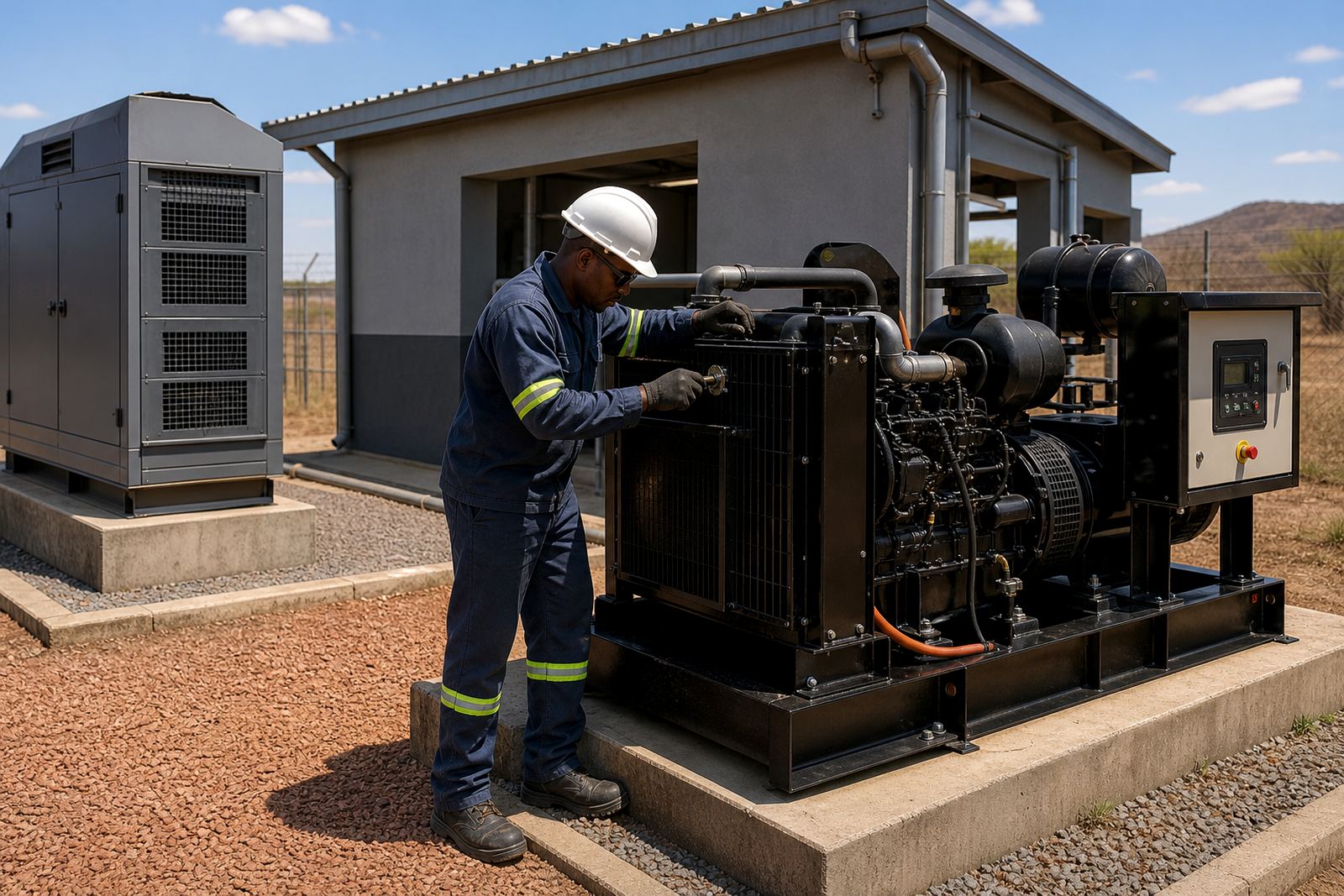
The client was a municipal services site in Mokopane, Limpopo, running a standby generator that supports pump station operations during supply interruptions. The brief was straightforward: inspect the unit, check the cooling side, confirm starting reliability and prove the set under operating conditions without disturbing the station’s daily programme.
Sites like this do not have much tolerance for guesswork. A pump station has fixed operating windows, limited space around the generator enclosure and, in this case, a tight site layout that made access awkward for larger tools. Load-shedding is only part of the picture for these places, because a local outage, a tripped breaker or a utility fault can stop pumping just as quickly. The generator had to be ready for that kind of call.
We planned the visit around safe access, short interruptions and a proper test sequence. Electrical work was kept within the scope allowed for qualified people under local regulations, and the controls were handled with care because the changeover equipment is part of the station’s essential protection. The client needed confidence, not a quick listen-and-leave inspection.
What we found on arrival at the generator room
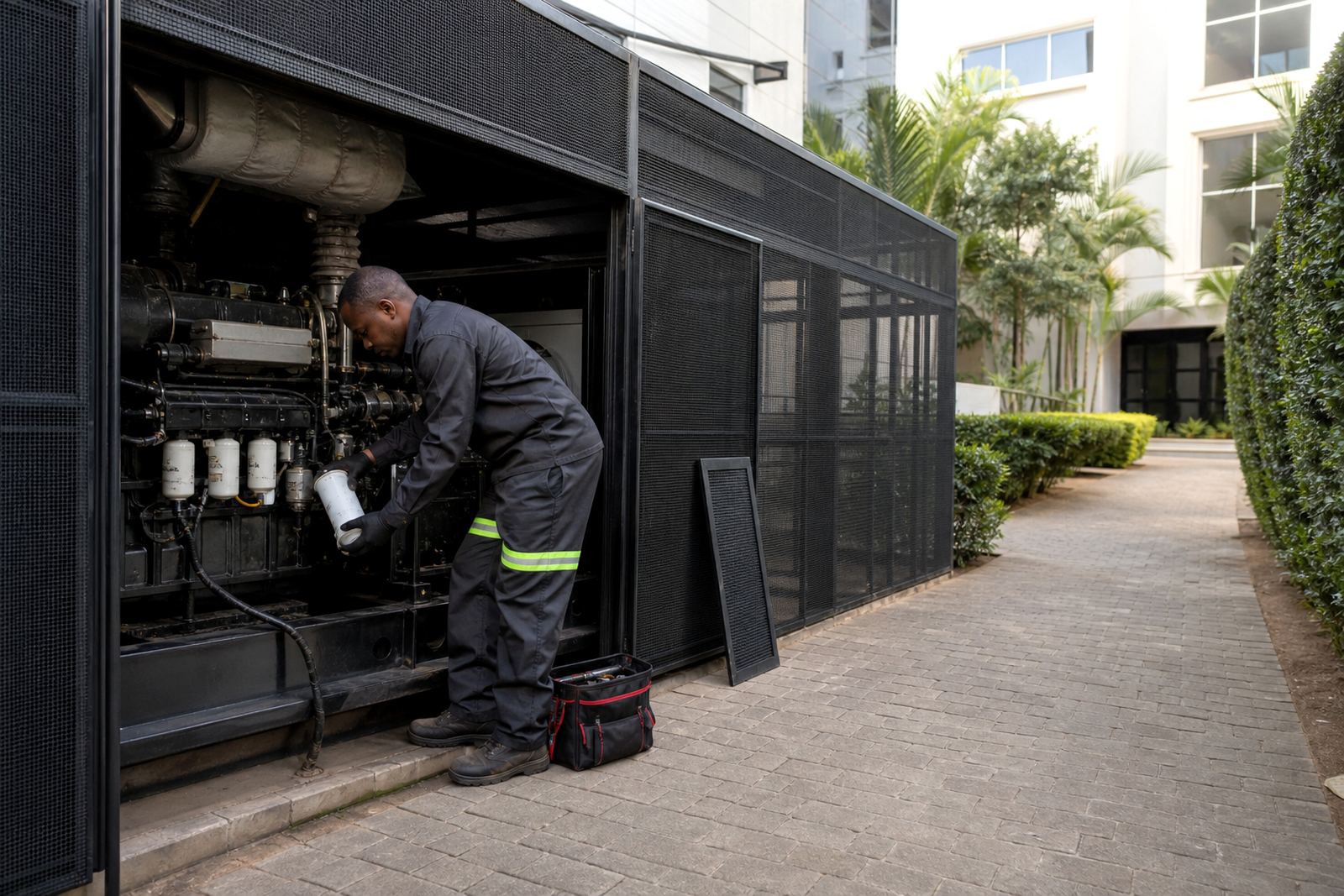
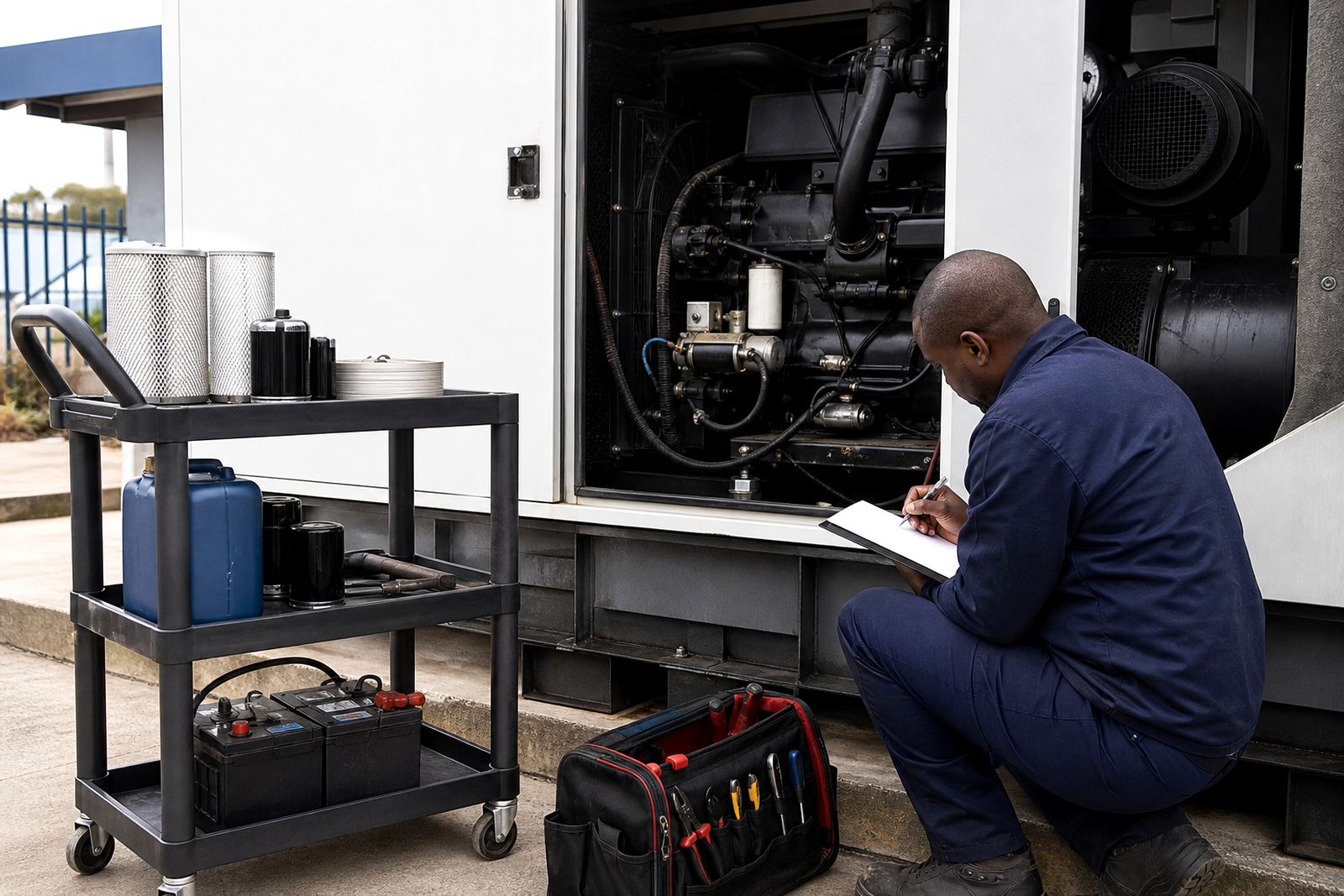
The first inspection covered the visible condition of the set, fluid levels, battery condition and the general state of the installation. The enclosure showed normal dust build-up from the area, with some heat staining around the exhaust side and a little corrosion beginning on a few fasteners. Nothing was severe, but on a pump station even small defects can turn into a starting fault at the wrong time.
We checked for signs of coolant loss, belt wear, loose fixings and any evidence of oil seepage. The battery was serviceable but not at its best, which is common on standby sets that spend long periods idle. The changeover switch assembly was also inspected for secure operation, clean contacts and correct indication. In short, the unit was workable, but it needed proper maintenance rather than another quick run test.
- Coolant level and condition checked for contamination and top-up requirement
- Battery voltage and terminal condition checked for start reliability
- Oil condition reviewed for service interval control
- Changeover switch operation inspected for safe transfer function
- External fitments checked for loose or corroded points
The service work carried out over two weeks
The assignment was completed over two weeks, allowing us to do the initial inspection, obtain the needed service items and return for the operational test without rushing the station. That timing suited the site because the pump room could not be left exposed for long, and the client wanted the work folded into a maintenance rhythm rather than treated as a once-off patch-up.
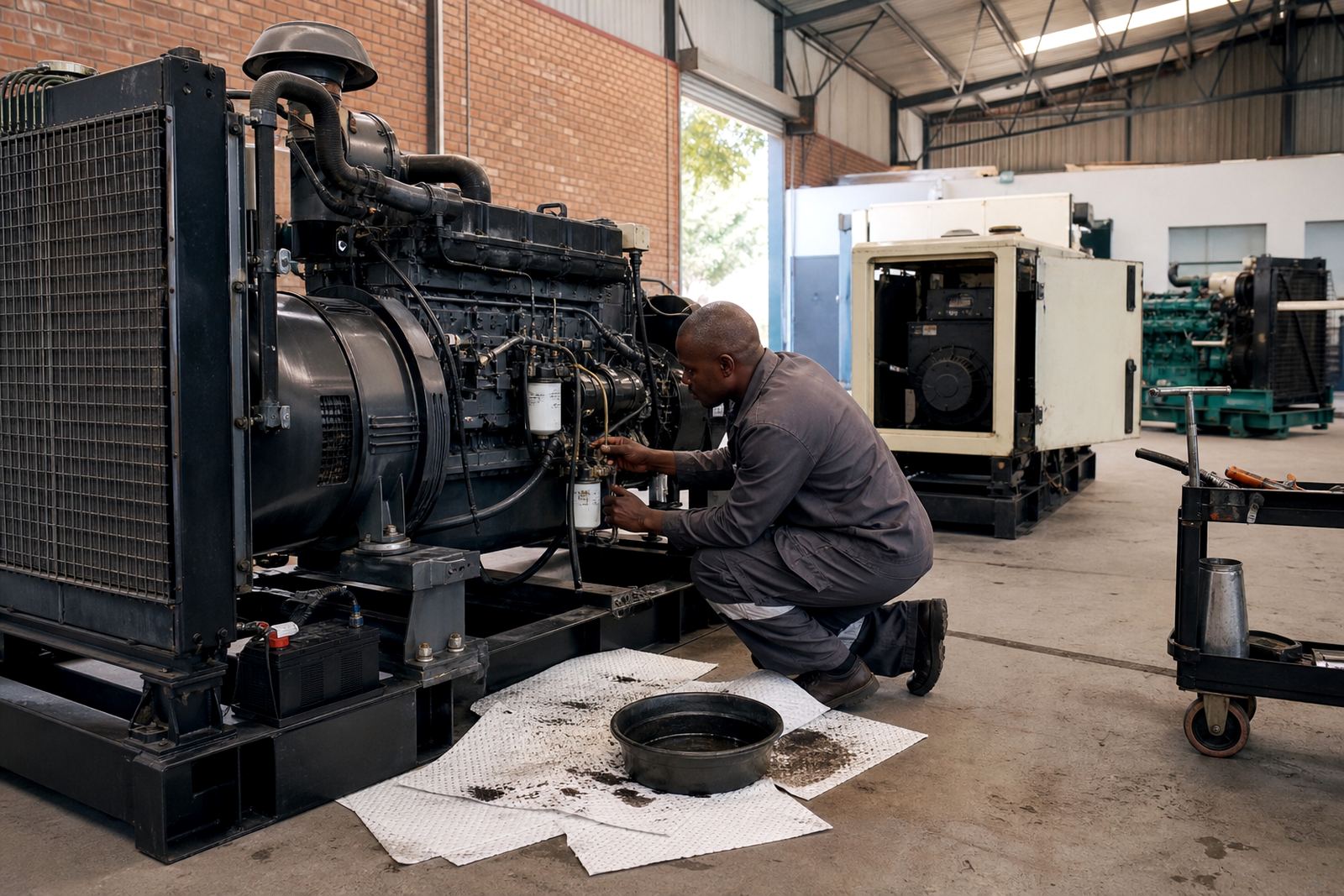
During the service visit we carried out a coolant system check, replaced service items where due, cleaned the battery terminals, tested the starting circuit and verified the condition of the control side. We also carried out a load bank test to place the generator under controlled demand and confirm that the engine, alternator and cooling circuit could cope with working load. Fuel system checks were limited to the generator service scope, with no work outside the unit’s immediate system.
The changeover switch was tested for correct transfer and return logic, with the site conditions taken into account so that the pump station could be restored safely after the test. All records were captured for the client’s maintenance file, including the service sequence, test observations and the next recommended interval.
- Oil and filter change completed where due
- Coolant system inspected and topped up to correct level
- Battery tested and terminals cleaned
- Load bank testing completed to verify output under demand
- Changeover switch checks carried out under controlled conditions
Keeping a pump station live while the generator is offline
Working at a pump station means the downtime window is always smaller than the paperwork would like. We therefore staged the service so the generator could be taken out, inspected and returned to service with the least disruption to pumping operations. The site team needed clear communication, because any service move that changes the generator state can affect the whole station.
The main constraint was the combination of limited access, a dusty environment and the need to preserve operational readiness. Generator servicing in a place like Mokopane has to account for heat, dust and occasional voltage instability on site. We also had to make sure the transfer equipment remained correctly labelled and that no unauthorised intervention was left behind after the visit. A pump station is no place for loose assumptions.
The practical result was that the unit could be maintained without interrupting the station’s essential work for any longer than planned. Our field team stayed within the agreed scope and left the site in a state that was cleaner and easier to monitor.
What the client received at handover
At handover, the generator was tested and returned to standby duty with the cooling side checked, the starting system verified and the operating record updated. The client received a clearer picture of the machine’s condition and a cleaner service trail for future maintenance planning. That matters when a site manager has to answer for downtime and cannot rely on memory alone.
The most useful outcome was confidence in the set’s ability to start and carry load when called upon. The load bank test gave a proper indication of how the unit behaved under demand, while the battery and coolant checks reduced the risk of a non-start or an overheating event. For a pump station, those are the kinds of faults that cause real trouble, not minor irritation.
- Generator proved under load after servicing
- Cooling circuit checked for serviceability
- Starting system improved through battery and terminal maintenance
- Service record updated for future audits
- Site left ready for normal standby use
The same approach we would take on the next station visit
If we were to repeat this job, we would use the same methodical approach: inspect first, plan the intervention around the station’s operating needs, carry out the service items properly and finish with a controlled operational test. That process works because it respects both the machine and the site team.
RelGen handles standby and prime generator servicing from our Midrand base across Johannesburg, Pretoria, Durban, Cape Town, Polokwane and surrounding areas such as Centurion and Sandton. On this project, the value was not in doing anything flashy. It was in doing the ordinary maintenance well, recording it properly and making sure the generator was ready for the next interruption. That is the standard we apply on maintenance contracts for businesses and public sites across South Africa.
For generators serving pump stations, manufacturing lines, office buildings or construction compounds, the same principle holds: look after the oil, filters, coolant, batteries, starting gear and transfer equipment, and the set is far less likely to fail when the grid does.
Key facts
| Project type | Pump station generator service visit |
|---|---|
| Location | Mokopane, Limpopo |
| Site function | Standby power for pump station operations |
| Scope | Coolant checks, battery testing, load bank testing and operational testing |
| Timeline | 2 weeks from inspection to handover |
| Base | Midrand, Gauteng |
| Service model | Maintenance contract support for sites across South Africa |