A Durban yard that could not afford a weak standby set
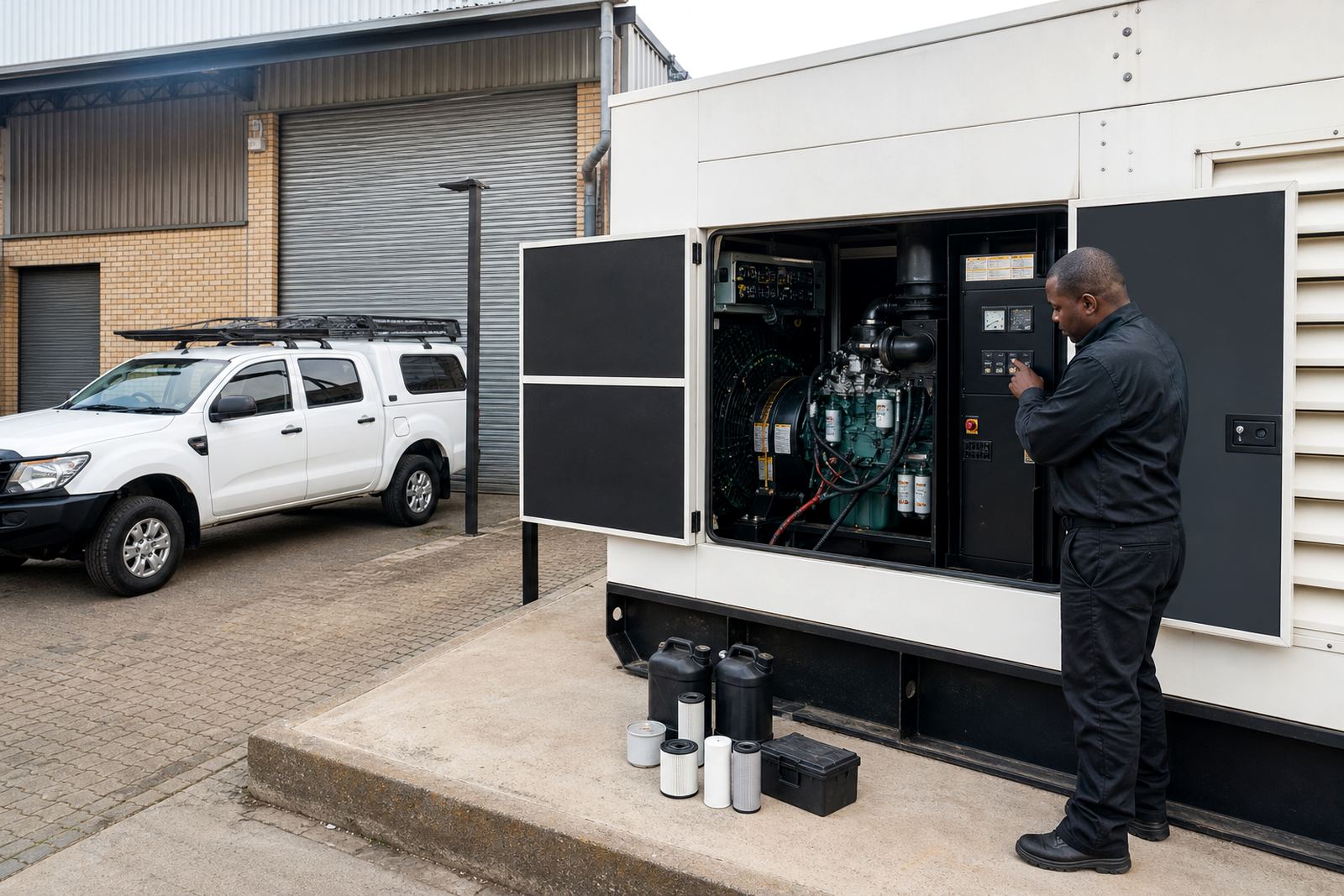
The site was a busy logistics yard in Durban with trucks moving in and out through the day and night, plus a generator that had to stay ready for outages and load changes. The brief was clear: the unit had been showing rising temperatures, signs of hose deterioration and a loss of confidence in the cooling circuit. The client needed a practical repair visit, not a long shutdown, and the yard layout meant every task had to fit around vehicle access and safety controls.
We treated it as a service call with repair work built into the same visit. The generator was a medium to large standby set tied to a transfer arrangement for critical yard functions, including gate controls, lighting and administrative spaces. Because the site sat close to the coast, humidity and corrosion were part of the picture, so we paid attention to clamps, hose ends, coolant condition and any signs of seepage around joints.
- Client type: logistics and warehousing yard
- Town: Durban, KwaZulu-Natal
- Equipment focus: standby generator cooling circuit and hosework
- Working constraint: active yard traffic and limited shutdown windows
What the fault looked like on arrival
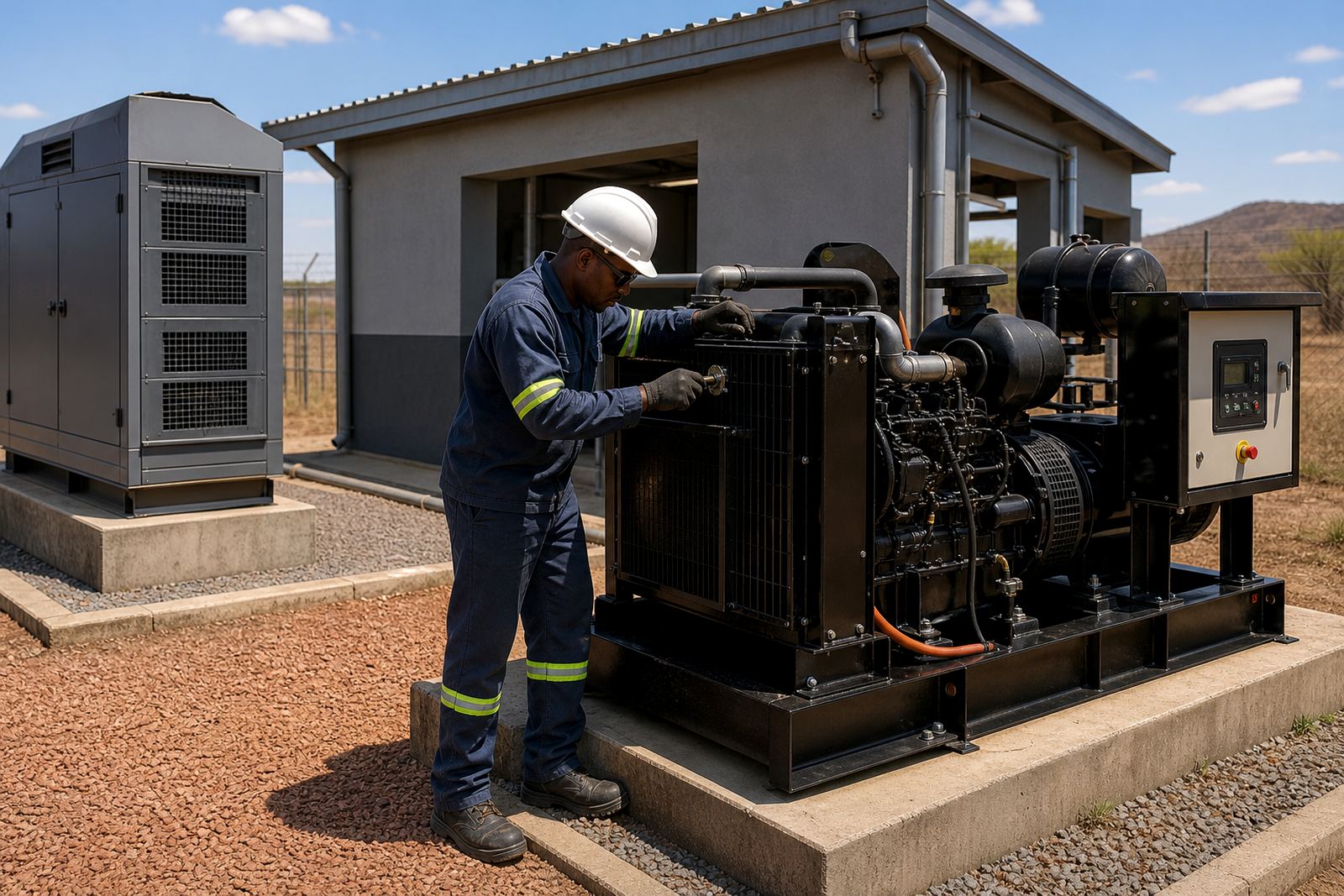
On inspection, the cooling system showed more than one issue. There was evidence of hose softening, minor coolant loss at connection points and contamination around the radiator side of the circuit. The set had also logged temperature fluctuations under test conditions, which pointed to a restriction or weak flow path rather than a single isolated defect. Electrical work was kept strictly within the scope allowed for qualified people under local regulations, and any controls work was handled with the proper isolation procedures in place.
We found that the generator had been running on a preventative maintenance cycle that had slipped in a few areas, mainly because the yard was hard to shut down for long periods. That kind of pressure is common in Durban where coastal humidity, heat and stop start operations can shorten the life of hoses, belts and battery terminals. The client needed the machine dependable for load-shedding periods and for any sudden mains failure, so the repair had to address the root causes, not just clear the warning signs.
- Cooling issue traced to hose wear and minor leakage points
- Temperature instability found during load response checks
- Corrosion risk elevated by humidity and salt air exposure
- Site access had to remain open for freight movements
The repair plan that fit around freight traffic
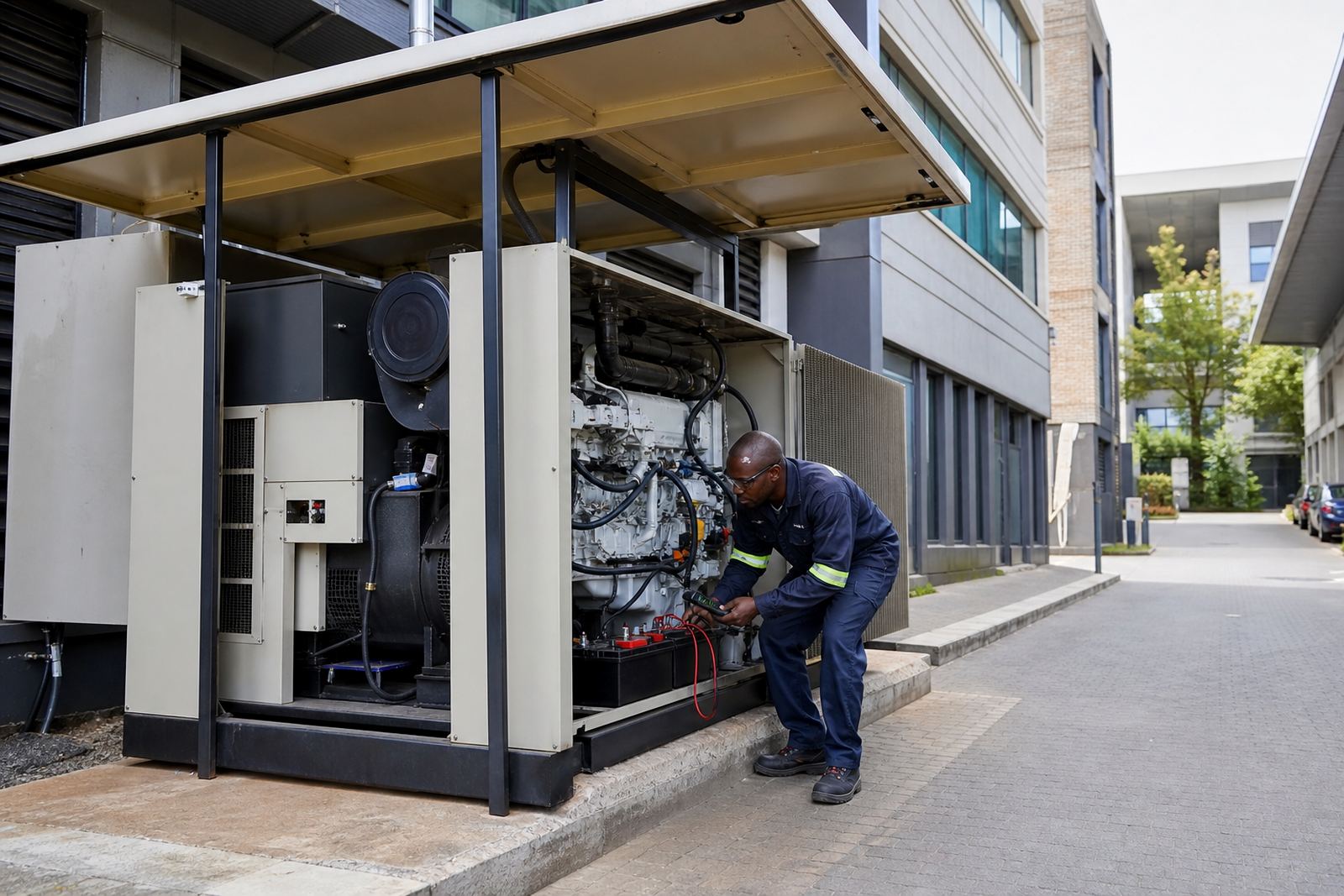
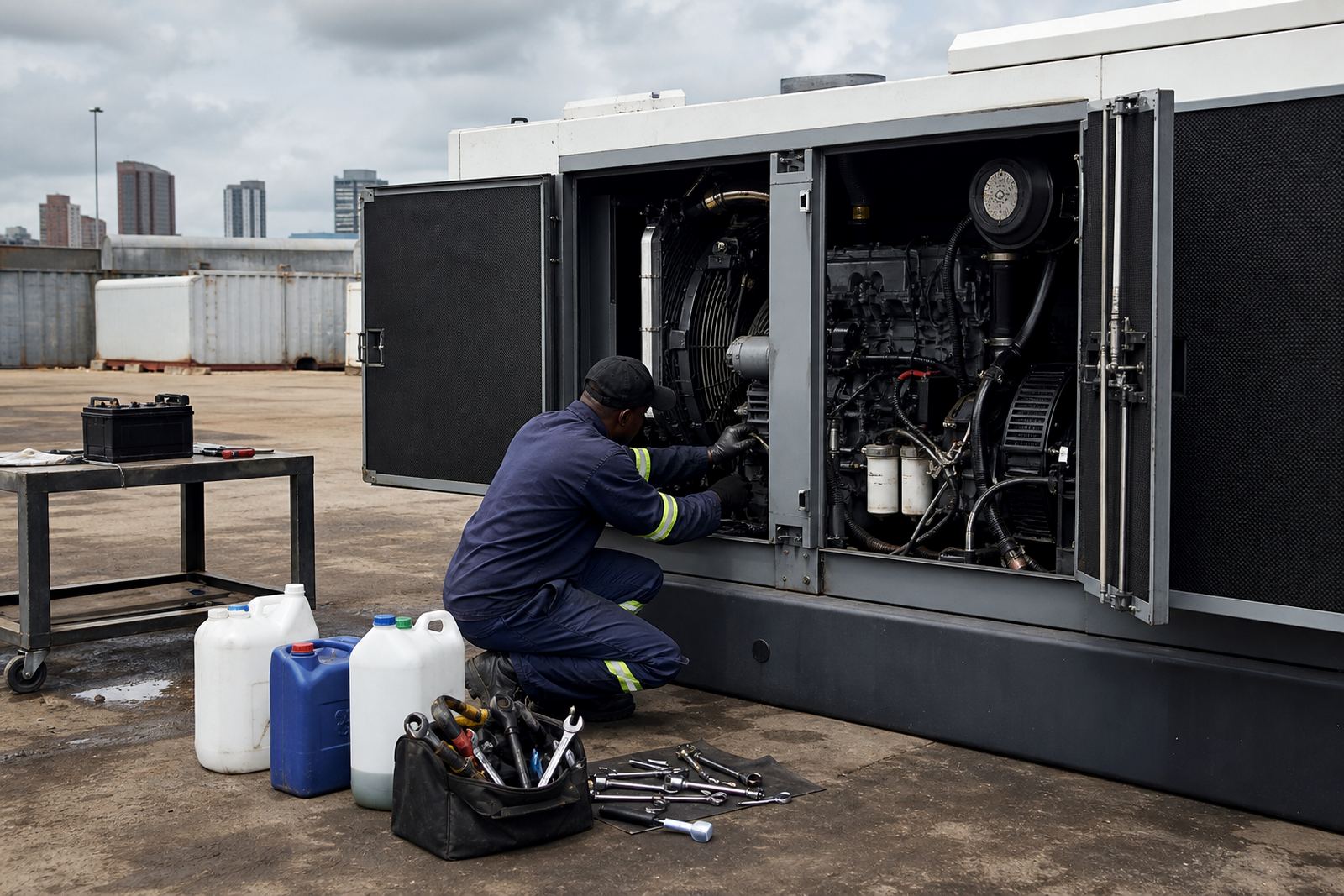
We mapped the work into a two-week timeline so the yard could keep moving while we handled the repairs in stages. In week one, our team isolated the set, drained and inspected the cooling circuit, replaced suspect hoses and clamps, cleaned affected areas and checked the radiator for blockage or contamination. We also tested the battery condition and charging path because a weak start can look like a cooling fault when in fact the set is struggling to come up to speed cleanly.
In week two, we returned for confirmation testing, refilled the system with the correct coolant mix and ran the unit through a controlled test period. Load bank testing was used to put the generator under a steady electrical demand, which helped show whether the temperature stayed stable and whether the repaired hoses held pressure. Where changeover switch checks were needed, we coordinated with the site responsible person and followed the correct isolation sequence, because transfer equipment must be handled by qualified people and within local rules.
- Week 1: strip-down, cleaning, hose replacement and initial diagnostics
- Week 2: refill, leak checks, load bank testing and final verification
- Additional checks: batteries, starter circuit, fuel lines and transfer gear
- All work scheduled around freight windows and yard entry control
What we supplied and how the set was put back into service
The repair package included replacement hoses, new clamps where needed, coolant service materials, filter inspection items and starter-system checks to make sure the set would respond properly after the cooling fault was cleared. We also carried out an oil and filter review, because any generator that has been running hot deserves a broader service inspection even if the oil itself has not yet failed. The machine was then refilled, pressure tested and run to confirm that the cooling system was holding steady under sustained demand.
Where the client requested it, we also reviewed the service records and completed a practical maintenance note for the site file. That makes a difference when a yard has several people rotating through operations and nobody wants to rely on memory when the next service date arrives. Our stores and logistics process allowed the right parts to be dispatched without delay from the Midrand base, and that kept the repair moving without unnecessary waiting.
- Hose replacement and clamp renewal
- Coolant system flush, refill and pressure checks
- Battery testing and starter system inspection
- Oil and filter review as part of the repair visit
Why the yard needed more than a quick patch
A logistics site in Durban cannot treat generator servicing as a once-off emergency fix. The machine has to start in poor weather, carry the required load and then do it again next time without drama. For that reason, we looked at the whole support system around the set, including battery health, fuel delivery condition, changeover switching and the maintenance history. A repaired hose means very little if the battery bank is weak or the transfer equipment has not been checked properly.
The client had also been dealing with repeated minor interruptions in operations, so the real goal was to reduce the chance of a repeat breakdown during a busy shift. The solution was a measured one: repair the cooling circuit, confirm the electrical and start-up side, then put the generator back into a service contract rhythm that suits the site. That way the yard has a better chance of staying operational when municipal supply dips or when a short interruption hits the area.
- Generator repaired with uptime and repeatability in mind
- Service interval reset to suit yard operating hours
- Transfer equipment checked to support clean changeover
- Maintenance records updated for the next planned visit
What changed after the visit
Once the work was completed, the set ran cooler, started more cleanly and held a more stable operating temperature during test runs. The coolant level remained steady after pressure testing and the repaired hose connections no longer showed seepage. The client also had clearer visibility on what had been done, what still needed watching and when the next preventative inspection should happen.
For the yard team, the main result was confidence. They did not need a full replacement or a drawn-out shutdown, only a careful repair and proper follow-up. That is the sort of outcome we aim for on maintenance contracts across South Africa, whether the site is in Durban, Johannesburg, Pretoria, Cape Town or Polokwane. If we were to repeat the job, we would follow the same sequence: inspect, isolate, repair, test under load and record everything properly. It kept the process controlled and it kept the yard moving.
- Improved cooling stability after repair
- Reduced risk of hose failure at the repaired points
- Cleaner start-up response after battery and starter checks
- Documented follow-up plan for future servicing
Key facts
| Project | Durban Yard Repair |
|---|---|
| Client type | Logistics and warehousing yard |
| Town | Durban, KwaZulu-Natal |
| Timeline | 2 weeks |
| Main faults | Cooling system wear, hose issues, minor coolant loss |
| Service scope | Repair, testing, record review and follow-up planning |