What the Centurion site needed from a contract team
The factory runs on a mix of production shifts, equipment start-up loads and scheduled downtime that is never as long as anyone would like. Their standby generator was being called on often enough that ordinary once-off servicing was no longer enough, so the brief was to put proper maintenance structure around the set and reduce the risk of nuisance faults on busy days.
The site is in Centurion, Gauteng, with close access to loading bays, plant rooms and a busy internal yard. That meant our work had to fit around trucks, forklifts and staff movement, and it also had to respect the factory’s safety rules for access, isolation and permit control. Electrical work was handled by qualified people in line with local regulations, with checks done in a way that kept the generator and changeover arrangement safe for use.
The generator was a high running-hour diesel set used for backup support during supply interruptions and planned changeover checks. It had ageing consumables, some heat stress from repeated use and a service history that was not always recorded neatly. The client wanted one contractor to manage routine servicing, fault finding and record keeping so the maintenance picture was clear.
Our starting point and the limits on site
Before any work started, we inspected the installation, reviewed the service log and checked the physical condition of the set, fuel lines, battery bank, hoses and control panel. The factory could only spare short windows between shifts, so we had to break the work into planned visits rather than one long shutdown. Noise control mattered too, because neighbouring production areas stayed active while we worked.
There was also a practical constraint around access. The generator sat in a tight plant room with limited clearance on one side, which made filter changes and coolant checks a bit more awkward than usual. We planned the sequence carefully so that spill control, parts handling and testing could be done without delaying production. Load bank testing had to be scheduled for a period when the site could tolerate a controlled test run, not during peak output.
- Limited shutdown windows between shifts
- Tight plant room access for service work
- Need for clear service records and fault history
- Controlled testing without disrupting factory output
The maintenance plan we put in place
We put the generator onto a maintenance contract built around its actual usage rather than a generic calendar only. That meant tracking running hours, watching for oil condition, checking coolant strength and keeping an eye on battery health before it became a starting issue. The factory needed dependable response times and a service routine that would not create unnecessary downtime.
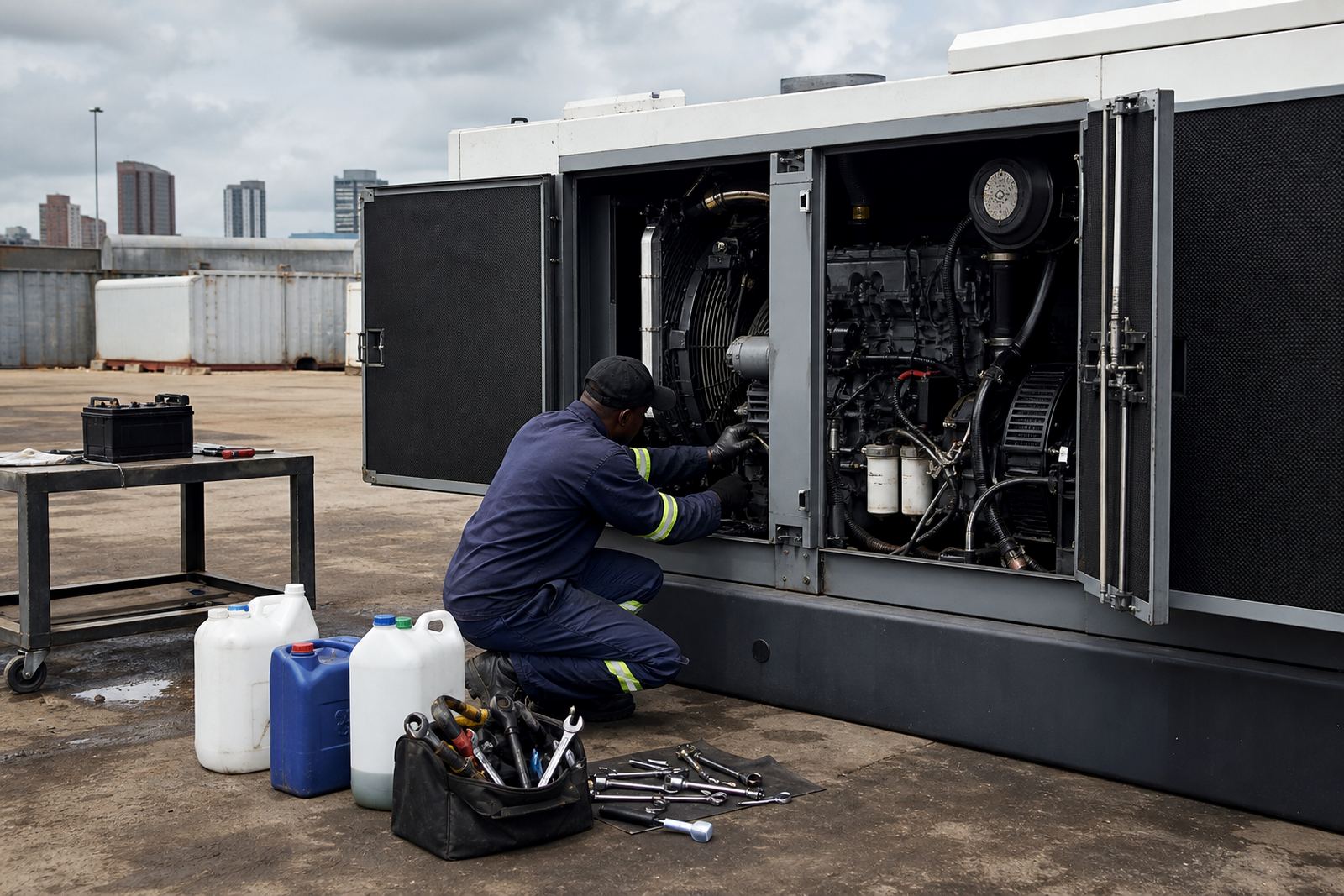
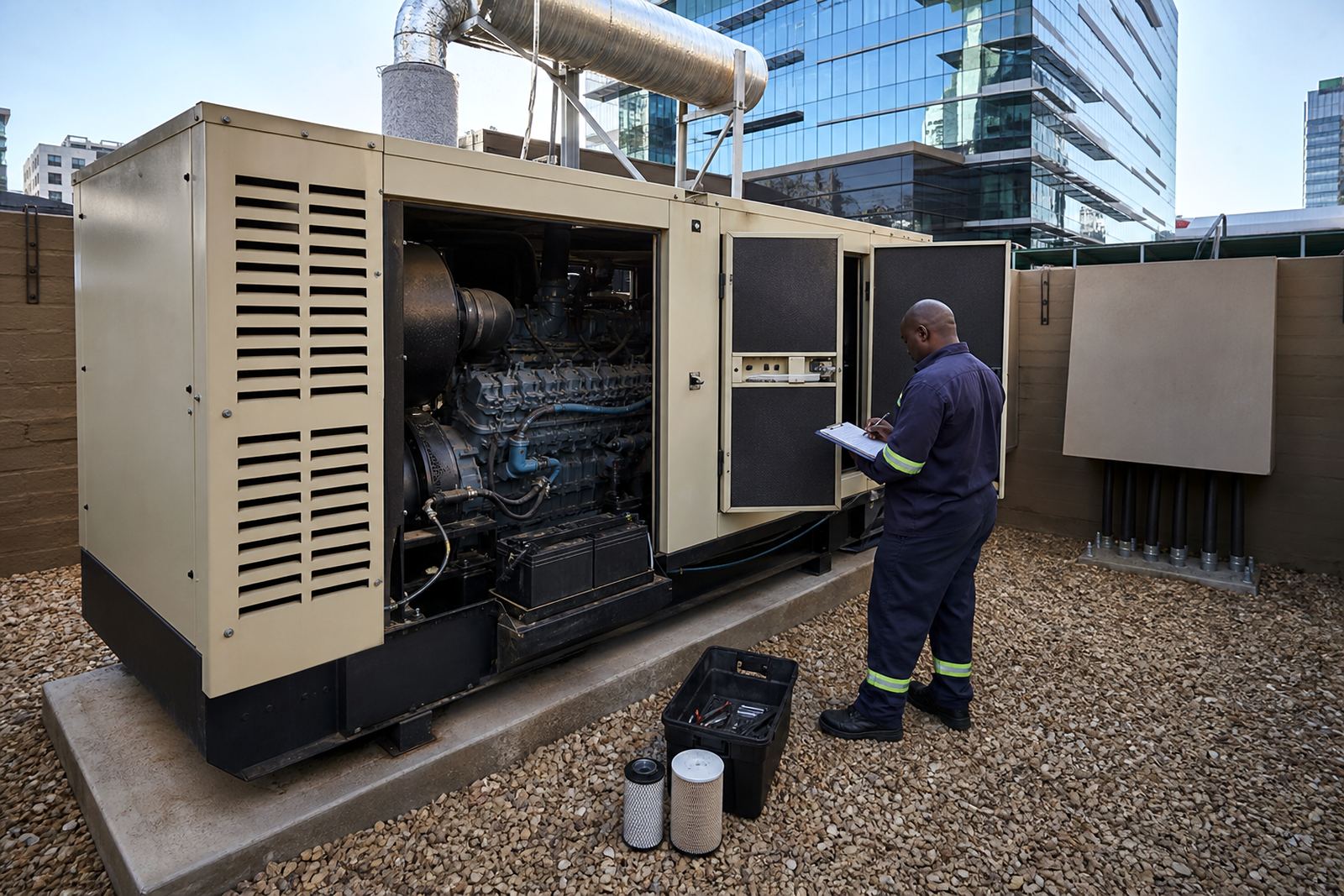
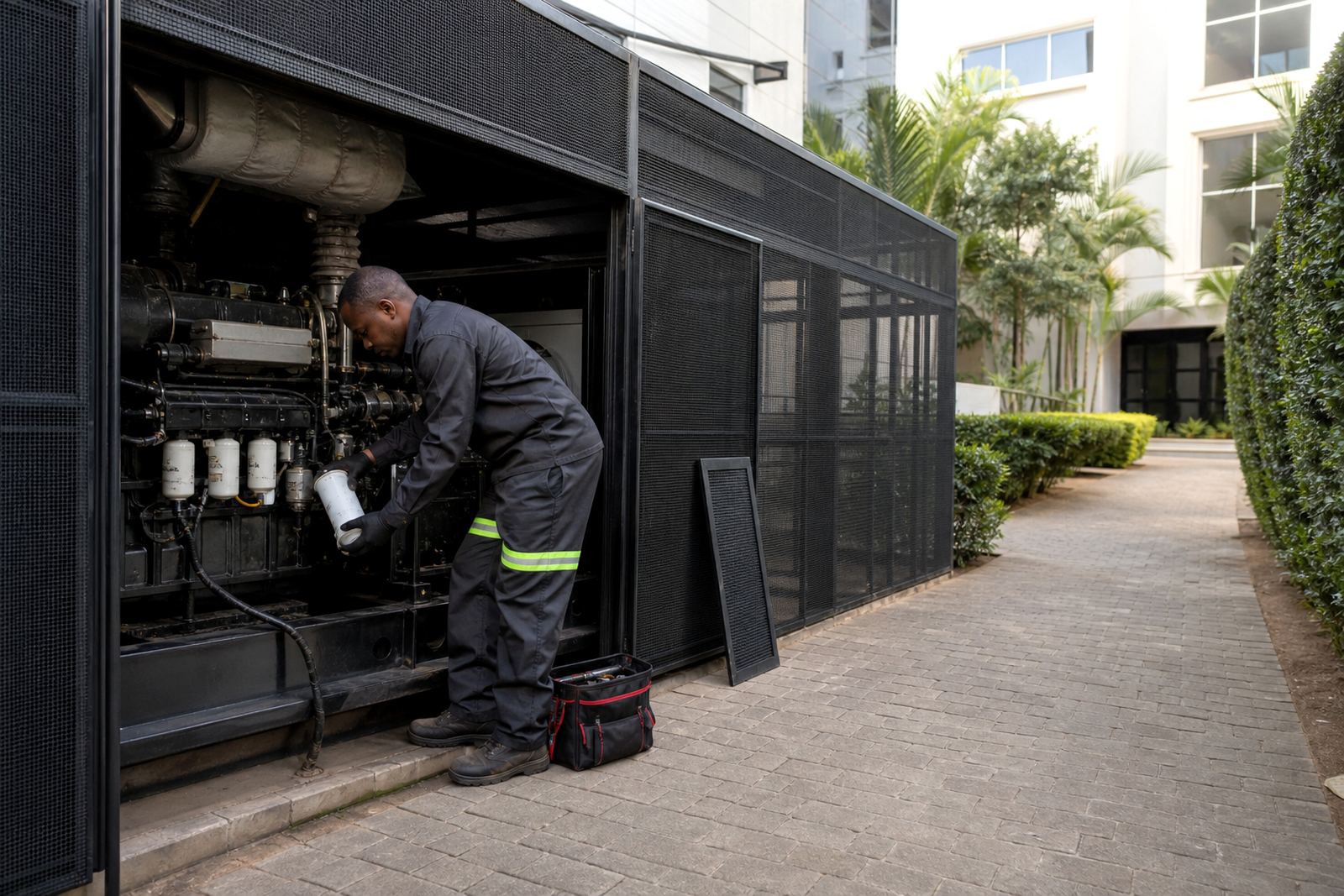
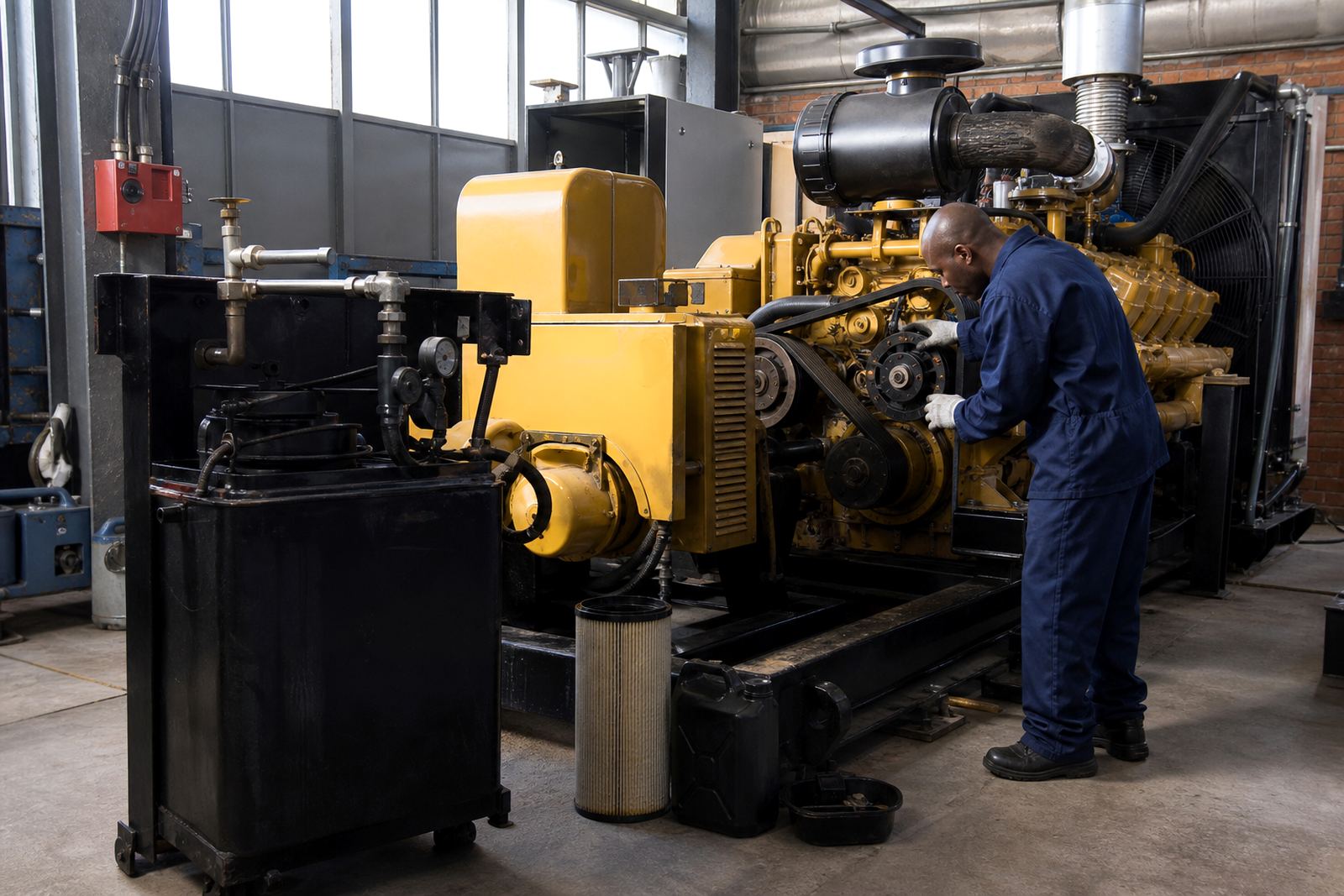
Our team handled scheduled servicing and the consumables side of the job, including oil and filter changes, coolant system service, battery testing, starter system repairs and changeover switch checks. We also carried out service record audits so the site had a clean paper trail for maintenance decisions and internal sign-off. Where fault symptoms showed up, we investigated wiring and control issues within the proper scope, with qualified electrical people handling the work that needed that level of competence.
- Oil and filter changes based on running hours
- Coolant checks for level, condition and hose wear
- Battery testing, terminals cleaned and secure
- Changeover switch checks and control verification
- Starter circuit fault finding when the set was slow to crank
Load bank testing and the hard-running hours problem
A generator that works hard needs more than a visual once-over. The set had been carrying heavier duty than usual, so we arranged load bank testing to confirm how it performed under controlled demand. That helped us check temperature rise, exhaust response, voltage stability and whether the machine could hold load without showing weakness that only appears away from the yard.
The test also gave us a cleaner picture of the engine side. Under load, small issues show up faster, such as fuel delivery restriction, tired batteries or a cooling system that is almost fine but not quite. We found a few items that needed follow-up attention, including replacement of worn filters, minor fuel system repairs and cleaning around the starter circuit. Nothing dramatic, but the sort of wear that builds up on a machine that gets used often. We also found the service log had gaps, so we corrected that and aligned the records with actual maintenance dates.
Because the site was in an industrial part of Centurion, the team was also careful about spill control and safe waste handling. Used oil and filters were removed in a controlled way, and the service area was left tidy after each visit. That matters on a factory floor where housekeeping affects safety as much as appearance.
How the work was staged over the weeks
The contract was put in motion over a short but deliberate timeline. In week one we completed the initial inspection, recorded the condition of the generator and agreed the service schedule with the site contact. In week two we carried out the first full service, including oil and filter work, coolant checks, battery testing and a review of the changeover arrangement.
Week three was set aside for fault finding and the first load bank test. That gave the client a realistic picture of how the set behaved under pressure, not just while idling. In week four we followed up on the worn items, completed the remaining repairs and audited the service record file so the maintenance trail was up to date. The site then moved onto the ongoing contract cycle with planned inspections and response cover for emergency callouts.
- Week 1: inspection and service planning
- Week 2: full scheduled servicing
- Week 3: load bank testing and fault finding
- Week 4: repairs, record audit and handover
What changed after the first cycle
Once the contract was settled in, the factory had fewer surprises at changeover and fewer last-minute requests for urgent attention. The generator started more cleanly, the service intervals were easier to plan and the maintenance team inside the plant had clearer information on what had been done and when. The site could now see patterns in battery wear and consumable replacement instead of reacting after a fault showed up.
The result was not only better readiness, but better control over the maintenance budget and shutdown planning. When a standby set is used often, small issues can become bigger quite quickly, especially in warm weather and dusty conditions. Regular servicing helped keep the set dependable, and the team had confidence that the machine would cope with planned testing as well as the next interruption.
The client also appreciated that the work was handled by one contract team that understood factory access, shift timing and the need for prompt paperwork. That cut down on repeated explanations and made the whole process less messy.
What worked well
For a similar site, we would use the same approach: start with an honest inspection, build the servicing around running hours, then use load bank testing to check the generator properly under demand. That combination works well for factories with heavy use because it picks up the small faults before they turn into a no-start or a failed transfer event. It also suits sites where downtime is expensive and access windows are short.
We would also keep the record system tight from the first visit. A good log book, clear service dates and notes on oil condition, filters, coolant, batteries and switch checks save time later. In a plant environment, that detail matters. It helps maintenance staff, it helps operations and it helps anyone who has to make a call when the lights dip. If the site has strict internal rules, we work with those too, as long as the electrical side stays within the proper scope for qualified people.
For factories in Centurion and other industrial areas around Johannesburg, Pretoria and across Gauteng, this kind of contract support is often the difference between a generator that is merely there and one that is ready when needed.
Key facts
| Client type | Factory site with high generator running hours |
|---|---|
| Town | Centurion, Gauteng |
| Generator use | Standby support with frequent test and changeover activity |
| Key work | Oil and filter changes, coolant service, battery testing, load bank testing |
| Support timeline | 4 weeks from inspection to handover |
| Service scope | Scheduled servicing, emergency callouts, fault finding and service record audits |