Oil is the working skin of the engine
Inside a standby or prime generator, oil sits between fast-moving metal parts that would otherwise run hot and wear quickly. It coats bearings, pistons, cam components and other internal parts, reducing metal-to-metal contact every time the set starts and carries load. When the oil is clean and at the correct level, the engine turns more freely and the whole service life improves.
In Midrand and Sandton, where many businesses rely on generators for load-shedding and outage cover, we often find that a set has not failed because of one big fault. More often, the oil has simply gone too old, too thin, or too dirty to do its job properly.
What dirty oil does when a generator is under pressure
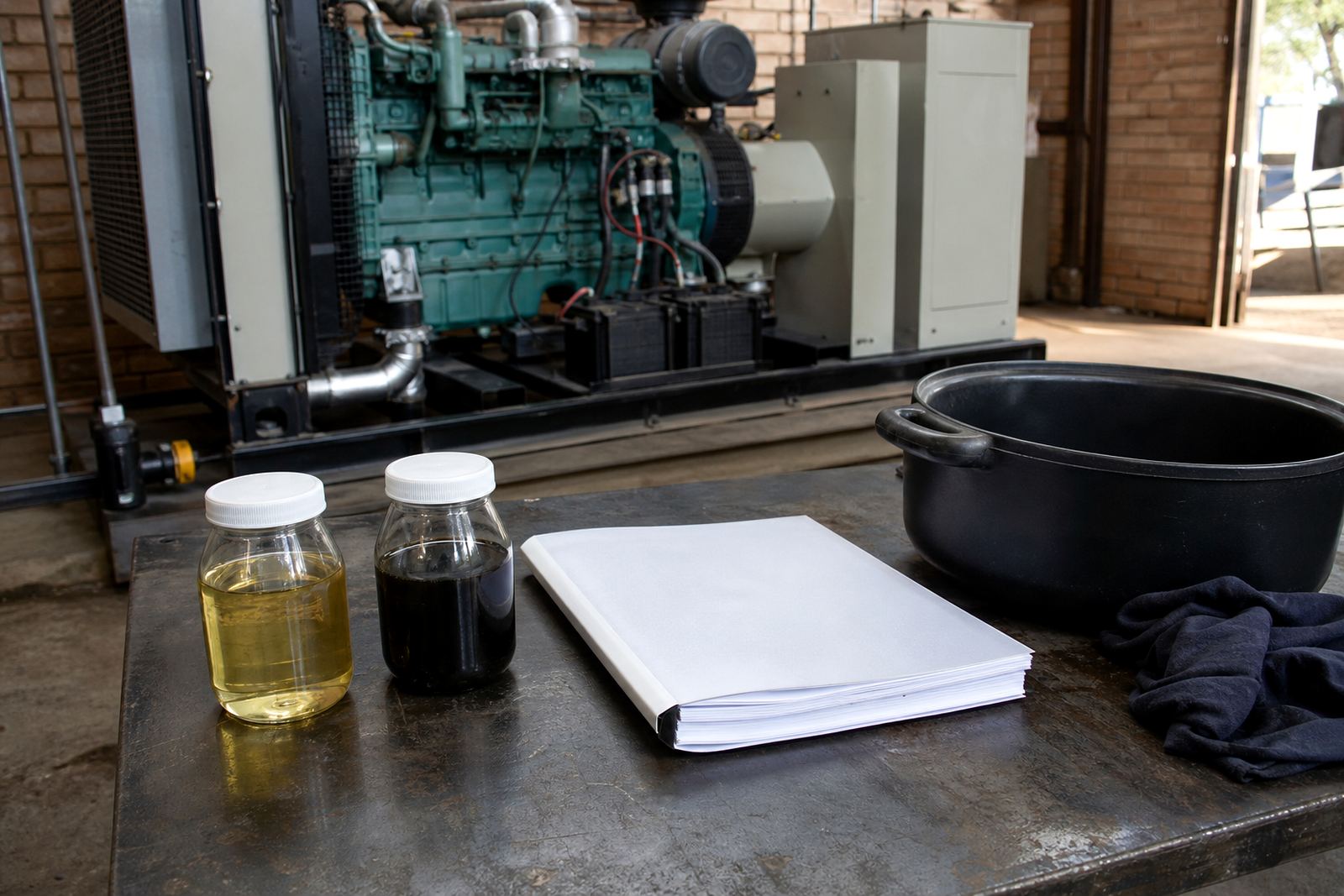
Oil picks up soot, dust, combustion residue and tiny wear particles as it works. Over time it becomes thicker in some engines and thinner in others, depending on heat and fuel dilution. Either way, it starts to lose the protective film that the engine depends on. That is when you see harder starting, higher operating temperatures and noisy running.
- Dirty oil can block narrow oil passages and slow circulation.
- Overheated oil breaks down faster and loses protective properties.
- Metal particles in oil can speed up internal wear.
- Long service gaps can leave sludge in the sump and around seals.
For sites in Durban and Cape Town, coastal humidity adds another layer of care. Moisture can build up during long standby periods, so oil condition should be checked during every scheduled servcie and not left to guesswork.
The oil change is never just the oil change
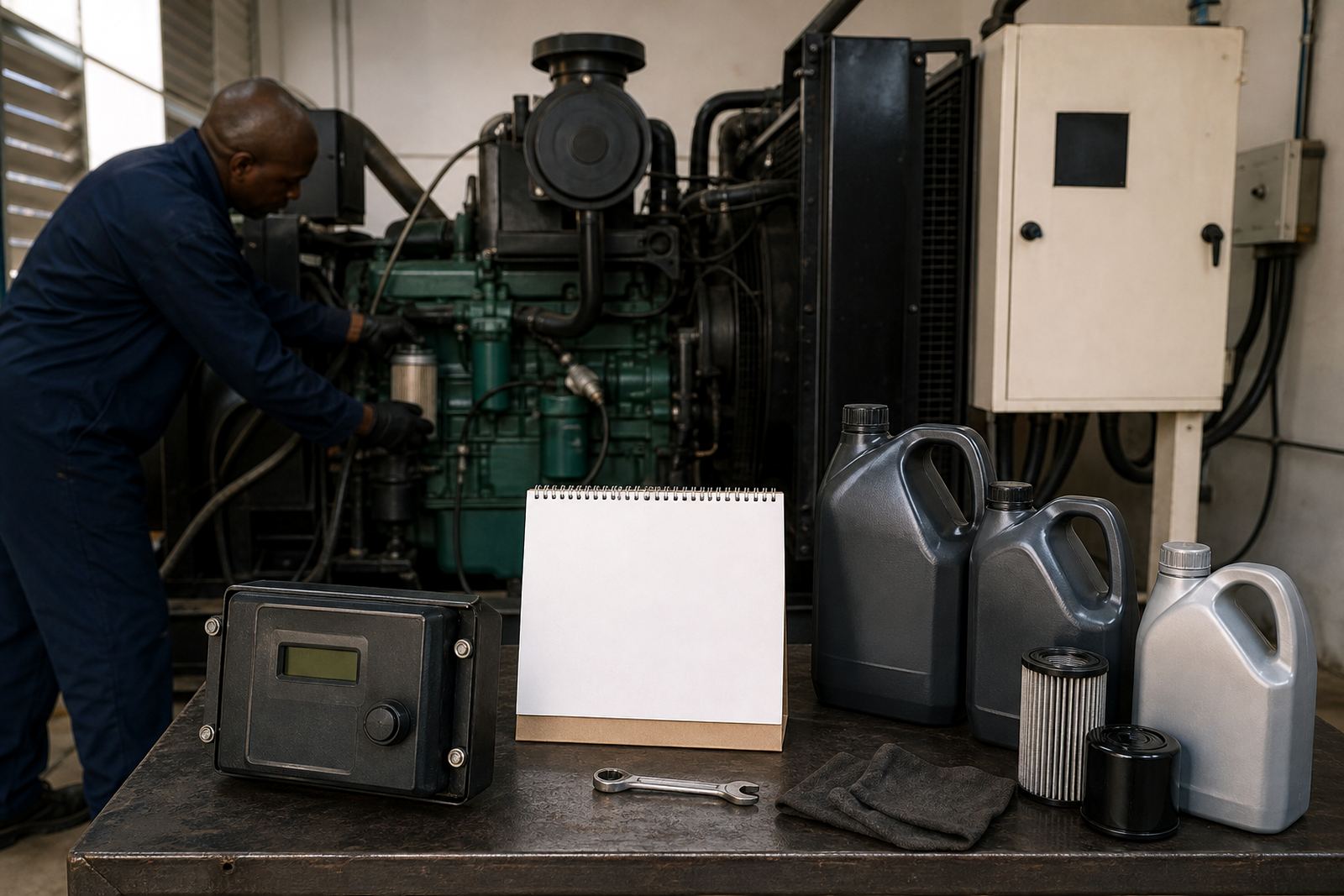
A proper generator oil service includes more than draining and refilling. The oil filter must be changed at the same time, because a fresh fill pushed through a blocked filter is a short-lived fix. Coolant level and condition should also be checked, along with belts, hoses and battery condition, so that one small issue does not turn into a breakdown during an outage.
At a business park in Pretoria, for example, a generator may only run during municipal interruptions and testing. That does not mean the engine is idle in a healthy way. Short runs, stop-start operation and low load can still contaminate oil, especially if the unit is not brought up to working temperature regularly.
- Drain oil while the engine is warm enough to flow cleanly.
- Replace the filter with the correct service interval.
- Inspect for leaks around sump plugs, seals and hoses.
- Top up only to the correct dipstick mark, not above it.
Load bank testing tells the truth about oil condition
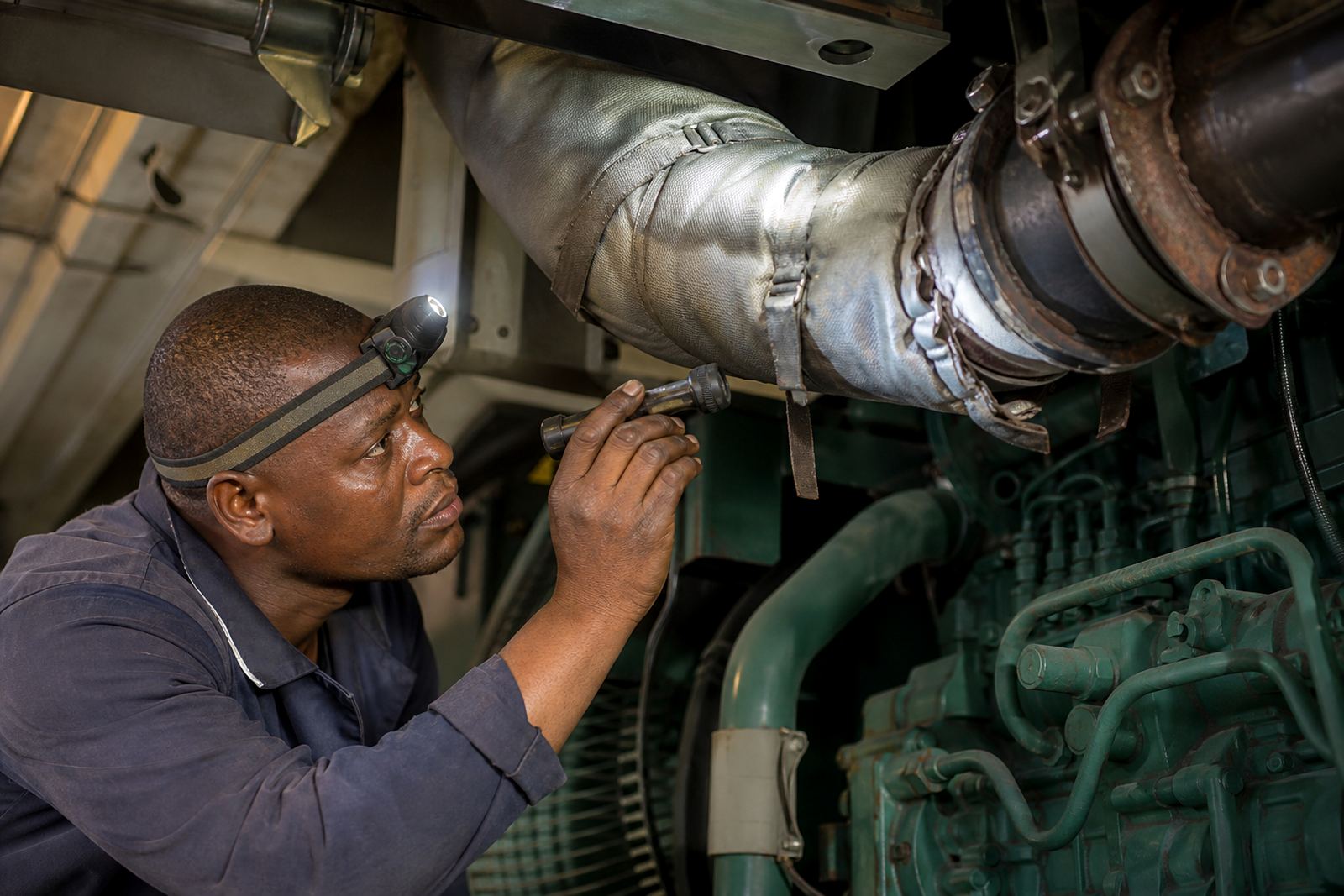
A generator may sound fine at light load, but oil stress shows up when the engine has to work. Load bank testing is useful because it puts controlled demand on the set and helps reveal temperature rise, smoke, pressure changes and any weakness in lubrication. If oil pressure drops or the engine runs hotter than expected under load, it is a warning sign worth tracing.
Our technical team uses load bank testing as part of maintenance contracts where clients need proof that the generator can carry the expected demand. This is especially important for manufacturing, warehouses and process sites where a fault during a power cut can stop more than lights. Electrical work must always be done by qualified people under local regulations, and changeover switch checks need to be handled properly, not improvised.
The small checks that protect a costly engine
Oil quality is linked to other systems. A weak battery can cause repeated cranking, which puts extra strain on the engine and contaminates the oil faster. Fuel system faults can lead to poor combustion and more soot. Coolant problems can raise engine temperature and cook the oil before its time. That is why generator servicing works best as a full routine, not a once-off oil drain.
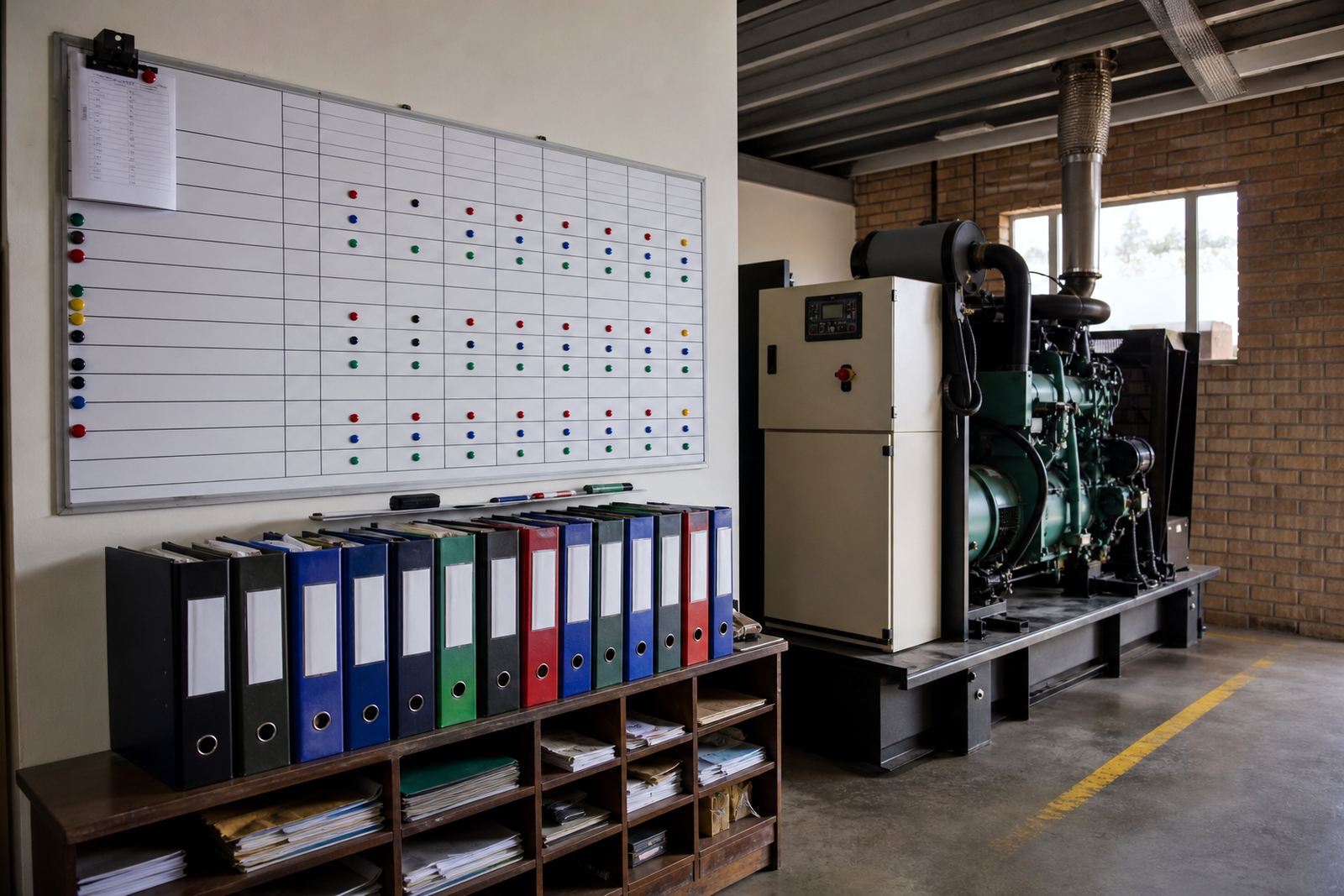
In our Midrand base, we see that sites with regular preventive inspections tend to avoid the ugly surprises that come with emergency callouts. A good service record helps track what was changed, when it was changed, and whether the oil condition is trending in the right direction. That paper trail matters when several buildings or sites are being managed across Johannesburg, Centurion and further afield.
- Check oil level before every scheduled start test.
- Inspect battery terminals for corrosion and loose connections.
- Look for coolant stains that may point to overheating.
- Review service records for repeated oil top-ups or unusual consumption.
A practical rule for South African sites
There is no one interval that suits every generator. A standby unit that runs rarely has different needs from a prime set that works daily. Dust, heat, coastal air, fuel quality and run hours all affect oil life. That is why maintenance contracts should be set around actual site conditions, not just a calendar date.
For businesses in Polokwane, Johannesburg and Cape Town, the common thread is the same: when the oil is managed properly, the generator starts cleaner, runs smoother and is more likely to carry load when the grid is unreliable. It is one of the quietest parts of generator maintenance, but also one of the most important.
At RelGen, our work across South Africa includes scheduled servicing, oil and filter changes, coolant system service, battery testing, load bank testing, changeover switch checks, fault finding and emergency callouts. Thabo Engelbrecht leads the business from our Midrand base, with support from Naledi Shezi, Johan Matlala, Ayanda Khoza, Muneerah Daniels, Sibusiso Wessels and Rikus Botha. If a generator is part of your operation, clean oil is part of protecting that investment.