Why a calendar date is never enough for a running set
A standby set that starts only during outages ages differently from a prime unit that carries daily load, and the service plan should reflect that. Oil condition, filter loading, battery health, coolant quality and the hours on the metre tell a much clearer story than a date on a wall chart.
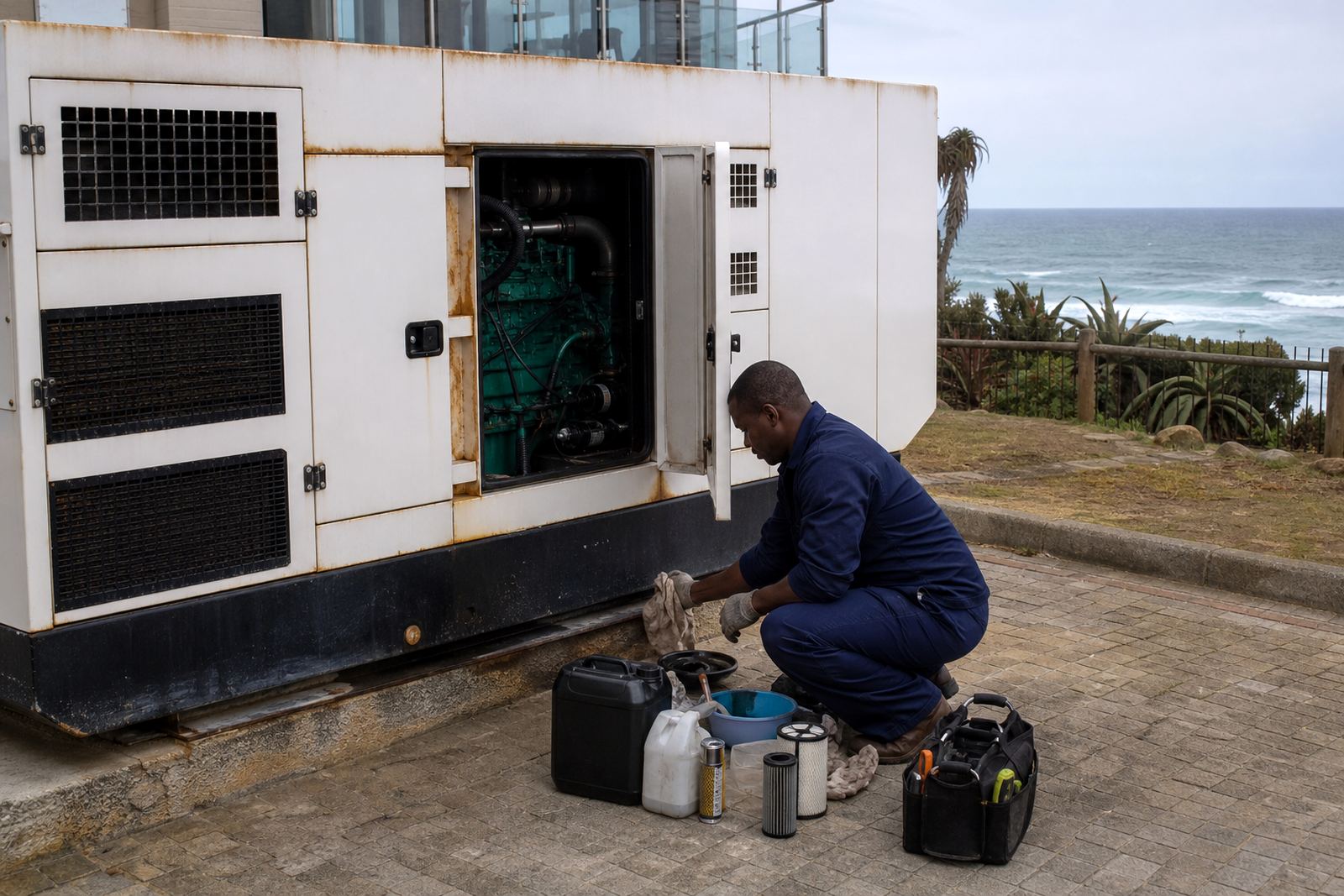
In Midrand, a business park with frequent switching during load-shedding may need closer checks than a warehouse that only sees the plant on test days. Coastal humidity in Durban, dusty conditions in Polokwane, and long hours of summer heat all change the pace of wear, so interval planning must account for the site not just the machine.
How to match intervals to the real duty cycle
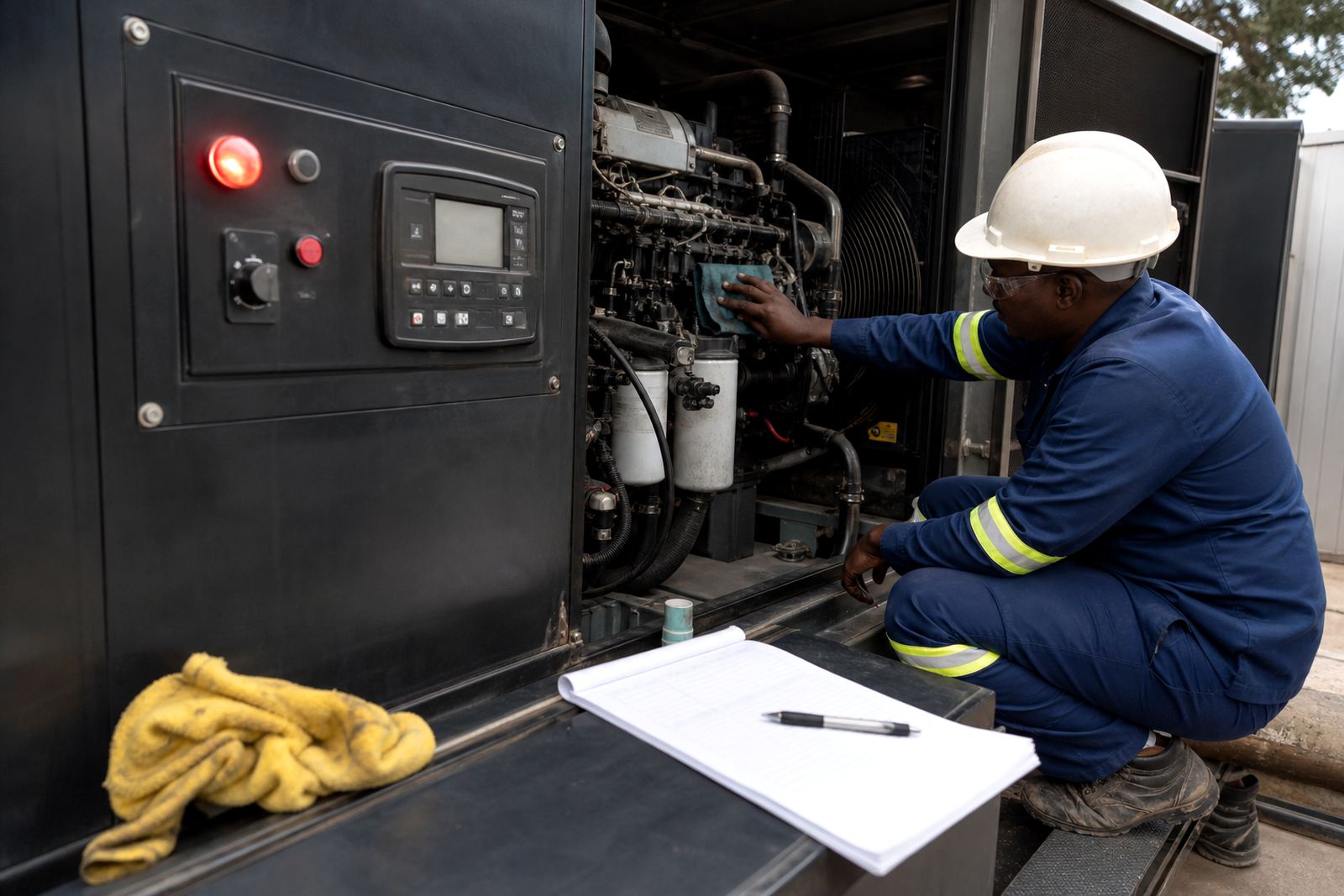
RelGen plans service timing around actual use, not a one-size schedule. For a lightly used standby generator, a monthly inspection and an hours based oil service can be enough. For a prime set supporting production or essential services, the work often needs to be tighter, with routine checks after shorter run periods and more frequent record review.
- Track run hours, not only calendar months.
- Separate standby units from prime duty units in the maintenance plan.
- Increase inspection frequency after extended load-shedding or long outages.
- Build in checks before peak demand seasons, especially summer and winter.
When a site in Centurion runs cold rooms and access control on the same system, a missed service can affect more than comfort. It can interrupt stock, security and customer movement in one go.
What a proper interval should include, not just a filter change
A good service interval covers the full set of items that keep the generator reliable. Oil and filters are the obvious ones, but coolant, batteries, belts, electrical terminals and changeover switches also need attention. Qualified people must handle electrical work in line with local regulations, especially where changeover equipment, starter circuits and load transfer controls are involved.
Load bank testing is often the missing piece. A generator can appear healthy when it only starts and idles, yet fail once it has to carry a meaningful load. That is why service planning should include periodic testing under load, plus fault finding when readings or behaviour start to drift.
- Oil and filter changes at the right hour interval for the duty cycle.
- Coolant system service before heat stress starts showing up.
- Battery testing and starter system checks ahead of outage season.
- Load bank testing where real site demand cannot be exercised often enough.
- Changeover switch checks to confirm safe transfer and return.
The warning signs that your interval is already too long
If a generator is already struggling, the plan is late. Hard starting, low battery cranking, oily residue around hoses, coolant loss, black exhaust smoke under load and repeated alarms all point to service timing that has slipped. Service record audits help spot patterns that people often miss when they only react to breakdowns.
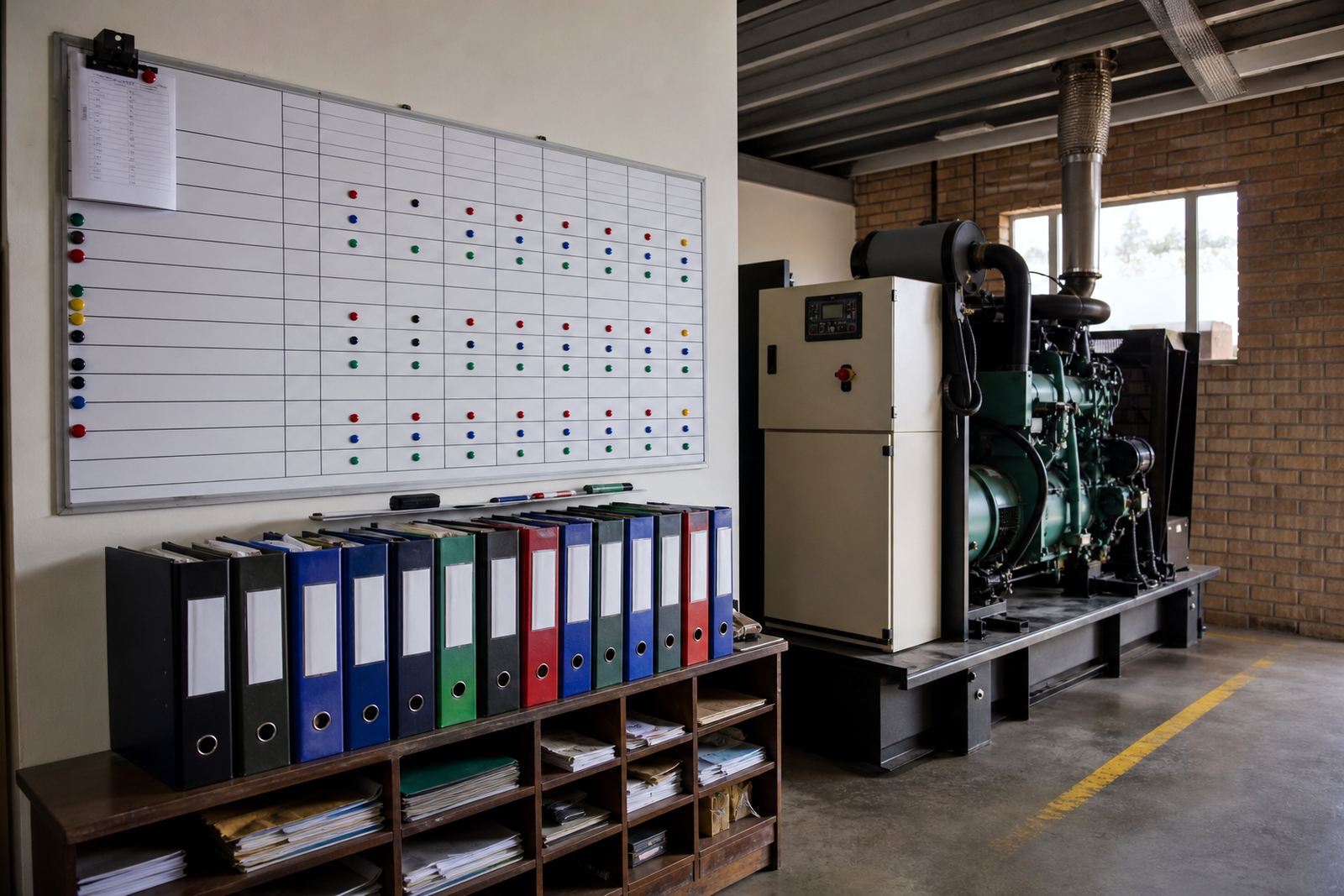
In Johannesburg and Sandton, many sites run backup sets for more hours than owners realise because of regular outages and testing. If the records do not show what happened during each start-up, shut down and test run, the service interval can quietly drift until the set becomes unreliable. That is exactly when emergency callouts start costing more than planned maintenance ever would.
A Midrand example: one site, two different schedules
A distribution site in Midrand with a standby set for security systems and a prime unit for production would not use one shared timetable. The standby unit might need preventive site inspections every month, with battery testing and changeover switch checks before the rainy season. The prime unit, because it carries a heavier working load, would need tighter oil and filter changes and more frequent fault finding if readings shift.
That split schedule protects both uptime and budget. The security generator is ready when the utility supply fails, while the production unit gets service before wear turns into an unplanned stop. It also keeps the maintenance history clearer, which helps when managers need to justify spare parts, labour and downtime planning.
How RelGen structures service timing for contracts
RelGen builds maintenance contracts around the way a site actually operates. Johan Matlala and the service contracts team align planned visits with site access, business hours and outage exposure, while Ayanda Khoza coordinates field attendance so the right technician arrives with the right parts. That matters when a set is on a tight duty cycle and the window for work is narrow.
Thabo Engelbrecht oversees the overall approach from the Midrand base, with support from Naledi Shezi on operations, Muneerah Daniels on technical support, Sibusiso Wessels on generator work in the field, and Rikus Botha on stores and logistics. The point is not to over-service a machine, but to service it at the right time for the site. That keeps costs sensible and reduces the chance of a flat battery, a blocked filter or a failed start when the lights go out.
Businesses across South Africa, from Cape Town to Durban, can use the same principle: plan by use, check by condition and keep the records honest. If the site is critical, the interval should be tighter than the minimum. If the unit only works lightly, the plan can be less frequent, but never neglected.