When the panel speaks, treat it like a maintenance note
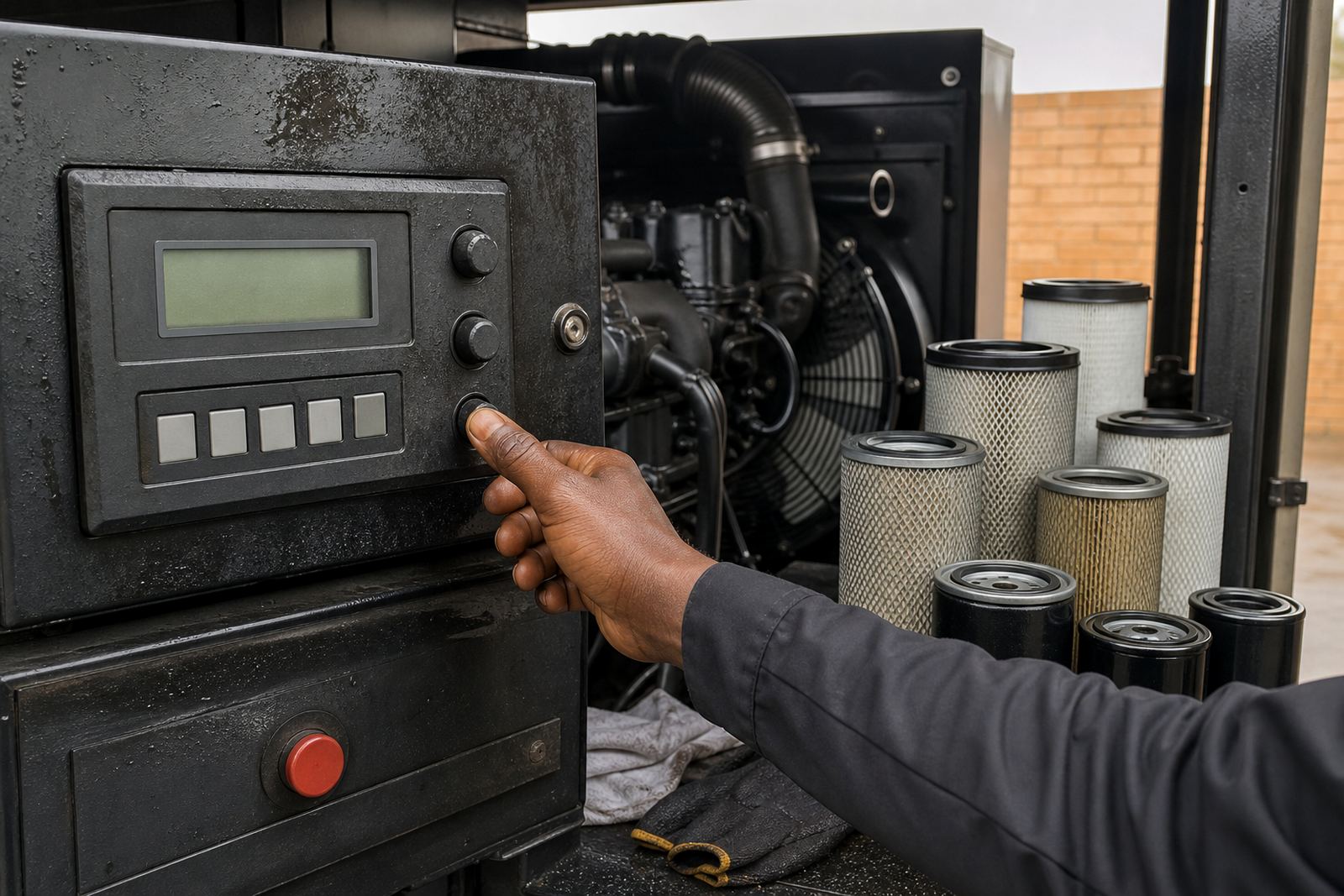
Alarm codes are there to narrow the fault, not to replace inspection. A low oil pressure message, over temperature warning, battery fault or overspeed alarm can point to very different causes, and each one needs a different check. On site we see a lot of guesswork after a trip event, especially where a set is expected to carry a building through load-shedding or a production break. Resetting the controller without finding the cause can leave a minor issue turning into a major one.
For businesses on maintenance contracts, the right step is to record the code, note the time it appeared, and link it to what the set was doing at the time. Was it starting under load, running during a long outage, or failing during changeover? That detail helps a technician separate an electrical control issue from a fuel, cooling or starting problem.
The faults that keep showing up on South African sites
Across Midrand, Sandton, Pretoria and the coastal areas, the same patterns keep returning. Dust, heat, salty air and poor housekeeping all affect generator health. A battery that looks fine in the morning may fail on a cold start in the afternoon. A blocked radiator can push temperature up during a long run. Fuel contamination can trigger rough running, smoke or repeated shutdowns. Electrical work must be handled by qualified people under local regulations, especially where changeover gear and control circuits are involved.
- Battery voltage low or charger failure
- Oil pressure alarm after start
- High coolant temperature during extended running
- Emergency stop or controller lockout
- Changeover switch not transferring correctly
- Fuel pressure or fuel delivery fault
What a proper inspection covers before the next start
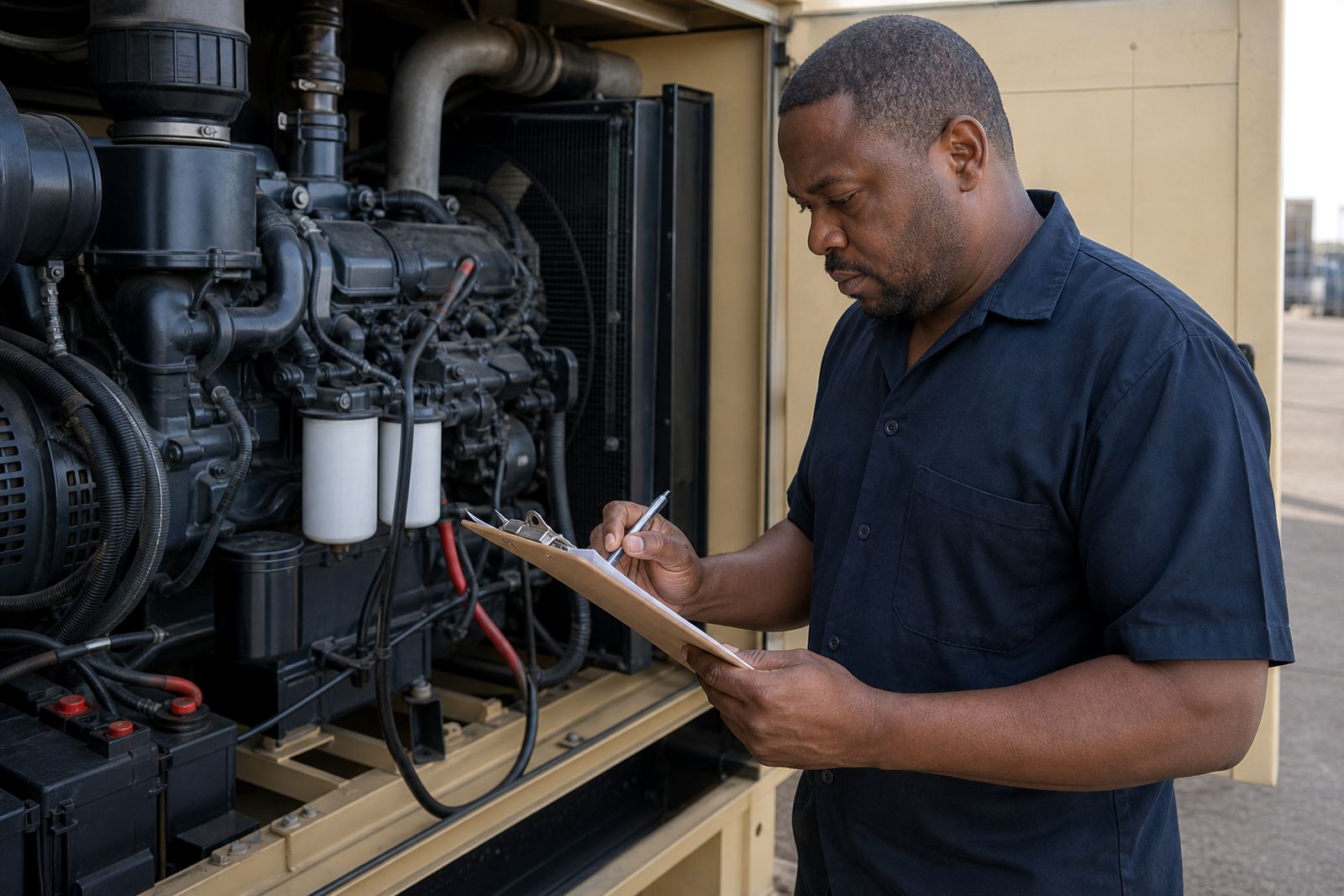
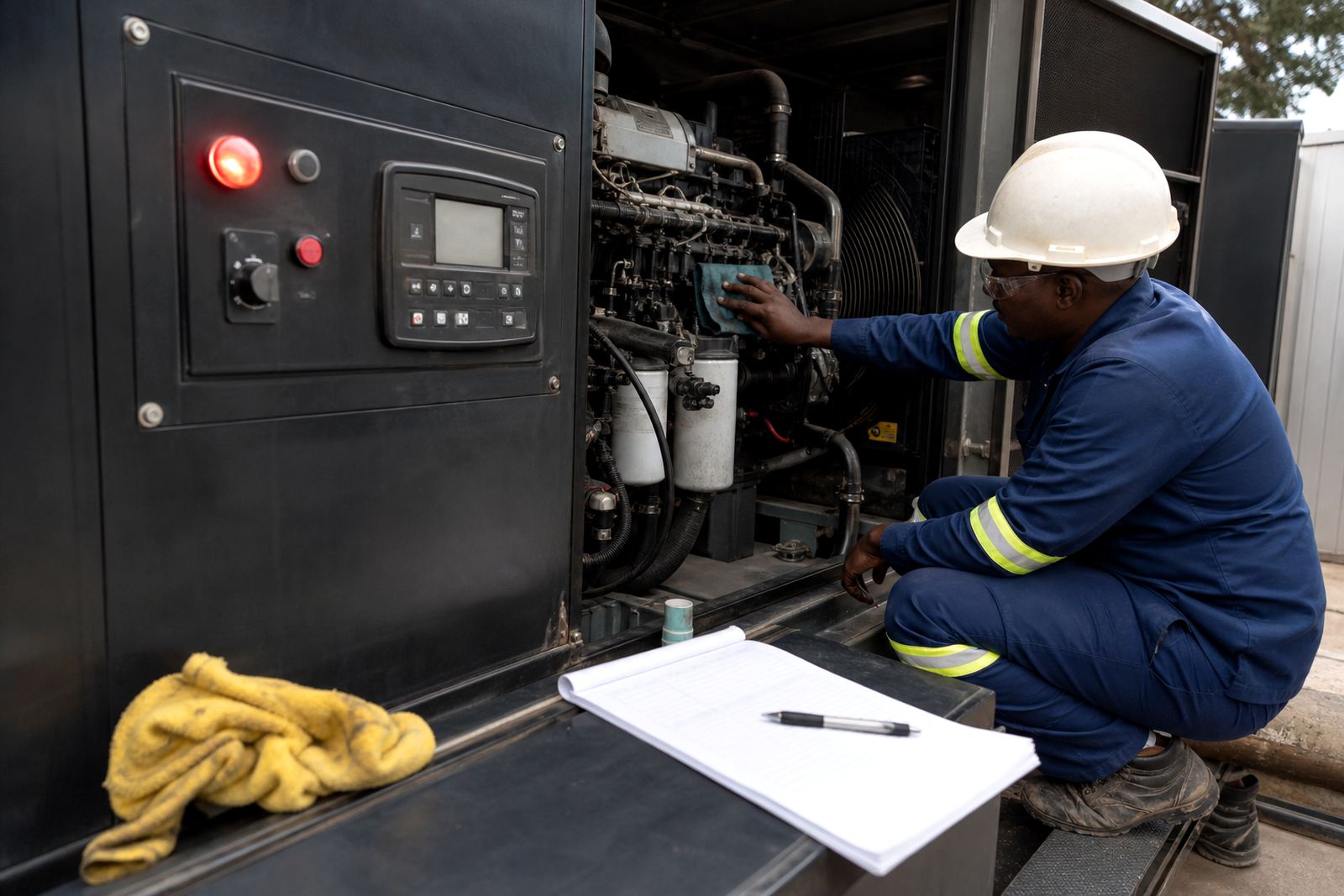
An organised inspection follows the alarm path rather than the loudest guess in the room. First comes the record of the alarm, then a visual check of the set and its surroundings. Oil level, filter condition, coolant level, battery terminals, charger output and signs of leaks all matter. After that, the technician checks the starter system, control alarms, changeover switch operation and any recent service history. If a load bank test is due, that test can show whether the set holds frequency and voltage under controlled load, which is often where hidden weakness appears.
Service records are important too. A repeated alarm is often a pattern, not an isolated event. If the same fault has appeared after three starts in two weeks, the answer may sit in worn batteries, blocked breathers, a failed sender or a neglected service item. Guessing wastes time and can leave a site without backup power when the next interruption arrives.
- Check the alarm code and time stamp
- Inspect oil, coolant and battery condition
- Review recent servicing and faults
- Test the start, transfer and running sequence
- Confirm the set under load where needed
Why changeover problems deserve fast attention
Many alarm calls are not about the engine at all but about the transfer system around it. A changeover switch can fail to transfer cleanly, can remain stuck, or can send a fault signal when the control logic sees something unsafe. In a warehouse, office block or small plant, that can leave equipment without backup supply even though the generator is technically available. In these cases, the alarm message is only the first clue, not the full diagnosis.
RelGen’s field teams in Gauteng and other provinces see this often after load-shedding cycles where equipment gets exercised too often or not often enough. Too many manual resets can hide the real issue. Too few inspections can leave a dirty contact, loose terminal or tired control battery undetected until a critical moment.
A Midrand example from a cold Monday start
A business park in Midrand called with a recurring low voltage and battery alarm after an early morning outage. The set would start, then trip before taking load. The panel had been reset a few times already. On inspection the batteries had lost capacity, the terminals were dirty, and the charger was not bringing the bank up properly after overnight standby. There was also evidence of an overdue service, with filters and coolant due for attention. The site had been running on hope, not maintenance.
Once the battery issue was corrected, the service items were done and the start sequence tested again, the set held steady. It was not a dramatic repair, just the sort of practical work that keeps a standby unit ready. That is the point: alarm codes tell you where to look, but the fix still depends on proper inspection and follow-through.
How maintenance contracts reduce the panic
A good maintenance contract gives alarm handling a routine. Instead of waiting for a fault and then scrambling, the site has scheduled servicing, preventive inspections and service record audits. Filters are changed on time, coolant is checked for level and condition, batteries are tested before they fail, and the fuel system is cleaned up before contamination becomes a shutdown. For prime power sites, this also helps with running hours, wear rates and the cost of avoidable callouts.
Our team in Midrand supports standby and prime generators for businesses across Johannesburg, Pretoria, Durban, Cape Town and Polokwane. That includes emergency callouts, scheduled servicing, load bank testing, starter system repairs and fault finding, with records kept so the next alarm is not a mystery. When the message on the panel is treated early, the rest of the system has a better chance of staying predictable.
What to do before you press reset
Before anyone clears an alarm, make sure the site note is captured and the set is safe to inspect. That means checking whether the generator is actually stopped, whether there is a smell of fuel or overheating, and whether a qualified person needs to attend the panel or changeover gear. A reset without diagnosis can hide the cause for a while, but it rarely removes it. The next outage usually finds the weakness again, often at the worst time.
If the alarm appears more than once, or if there is any doubt about the cause, arrange a proper inspection rather than another quick restart. That small delay is often cheaper than a spoiled product run, lost production hour or damaged battery bank.
- Write down the exact alarm code
- Note the time and running condition
- Keep unauthorised hands away from live equipment
- Call in qualified generator service support
- Log the fault so the next visit has a clear trail