When the metre climbs, the service list gets shorter and sharper
A low hour standby set can sometimes wait for its next scheduled visit with only light attention. A high hour generator cannot afford that kind of breathing room. Once a machine is carrying regular load, the service plan has to focus on the parts that age fastest under heat, vibration and dust: oil, air and fuel filtration, belts, hoses, batteries and the control system.
For businesses in Gauteng, especially around Midrand, Sandton and Centurion, the work environment adds another layer. Dust from construction sites, roadworks and warehouses gets into filters. Coastal humidity in Durban and Cape Town can push up corrosion on terminals and enclosures. On busy industrial sites, even a clean plant can have repeated starts and stops that wear out components faster than people expect.
That is why high hour servicing is not just about ticking off tasks. It is about reading the pattern of use and treating the generator like a working asset, not an emergency backup that only gets attention after a failure.
Oil changes are the first warning bell, not the only one
Engine oil does more than lubricate. It carries heat, suspends fine debris and gives a clear picture of engine condition. On high hour units, oil condition can change quickly, especially where the generator runs for long periods during load shedding, planned production support or remote site work. If the oil breaks down, the engine runs hotter and wear increases across bearings, pistons and cylinder surfaces.
A proper oil service on a high hour set should include:
- Drain and replace oil at the correct interval for the duty cycle
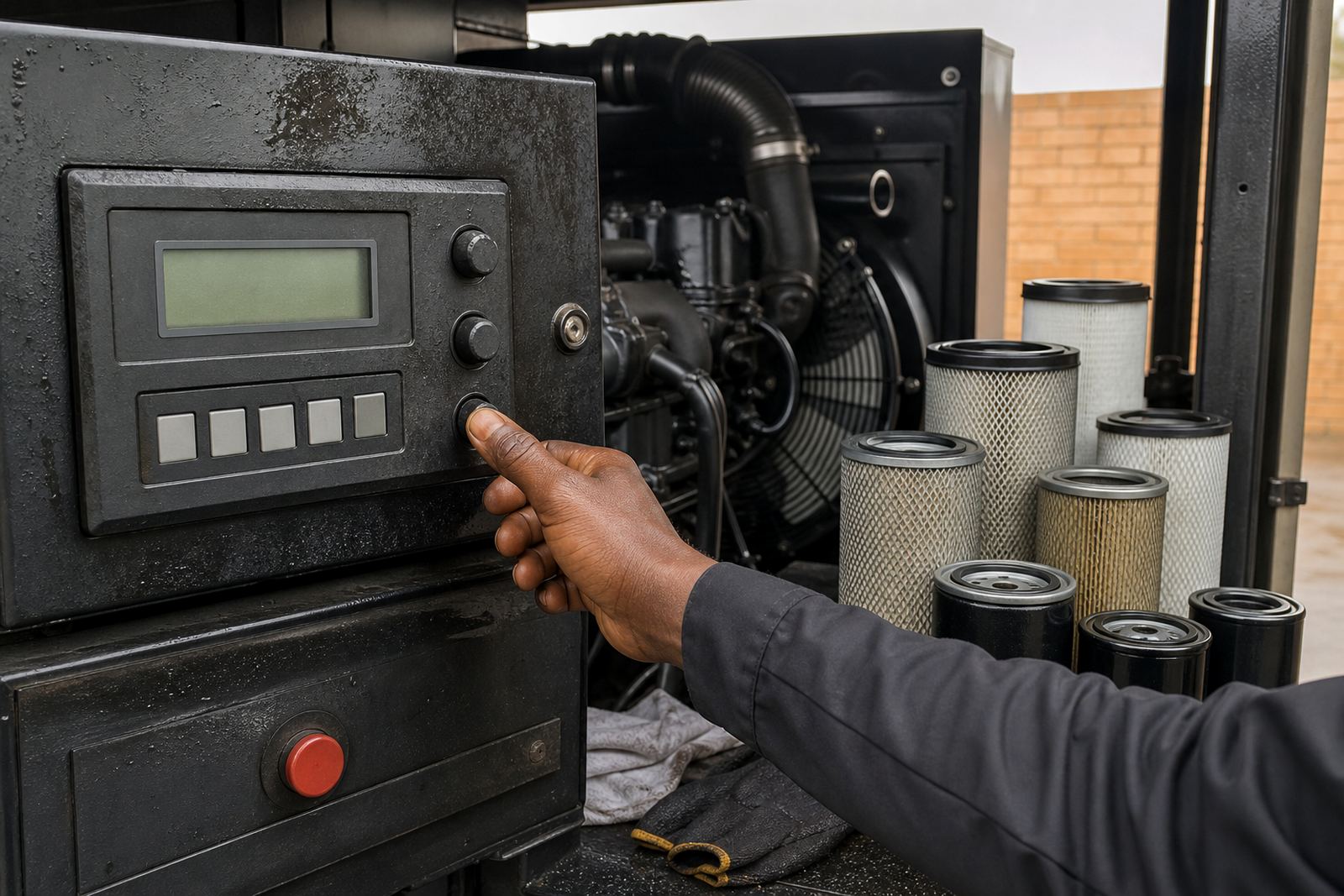
- Replace oil and fuel filters together, not on different schedules unless the service plan allows it
- Check for leaks around sump, filter heads and gaskets
- Inspect the breather system for blockage
- Review oil pressure readings and warning history
It is also worth checking the service log itself. If a unit in Pretoria has had three unscheduled top-ups in two months, that tells a different story from a machine that uses very little oil between services. The log should guide the next visit, not just the calendar.
Coolant, hoses and heat soak are where long runtimes bite hardest
Long operating hours put the cooling system under pressure. When the engine runs for extended periods, coolant has to do more than circulate. It has to carry heat away steadily, protect internal surfaces and cope with temperature swings after shutdown. On a generator that is pushed hard, even small weaknesses in hoses, clamps, radiator caps or coolant quality can turn into overheating during the worst possible time.
High hour maintenance should look at:
- Coolant level, concentration and condition
- Hose softness, swelling or cracking
- Loose clamps and signs of seepage
- Radiator fins blocked by dust, chaff or oily residue
- Evidence of air pockets after previous topping up
Load shedding often means repeated starts in a short period, then a return to full building demand. That cycle creates heat soak, and heat soak is where tired cooling parts show their weakness. In coastal areas, corrosion around the cooling package can make things worse, so the inspection has to be practical and thorough.
Batteries and starter systems need more than a quick voltage check
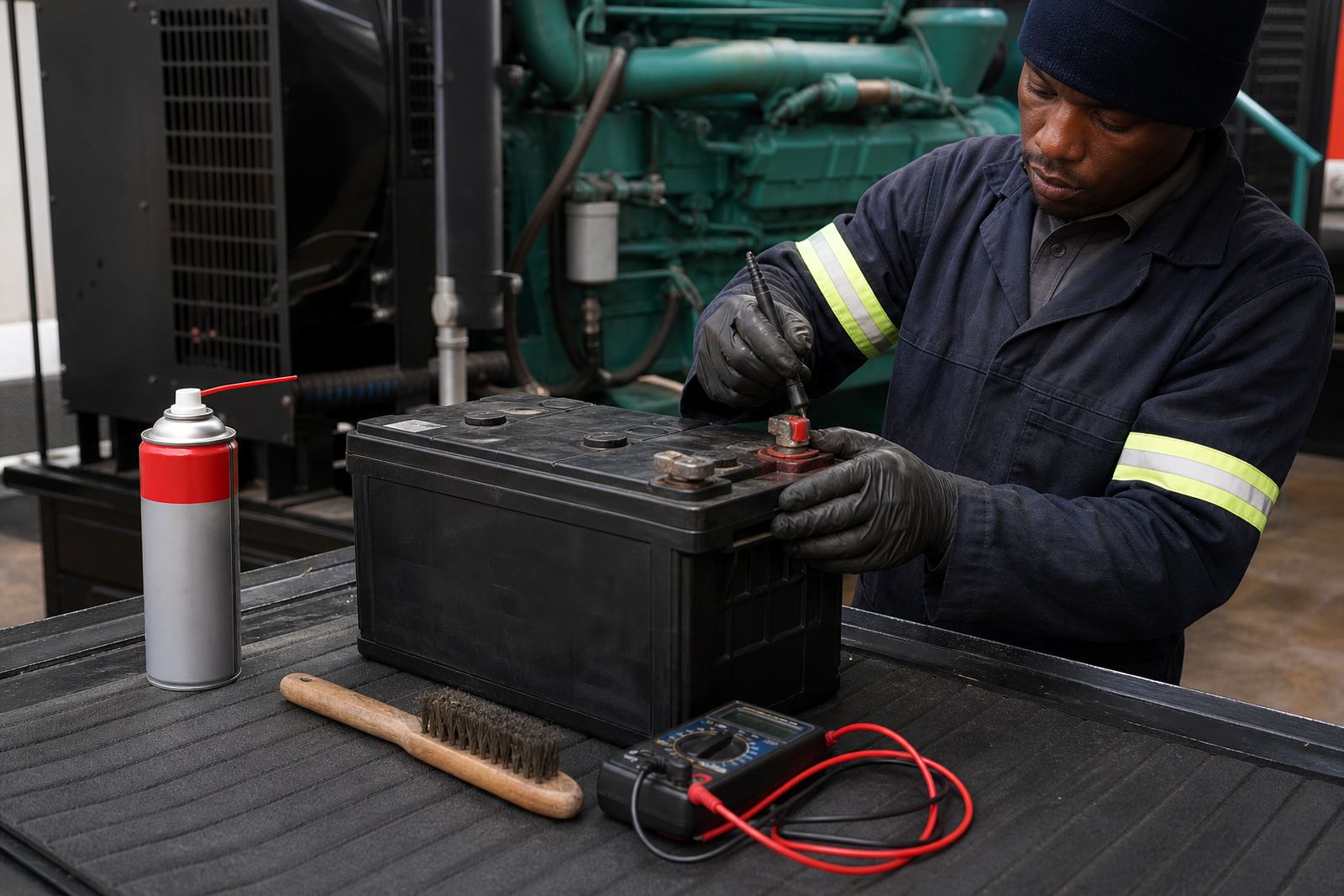
Many generator failures on high hour sites start with the battery system, not the engine itself. A set can be mechanically sound and still fail to start because the batteries are weak, the terminals are dirty or the starter circuit has high resistance. If the unit is being called on often, the charging system and batteries must be checked as part of every serious service visit.
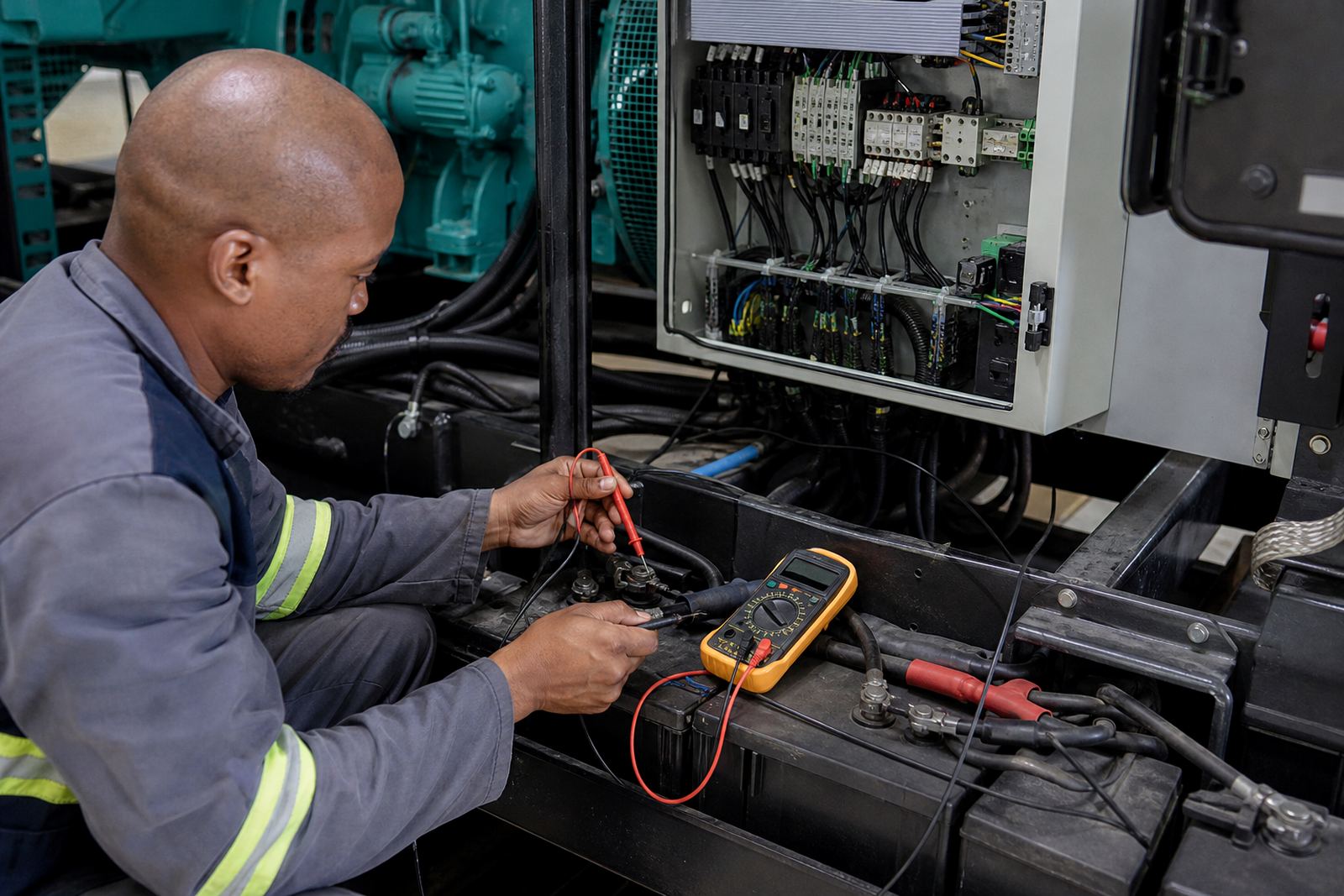
Battery testing should include load testing where possible, terminal cleaning, electrolyte condition on serviceable batteries and inspection of the charger output. Starter motors, solenoids and cabling also deserve attention. Loose earth connections, frayed cables and heat-damaged terminals are common on older equipment and should not be left to chance.
For sites in Johannesburg and Polokwane, where power interruptions may happen without much warning, a battery that only looks fine on a metre can still fail under actual starting load. That is why practical testing matters. A reading on its own does not tell the whole story.
Load bank testing shows whether the set can still carry its own weight
A generator that only idles or runs light loads can look healthy while hidden issues build up inside the engine. Load bank testing gives a clearer picture. It forces the set to work at a controlled load so temperature, exhaust, voltage behaviour and response can be checked properly. For high hour units, this is one of the best ways to expose problems before they appear on site.
During load bank testing, technicians look for:
- Stable frequency and voltage under stepped load
- Exhaust smoke patterns and unusual vibration
- Cooling performance over an extended run
- Signs of fuel starvation or governor instability
- Alarms that only appear when the unit is working hard
This is especially useful for standby generators that are expected to wake up after weeks of quiet time and immediately take over a building. It also matters for prime power sets on sites where the generator is part of the daily production rhythm. If the machine cannot hold load during a controlled test, it is not ready for a real interruption.
Switchgear and changeover checks are part of the same picture
People often talk about the engine and forget the switching gear that lets the power move safely between supply sources. On high hour sites, changeover switches, control wiring and panel contacts need inspection as part of the service plan. Electrical work must be handled by qualified people under local regulations, and that is not a box-ticking matter. It is how the site stays compliant and safe.
A good service visit should include checking the changeover sequence, confirming the interlocks work, reviewing warning lights and alarms, and looking for heat marks or loose terminations in the control panel. Fault finding often starts here when a generator refuses to start, transfer or return to normal supply.
At a busy commercial site in Midrand, a weak switch contact can cause nuisance trips that look like engine trouble at first glance. Careful inspection saves time and prevents repeated callouts.
A Midrand maintenance plan for machines that never get much rest
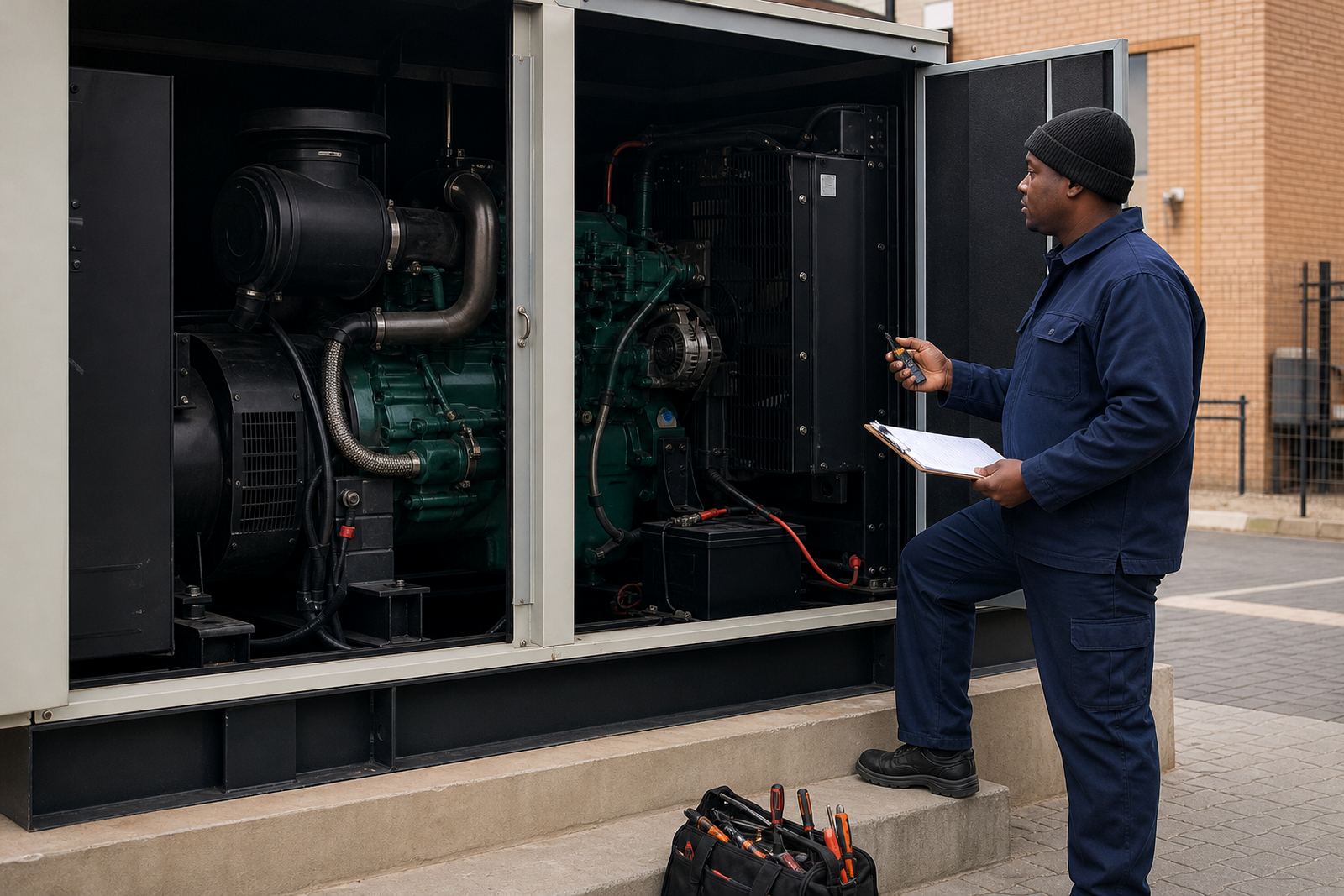
High hour servicing works best when it is scheduled around real site demand. A warehouse, cold room, manufacturing plant or office block does not all need the same visit pattern. Some sites need monthly checks, others need more frequent inspections depending on runtime, dust, operating temperature and the quality of fuel handling on site. Service records should be reviewed every time so trends do not get missed.
A practical maintenance contract for a hard-working generator usually includes:
- Scheduled servicing based on running hours and calendar time
- Emergency callouts when faults appear after long use
- Preventive site inspections before peak demand periods
- Service record audits to spot missed work or repeated faults
- Fuel system repairs, starter system repairs and control checks where needed
RelGen works from Midrand across Johannesburg, Pretoria, Durban, Cape Town, Polokwane and surrounding areas including Centurion and Sandton. For businesses dealing with heavy runtime, the main goal is plain enough: keep the machine ready, keep the site safe and keep surprise downtime out of the week. That takes steady attention, not last-minute panic.