The paper trail that keeps a generator honest
A standby or prime generator can look healthy while a fault is building slowly inside the unit. Good records make those warning signs easier to spot because every oil change, filter replacement, coolant top up, battery test and inspection is written down in one place.
That history matters when a set is under pressure during load shedding, seasonal storms, high humidity on the coast or heavy use at a factory in Gauteng. If the last service was delayed or a warning note was missed, the next breakdown is often no surprise to the technician but a costly one for the business.
What a proper service record should show
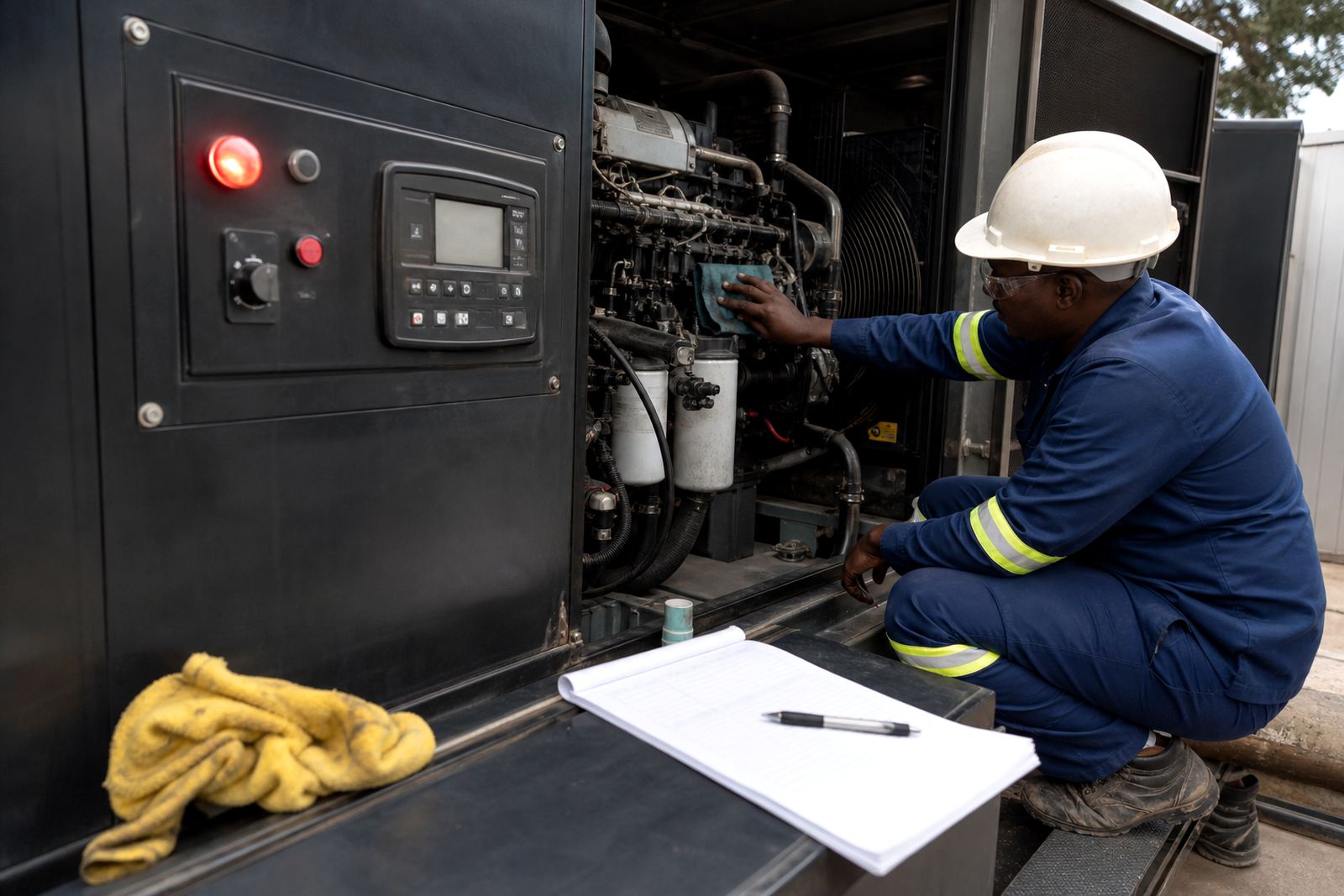
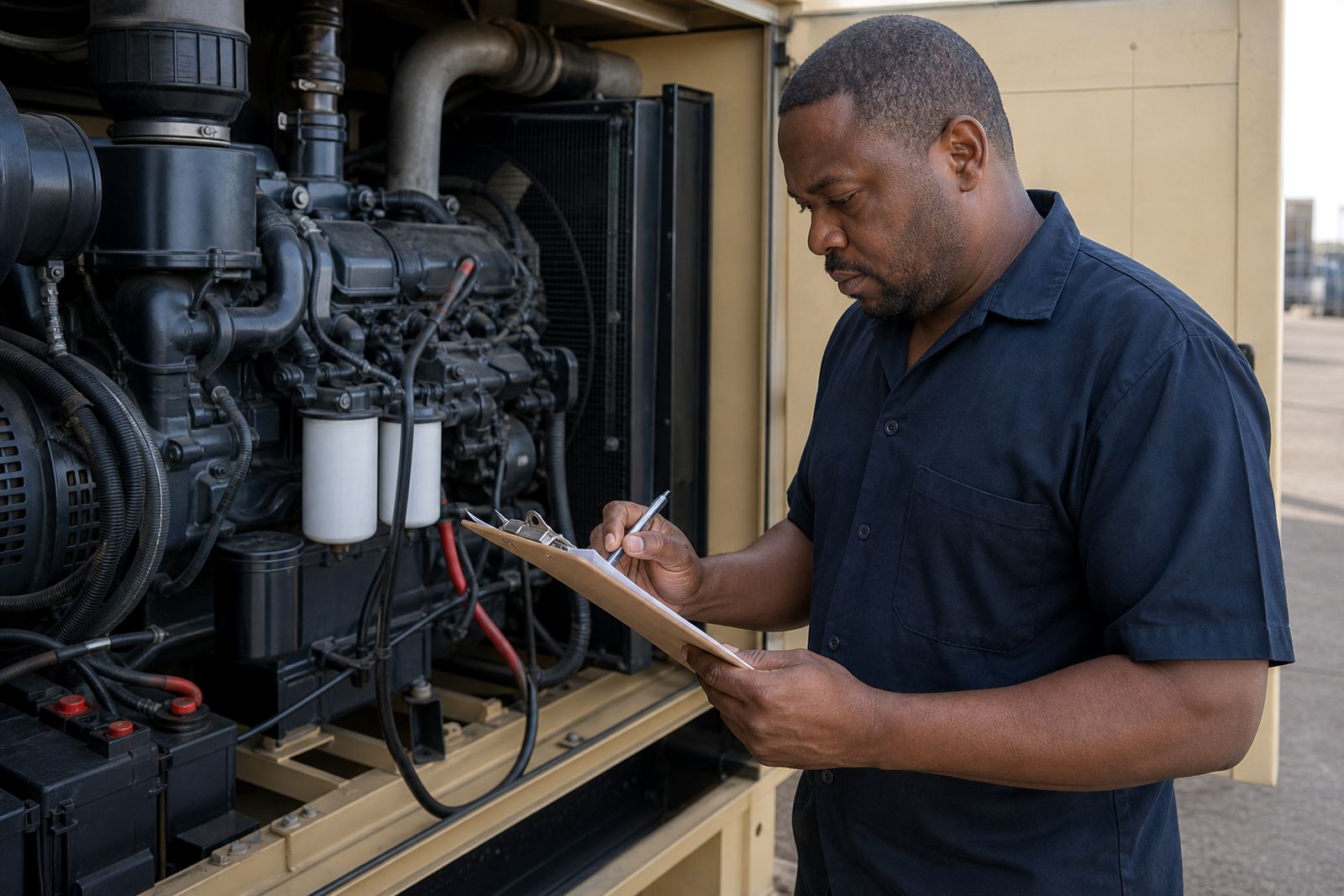
A logbook does not need fancy language, but it does need detail. It should show the date, running hours, location, the person who carried out the work and the parts or fluids used. If a changeover switch was checked, the note should say so. If a fault was found in the starter system, that must be captured too.
- Date and running hours at the time of service
- Oil and filter changes completed
- Coolant level, condition and leak checks
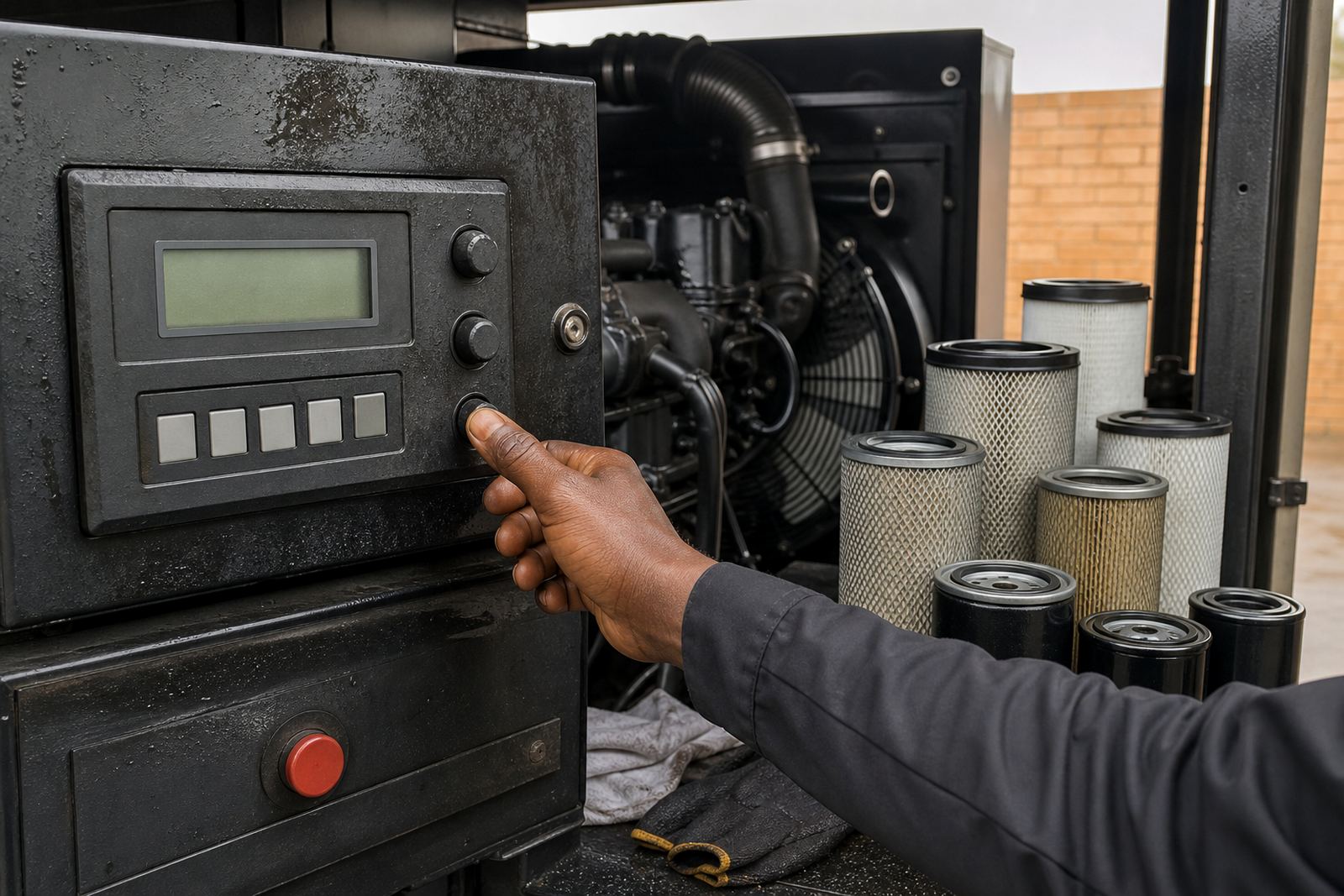
- Battery test results and any weak cells found
- Load bank test readings and observations
- Changeover switch checks and alarms tested
- Fuel system or starter repairs noted clearly
Why missing notes become expensive later
When a business cannot see the service history, it is harder to plan the next visit properly. Filters may be changed too late, coolant issues may be repeated and batteries can be replaced before their time or kept in service long after they should have been retired. That is money lost either way.
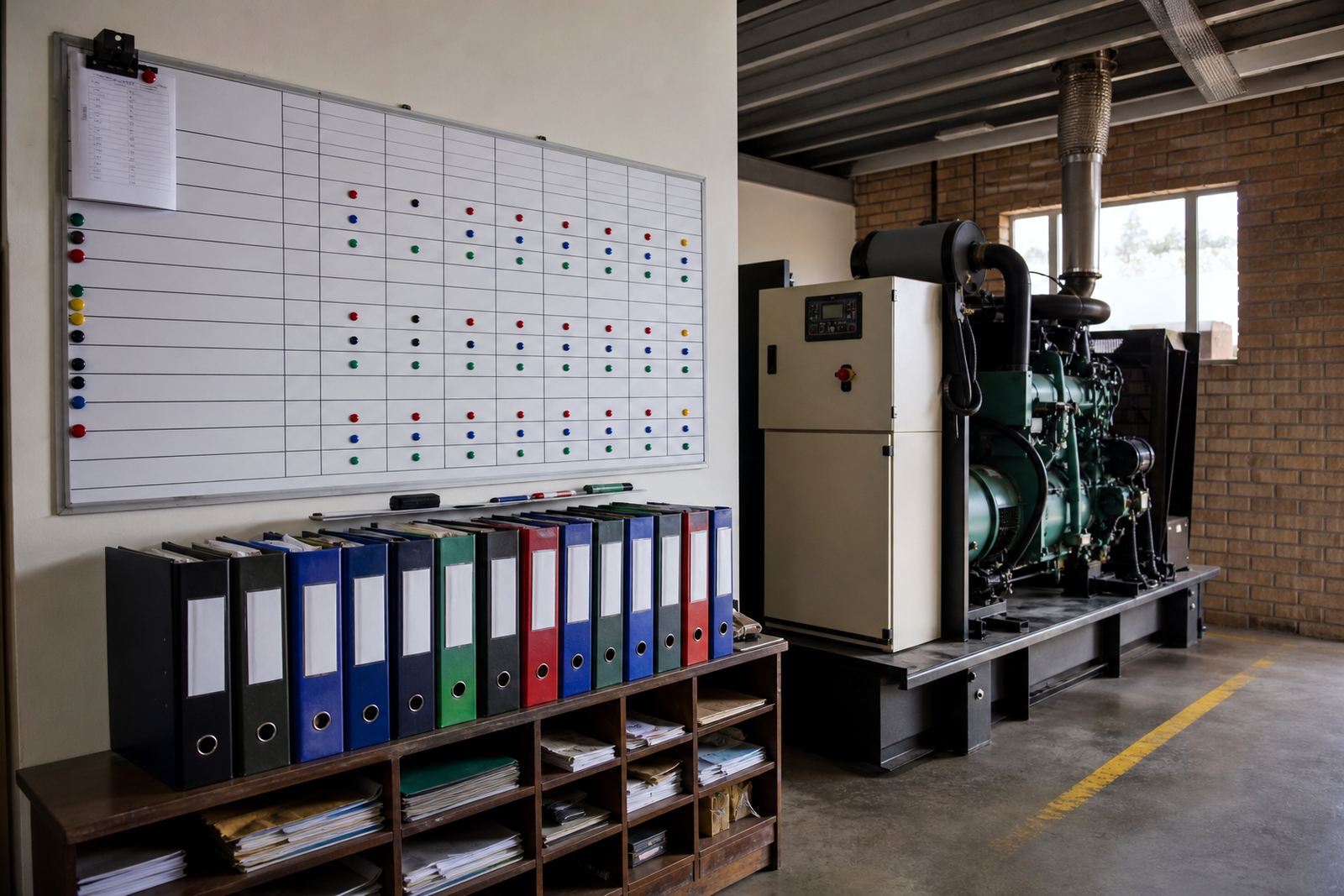
Detailed records also help when a unit is moved between sites or handled by more than one supervisor. A plant in Midrand may have one team on weekdays and another on weekends, so the logbook becomes the shared memory of the machine. Without it, small issues get repeated and nobody can say where the real fault started.
A Midrand example that makes the point
Take a distribution warehouse in Midrand that runs a generator on a maintenance contract. The unit starts fine during a short outage, so everyone assumes all is well. But the logbook shows the battery test was already borderline, the coolant level had dropped twice in six weeks and the last load bank test was due. That is enough information to schedule work before a night outage leaves the site in the dark.
Once the records are in order, the service team can match the maintenance to the actual usage pattern. A business with long weekly runs will need different attention from a smaller site that only sees emergency start ups a few times a month.
What a service team can do with cleaner records
A tidy logbook helps qualified technicians work faster and safer, especially where electrical work must be done under local regulations and by the correct people. It also supports better planning around municipal rules, site access times and noisy testing hours, which can matter at offices, factories and residential edge sites alike.
With accurate notes, a technician can:
- See when the next scheduled service is due
- Trace repeat faults instead of guessing
- Confirm whether a load bank test is overdue
- Check if the changeover switch has been inspected recently
- Order the right parts before the truck arrives
Turning a logbook into a maintenance tool
The best logbooks are used, not stored. After every visit, the entry should be reviewed by the site contact and matched to the maintenance schedule. If there was an emergency callout, the reason for the trip should be written down clearly so that the next inspection starts with the right questions.
For businesses in Johannesburg, Pretoria, Durban, Cape Town and Polokwane, that habit helps keep multiple sites under control. It also gives managers a clean view of service costs, downtime patterns and recurring problems, which makes contract decisions far easier to justify.
How RelGen handles generator records on contract sites
RelGen supports standby and prime generator servicing across Midrand, Centurion, Sandton and other business areas in South Africa. Our team keeps service records practical and readable, with notes that cover oil and filters, coolant system service, battery testing, load bank testing, changeover switch checks, fault finding, fuel system repairs and starter system repairs.
From a scheduled service to an emergency callout, the aim is the same: keep the record clear enough that the next visit is planned properly and nothing is left to memory alone. That is where a logbook earns its keep.
- Service record audits for missing or unclear entries
- Preventive site inspections with written findings
- Maintenance notes aligned to contract schedules
- Support for businesses operating across several sites