
Salt spray reaches further than the eye can see
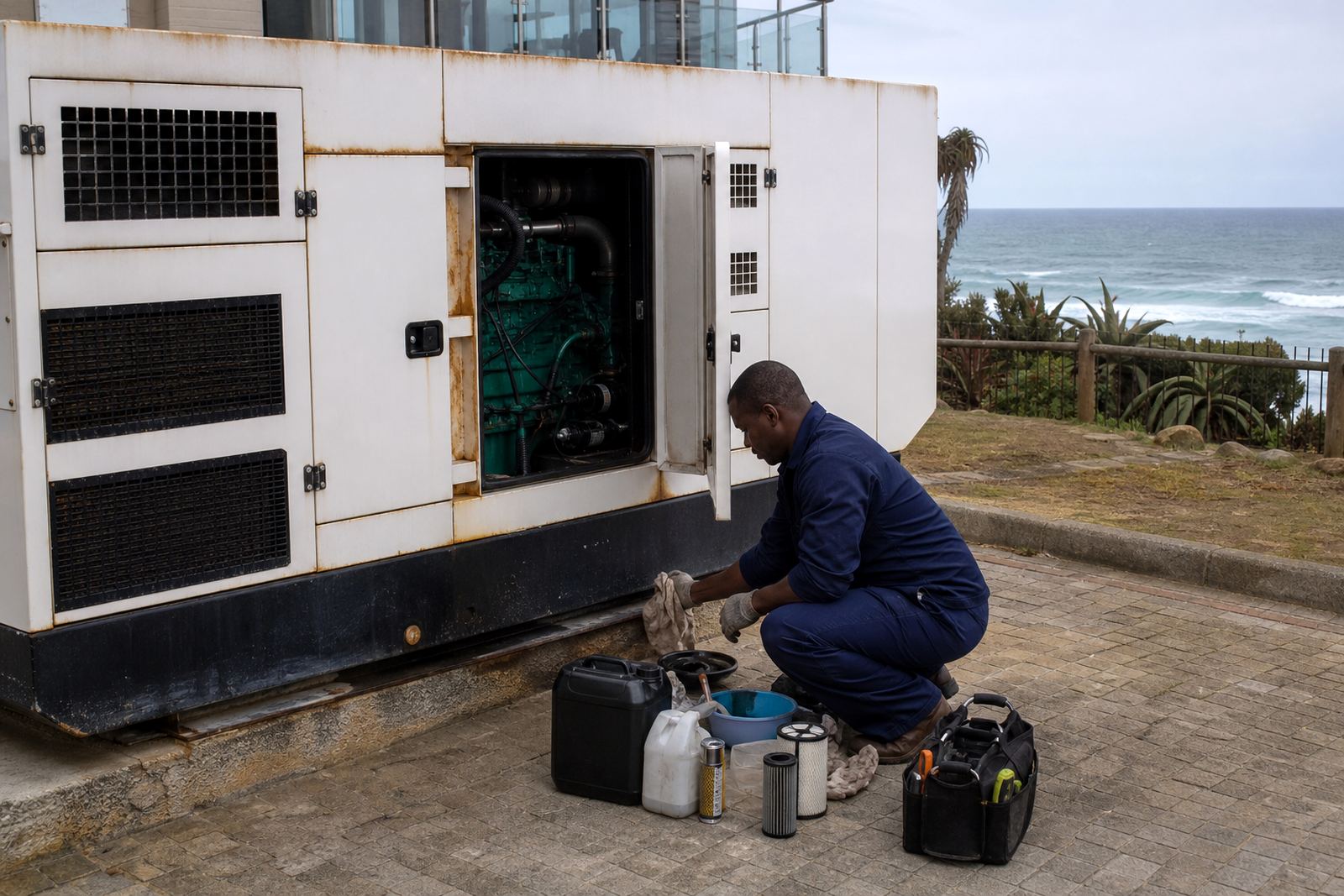
Generators installed near the coast face a different kind of wear from inland units. It is not only the cabinet that suffers. Salt-laden moisture settles on radiator fins, fixings, cable lugs, terminal blocks and battery tops, then creeps into joints and creates white oxidation, pitting and loose connections. In places such as Durban, Cape Town and parts of the Garden Route, that build-up can happen faster than many site teams expect.
The first signs are often small: a stained hose clip, a crust around the battery terminals, dulling on earth points, or a control panel that shows intermittent warnings after humid nights. If the unit sits close to sea air, open doors, vents or an exposed plinth can make things worse. A good maintenance contract should treat coastal exposure as its own condition, not just another site note.
The extra checks that matter at the coast
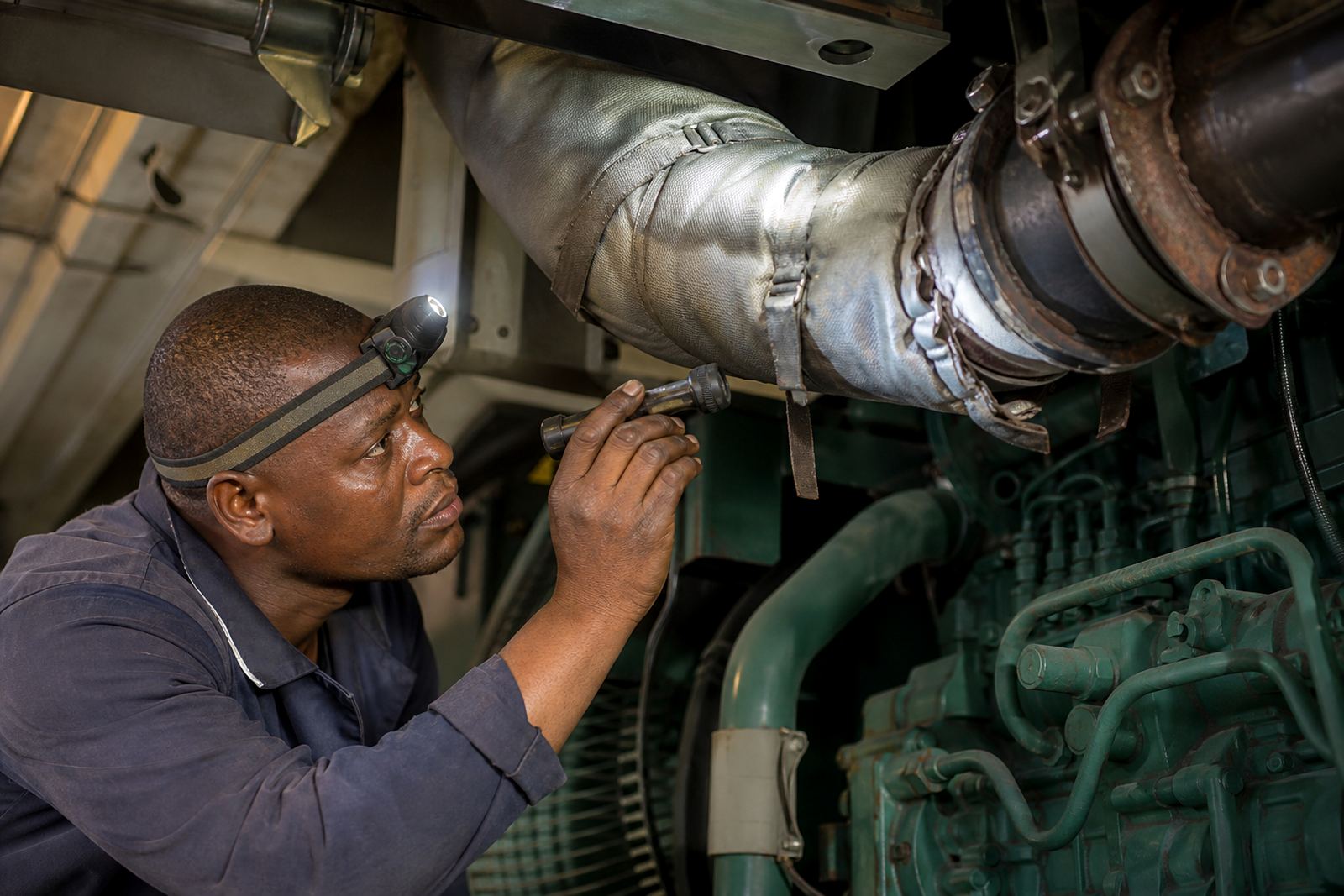
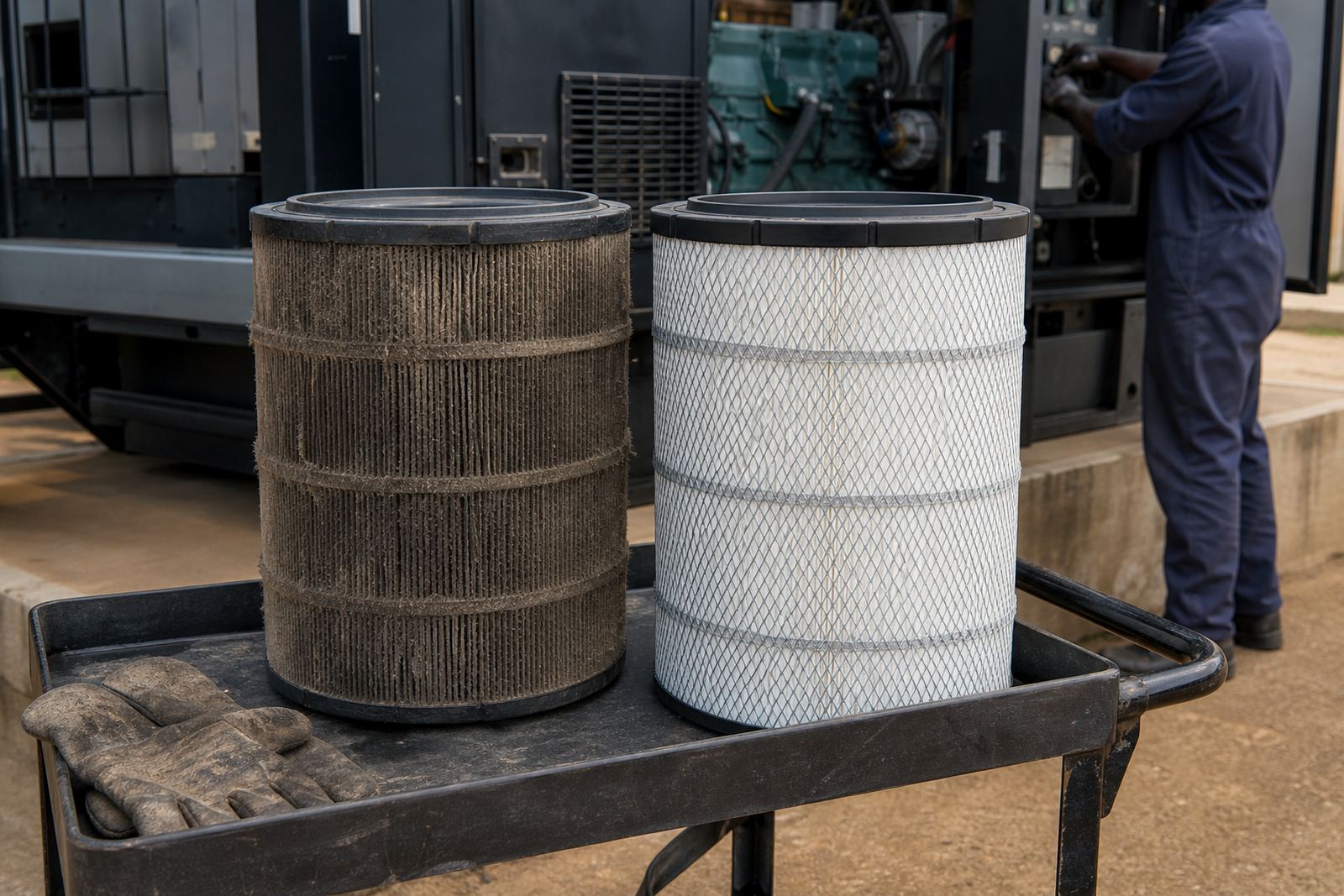
Routine servicing still starts with the basics, but coastal work needs a wider visual and mechanical inspection. Oil and filters matter, yet corrosion control is just as important because a healthy engine can still fail if the starting system, control wiring or alternator connections are compromised.
At a coastal site, the service list usually needs a few extra points.
- Inspect battery terminals for green or white deposits and test clamp tightness
- Check coolant hoses, clamps and caps for rust staining or salt crust
- Look for corrosion on cable lugs, bus connections and earthing points
- Confirm the changeover switch and control contacts are clean and dry
- Review enclosure seals, louvers and drain paths for salt entry or water pooling
- Check radiator faces for blocked fins caused by coastal grime and insects
Where corrosion is found, the answer is not just to wipe it off and move on. The cause has to be traced. A loose gland, missing seal or damaged gasket lets in moisture and salt, and that is where repeat failures begin.
Battery rooms and starting gear take the first knock
Battery systems are often the first part of a coastal generator to show trouble. Humid air and salt residue can shorten the life of terminals, trays and links, especially where cleaning has been irregular. Even a slight film on the battery top can encourage tracking between terminals. That is why battery testing should include physical condition, voltage checks and inspection of the whole starting circuit, not just the batteries themselves.
Starter motors, relays and solenoids also need attention. If corrosion increases resistance in the starting circuit, the engine may crank slowly or fail to start under load. On a standby set, that delay can be costly. On a prime set used daily, repeated hard starts can compound the wear. Electrical work must always be handled by qualified people under the relevant local regulations, because a tidy-looking connection is not always a safe one.
- Replace damaged battery leads and heat-shrunk repairs that have gone brittle
- Clean and protect terminals with proper corrosion control compounds
- Check charge rate and alternator output after damp periods
- Inspect battery trays and brackets for rust under the coating
Coolant and fuel systems need the same hard look
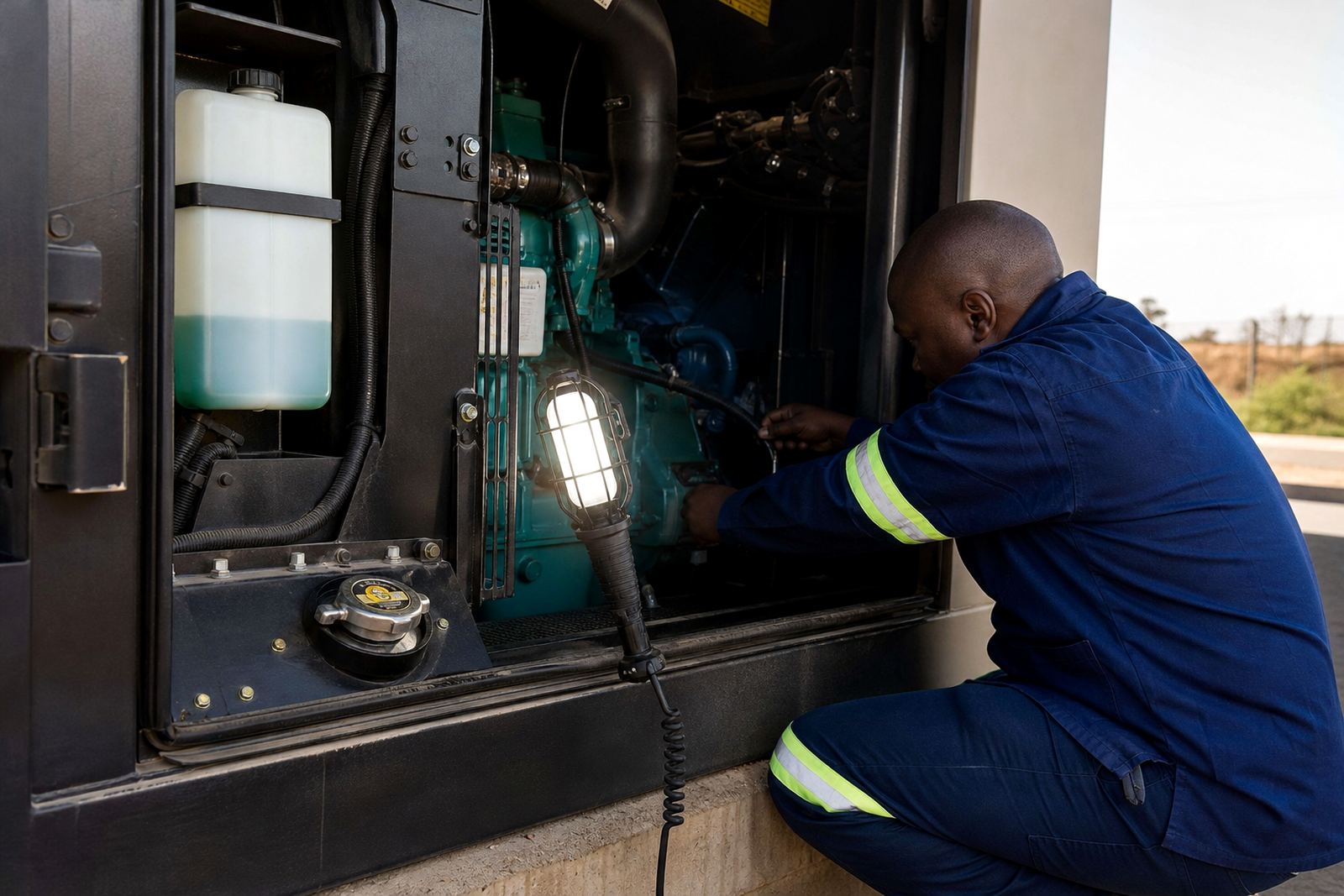
Coastal air does not only attack metal. It also makes maintenance gaps show up faster in cooling and fuel systems. Coolant service should include inspection of clamps, radiator condition, thermostat housings and the filler cap seal. If a cap does not hold pressure, the engine may run hotter than expected during a hot coastal afternoon or when a site generator is carrying a heavy block load.
Fuel system repairs are just as important. Corrosion around tank fittings, breather caps and pipe unions can let moisture into the system. That moisture can cause poor combustion, rough running or filter blockage. We often find that a set can look fine from the outside, yet a small leak or badly seated fitting has already let in enough moisture to cause grief. A quick fuel check is not enough when a site sits in damp sea air.
Load bank testing is useful here too. It helps confirm that the generator will carry its expected load cleanly, with stable temperatures and no hidden weakness in the cooling or fuel delivery systems. It is best done on a planned schedule, not after a breakdown.
Changeover gear must stay dry, clean and legal
Changeover switches and associated control gear deserve special attention on coastal sites because corrosion can affect both safety and reliability. Contacts that look serviceable may still have a thin layer of oxidation that causes heat build-up or inconsistent transfer. Where a unit has been exposed to sea mist, the enclosure should be checked for moisture ingress, rust on hinges and seals that have started to fail.
It is also worth checking the surroundings. A switchboard installed near an open sea-facing wall, a wash bay or a poorly ventilated plant room is more exposed than one tucked away under cover. Preventive site inspections should include the cabinet face, internal condition, gasket integrity and signs of damp around cable entries. Any repairs to switchgear or electrical controls must be handled by qualified people under local regulations and site safety rules.
On a busy industrial site in Cape Town harbour-side conditions, for example, a contractor may find that a transfer switch needs cleaning and minor re-termination far earlier than an inland site would. That is not unusual. It simply reflects the environment.
Midrand planning for coastal contracts across the country
From our Midrand base, we support maintenance contracts for standby and prime generators across Johannesburg, Pretoria, Durban, Cape Town and Polokwane, with service planning shaped around local conditions. A coastal site in Durban or Cape Town will usually need more frequent inspection of external metalwork, batteries, seals and cable terminations than a dry inland site. The service record should reflect that difference so the next visit is targeted, not guesswork.
RelGen’s scheduled servicing, fault finding and service record audits are built for this kind of detail. The point is not to add paperwork for its own sake. It is to keep a clear record of what was found, what was cleaned, what was tightened and what needs watching before the next storm season or heatwave.
- Record corrosion points with photos and exact component locations
- Track repeat faults on the same terminals, glands or brackets
- Match service intervals to sea exposure, not just running hours
- Plan preventive site inspections before the wet, windy months
When the warning signs are small, act early
The biggest mistake on coastal plant is waiting until corrosion becomes obvious. By then, the damage may have spread from one terminal to another or from a simple bracket to a control fault. If a generator shows slow starting, hot spots on terminations, erratic readings or repeated battery issues, it is worth bringing forward the inspection.
Our team, led by Thabo Engelbrecht with support from Naledi Shezi, Johan Matlala, Ayanda Khoza, Muneerah Daniels, Sibusiso Wessels and Rikus Botha, works on contracts that account for local conditions and site access needs. For coastal clients, that often means more frequent checks, tighter record keeping and a firmer eye on the parts of the set most likely to corrode first. The goal is steady running, fewer surprise callouts and fewer expensive stoppages when the weather turns foul.
On the coast, maintenance is not just about keeping the engine alive. It is about keeping every small connection honest, dry and ready.