Dust gets in faster than most sites expect
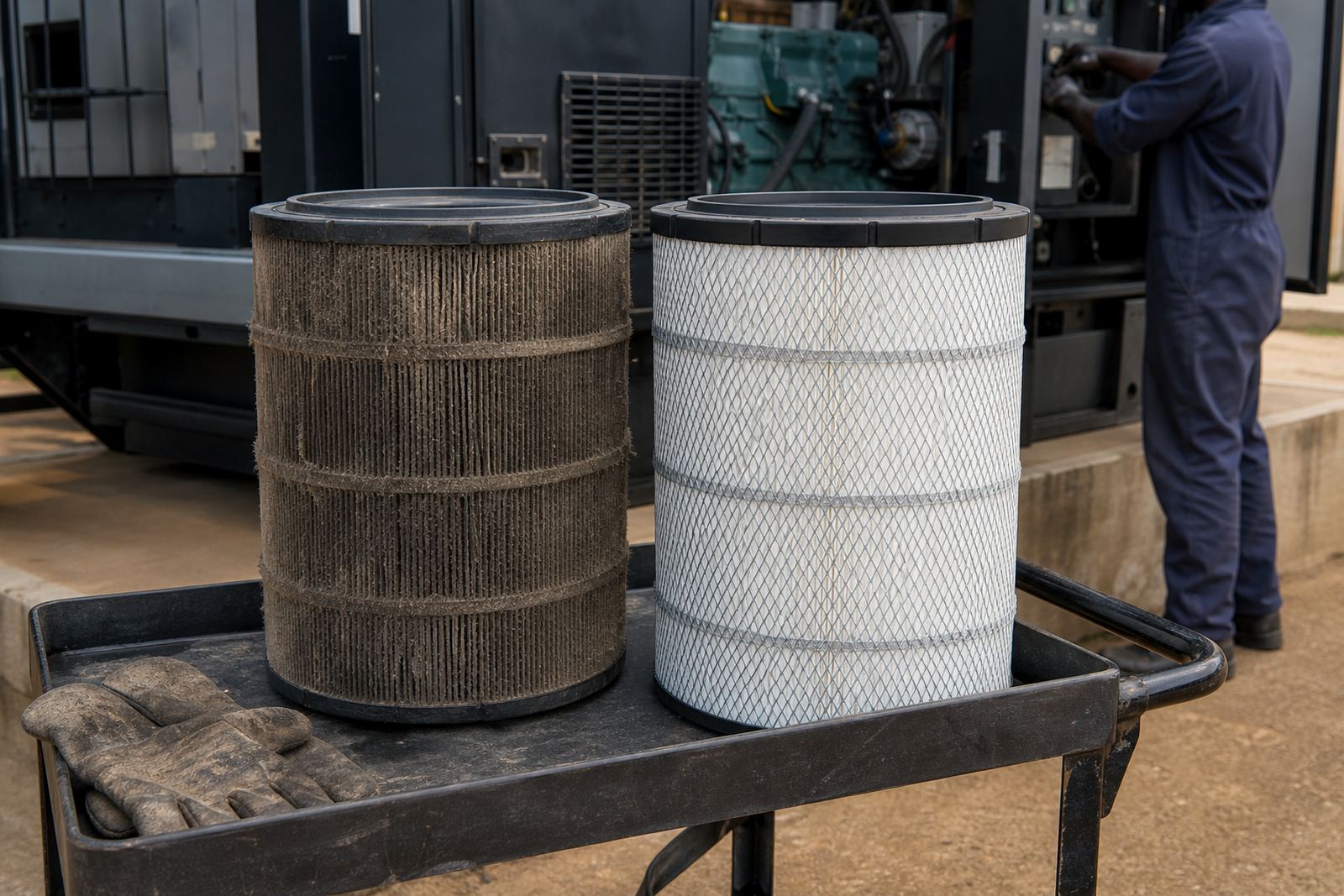
Air filters are often overlooked until a unit starts smoking, pulls harder on fuel or struggles under load. On construction sites in Midrand, roadworks in Centurion, and yards along the N1 or N3, fine dust moves into the intake area quickly. Once a filter starts loading up, the engine has to work harder to breathe. That affects combustion, starting, and in some cases temperature as well.
Generators on standby do not escape this problem either. A machine that sits for weeks in a plant room can still collect dust from traffic, packaging, ceiling works or nearby grinding. If the housing is not sealed properly, the element can soil up long before the next scheduled service. In coastal towns like Durban and Cape Town, you may also see moisture mixed with airborne dirt, which can make the filter paper swell or break down sooner than expected.
What restriction actually does inside the set
When an air filter becomes restricted, the engine cannot draw enough clean air for the amount of fuel being injected. That imbalance shows up in a few ways. The machine may smoke more, hesitate on start-up, run warmer or lose pulling power during a test with live load. You might also hear a change in engine note, especially on older sets with mechanical governors.
Restriction does not always mean the unit stops immediately. More often it becomes a slow performance problem, which is why it gets missed. A set can still run, but it is running less efficiently and under more stress. If the issue is left too long, dirt can bypass the element or enter through damaged seals, and then you are no longer talking about a filter change only. You are looking at wear inside the intake path and the engine itself.
- Higher fuel use for the same output
- Black smoke or uneven running under load
- Hard starting after long standby periods
- More heat around the engine bay
- Shorter service life of internal engine parts
How we check a filter before it turns into trouble
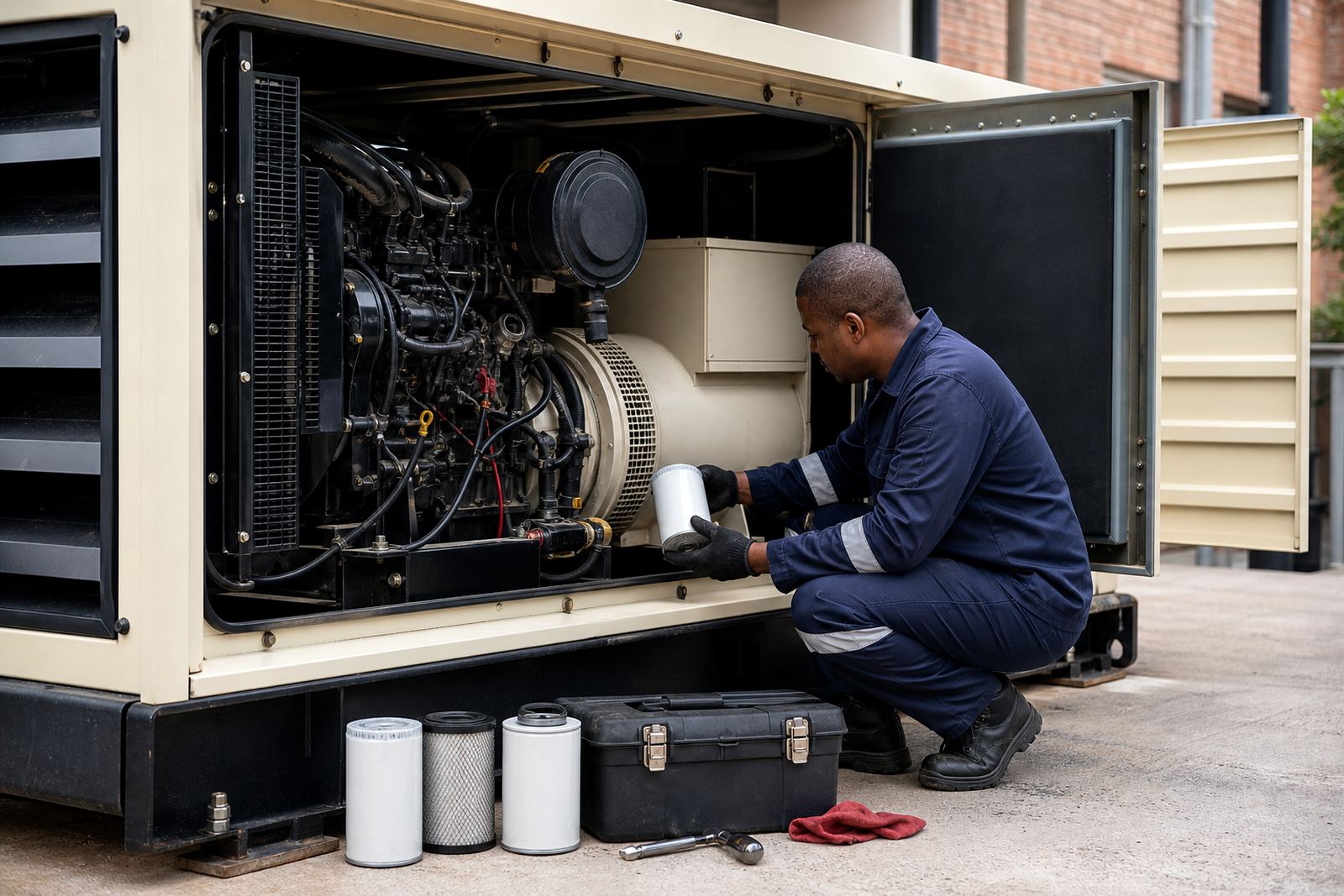
A proper inspection is not only about taking the element out and looking at it. The housing, seals, clamps and intake pipework must be checked as well. A split hose or loose clip can allow dirty air in even if the filter itself looks fair. On diesel generator servicing, we also look for oil mist, rodents nesting near the intake, blocked pre-cleaners and signs that the housing has not been closed correctly after previous work.
For maintenance contracts, the best approach is to check air filtration at every scheduled service and again after dusty site work, high wind events or building activity around the plant room. In some cases a filter may look usable on the outside yet still be too restricted inside. A service team should confirm the condition against the engine hours, the site conditions and the unit’s recent duty cycle, not only by eye.
- Inspect the filter housing and rubber seals
- Check intake hoses for cracks or loose joints
- Confirm the element is seated properly
- Look for dust tracks past the seal line
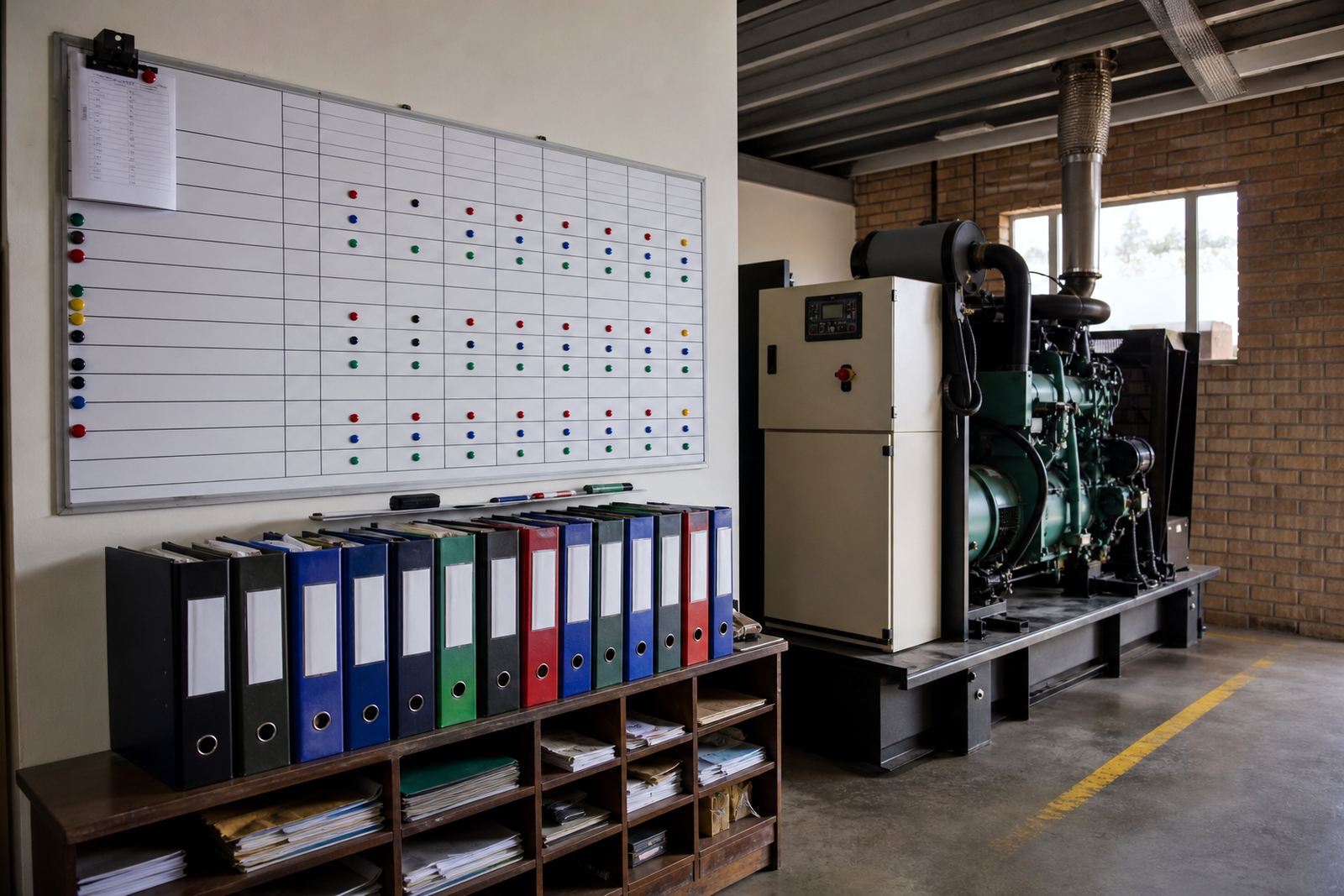
- Record the condition on the service sheet
Dusty sites ask for tighter service intervals
No fixed swap point suits every site. A unit at a warehouse in Sandton will meet a different setting from one at a plant near a quarry outside Pretoria or a site with constant earthmoving in Polokwane. That is why a service plan should match the real dust load, not only the hours on paper.
For businesses that rely on standby and prime generators, air filters should be part of a wider inspection that includes oil, filters, coolant, batteries, load bank testing and the changeover switch. Electrical work must be handled by qualified people in line with local regulations, especially when the transfer system or control gear is involved. If the intake side is neglected, the rest of the maintenance work can still be compromised because the unit is not breathing properly.
In practice, tighter intervals make sense where there is road dust, bulk handling, workshop grinding or open yard storage. Even a well kept generator room can pull in fine particles through vents and access doors. That is why preventive site inspections are useful. They catch the pattern before the unit starts showing repeated faults.
A Midrand example that repeats across the country
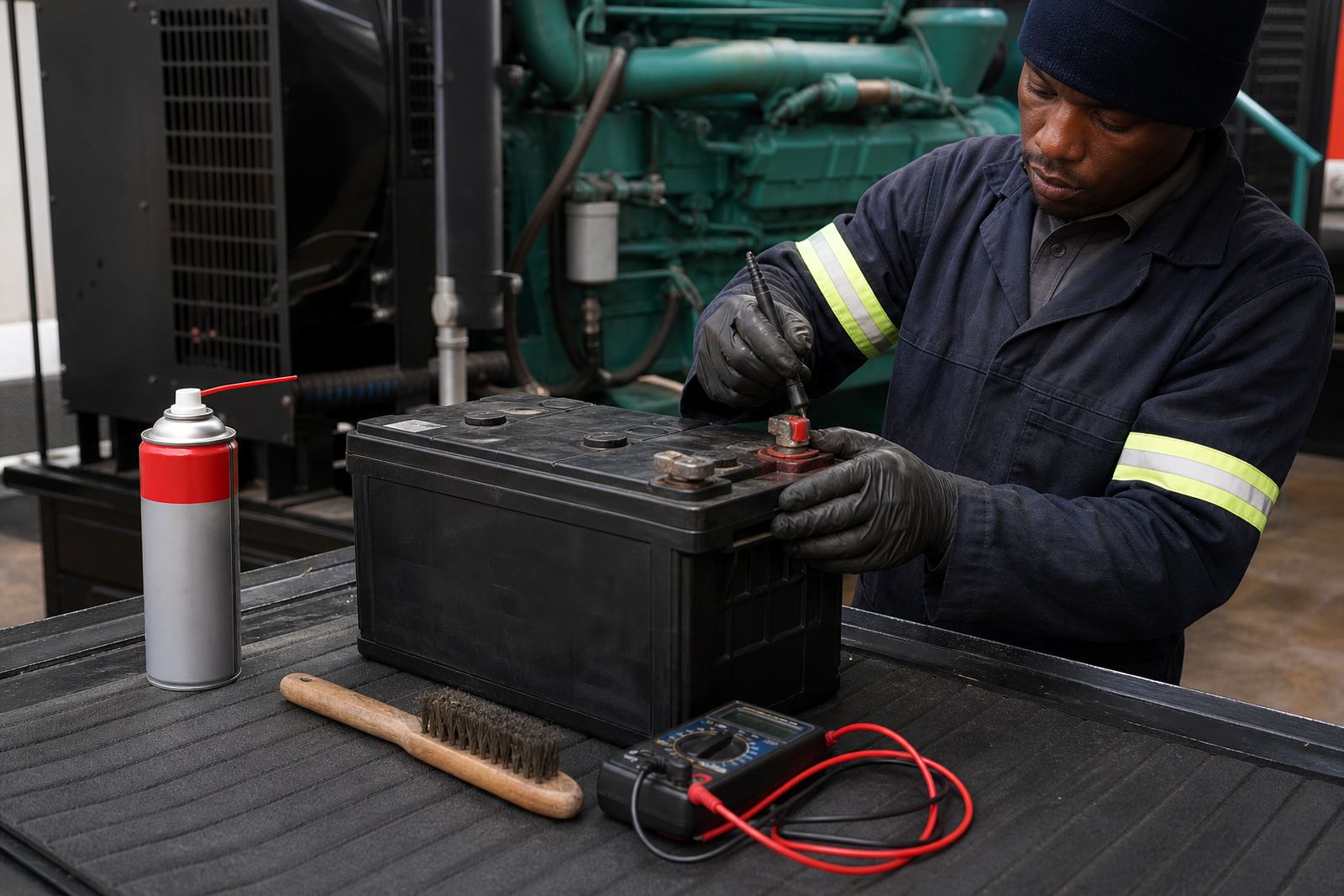
A business in Midrand with a standby set had regular start failures after weekend testing. At first the battery and starter system were blamed, but the real issue was a heavily loaded air filter and a loose intake clamp. The unit was still running, just not breathing freely. After the element was replaced and the intake checked, the engine started cleanly and the test under load settled out properly.
That same pattern is common across Johannesburg, Durban, Cape Town and Gauteng industrial areas. A site may think it has a fuel issue or a battery fault, but the symptoms often begin with simple airflow restriction. The lesson is straightforward: if the filter is left too long, the problem spreads into starting, smoke and service reliability. It costs less to replace an air filter on time than to chase repeat faults after downtime has already started.
The small part that protects the expensive parts
An air filter is a low-cost item, but it guards some of the most expensive parts of the engine. Once dirt passes the intake, wear starts quietly and does not always show up straight away. That is why service records matter. If the filter replacement dates, site conditions and fault notes are properly logged, the next technician can see whether a restriction issue is recurring or linked to a particular location or operating pattern.
For companies running maintenance contracts, this kind of record keeping helps with planning too. It shows when a unit is being pushed harder than expected and whether the site needs a different service interval. It also helps keep shutdown time short because the cause is easier to trace. In generator work, the details matter, and the air filter is one of the first details worth checking properly.
Keeping the intake side honest
If your generator is on a dusty site, or if it starts showing smoke, poor pick-up or repeated filter warnings, the air intake system needs attention before the next outage. Scheduled servicing, service record audits and preventive inspections all help keep the unit in good condition without waiting for a failure. The aim is not to over service the machine, but to keep clean air moving through it so it can do the job when the load comes on.