Why a few litres of coolant matter more than most people think
In a generator room, coolant is easy to ignore because the set may run perfectly for weeks or months. Then load shedding, a municipal outage or a site failure forces the engine to start hard and carry load for hours, and weak coolant shows up fast. If the level is low, the mix is wrong, or the fluid has gone dirty, the engine can overheat and trip before the building, plant or process has stable backup power.
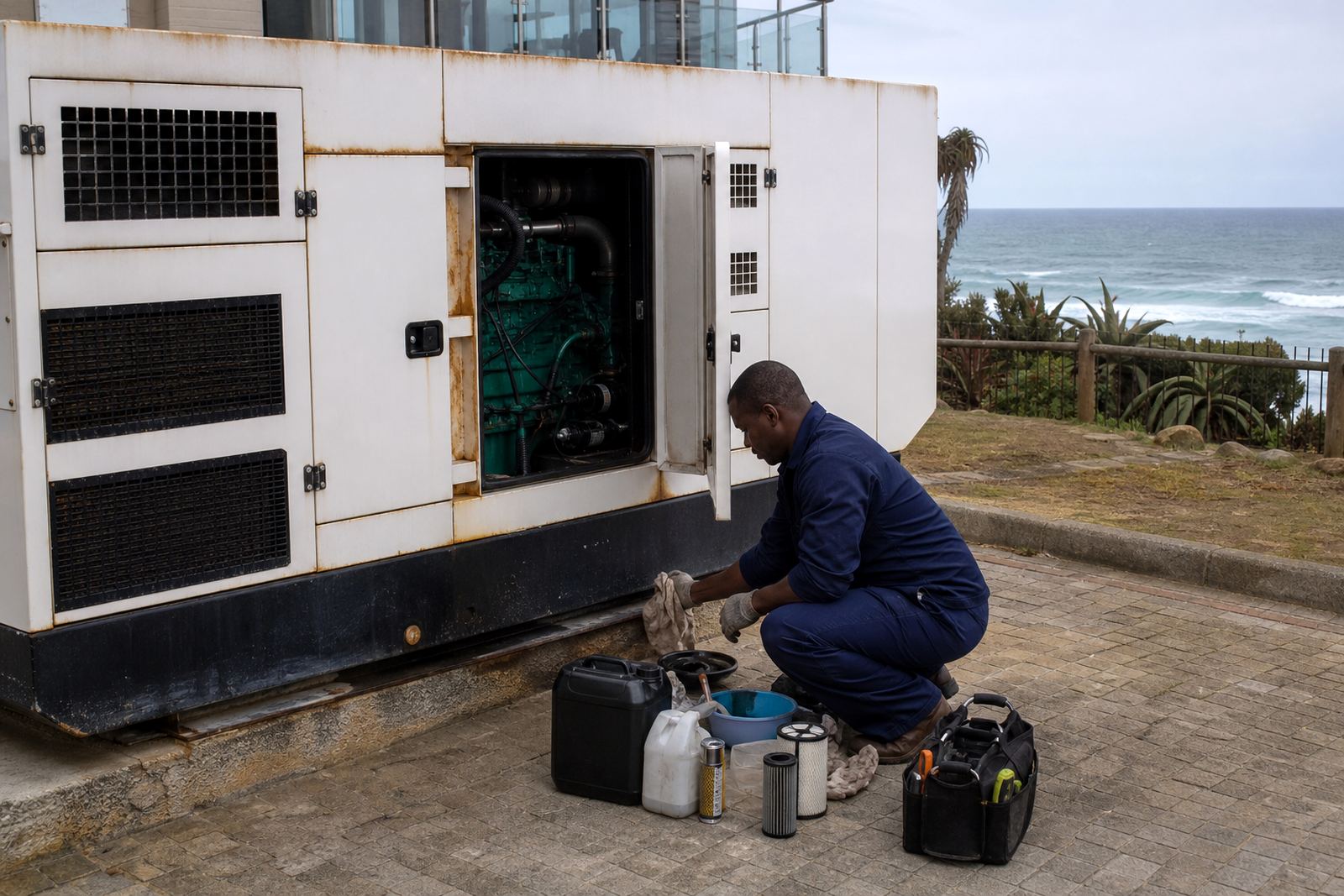
We see this on contracts in Midrand and Sandton where equipment sits in a warm enclosed space with limited airflow. Coastal jobs in Durban and Cape Town bring another problem: humidity and salt in the air can shorten the life of caps, hoses and clamps, so a clean top-up check matters even more. Coolant is not just a level check, it is part of engine protection.
What a proper coolant check includes on site
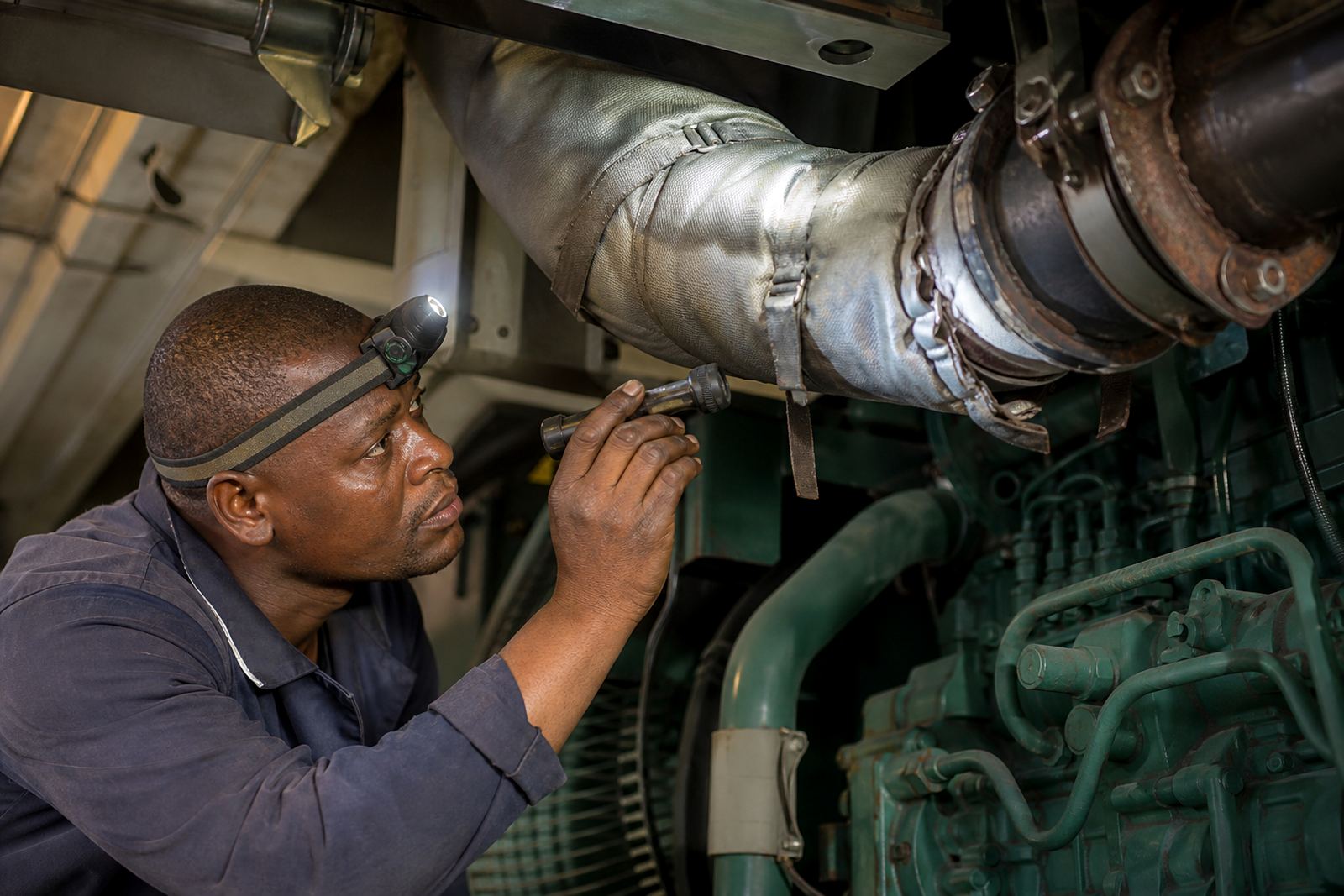
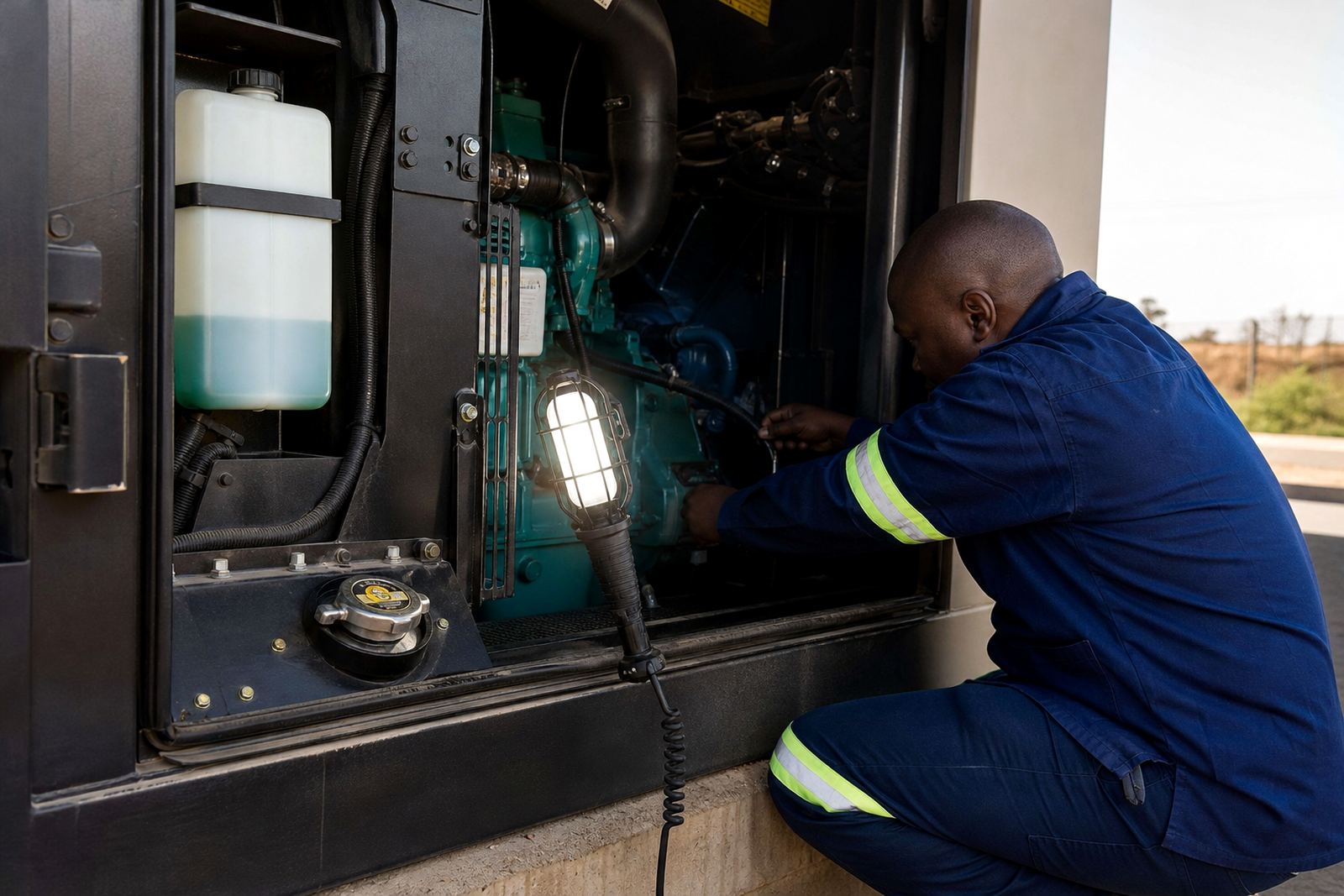
A proper inspection looks at more than the sight glass or expansion bottle. The technician should confirm the level when the engine is cold, inspect the colour and condition of the fluid, and check for leaks around the radiator, hoses, water pump area and drain points. Pressure caps, fan belts and the condition of hose clips also need attention because a small weakness can become a major leak under load.
- Check coolant level when the engine is cold
- Look for rust, oil contamination or sludge in the fluid
- Inspect hoses, clips, radiator fins and caps for wear
- Confirm there are no stains under the set after running
On larger standby sets, the condition of the coolant should also be linked to the service record. If a unit has been topped up several times without any sign of a leak being found, there is usually a reason that needs proper fault finding.
Mix strength and water quality can make or break the engine
Coolant is not only about what colour it is. The mix strength needs to suit the engine and the local conditions, and the water used in the mix must be clean enough to avoid scale and corrosion. Using poor water can leave mineral deposits inside the cooling passages, which reduces heat transfer and makes the engine work harder than it should.
In Gauteng, where many sites run standby and prime units for warehouses, workshops and data rooms, we often find systems that have been topped up with plain water over time. That may seem harmless in the moment, but it weakens protection against corrosion and can upset the freeze and boil protection provided by the coolant. It also causes a false sense that the system is fine, when it is not.
It is worth noting that coolant types should not be mixed at random. A blend that seems harmless on paper can react badly in the system and leave deposits or jelly-like residue. That is one of those faults that starts quietly and then keeps returning.
Warning signs that the cooling system needs attention
Generator engines usually give clues before they overheat. The warning signs can be slight at first, but they should not be brushed off during a busy week or a load-shedding run. If the set starts running hotter than normal, smells sweet near the exhaust side, or leaves damp marks under the radiator, something needs checking properly.
- Temperature gauge running higher than usual
- Low coolant level without an obvious reason
- Coolant smell after shutdown
- Wet hose joints, rust marks or white residue around fittings
- Repeated trips on temperature alarms
At a factory outside Pretoria, for example, a generator may run for long periods during power interruptions and then shut down as soon as mains returns. That stop-start pattern can expose weak hoses and loose clamps faster than a set that runs steadily. A short inspection after each run often catches the problem early.
Why electrical checks and coolant checks belong in the same service visit
Cooling faults do not sit in one neat box. A failing battery can cause slow cranking and extra strain on the starter, and bad starting behaviour can show up as repeated heat build-up in the engine room. Changeover equipment also needs attention because a generator that is being asked to transfer under load, without the system working as intended, is under more stress than it should be.
Electrical work must be done by qualified people and in line with local regulations. That matters on service contracts in Johannesburg, Centurion and Polokwane where sites often have different wiring arrangements, older panels and separate controls for standby operation. A good maintenance visit checks the coolant system, the controls and the changeover hardware together so the whole set stays reliable.
A Midrand maintenance routine that suits local conditions
For sites around Midrand, a practical routine is to inspect coolant level at every scheduled service, test the system under load where possible, and record any top-ups or repairs in the service log. On prime generators used for regular production, that record is even more important because the engine spends more hours under stress. The same applies to standby sets that sit idle for long periods then need to start immediately.
Our team finds that the best approach is steady and disciplined: keep the radiator area clean, inspect for leaks, check the condition of the hoses and confirm the fluid is still doing its job. When coolant is treated as part of the full maintenance plan rather than as a last-minute refill, the engine usually gives fewer surprises and better service life.
If a generator is due for a scheduled service or fault finding, coolant checks should be part of the visit, not an afterthought. That small discipline can save a set from overheating at the exact moment a business needs it most.