Hours Tell Part of the Story, but Not the Whole Story
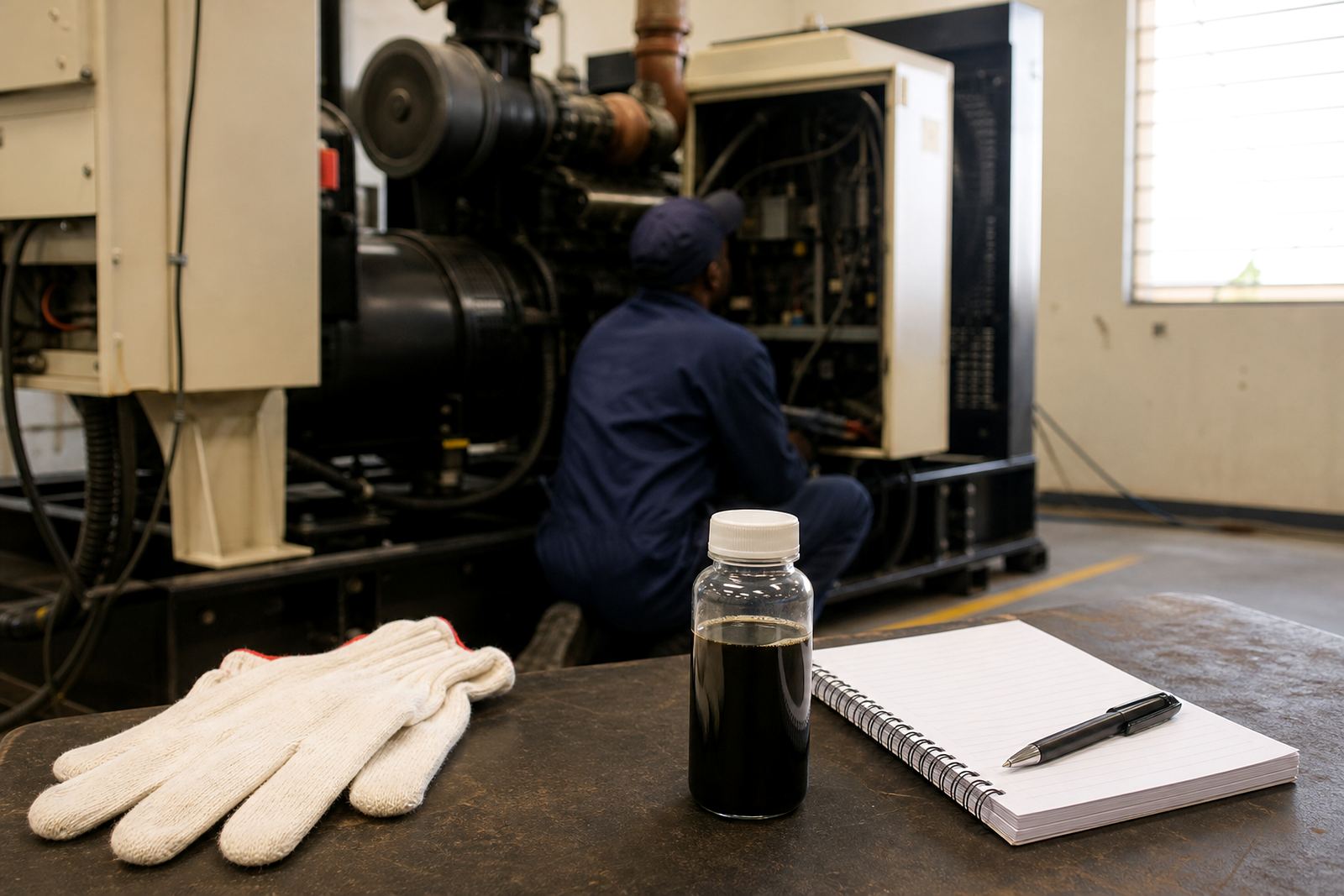
On a generator, oil works hard. It cools moving parts, carries away fine wear particles and helps protect the engine when it starts under load. Over time it breaks down, picks up soot and moisture, and loses the film strength that keeps metal surfaces apart.
That is why oil change intervals should never be treated as a one-size-fits-all number. A unit that runs a few hours each month during load shedding in Midrand will age differently from a machine that carries daily prime power on a construction or processing site in Durban. The same engine can need different attention depending on how clean the site is, how hot it runs and how often it cycles on and off.
As a rule, service contracts should be planned around operating hours, not guesswork. On many sites the oil looks fine from the dipstick, but that does not tell you what is happening inside the crankcase. Hidden contamination can build up long before the oil looks dirty.
What South African Sites Do to Engine Oil
Local conditions matter. Dusty yards in Gauteng, coastal humidity in Cape Town and Durban, and temperature swings on open industrial sites all affect oil life. If a generator sits for long periods and only starts during outages, moisture can collect inside the engine. If it runs for long stretches at high load, the oil can thin out faster and oxidise.
Fuel quality and maintenance discipline also play a part. Repeated short runs, poor warm-up routines and blocked filters can all shorten oil life. If the unit is working harder than it should, the oil carries the signs before anything else does.
- Dust and airborne grit increase wear if air intake protection is neglected.
- Short run cycles can leave unburnt fuel and condensation in the sump.
- High ambient heat and poor ventilation push oil temperatures up.
- Coastal moisture can speed up corrosion inside standing equipment.
In these conditions, changing oil only because a date has arrived is not good enough. The service plan must match the site, the duty and the hours logged.
Standby Units and Prime Units Need Different Discipline
Standby generators often seem gentle on paper because they do not run every day. In reality, they can develop problems through long periods of inactivity. Old oil, battery weakness, condensation and fuel contamination can all show up when the unit is called into action. A machine that sits through load shedding cycles but is never properly exercised can need oil service sooner than expected.
Prime generators are a different matter. They carry regular demand and should be treated as working equipment, not emergency back-up. Their oil changes are usually driven by hours, load and operating temperature, with planned inspections to check for leaks, coolant condition and any signs of fuel dilution.
Electrical work must always be handled by qualified people under local regulations. That includes checks on changeover switches, protection settings and any work that affects the power system. Oil servicing is mechanical work, but it sits inside a larger maintenance plan that should be managed by competent technicians.
Clues the Oil Is Talking Before the Engine Does
Some signs show up before a service interval is reached. They should not be ignored, especially on equipment that protects operations or critical process equipment.
- Oil on the dipstick appears darker than normal and smells burnt.
- Oil level drops without an obvious external leak.
- The engine starts but sounds harsher than usual during warm-up.
- Exhaust smoke changes, or the unit hesitates under load.
- Service records show the machine has gone far beyond its planned hours.
These signs do not always point to oil alone, but they are worth checking straight away. A blocked filter, failing battery, poor coolant circulation or a starter problem can place extra stress on the engine and shorten oil life. If a generator is not being tested under load, problems can also stay hidden until the worst possible time.
How Oil Changes Fit Into a Proper Maintenance Plan
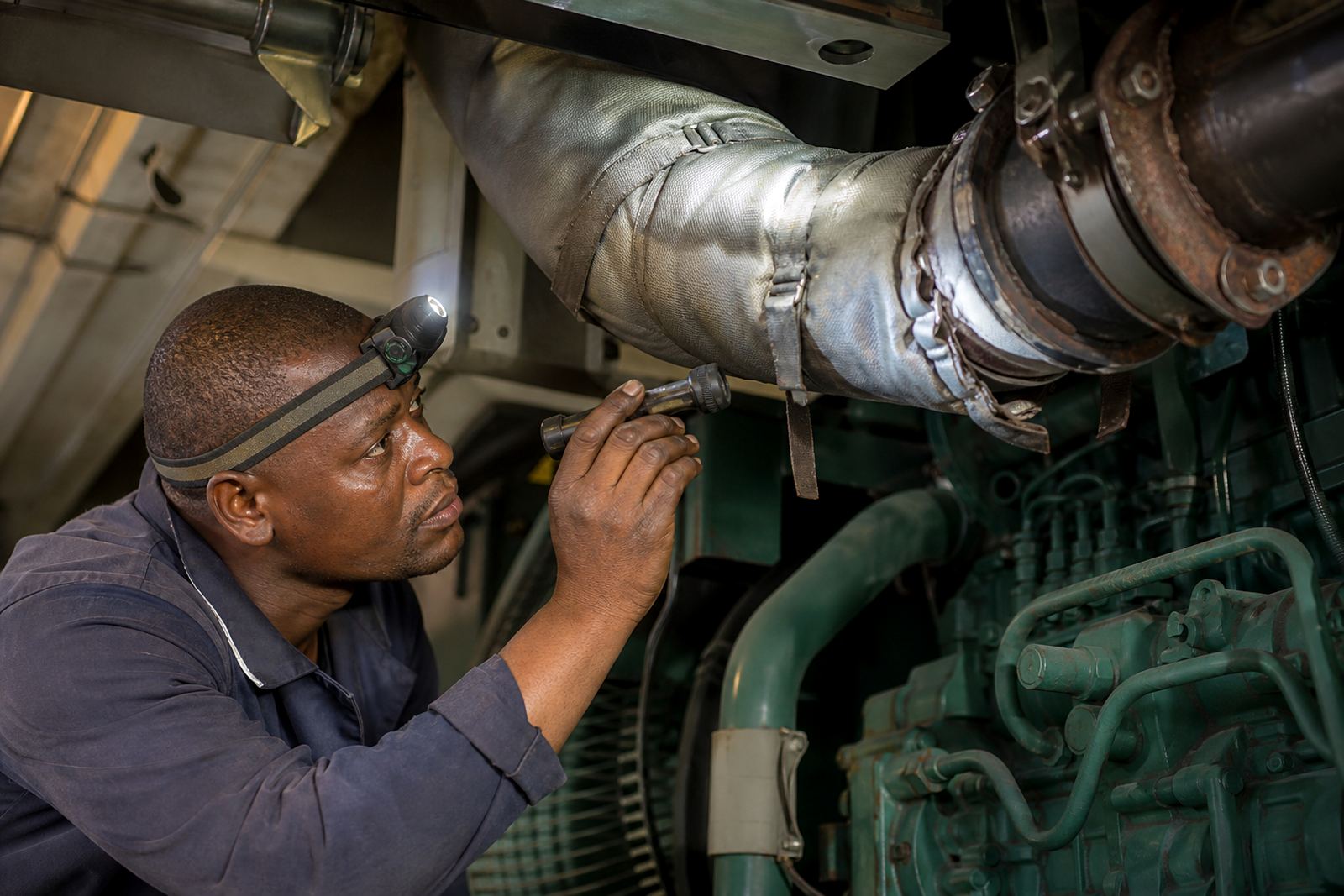
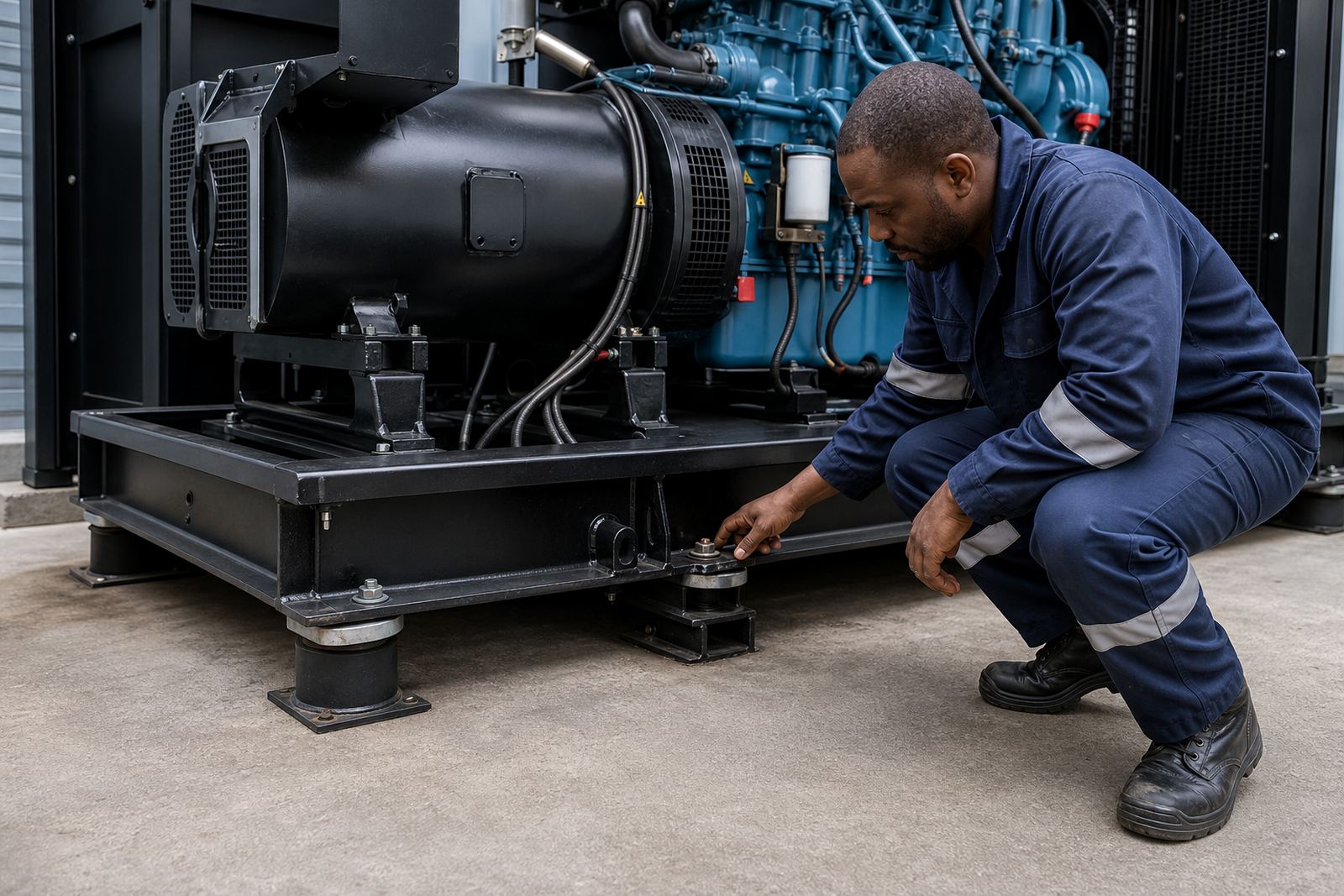
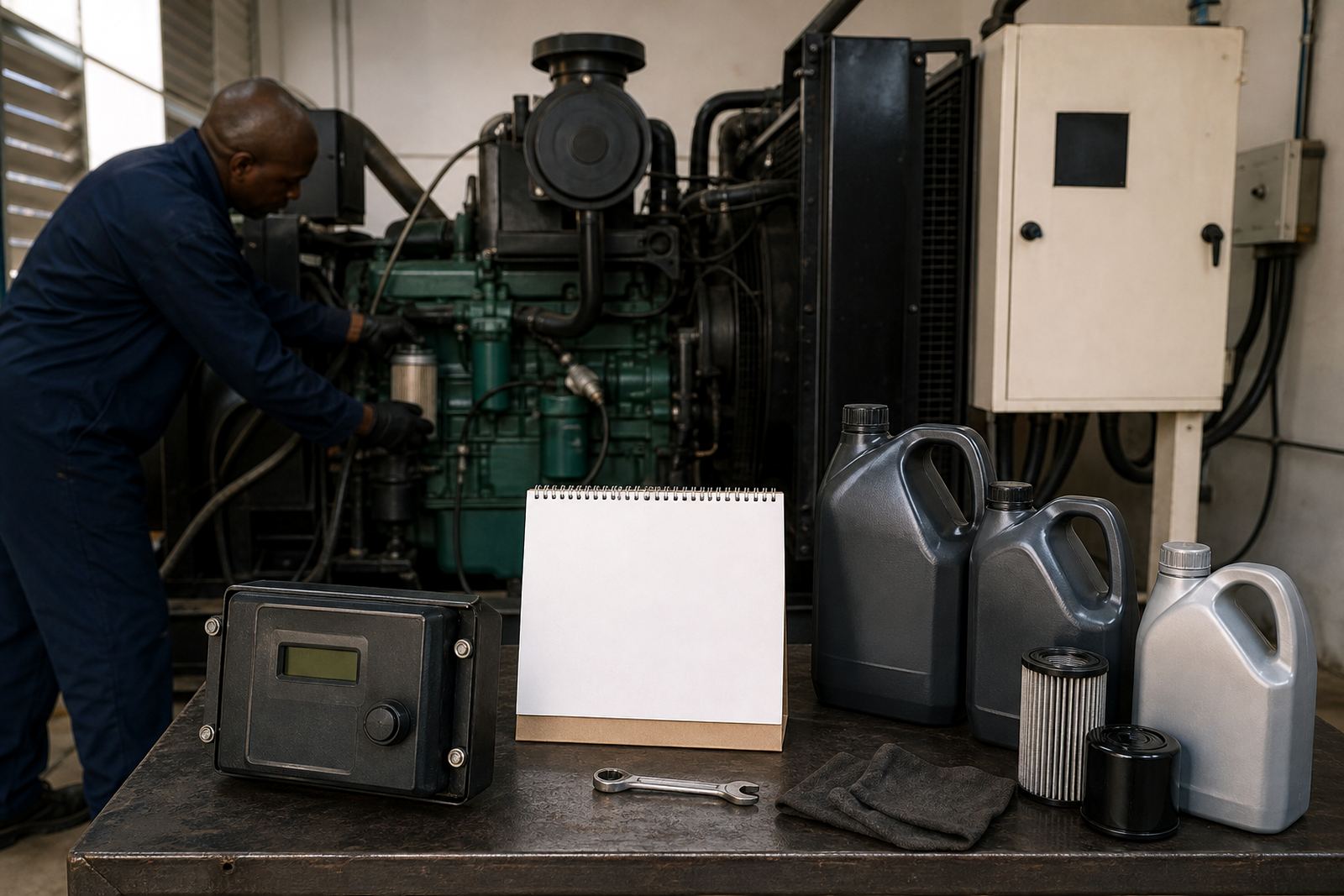
A good service plan does more than drain oil and refill it. It tracks the whole condition of the machine. That includes oil and filter changes, coolant system checks, battery testing, load bank testing, changeover switch checks, starter system repairs and fuel system repairs where needed.
Service record audits are just as important as the hands-on work. They show whether the machine is running too many hours between oil changes, whether repeat faults are developing and whether planned servicing is actually happening on time. Without records, a site can drift into reactive maintenance, and that usually costs more in downtime.
On a busy industrial site in Midrand or Sandton, for example, a generator may appear to be running well until a scheduled load test shows oil pressure issues or overheating under sustained demand. A proper inspection catches that before a breakdown creates an outage, lost production or a scramble for emergency callouts.
A Practical Rule for Midrand, and Beyond
There is no single oil-change answer for every generator. The right interval depends on the engine type, operating hours, environment and how carefully the rest of the system is maintained. For businesses across Johannesburg, Pretoria, Centurion, Polokwane, Durban and Cape Town, the best approach is to set intervals around real usage and then adjust them as the site conditions change.
If the unit runs in dusty air, on long prime duty, or in a place where load shedding has increased the number of start-stop cycles, it may need more frequent attention. If it is a standby unit that hardly runs but sits in a humid or coastal environment, contamination and ageing can still justify shorter service gaps. Planning should always be based on evidence, not assumptions.
RelGen manages generator servicing and maintenance contracts from Midrand for businesses across South Africa. With scheduled servicing, preventive site inspections and emergency support, the goal is to keep the oil, filters, coolant, batteries and changeover equipment in condition that matches the work the generator has to do. That is what keeps a power system ready when it is needed most.