When a small rubber block starts costing real money
Most people notice vibration mounts only when something starts rattling. By then the generator may already be transferring extra movement into the skid, pipework, cable trays and nearby concrete. A mount that has gone soft or collapsed can allow the set to sit unevenly, which changes how the engine and alternator behave under load.
On standby generators, this often shows up after years of heat, dust and repeated start-stop cycles. On prime units, the wear can build faster because the machine runs for longer periods and sees more movement every day. In Gauteng, where Midrand sites often deal with dusty yards and hot afternoon starts, mounts can age faster than expected if nobody checks them during scheduled servicing.
What a proper mount inspection should pick up
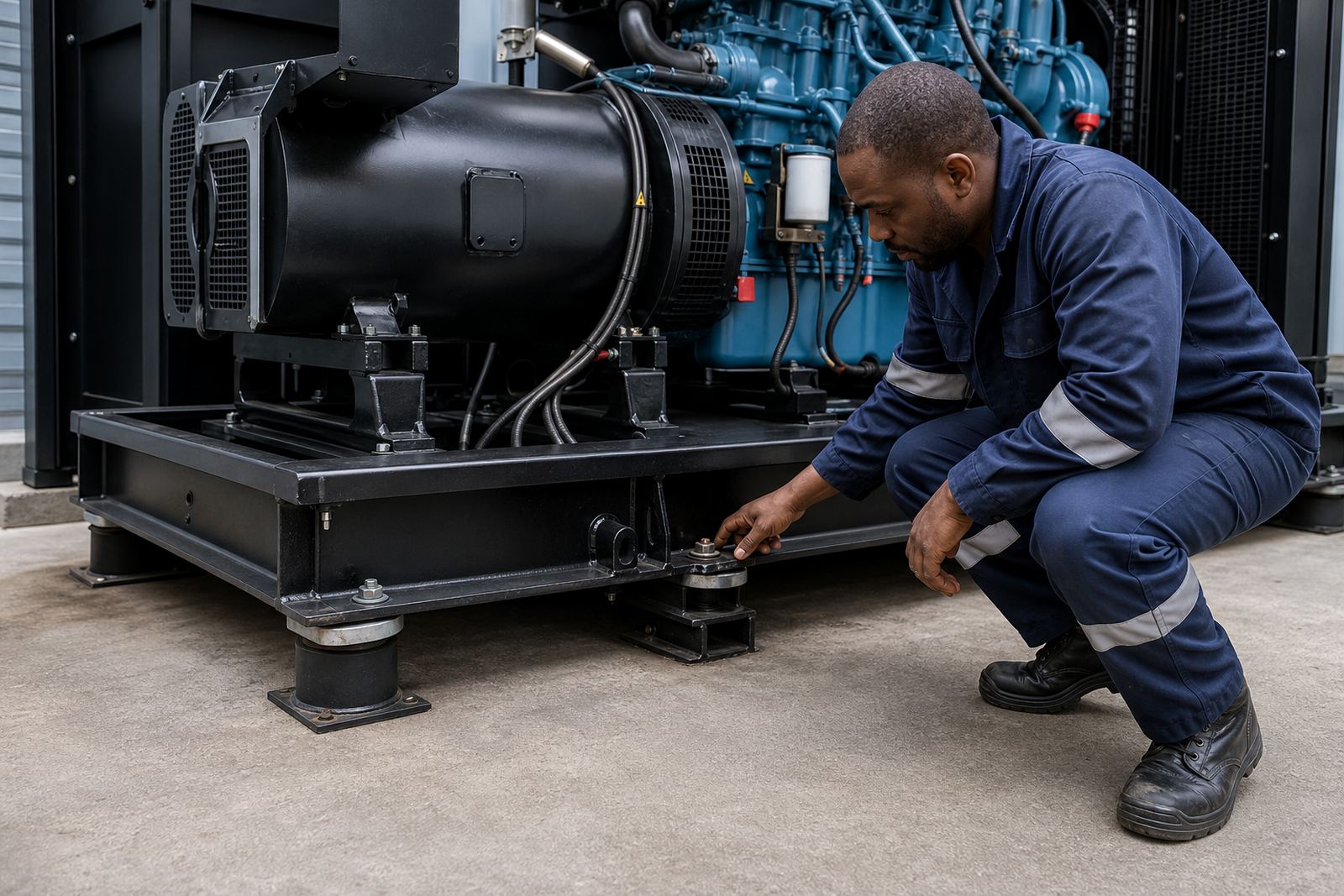
A good inspection is not just a glance from the side. The technician should look for cracked rubber, oil contamination, rusted brackets, loose fixing bolts, sagging feet and signs that the base frame has shifted. If the generator sits on anti-vibration pads or spring mounts, those parts must be checked for compression and even support.
- Cracks, splits or perishing in the rubber element
- Oil or fuel contamination that softens the mount material
- Uneven gap between the frame and the base
- Loose fasteners, bent brackets or missing washers
- Pipe strain or cable strain caused by movement
- Fresh marks on the floor or skid that show unwanted travel
It is also worth checking the condition of the surrounding hardware. A mount can look fine, but if the frame bolts are backing off or the base plate is distorted the vibration problem will keep returning.
Why alignment matters just as much as the rubber itself
Generator vibration is not only about noise. Extra movement can affect alignment between the engine and alternator, put strain on exhaust joints and loosen fittings on fuel lines and control wiring. Over time, that leads to more faults, more callouts and a shorter life for parts that should have lasted longer.
If a set is installed on an uneven slab or a roof plant room with poor levelling, the mounts can take the weight unevenly. That creates a constant pull on one side of the frame. The result may be subtle at first: a slight hum, a walk across the floor or fastener movement that keeps returning after every service. In a commercial site near Sandton or Centurion, that kind of slow shift can become a maintenance headache very quickly.
Load bank testing can expose a mount problem early
Load bank testing is useful because it forces the generator to work hard while the technician watches for movement that may not show up at idle. A mount that seems acceptable with no load can fail under heat, torque and sustained vibration. During a test, the frame may rock, the exhaust may shake more than expected or an uneven base may become obvious as soon as the set settles under load.
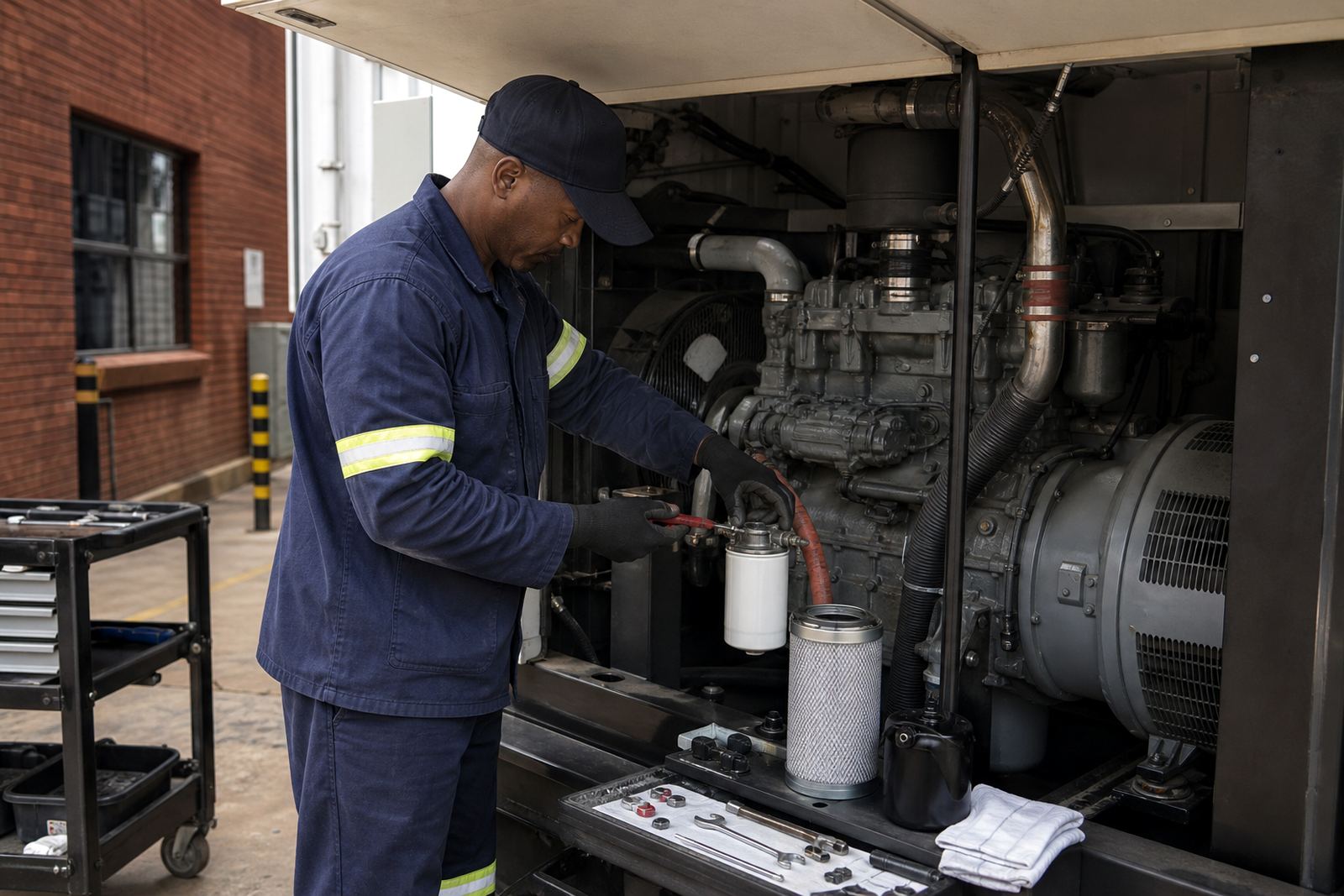
That is why vibration mount inspections should sit alongside routine servicing, not after a breakdown. If the mounts are checked while oil and filters are being changed, or during a preventive site inspection, small issues can be picked up before they turn into cracked brackets or damaged alternator connections.
- Check mount condition before and after load bank testing
- Watch for movement changes as the set warms up
- Confirm that the generator returns to level after shutdown
- Record any recurring shift in service notes
A Midrand example: when the noise was only the warning
A commercial site in Midrand called for scheduled servicing after staff noticed a sharper vibration when the generator picked up load during load shedding. The set was still running, but the base had started to settle unevenly and one rear mount had compressed more than the others. The technician also found a loose clamp on nearby pipework that was being shaken harder than it should have been.
After the mounts were renewed and the frame checked for level, the generator ran quieter and the movement dropped straight away. The fault could have been missed if the team had only listened for a complete failure. That is the value of inspections done before the machine gives you a reason to stop and look.
What qualified technicians should handle on site
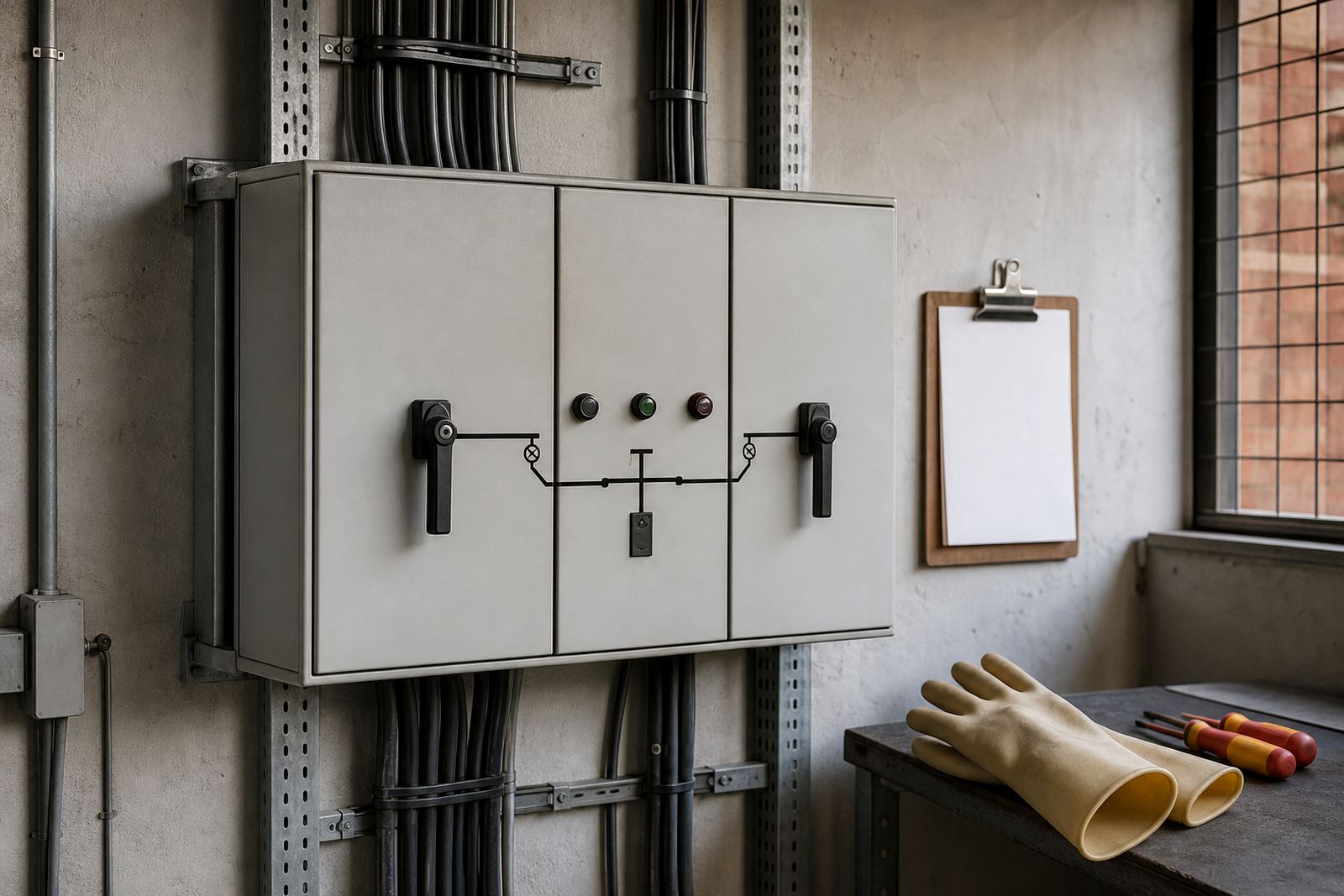
Vibration mount work often looks straightforward, but it still forms part of electrical and mechanical generator maintenance and must be handled by qualified people under local regulations. A technician needs to know how to isolate the plant safely, support the frame correctly and confirm that no secondary damage has been caused by the movement. On sites with automatic changeover systems, the inspection should be planned around the switching arrangement so that no one is exposed to live parts.
Good servicing also includes looking at the wider condition of the machine, not just the mount itself. If the generator has been moving for some time, other items may need attention too.
- Oil leaks that contaminate rubber supports
- Coolant hose strain caused by excess movement
- Starter battery tray movement or loose hold-downs
- Changeover switch wiring tension from vibration
- Service record entries that show repeated mount issues
When mount inspections are done properly, they help protect the whole set. That means fewer surprises during storms, fewer nuisance faults during evening load shedding and less wear on the equipment that keeps a business going.