What a clean start sounds like on site
The first few seconds tell their own story. A healthy generator should crank firmly, fire without repeated attempts, and settle into an even idle with steady exhaust and no hunting. If the starter labours, the speed wavers, or there is a sharp metallic knock, the technician starts looking deeper before the unit goes onto load.
On a Midrand commercial site, we often see the clues within the first minute after start-up. A weak battery, air in the fuel line, a sticking solenoid, or a controller warning can all show up before the building notices anything at all. That is why the ear matters as much as the gauge readings.
- Starter turns the engine at a consistent speed
- Oil pressure builds within the expected time
- No repeated firing, misfiring, or rough idle
- Exhaust smoke clears down to normal running levels
The sounds that make a technician pause
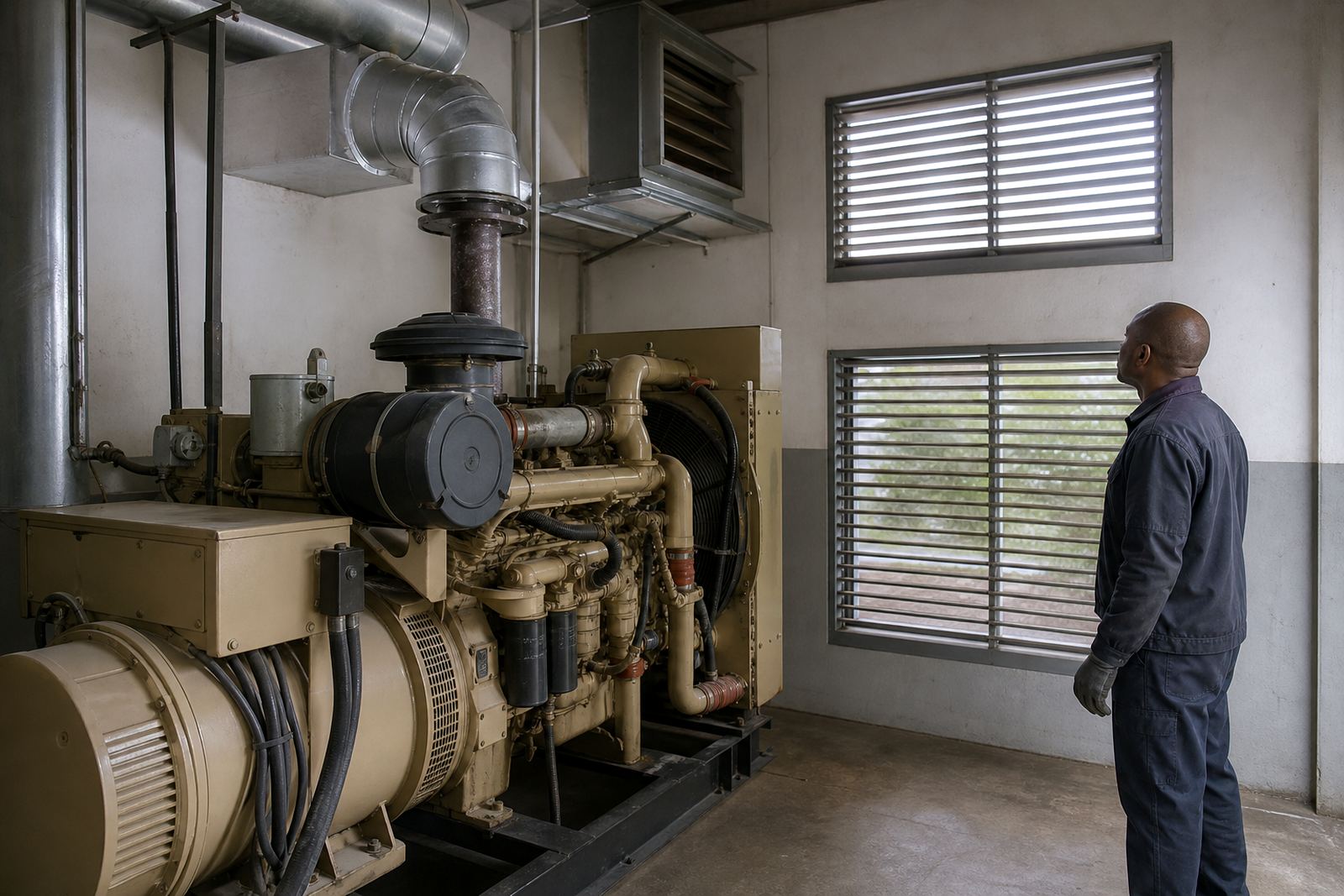
Generator rooms are noisy spaces, but trained technicians learn to separate normal running noise from trouble. A rhythmic rattle can point to loose covers or mounts. A hiss may suggest a hose, clamp, or gasket issue. A high pitched whine can come from an alternator bearing or fan belt that needs attention.
We also listen for changes after warm-up. A set that sounds fine cold but gets harsher after ten or fifteen minutes may have a cooling issue, fuel restriction, or an electrical load problem. In coastal towns such as Durban or Cape Town, salty air can speed up corrosion and make these warning sounds appear sooner than expected.
- Loose panel or canopy vibration
- Belt squeal or bearing noise
- Air leaks from hoses or joints
- Smoke that changes colour or thickness during the run
What the gauges and warning lights are telling us
During a test run, the technician checks the instruments against what the engine is doing in real time. Oil pressure, coolant temperature, charging voltage, frequency, and running hours all need to sit within normal ranges for that specific machine. Any drift is treated as a clue, not a guess.
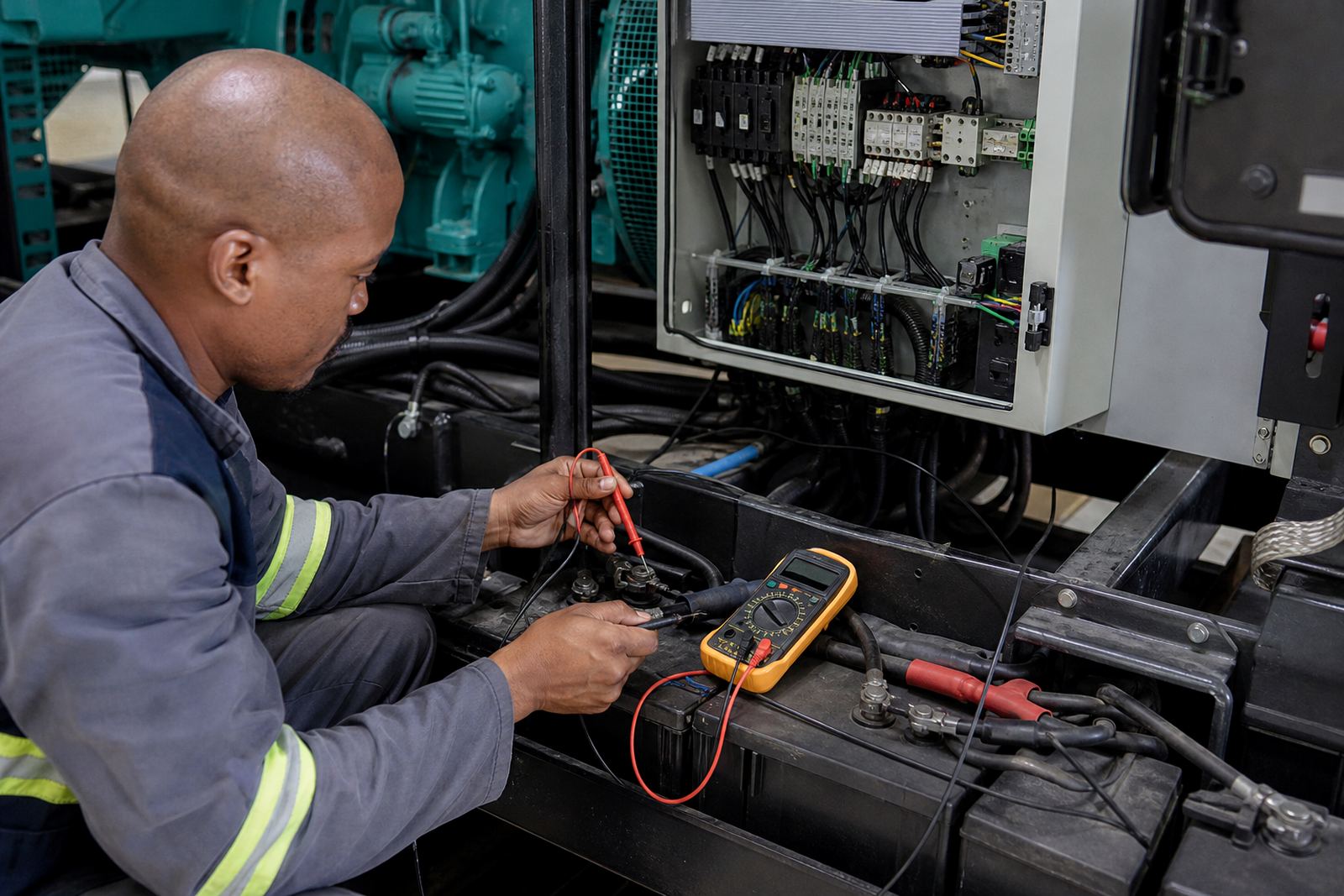
Warning lamps and controller messages are equally important. A battery charge fault, low coolant alarm, overspeed warning, or failure to transfer can point to a system that needs maintenance rather than a quick reset. Electrical work must be handled by qualified people under local regulations, especially when the changeover gear and control wiring are involved.
- Oil pressure stays steady once the engine is running
- Temperature rises normally and then stabilises
- Charging system keeps the batteries topped up
- Controller shows no active fault messages
How the unit behaves when load is applied
A generator is only properly tested when it is asked to carry load. That is when weak batteries, tired fuel delivery, blocked filters, or cooling limitations start to show themselves. We watch the pickup, the recovery time, and whether voltage and frequency remain stable when the load steps up or down.
On a manufacturing site in Pretoria, for example, a unit may start neatly yet sag when motors and process equipment come online. On a smaller office block in Sandton, the same set may reveal slow recovery on the transfer back to mains. Both need proper observation, not assumptions.
- Load pickup without stalling or slow response
- Stable voltage and frequency under load
- No excessive smoke or fuel smell
- No overheating once the building load has settled
The practical checks hidden inside a test run
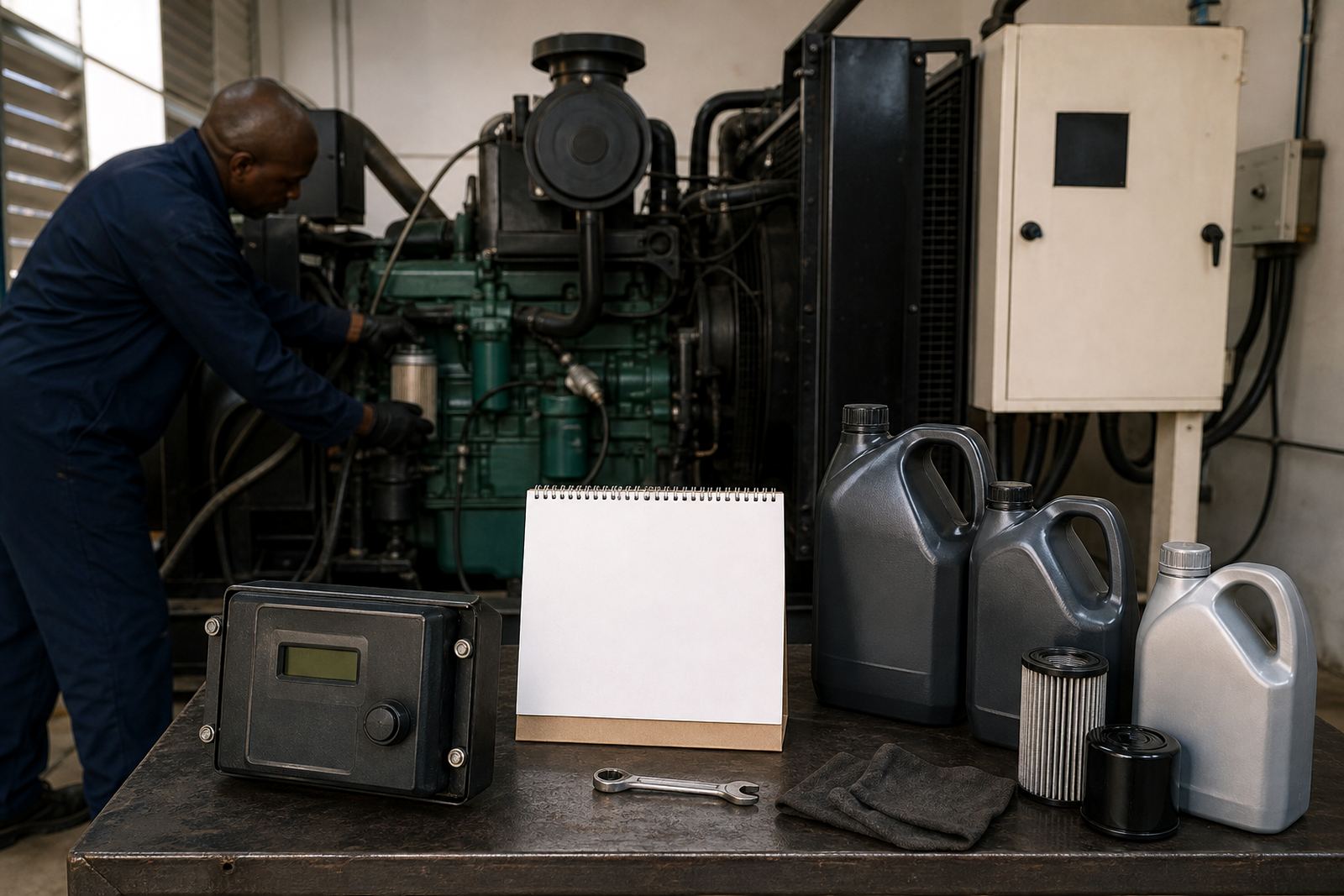
A good test run is not only about watching the engine. It is also the time to inspect oil leaks, coolant seepage, battery terminals, fan belts, hose condition, filters, fuel lines, and the condition of the enclosure. Small defects often show up only when the set warms up and vibration starts moving through the frame.
We also check the changeover switch operation, because the transfer between mains and generator must happen cleanly and predictably. If the transfer gear hesitates, sticks, or gives an abnormal indication, the problem may not be the engine at all. It may be in the switching equipment, the control logic, or the wiring that supports it.
- Oil stains under the base or around gaskets
- Coolant smell, drips, or low header level
- Battery corrosion, loose lugs, or low charge
- Transfer equipment that does not operate as expected
What a service team records before the set leaves the bay
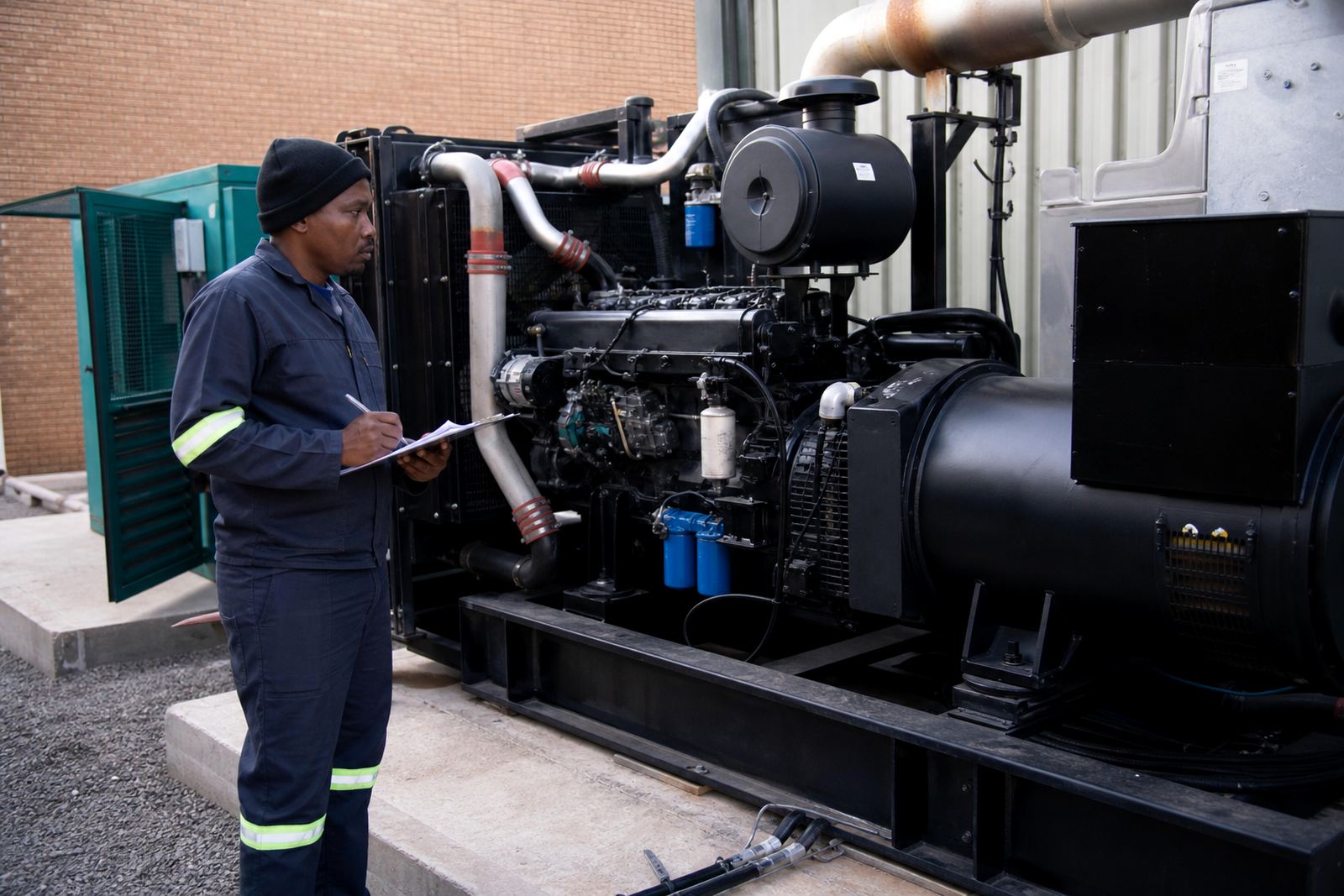
Test run observations only matter if they are written down clearly. Service records should show the start condition, run time, load applied, alarms seen, readings taken, and any follow-up work required. That record becomes the memory of the machine, which is especially useful on maintenance contracts where the same unit may be visited month after month.
At RelGen, our Midrand base supports standby and prime generator servicing for businesses across Johannesburg, Pretoria, Durban, Cape Town, Polokwane, Centurion and Sandton. A tidy record helps the next technician see trends early, whether the issue is fuel quality, battery aging, or a cooling circuit that needs closer attention.
- Start and stop times
- Load applied during the run
- Readings for oil pressure, temperature and voltage
- Faults found and corrective work completed