Why a closed room can turn a healthy set into a hot one
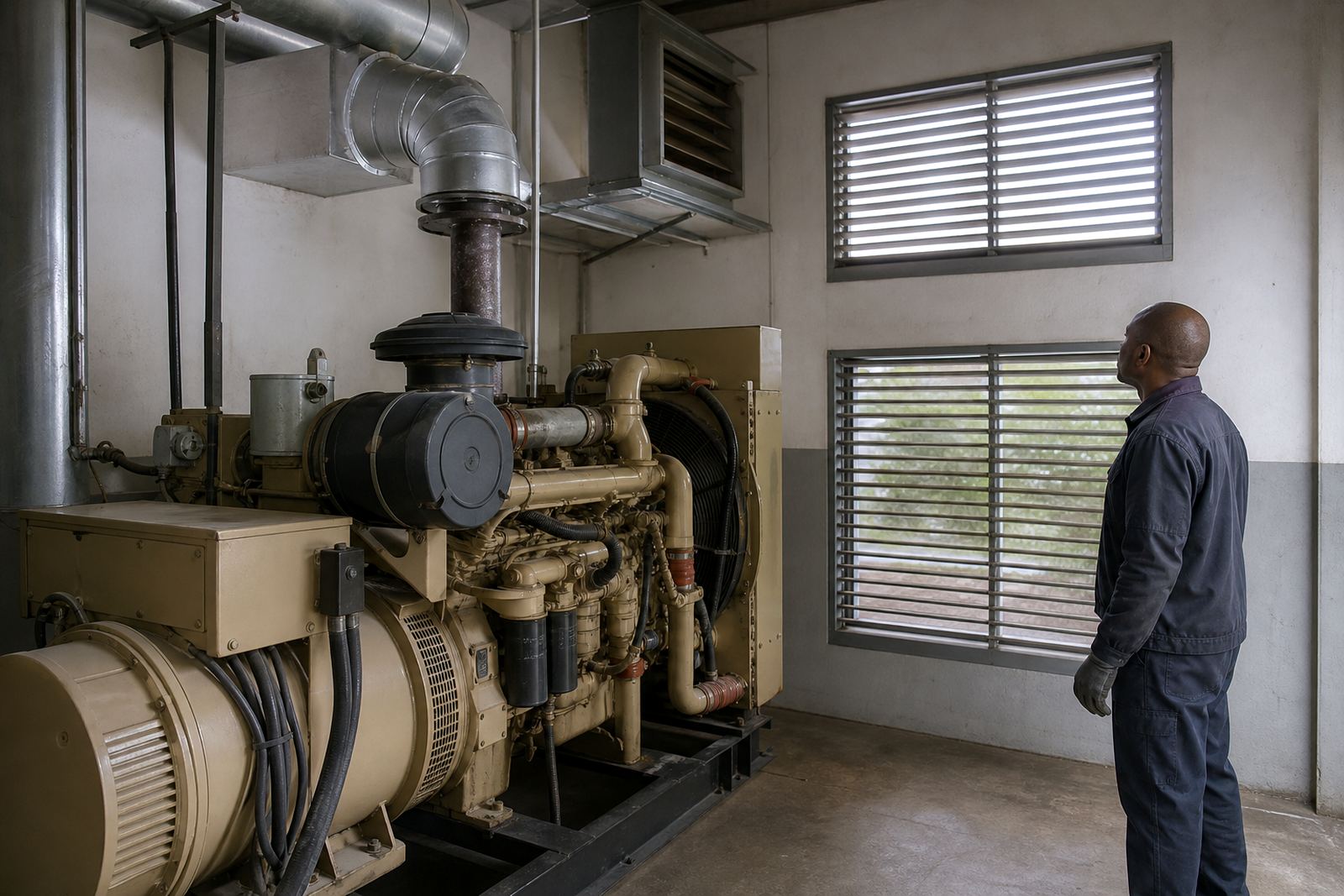
A generator gives off heat every time it runs, and an enclosed room has to get that heat out as quickly as the machine makes it. If the intake air is restricted, the room temperature rises, the alternator works harder, and the engine may start to derate or trip on high temperature. In Johannesburg and Pretoria, we see this most often in plant rooms that were sized for the original set but not for later changes such as bigger batteries, extra cabling, added pipework or a second unit.
Ventilation is not only about temperature. It also affects combustion air, exhaust routing, access for maintenance and the way dust moves through the room. A generator that pulls warm air back into its own intake can run fine for a short test and then struggle during a longer outage. That is why airflow checks should form part of every maintenance contract, not only a once-off inspection.
When the room is too tight, the symptoms are often plain to see: hot metal surfaces, repeated alarms, discoloured ducting, damp patches near louvers and a burnt smell after load transfer. These are warning signs, not minor quirks.
What our technicians look for during an airflow check
A proper ventilation check starts with the room itself. We look at intake and discharge paths, fan operation, louvre condition, damper movement and whether anything is blocking the route in or out. We also check that the air path matches the size of the set, because a neat installation can still be wrong if the free area is too small.
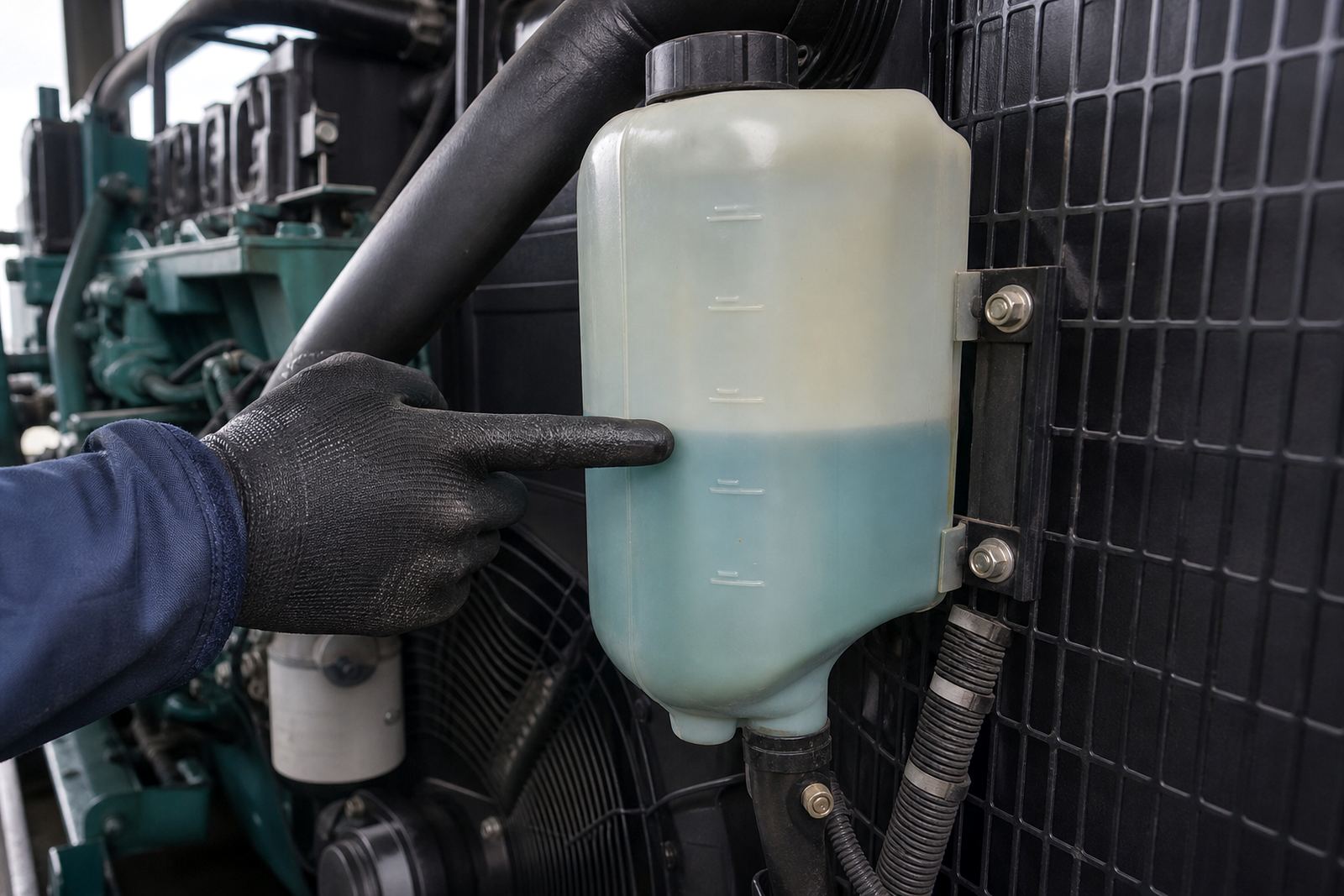
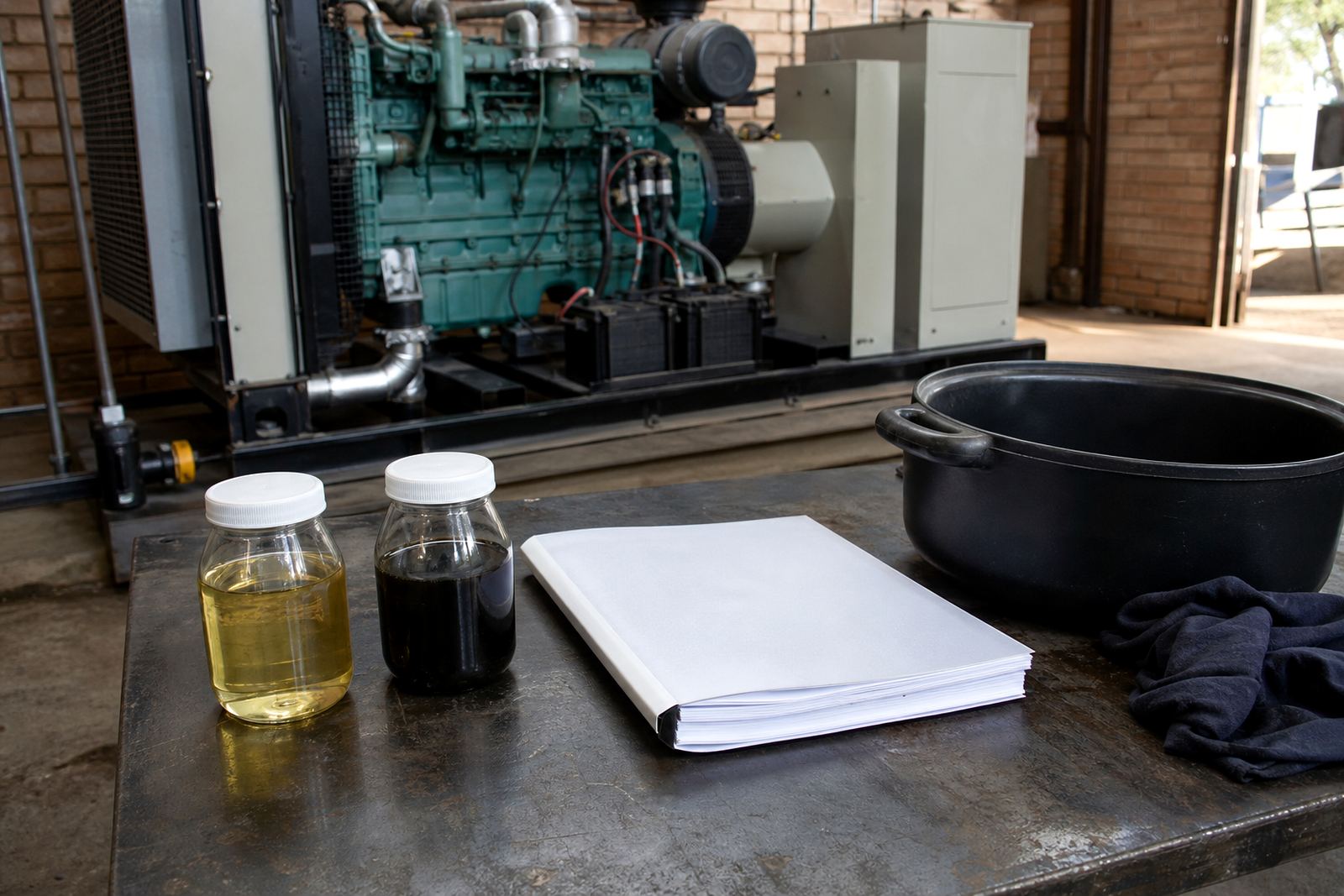
On site we also review service items that affect heat and performance. Dirty filters, old coolant, weak batteries and poor changeover operation can all make the generator work harder than it should. Electrical work must be done by qualified people under the local rules that apply to that site, and any adjustment to controls or changeover equipment should be handled with care.
- Intake and discharge openings free from cardboard, leaves, dust and stored material
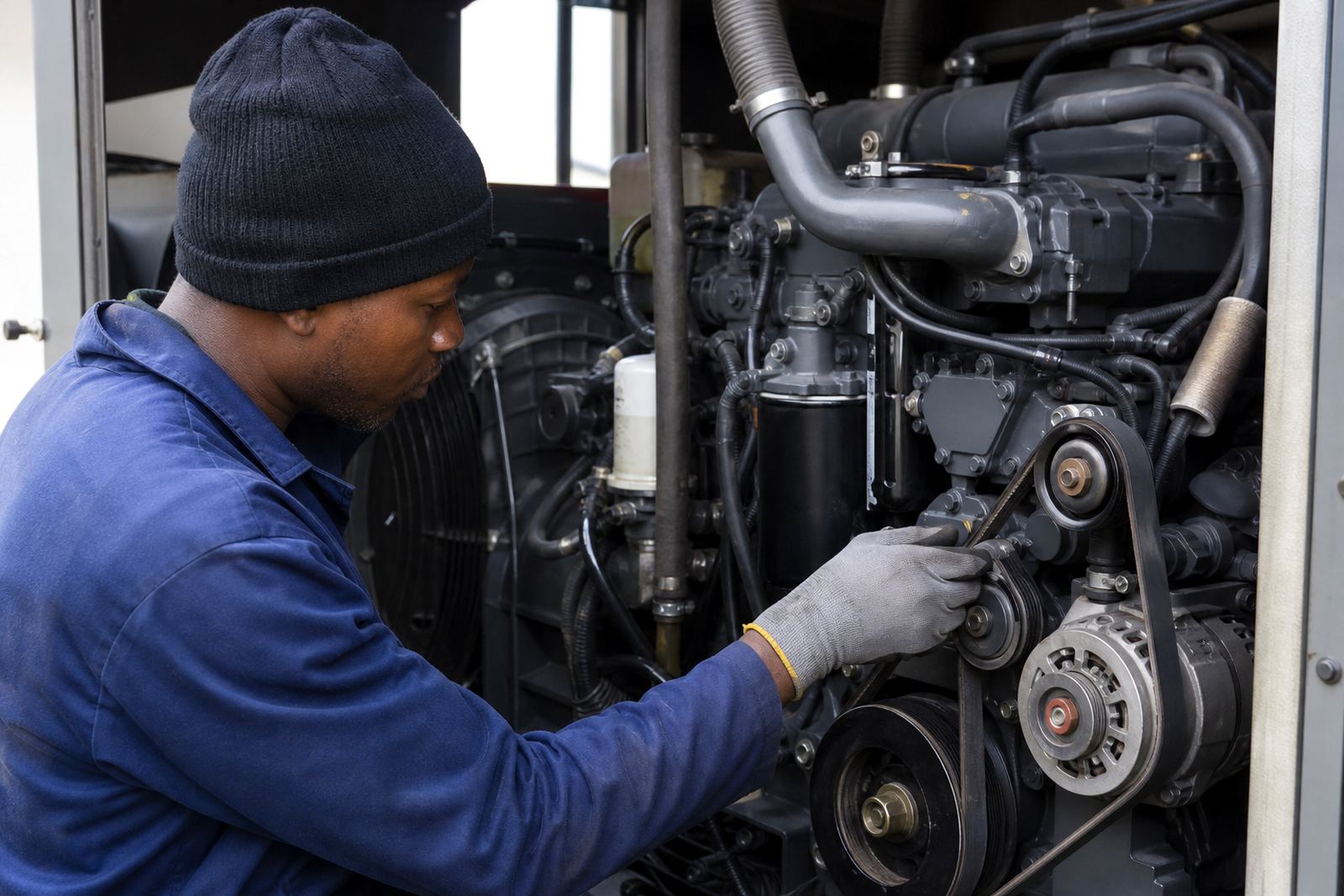
- Fan belts, guards and rotating parts in sound condition
- Clear path for cooling air around the radiator and exhaust sections
- Room temperature compared with the maker's normal operating range
- Signs of recirculation, such as warm air being drawn back in
- Access for routine oil, filter and coolant service without blocking the airflow path
The hidden problem is often recirculation, not the set itself
Many owners blame the engine when the real issue is air being drawn back into the intake from the discharge side. This can happen where a plant room opens onto a narrow passage, a wall is too close to the louvre, or the discharge duct sends hot air into a corner. Coastal sites in Durban and Cape Town can also suffer when salty air and moisture affect dampers or make filters clog sooner than expected.
Recirculation is sneaky because it may only show up under full load. A set can pass a short no-load or light-load test and still overheat during an actual outage, especially when the building is already warm and the aircon system is down. We have seen this in warehouses and office parks where the generator room shares space with other plant, and the extra heat from pumps or compressors pushes the room beyond what was planned.
When the discharge path is not right, the cure is usually practical: improve the air route, clear obstructions, service damaged dampers, and make sure the room is not being used for storage. Boxes, paint tins and spare parts should never be left where they cut off intake or block access panels.
Load bank testing tells the truth about the room
A standby set can appear fine for months and then reveal its weaknesses only when it is carrying real load. That is why load bank testing is such a useful part of service planning. It shows whether the generator room can shed heat properly while the set is working harder for a sustained period.
During a load bank test we watch for temperature rise, exhaust behaviour, stable running and any alarms that appear as the load increases. If the room is under-ventilated the readings will often drift upwards before the test ends. That gives you a chance to fix the problem before a power interruption does the testing for you.
- Use load bank testing after room changes, duct alterations or equipment relocations
- Test in warmer weather as well as on mild days, because summer conditions show the weak points
- Record room temperatures, alarms and run time so future servicing has a clear reference
- Check that the cooling path is still sound after any building work nearby
For sites in Midrand, Sandton and Centurion, where new installations often sit inside busy commercial buildings, this step is especially useful because the plant room can be affected by other tenant activity and changed airflow from construction.
How ventilation ties into maintenance contracts
Ventilation should never be treated as separate from the rest of generator servicing. Oil changes, filters, coolant levels, battery tests, changeover switch checks and fault finding all need a room that allows the set to breathe properly. If the room is hot or dusty, those service items degrade faster and the intervals between problems get shorter.
On a maintenance contract, we can track repeated issues such as blocked vents, failed extractor fans or doors that are left open during operation. We also compare service records from one visit to the next so small changes are not missed. A site in Polokwane with dry dust has very different needs from a coastal installation in Durban, yet both need the same discipline around airflow and access.
The aim is not to overcomplicate things. It is to keep the room practical, safe and ready for use. That includes making sure the generator can be inspected, the batteries can be reached, and the switchgear can be checked without people standing in a cramped, overheated space.
A Midrand plant room example that shows the difference
One Midrand site called us after repeated high-temperature alarms during longer outages. The set had been serviced on schedule, yet the room still ran hot and the team had started to lose confidence in it. On inspection we found a blocked lower louvre, an extractor fan that was turning but moving very little air, and stored packaging stacked close to the discharge side. Nothing was broken in a dramatic way, but the room had slowly become too tight for the generator.
After clearing the air path, repairing the fan and reviewing the layout, the room held a much steadier temperature during test runs. The engine no longer had to fight its own heat build-up, and the client had a clearer picture of what the space needed during future maintenance. It was a practical fix, not a fancy one, and that is usually how these issues are solved.
That is the point of ventilation checks. They reveal the conditions around the generator, not just the condition of the machine itself. Once you see the whole room, the next service decision becomes a lot more accurate.