The parts that quietly carry the load
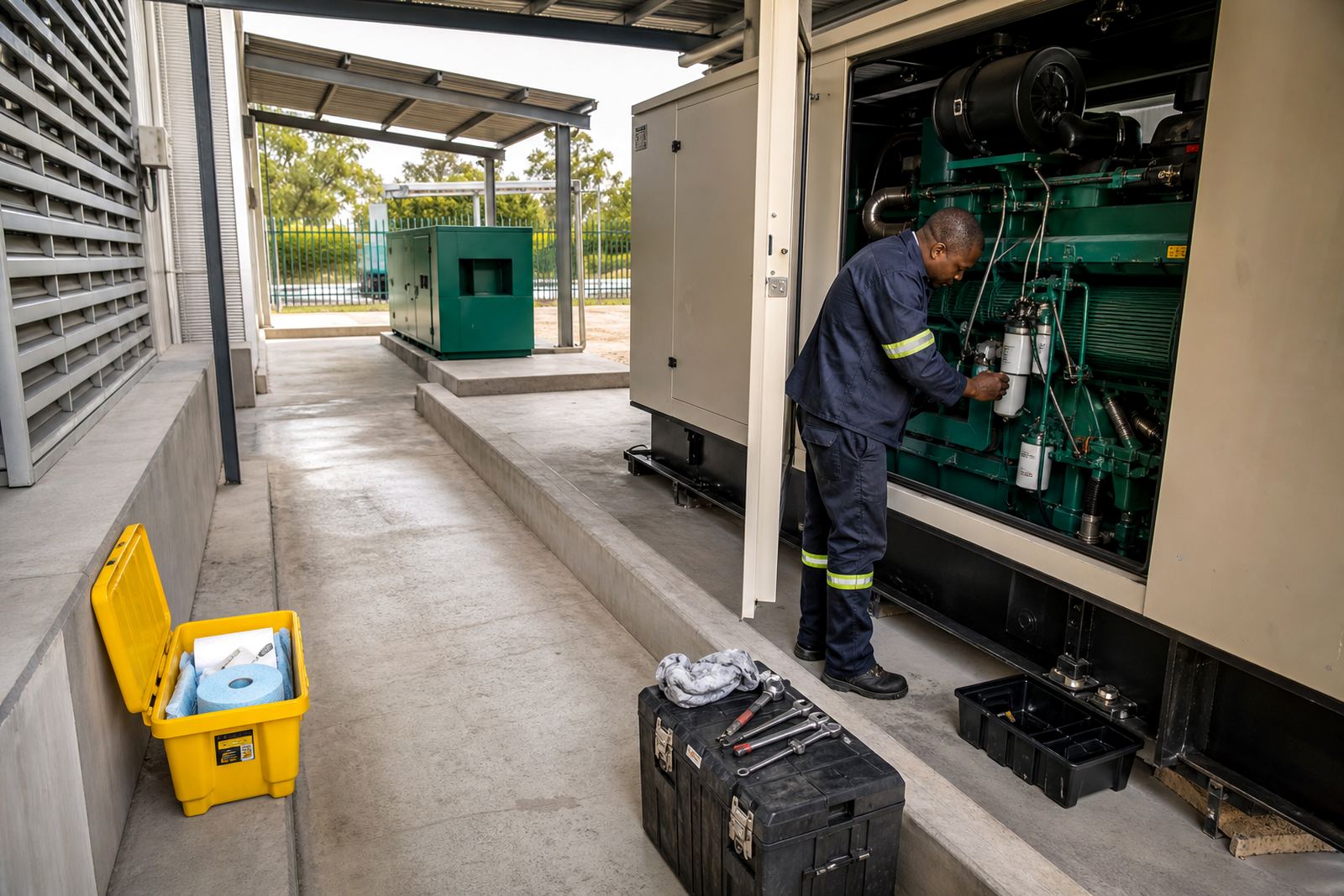
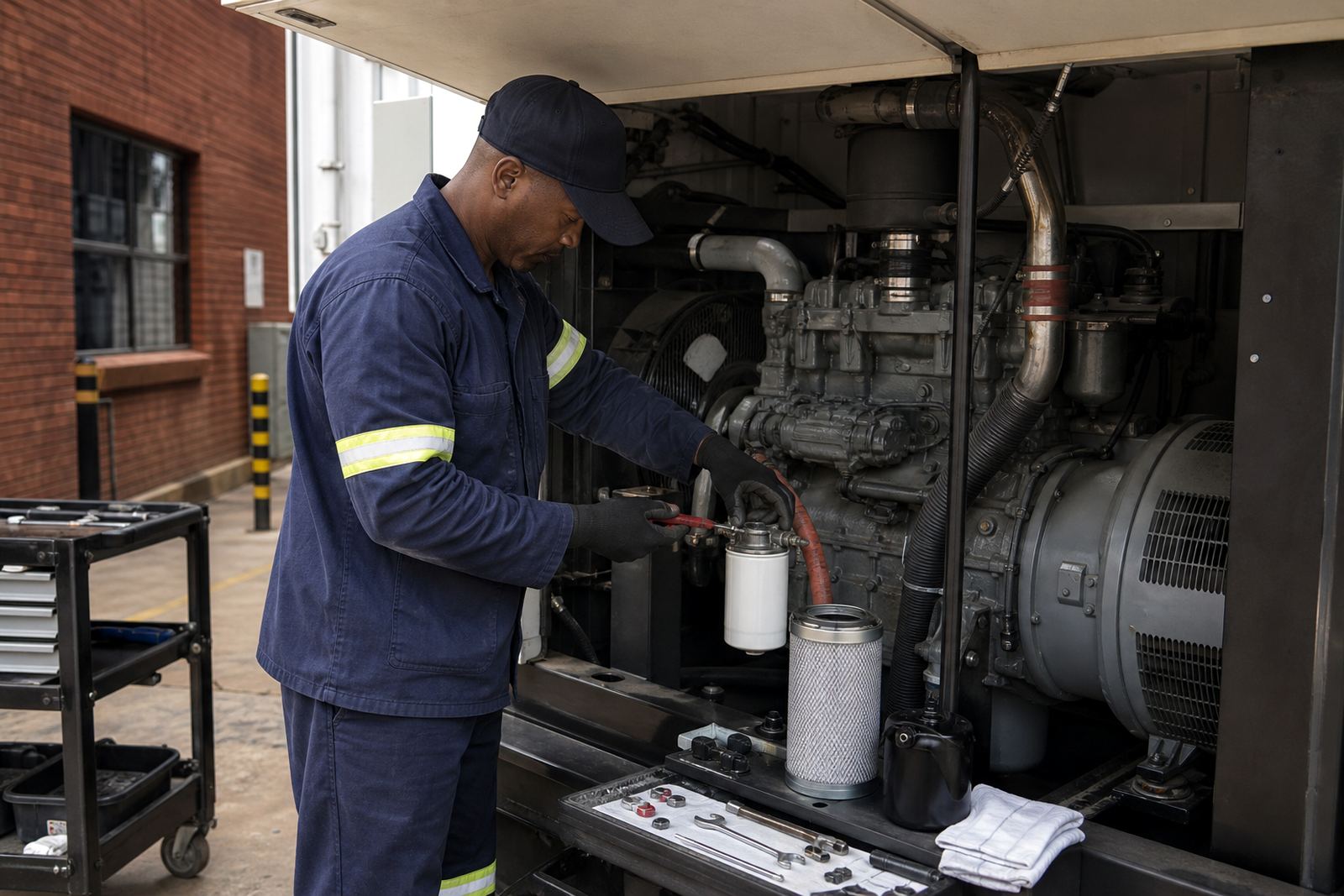
In a standby or prime generator, hoses move coolant and other fluids through the system, while belts drive key accessories and help keep the set working as intended. They sit in the background, but they are under heat, vibration and constant mechanical stress every time the unit runs. In Gauteng summer heat, or in a coastal area like Durban where humidity and salt in the air can be hard on rubber, those parts age faster than many owners expect.
A hose can look fine from the outside and still be soft, swollen or cracked underneath. A belt can still turn but slip under load, make noise or shed dust before it finally gives up. That is why a proper service inspection must include both visual checks and practical testing, not just a quick top-up and tick box.
What a proper hose inspection should catch
Hoses carry coolant and sometimes fuel or other working fluids depending on the set up, so a weak hose can become an expensive problem fast. During scheduled servicing, a technician should check for chafing, hardening, bulges, leaks at the clamps and signs of rubbing against frames or pipework. On older units, brittle elbows and perished joins are common trouble spots.
- Cracks near bends and clamp points
- Soft sections that collapse under suction
- Swelling, blistering or coolant staining
- Loose clamps or damaged fittings
- Evidence of rubbing against metal edges
In Midrand industrial parks, where generators often sit near warehouses and workshops, heat and dust can speed up wear. A hose that is slightly compromised in winter may fail completely on the first hot afternoon under sustained running.
Belts fail in a different way and that matters
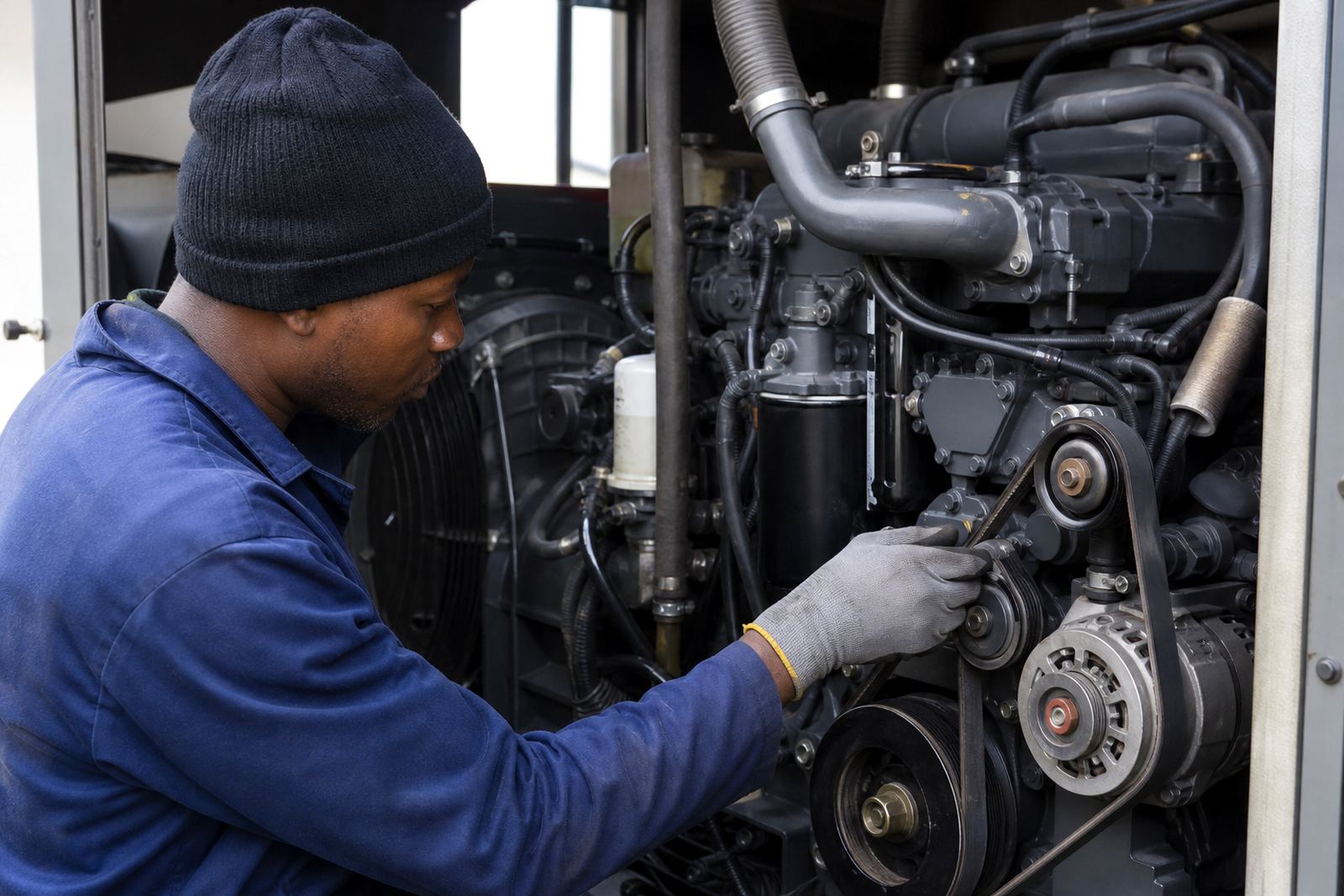
Belts usually give warning before failure, but only if someone knows what to look for. A worn belt may squeal on start-up, glaze over, fray at the edges or show a shiny surface where it is slipping. If the tension is wrong, the belt can either overload bearings or fail to drive the accessory properly. Either way, the set is not getting the support it needs.
On many generator models, belt condition affects more than convenience. If the alternator drive or cooling fan drive is affected, the unit can run hotter or charge poorly. That is a small issue that quickly turns into a bigger callout if it is left alone, especially during load shedding when the generator is already working harder than usual.
We also see cases where a belt issue is the first visible sign of a deeper problem such as misalignment, worn pulleys or poor mounting. Catching that early saves time and avoids repeat breakdowns.
Why these checks belong beside oil, filters and batteries
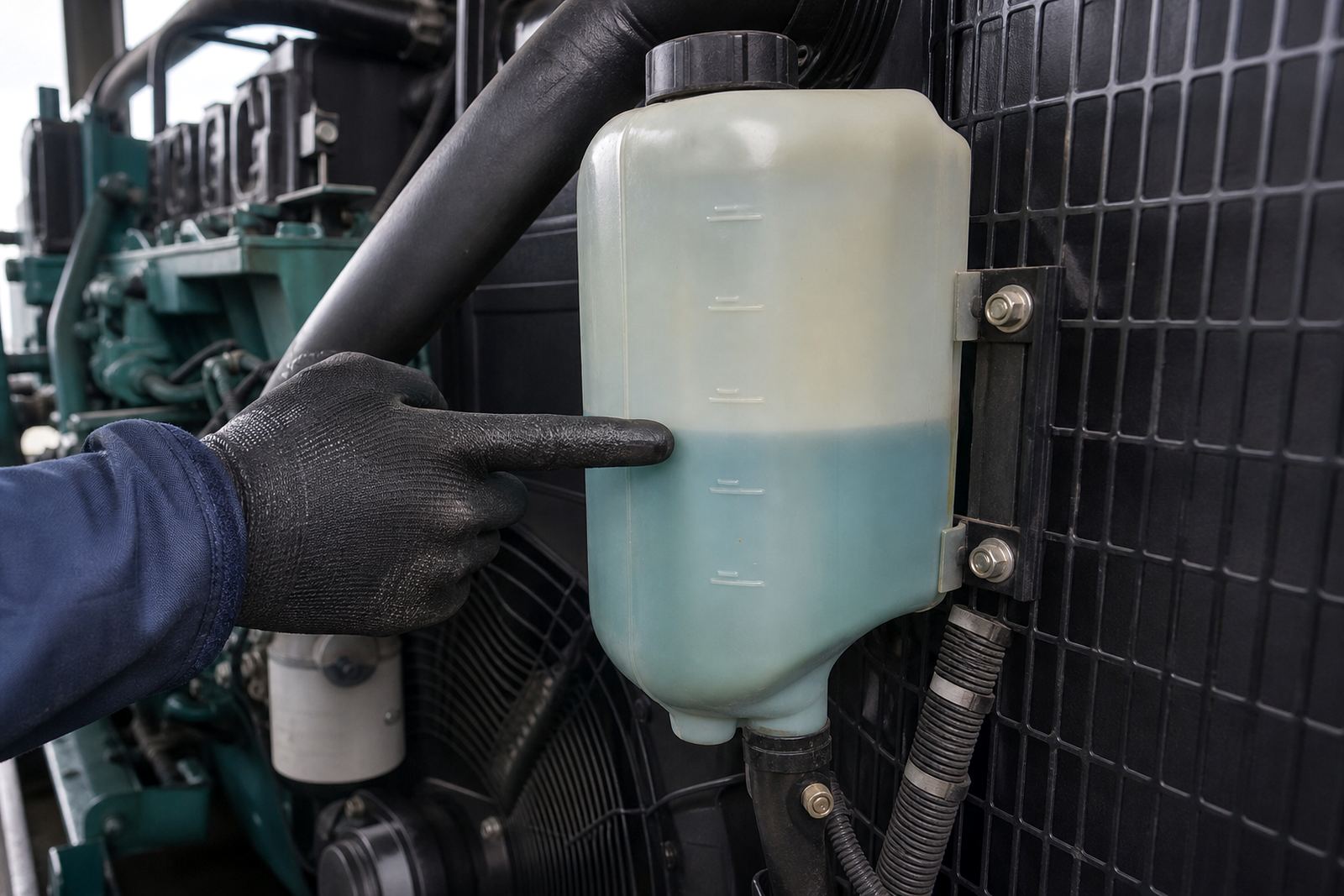
Hoses and belts should never be treated as separate from the rest of the maintenance plan. They work alongside the oil system, filters, coolant, batteries and changeover equipment, so a weakness in one area can affect the whole set. If the coolant level is correct but a hose is degrading, the result can still be overheating. If the batteries are fine but the belt is slipping, the machine may struggle to recover after start-up.
For that reason, a thorough maintenance contract should include a full visual and functional inspection of the surrounding components, not just the headline items. This is also where service record audits matter. Patterns show up over time, such as a hose that keeps softening early or a belt that needs repeated adjustment because the real issue was never corrected.
- Check hose condition during every scheduled service
- Inspect belt tension, alignment and surface wear
- Look for coolant stains, dust trails or rubber debris
- Record any repeated adjustments or part changes
- Match inspection findings to the load pattern on site
The local example: a standby set in Centurion
A practical example is a retail distribution site in Centurion that depends on a standby generator for refrigeration and security systems during outages. The generator had been starting fine, but a routine inspection picked up a softened coolant hose and a belt with early edge fraying. Neither had failed yet. Both were close enough to cause trouble on the next extended run.
Those parts were replaced during a planned visit, and the team carried out a load bank test afterwards to confirm stable operation under demand. That kind of work is far better than waiting for a Sunday callout when traffic is light but the site is dark. It also gives the client a clear service trail for future maintenance and budget planning.
Why qualified electrical hands still matter here
Even when the job seems mechanical, generator servicing often touches electrical systems and control gear. Changeover switches, starter circuits and charging arrangements must be handled by qualified people under local regulations. That protects the equipment and the people working on it. Hose and belt work may look straightforward, but if the service includes fault finding or testing around live systems, the correct safety process must be followed.
That is especially important on commercial sites where the generator supports business continuity, refrigeration or critical process equipment. A technician should isolate properly, inspect carefully and only return the set to service once the work is complete and the checks are recorded. No shortcuts. Not on a site with staff, stock and reputations on the line.
What owners should insist on in their contract
If you have a standby or prime generator on contract in Johannesburg, Pretoria, Durban, Cape Town, Polokwane or across Gauteng, ask how hoses and belts are handled during routine servicing. The best agreements do not leave them for a separate emergency. They are checked, noted and replaced before they fail. That is what keeps downtime down and reduces repeat visits.
A good contract should also include preventative site inspections, service record audits and clear feedback after each visit. The aim is not just to keep the unit running today, but to avoid the sort of failure that takes out a full shift tomorrow. Small parts, proper checks and steady maintenance habits make a large difference in the real world.