Dust, puddles and loose storage are not small things
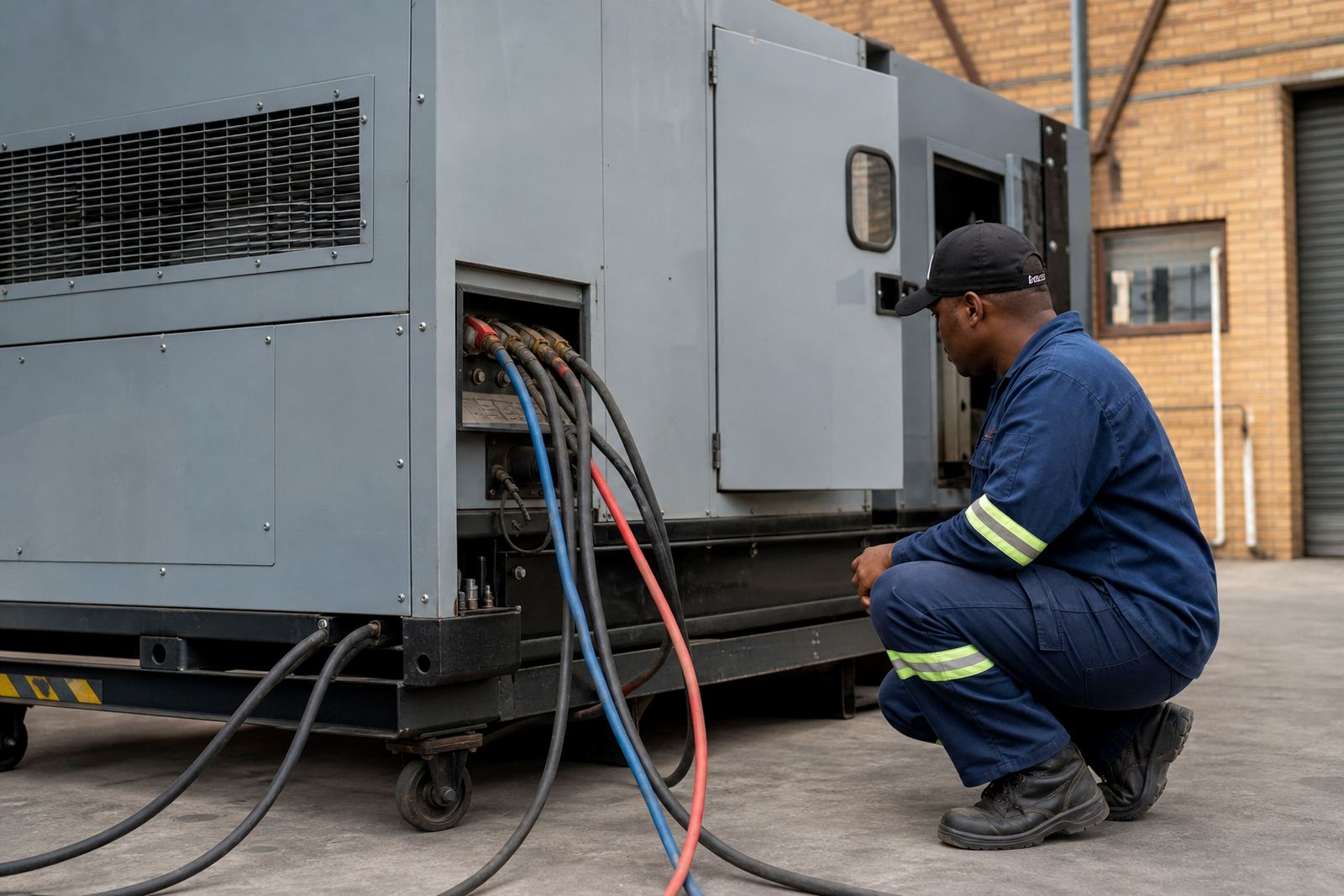
Most generator service problems do not begin with a major failure. They start with dust on intakes, oily rags near hot parts, cardboard against the enclosure, or standing water around the base frame. In Midrand and the wider Gauteng belt, fine dust gets into plant rooms and service yards quickly. On coastal sites in Durban and Cape Town, moisture and salt air add their own trouble, especially where vents, terminals and fasteners are exposed.
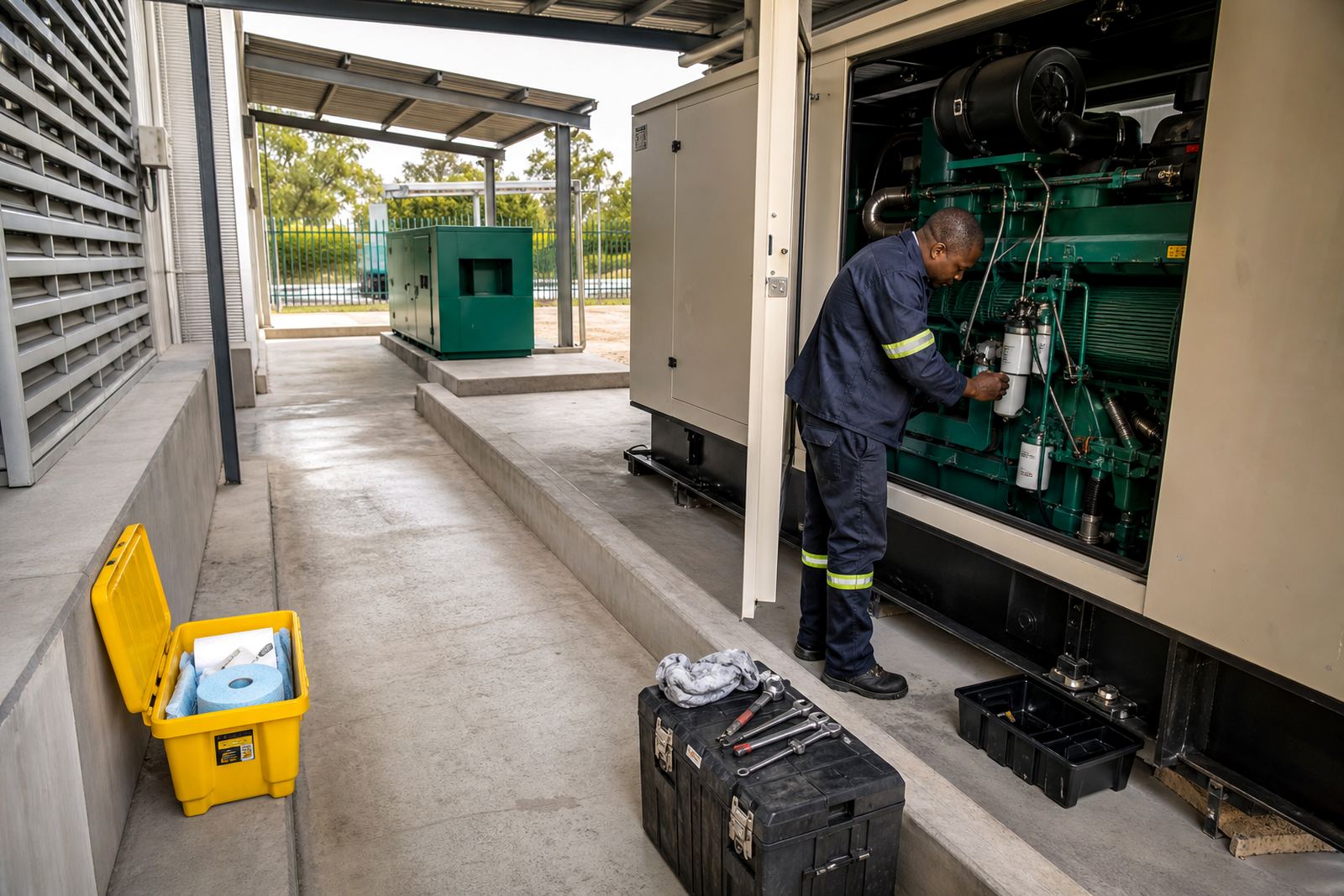
Clean access around the unit gives a technician room to check oil, filters, coolant levels, batteries and belts without battling clutter. It also makes faults easier to spot. A small leak shows sooner on a clean floor than on a floor already stained with old spills. Good housekeeping does not replace maintenance, but it makes maintenance far more effective.
- Keep the floor dry and clear of loose cables, pallets and spare parts.
- Store rags, absorbents and tools away from hot surfaces and exhaust routes.
- Mark the generator area so other staff do not use it as a storage corner.
Access matters when load shedding hits at 19:00
When the power fails after hours, the first person on site may be a security guard, an operations supervisor or a caretaker who does not work on the set every day. If the room is blocked, locked poorly, or lit badly, the response slows down. That delay can be the difference between a quick restart and a longer outage for a factory line, medical site, office block or retail centre.
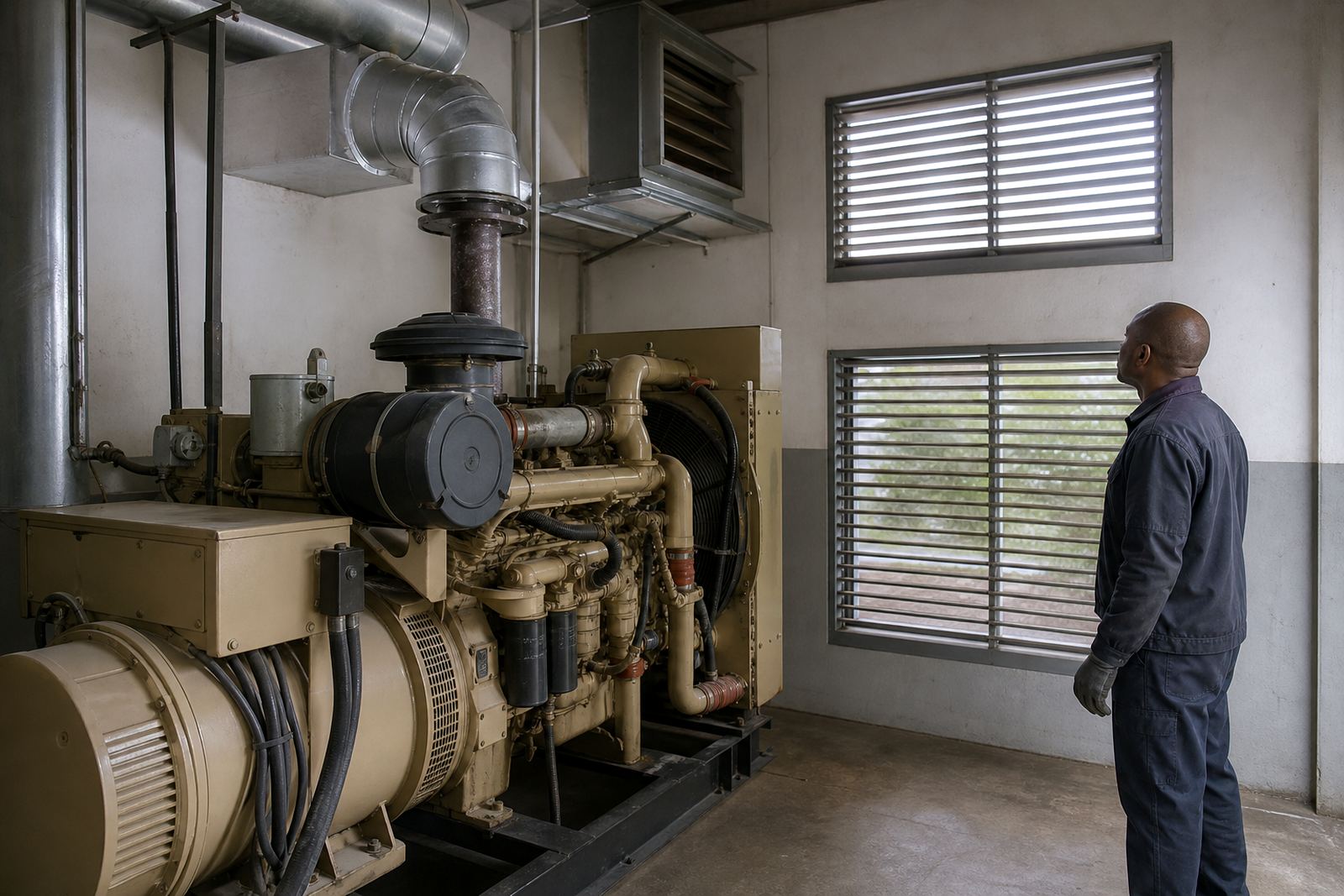
RelGen often sees rooms where the issue is not the generator itself, but the path to it. A locked panel with no clear access key, a blocked door swing, or a pile of stored material in front of the switchgear can waste valuable minutes. Good site housekeeping means the generator and related equipment can be reached safely, even during load shedding or after an evening storm.
- Keep keys, access codes and emergency contact details in a known place.
- Make sure the route to the set is lit and free of trip hazards.
- Leave enough working space around the changeover switch and control panel.
How dirt shortens the life of normal service items
Generator servicing is not only about changing oil and filters. It is also about protecting the parts that keep the set dependable between visits. Dirty surrounds pull dust into air filters faster. Wet, grimy floors encourage corrosion. Poor storage around the unit can damage batteries, hoses and wiring. Even a clean-looking room can hide a problem if loose dust is allowed to build up on guards, terminals and ventilation openings.
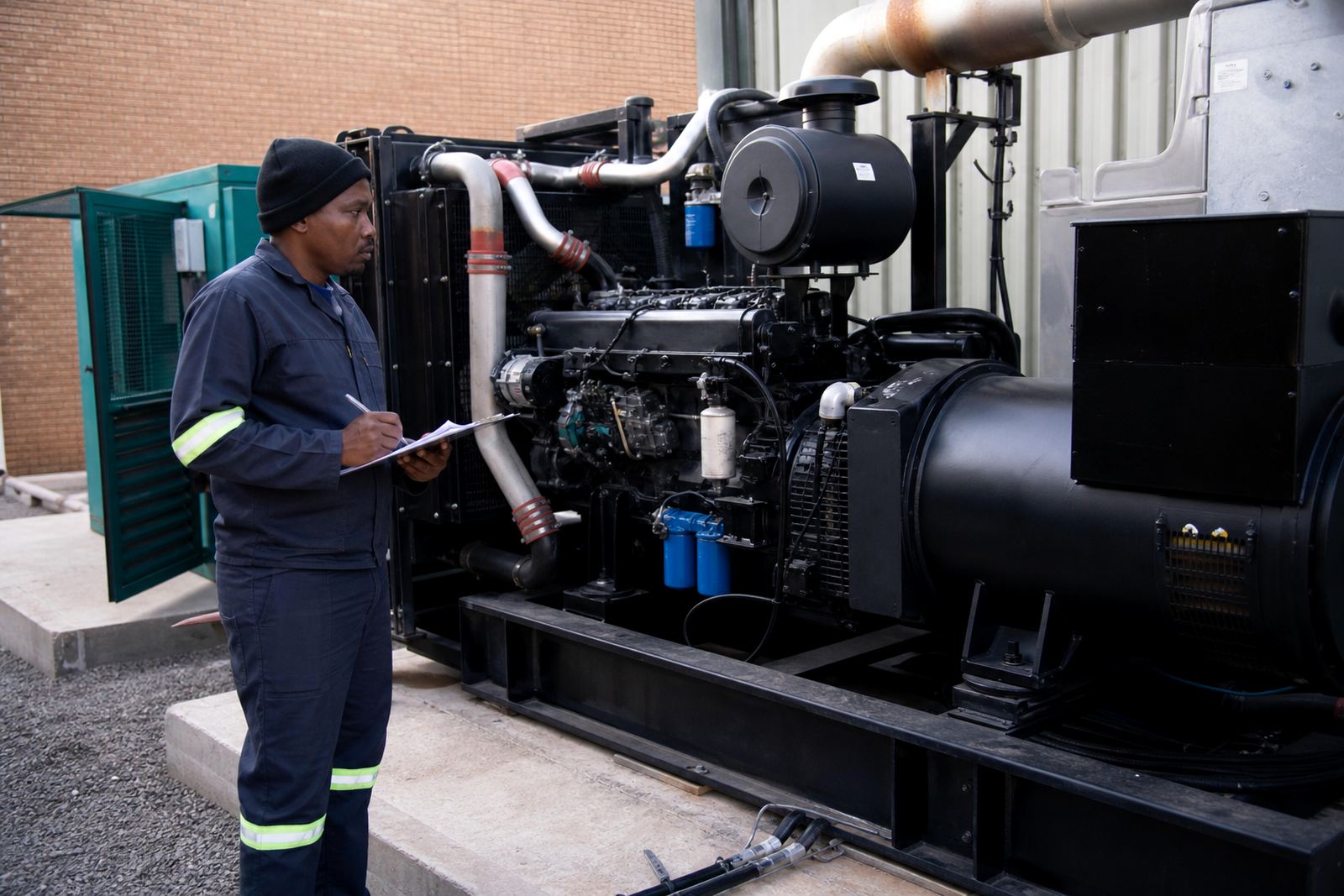
Routine housekeeping helps reduce unnecessary wear. It lets technicians inspect the starter system, fuel system, coolant system and service points properly. It also makes service record audits more useful, because repeated minor issues stand out sooner. On a well-kept site, a technician spends more time on the actual machine and less time moving obstacles just to get to it.
- Wipe up oil and coolant spills as soon as they are found.
- Do not store chemicals, paint tins or spare fuel near the generator enclosure.
- Keep vents, louvres and radiator areas free of leaves, paper and dust.
Safety is mostly about the small habits
Electrical work must be done by qualified people and in line with local regulations. That is non-negotiable. Site housekeeping supports that rule by making the work area safer before anyone touches live equipment, battery terminals or the changeover switch. A clean, orderly space reduces the chance of slips, shocks, dropped tools and accidental contact with moving parts.
Good habits also protect people who are not service technicians. In warehouses around Johannesburg, Centurion and Sandton, we have seen generator corners used as temporary storage because space is tight. It only takes one careless stack of cartons or a loose mop bucket to create a risk. If staff know that the generator area is not a dumping spot, the site becomes easier to manage and safer for everyone.
- Post a clear no-storage rule for the generator area.
- Keep fire extinguishers and spill materials visible and not buried behind stock.
- Do not let water hoses, mops or cleaning equipment sit near electrical panels.
A Midrand factory and the cost of one blocked aisle
A practical example comes from a light manufacturing site in Midrand. The generator itself was serviceable, but the room had become a storage point for spare packaging, old pallets and cleaning items. During a scheduled inspection, the technician had to move several items just to reach the battery bank and check the changeover switch. That extra time was not the main problem. The real issue was that a spilled container of liquid had gone unnoticed beside the set, and the floor surface had become slippery.
After the site team cleared the room and set a weekly housekeeping routine, the next service was quicker and safer. The technician could carry out load bank testing, inspect the battery condition, check coolant flow and review the service history without interference. The client did not change the generator. They changed the condition around it, and that made a noticeable difference.
- Give one person responsibility for the generator room each week.
- Walk the area after cleaning to check for leaks, clutter and blocked access.
- Use a short written checklist so the same items are checked every time.
What a clean site helps a service team do properly
When the environment is orderly, a service team can do the work that actually keeps the unit dependable. That includes oil and filter changes, coolant system service, battery testing, starter system repairs, fault finding, preventive site inspections and changeover switch checks. It also helps with emergency callouts, because the fault can be traced faster when the unit is not buried under clutter or grime.
For businesses working across Johannesburg, Pretoria, Durban, Cape Town and Polokwane, a clean generator area is a practical cost-saving habit. It helps protect equipment from avoidable wear, supports safer working conditions, and makes it easier to keep proper maintenance records. In other words, housekeeping is not cosmetic. It is part of the maintenance plan.
RelGen supports standby and prime generator maintenance contracts across South Africa from our Midrand base, with service teams and support across Centurion, Sandton and surrounding business areas. Clean access, clear records and regular servicing work best when they all happen together. That is how a generator stays ready when the mains fail or the site needs reliable prime power through long operating hours.