Why a small drop in coolant can turn into a big outage
A generator cooling system is not just there to keep the engine from running hot. It also helps protect hoses, seals, the radiator, the expansion tank and the engine block itself. When coolant drops below the correct level, the unit may still start, but it can overheat under a longer run, trip on high temperature, or lose output when the load climbs. That is when a routine check becomes a service issue instead of a quick top-up.
In Gauteng, dusty conditions and frequent starts during load shedding can hide early cooling problems. In coastal areas like Cape Town and Durban, moisture and corrosion can make small leaks harder to spot. A level check gives a technician an early warning before the problem turns into downtime. It also helps confirm that the right mixture is still in the system, not just a random top-up of water.
What low coolant usually tells a technician
Low coolant does not always mean the same fault. A proper inspection looks for the reason behind the drop, not just the symptom. If the level keeps falling, there is usually a path for loss somewhere in the system or a component that is not holding pressure.
- External leaks at hose joints, clamps, the radiator, water pump or expansion tank
- Internal loss where coolant is entering the engine or another sealed part of the system
- Pressure cap issues that allow coolant to vent too early
- Evaporation or overflow from incorrect filling or a weak cooling fan setup
- Corrosion, scale or sludge that reduces circulation and can push temperatures up
On site, the technician will also check for stains, dried residue, smell, and signs of dampness around the base of the set. A clean floor does not always mean the system is sound, but a wet patch around the unit is a clear warning that needs attention.
What a proper coolant level inspection includes
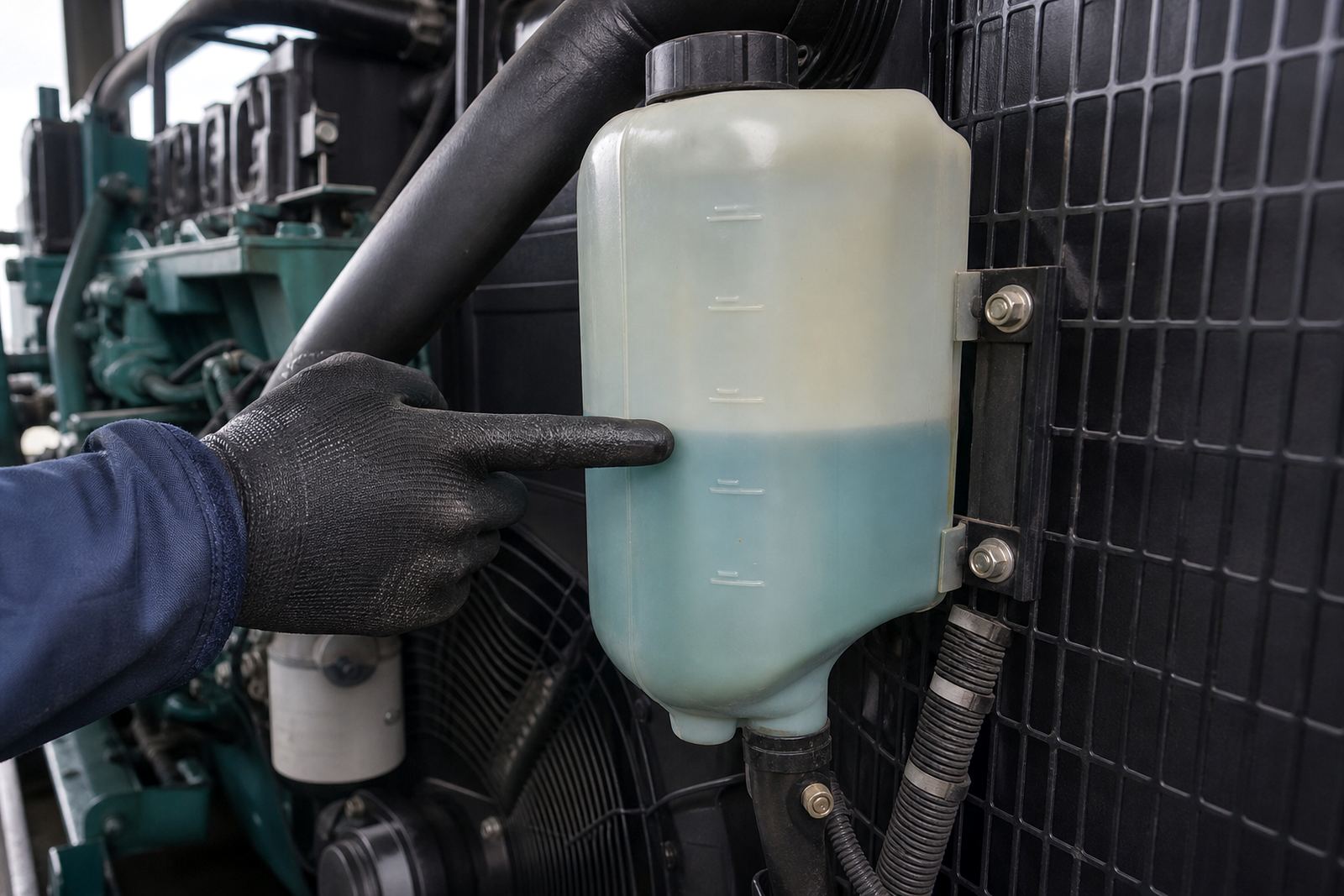
Coolant level checks are best done as part of a scheduled service, not only after the generator has overheated. The engine should be inspected when it is safe to do so, and the level should be checked against the manufacturer guidelines for that specific unit. A quick glance is not enough on its own because some systems show the correct level only when cold.
- Checking the coolant level in the radiator and expansion tank
- Inspecting hoses, clips, radiator fins and the cap for damage
- Confirming the coolant mix is suitable for the climate and the duty cycle
- Looking for rust, sediment or oil contamination in the coolant
- Testing for pressure loss where repeated top-ups are needed
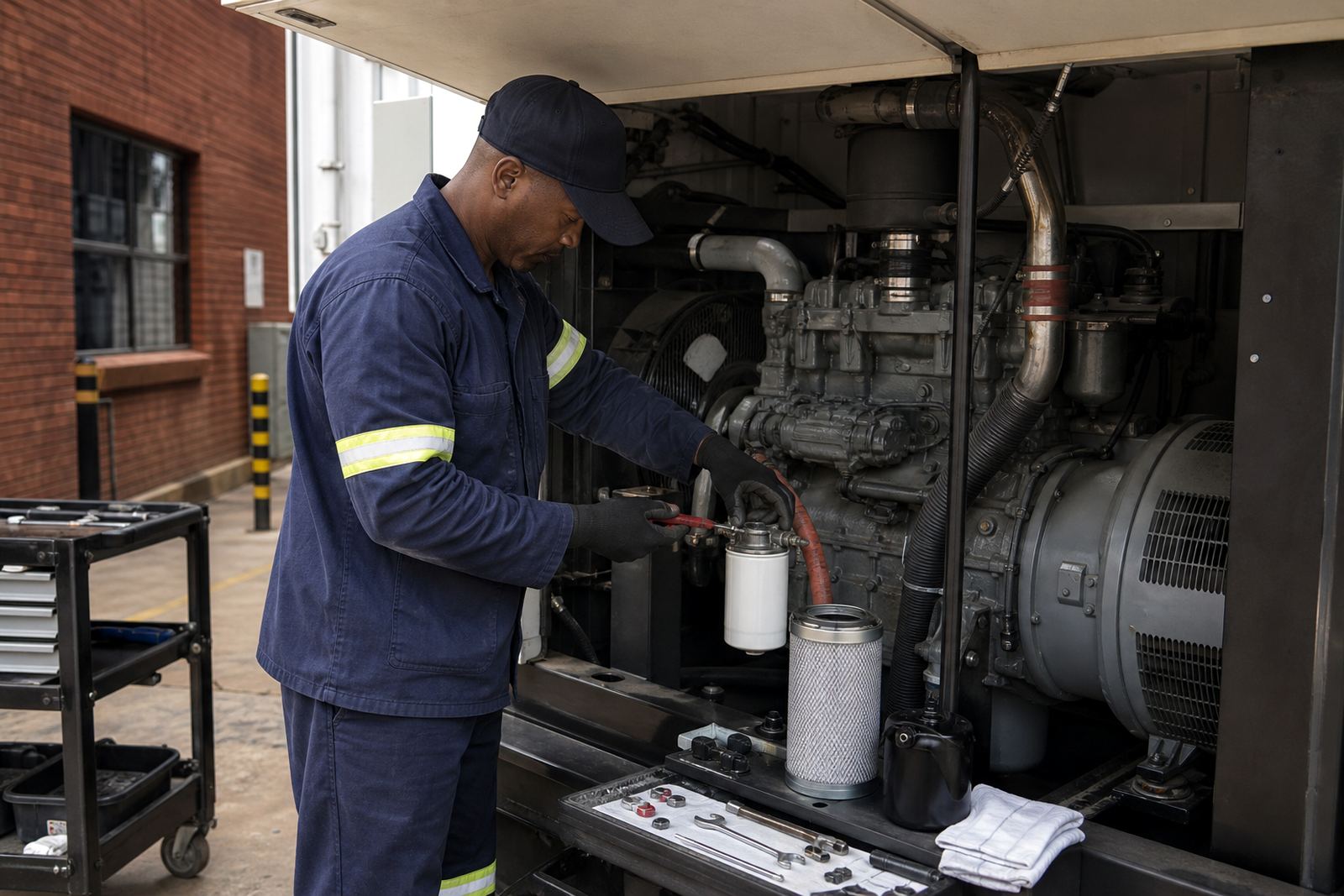
If the generator sits on a business park in Centurion or Sandton, the site may have restricted access and limited time windows for maintenance. In those cases, it helps to combine the level check with oil, battery and filter checks so the unit only needs one planned visit instead of several short interruptions.
How hot weather and long standby periods affect the system
Generators that run only during outages can sit for weeks or months before they are called on. That is where weak hoses, old coolant and a tired cap can stay unnoticed. Then the first real outage arrives, often on a hot afternoon, and the cooling system has to cope immediately with load and heat. If the level is already low, the margin is gone.
Prime generators used for longer operating hours face a different pressure. They cycle more often, so coolant ages faster and any minor leak becomes a repeated loss. In places like Polokwane and Johannesburg, dust can also build up on the radiator face and reduce air flow. The result is the same: temperature rises faster than it should, and the engine starts working harder than necessary.
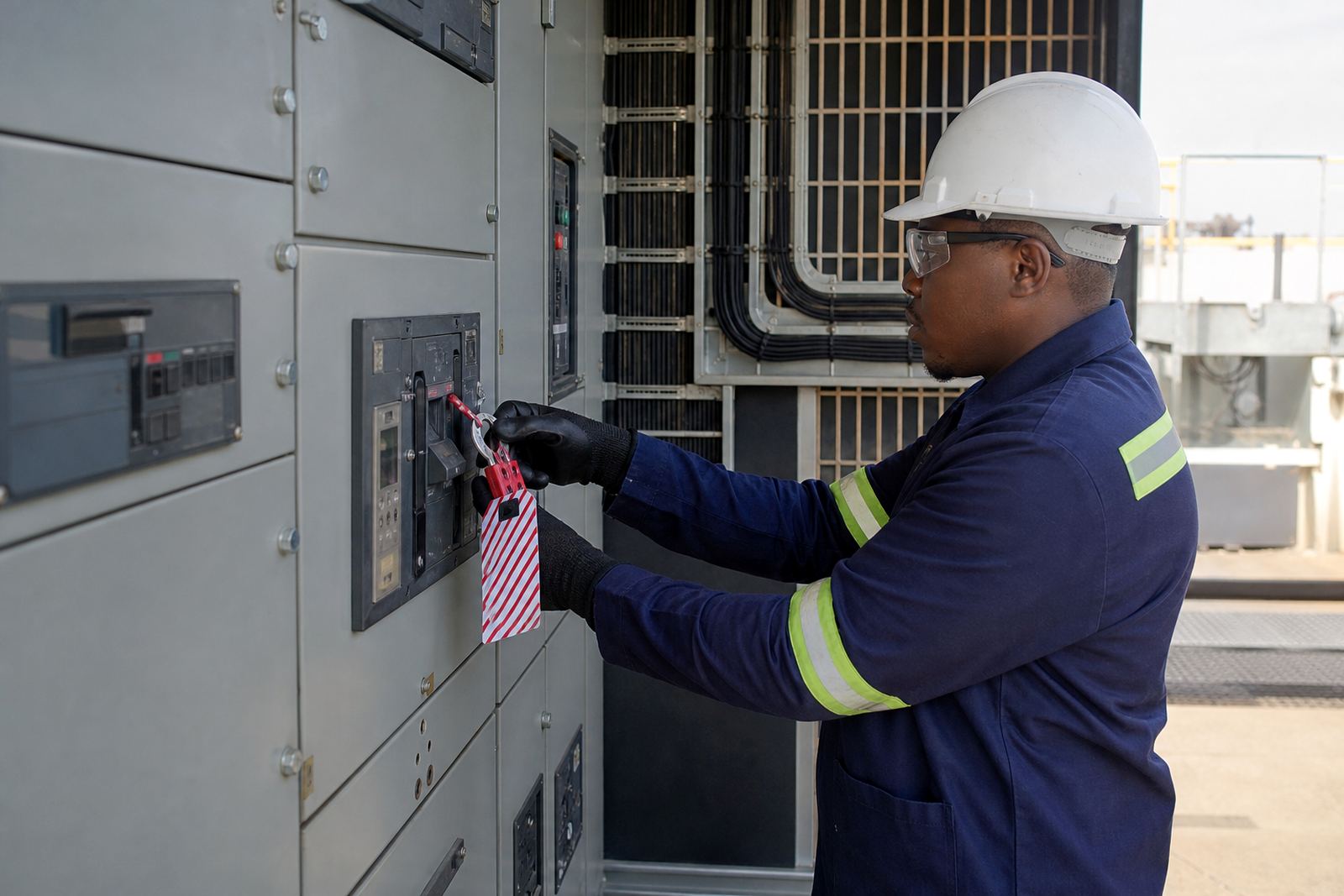
Routine inspections also help identify whether the issue is really coolant, or a fault in the fan, thermostat, water pump, or even the control settings. Electrical work must always be handled by qualified people in line with local regulations, especially where the generator is linked to a changeover switch and site distribution. That keeps the service safe and compliant.
A Midrand workshop lesson that applies on many sites
A distribution site in Midrand called in after a standby set showed a high temperature alarm during a morning outage. The unit had started well on previous tests, but the coolant level had dropped slightly each month and nobody had treated that as urgent. When the technician inspected it, the radiator cap was not holding pressure properly and there was a small seep at a hose clamp. Neither fault looked dramatic on its own, but together they were enough to cause overheating once the generator carried a full site load.
After the clamp was corrected, the cap replaced and the system refilled with the correct mixture, the unit went back into a proper service cycle. A follow-up load bank test confirmed it held temperature much better under sustained demand. The lesson was plain: a low level is often the first visible sign of something else, and the earlier it is caught, the less chance there is of a shutdown.
What good maintenance records reveal over time
Coolant level checks become more useful when they are written down properly. A service record should show what was found, how much coolant was added, whether there were signs of leaks, and if any parts were replaced. Over several visits, patterns start to appear. A small but repeated loss tells a different story from a one-off top-up after a major heat wave or a long run under load.
- Repeated topping-up points to a leak that still needs tracing
- Slow contamination can suggest an internal issue or poor maintenance practice
- Stable levels over several visits usually show the system is holding pressure well
- Matching coolant checks with battery testing and fuel system inspections gives a fuller picture of generator health
For contract clients in Pretoria, Durban, Cape Town or right here in Midrand, those records make planning easier. They help the service team decide when to inspect more closely, when to schedule a deeper flush, and when a part should be replaced before it fails.