Why the calendar matters more than the noise of a running set
A generator can sound healthy right up until the first heavy rain, the first long load-shedding stretch, or the first high-demand week on site. That is why Seasonal Maintenance Timing is not just a housekeeping task, it is a practical way to reduce avoidable callouts and protect operations when there is less room for delay.
For businesses in Midrand, Johannesburg, Pretoria and the coastal cities, seasonal timing is about matching the service plan to local risk. Summer brings dust, storms and hotter running temperatures. Winter often brings heavier electrical demand and longer periods where standby units are expected to start at short notice. If a set has not had oil and filters changed, coolant checked, batteries tested and the changeover gear inspected before those periods, small faults can grow fast.
RelGen handles maintenance contracts for standby and prime generators across South Africa, with scheduled servicing and preventative site inspections set around the way each site actually works. That may mean a quieter period before month-end production, school holidays, year-end shutdowns or the first wet months at a coastal site.
The seasons that usually expose weak points first
Different times of year test different parts of a generator. In Gauteng, dust and heat often show up first in air filtration, coolant condition and battery performance. In Durban and Cape Town, humidity and salt-laden air can punish terminals, cable ends and starting systems. In Polokwane, long hot stretches can put extra stress on cooling and fuel systems.
- Before summer: check coolant levels, belts, hoses, radiators and battery condition.
- Before winter: test starting performance, battery charge, automatic transfer functions and service records.
- Before storm season: inspect enclosures, drainage, fuel lines and any corrosion on terminals.
- Before year-end shutdowns: verify the set will run under load, not just idle on test start.
When the calendar changes, the failure pattern changes too. A battery that starts well in mild weather may struggle on a cold morning. A cooling system that seems fine in April can run hot during a December outage. Planning around these shifts is cheaper than waiting for a breakdown in the middle of trading hours.
What a proper seasonal service should cover
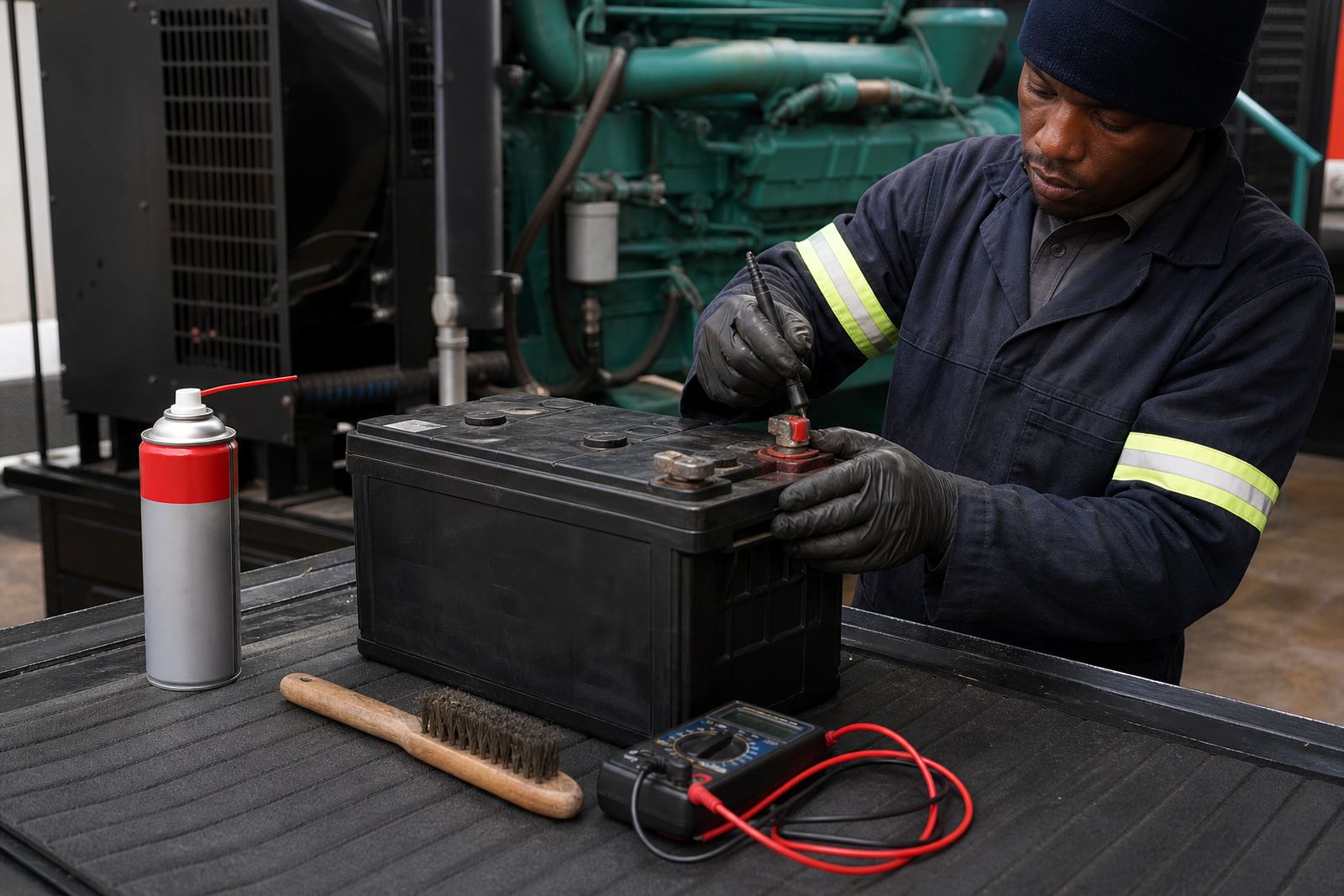
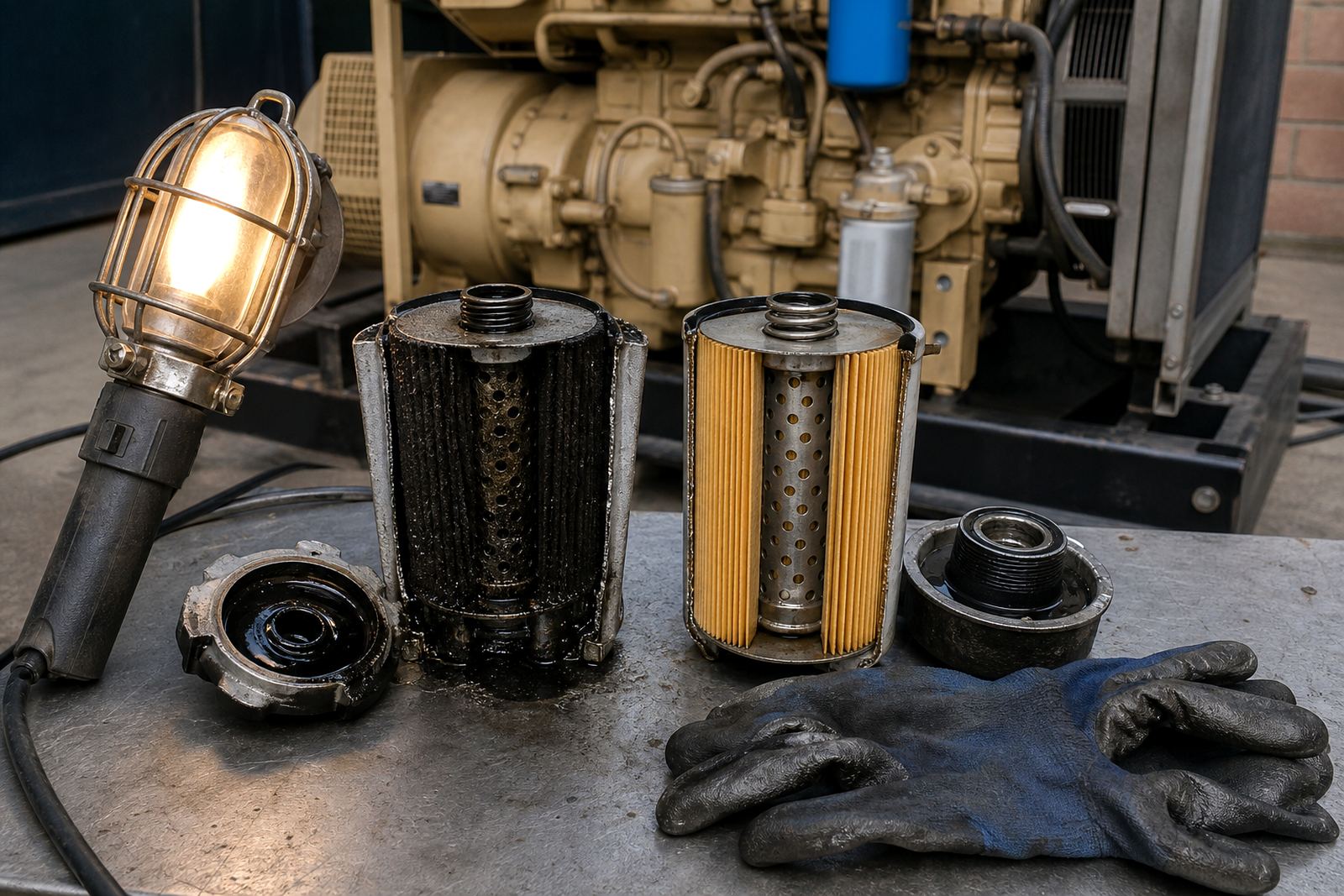
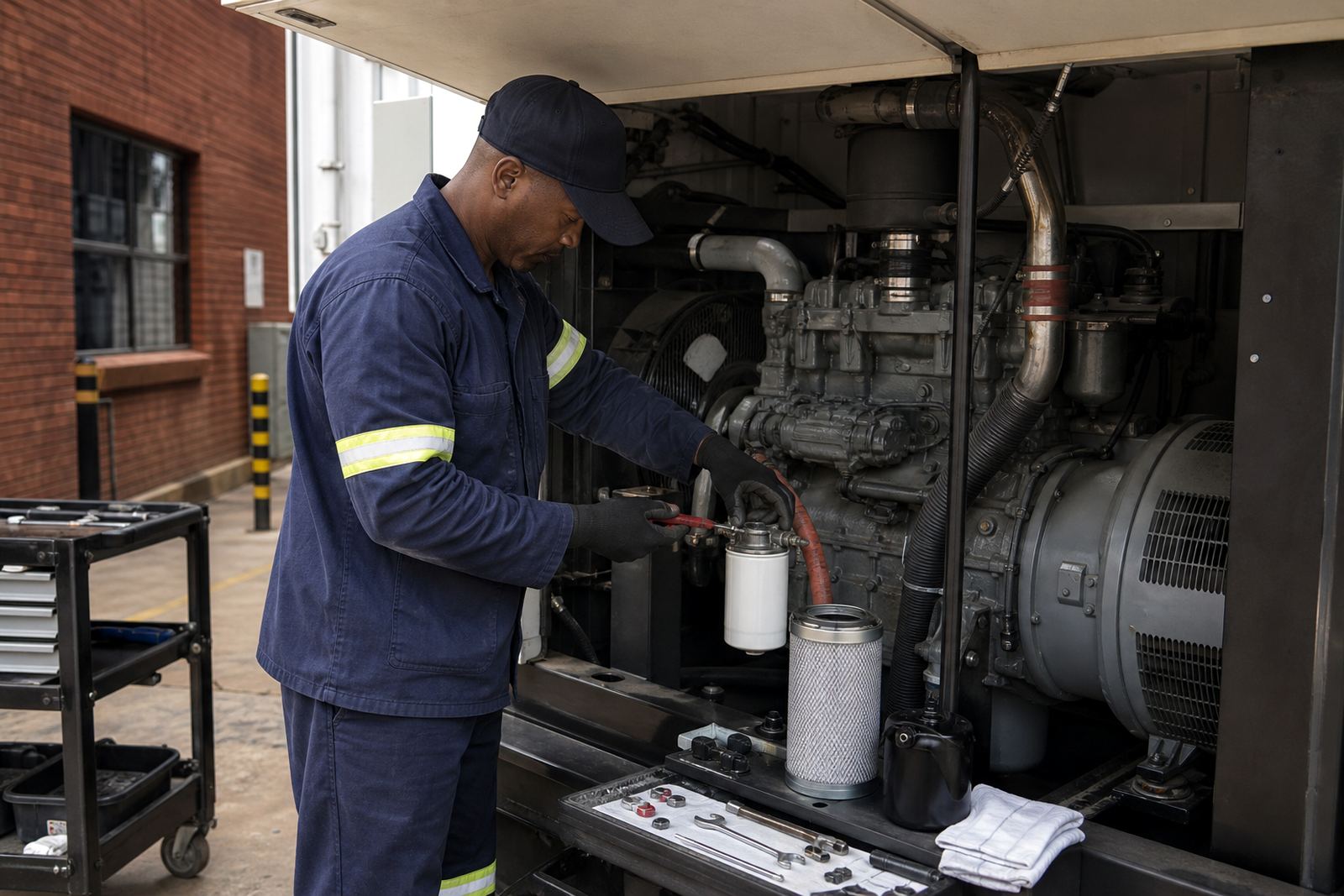
A seasonal service is more than a quick walk-around. It should check the items that are most likely to fail when demand rises or conditions turn harsh. Oil and filter changes matter because dirty oil loses protective value and can hide wear. Coolant system service matters because overheating is one of the fastest ways to damage a set. Battery testing matters because many callouts begin with weak cranking power rather than a major engine fault.
Changeover switch checks also matter. Electrical work must be handled by qualified people under local regulations, and the switchgear that transfers load between utility supply and generator supply must operate safely every time. Fault finding should include starter system repairs, fuel system repairs, and a review of any alarms or unusual readings captured during earlier runs.
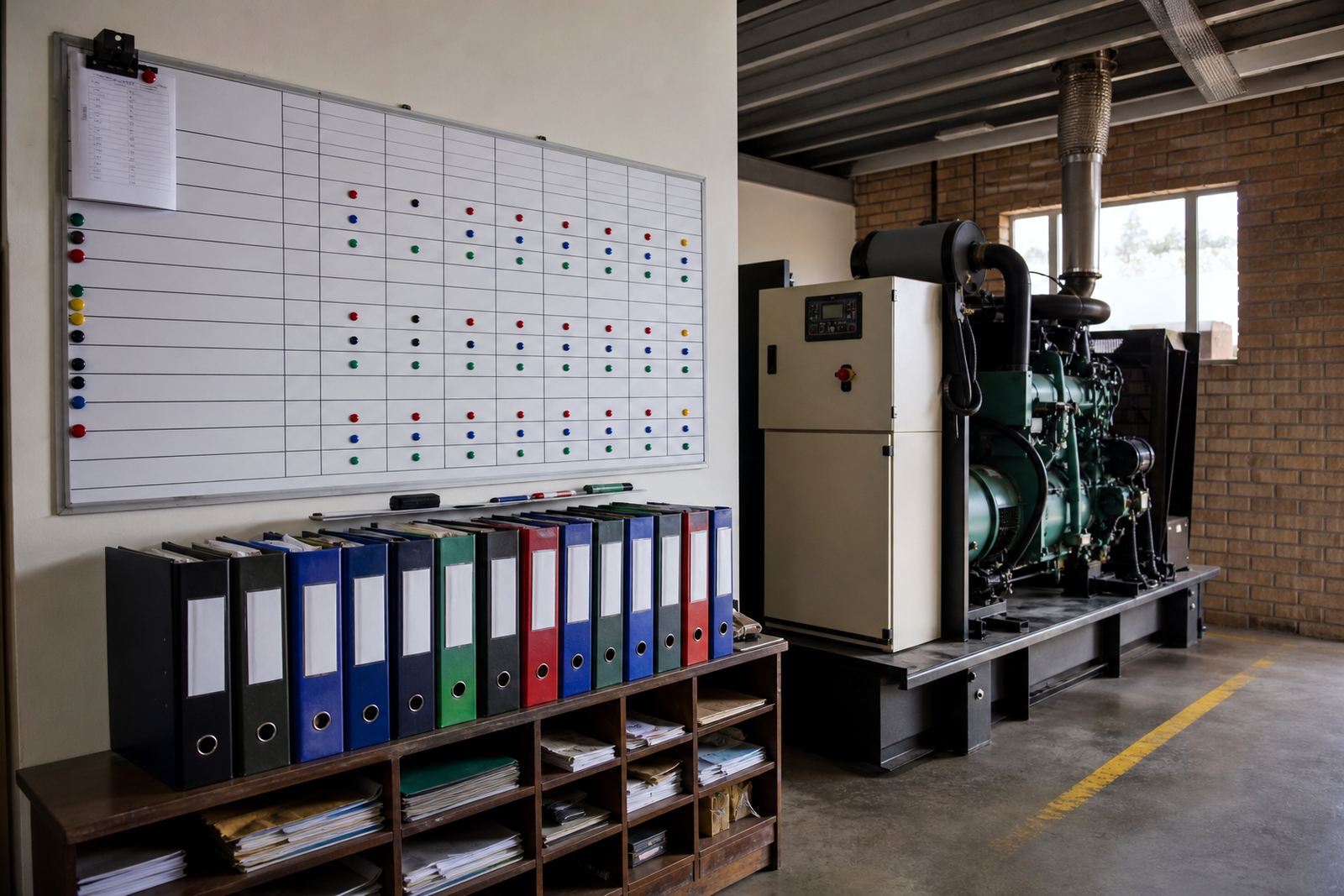
Good service records are part of the work too. If a site has repeated alarms, uneven running hours, or service gaps, those notes help shape the next maintenance visit. It is a practical way to spot patterns before they turn into downtime.
When to schedule work on a South African site
The best timing depends on how the site uses power, but there are a few common patterns. Many businesses service before heavy trading periods, before major shutdowns, and before weather that tends to increase outage risk. In manufacturing, that may be ahead of peak production. In construction, it may be before the next phase of site work starts. In commercial buildings, it may be before holiday occupancy changes or planned municipal interruptions.
A Midrand warehouse, for example, may schedule servicing in late winter so the generator is ready for summer storms and higher cooling demand. A Durban site may plan earlier checks before humid months begin, especially where the set sits close to the coast. In Pretoria and Centurion, many sites choose a service window before year-end because staffing and load patterns change fast.
RelGen also supports emergency callouts, but emergency work is always more disruptive and expensive in time than planned servicing. A contract that includes scheduled servicing, load bank testing and preventive site inspections gives a site a better chance of staying ahead of failure instead of reacting after the lights go out.
Why load bank testing belongs in the seasonal plan
A generator can appear fine if it only runs briefly with no real load. That is why load bank testing is useful in a seasonal programme. It places a controlled demand on the set so technicians can see how it performs under pressure. Weak alternator behaviour, overheating, poor fuel delivery and unstable governor response are often easier to spot under proper load.
This matters most before times when the generator may need to carry a full site or run for long periods. If a set only gets light test runs, deposits can build up and hidden faults can stay hidden. A proper load bank test helps confirm the unit is able to do the work expected of it, not only start and idle.
- Use load bank testing after major repairs.
- Use it before peak demand periods on critical sites.
- Use it when the generator has run lightly for long stretches.
- Use it if the service record shows unexplained temperature or voltage issues.
A local example from Midrand and the value of timing
A distribution site in Midrand can lose valuable hours if its generator fails during a stormy week when deliveries are already delayed. The same site might have a perfectly serviceable set in July, then face battery weakness, coolant pressure issues and starter trouble by December if no seasonal checks were done. That is often how avoidable problems build up, one missed service at a time.
For sites across Johannesburg, Sandton, Pretoria, Durban, Cape Town, Polokwane and Centurion, the timing question is often not whether servicing is needed but when it will cause the least disruption. A well-planned visit lets the team isolate the set, carry out inspections, test changeover switches safely and update the service record without forcing an unplanned shutdown. The work is more efficient, and the site gets a clearer picture of what needs attention before risk rises.
Thabo Engelbrecht and the RelGen team in Midrand work with service contracts that keep timing practical. Naledi Shezi oversees operations, Johan Matlala manages contracts, Ayanda Khoza coordinates field service, Muneerah Daniels leads technical support, Sibusiso Wessels handles senior technician oversight and Rikus Botha keeps stores and logistics moving so parts and consumables are ready when the site window opens.