Why a filter earns its keep inside the sump
Generator oil is there to lubricate moving parts, carry heat away from critical surfaces and help the engine stay within safe operating limits. As it works, the oil picks up tiny particles from normal wear, combustion by products and outside contamination that enters during servicing. The oil filter sits in the path of that flow and removes a large part of that material before it can circulate again.
When a filter is doing its job properly, bearings, camshafts, injectors and other internal parts are less likely to scuff or score. That matters on standby units that may sit for weeks and then run hard during an outage, as well as prime sets that operate for long hours on construction sites, farms or processing plants. A clean filter supports cleaner oil, and cleaner oil supports longer engine life.
What happens when replacement is delayed too long
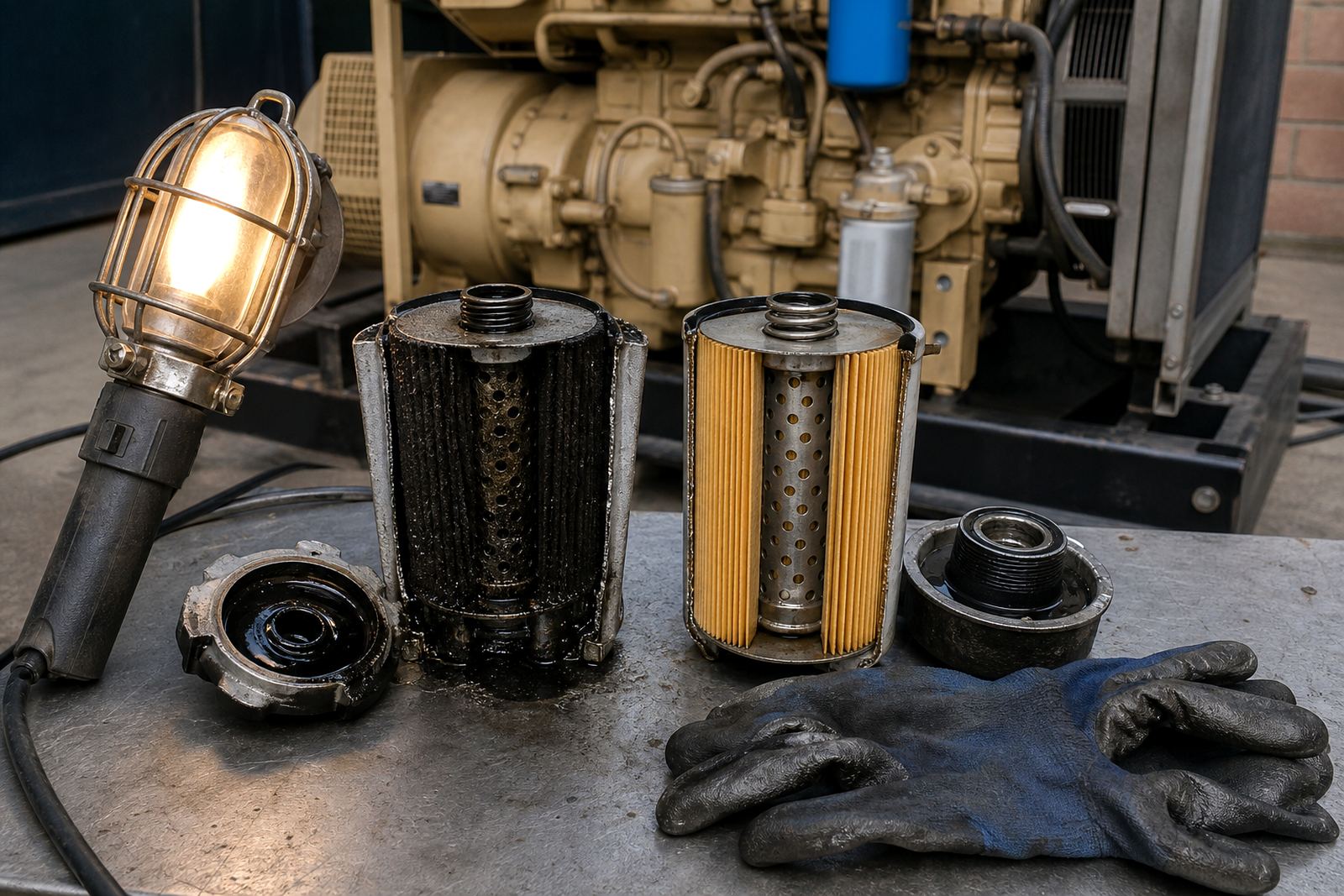
An overdue oil filter does not usually fail in one dramatic moment. More often, it gradually loads up with debris until oil flow becomes restricted or unfiltered oil begins to pass through parts of the engine. That is when wear starts to climb, and small problems become expensive repairs.
Common warning signs include darker oil sooner than expected, a drop in oil pressure, increased engine noise or a history of filters that look heavily contaminated at every service. In some cases the issue is not the filter alone but poor service practice, incorrect oil grade or dust getting in during top ups. A proper maintenance plan checks the whole picture, not only the canister itself.
- Restricted oil flow can stress bearings and turbo components
- Bypassed contamination can scratch internal engine surfaces
- Long intervals between changes can shorten service life
- Heavy soot loading can make oil break down faster in hot conditions
A Midrand site lesson from a dusty yard and a busy week
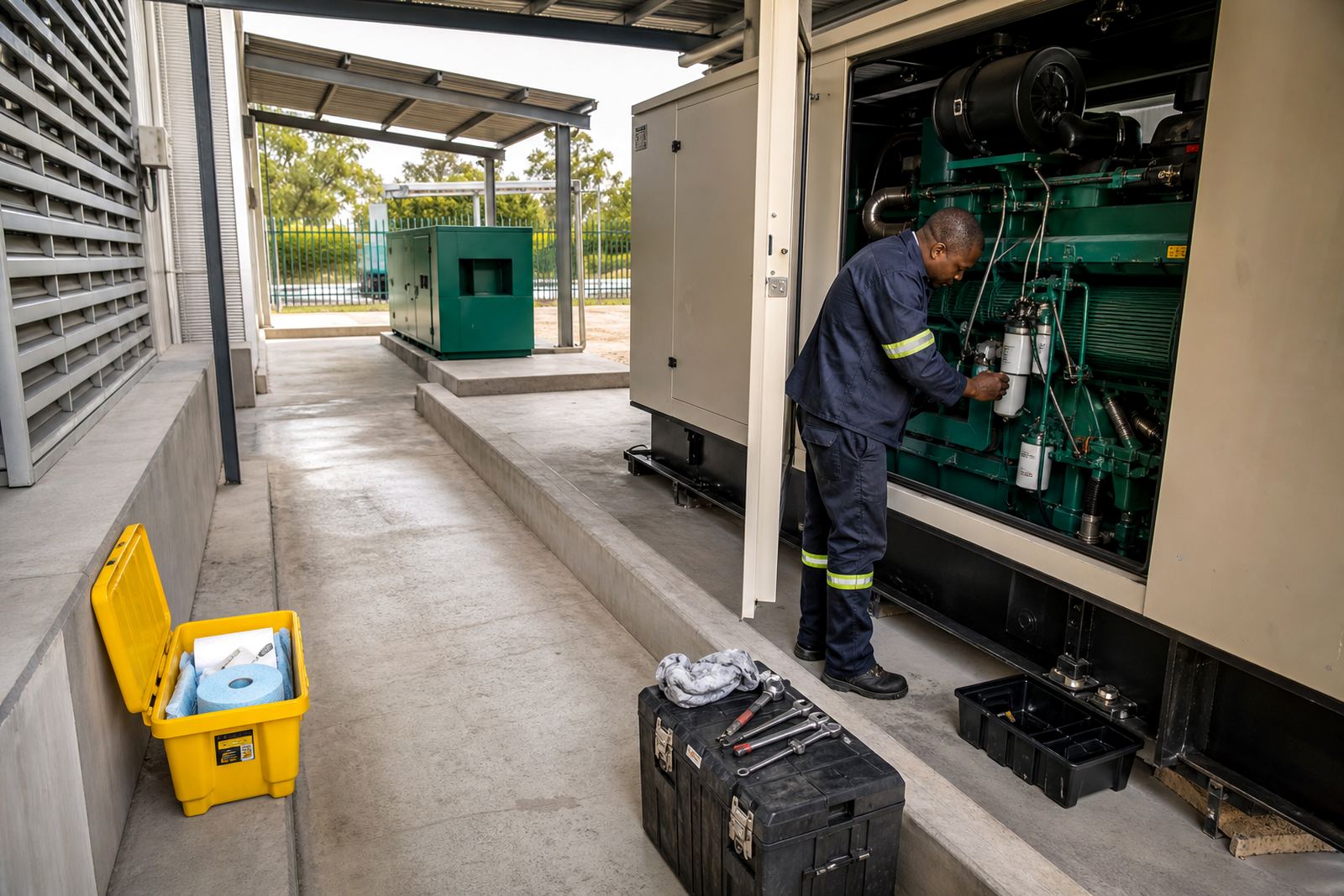
On a commercial site in Midrand with forklift traffic, generators often work in a dusty environment where fine grit settles on panels, hoses and service points. If the set is also carrying emergency loads during load shedding, the oil filter has to cope with both idle time and sudden demand. That mix is hard on any engine, especially if the unit gets serviced late or the enclosure is not cleaned properly before work starts.
We see this often on contracts where a generator is expected to step in for short outages and then stand down again. The engine may look fine from the outside but inside the oil has been doing a lot of work. If the filter is blocked or the wrong element has been fitted, the safest path is a full service check, not a quick top up and a hope for the best. The machine can keep going for a while, but it is not happy.
What a proper oil service should include
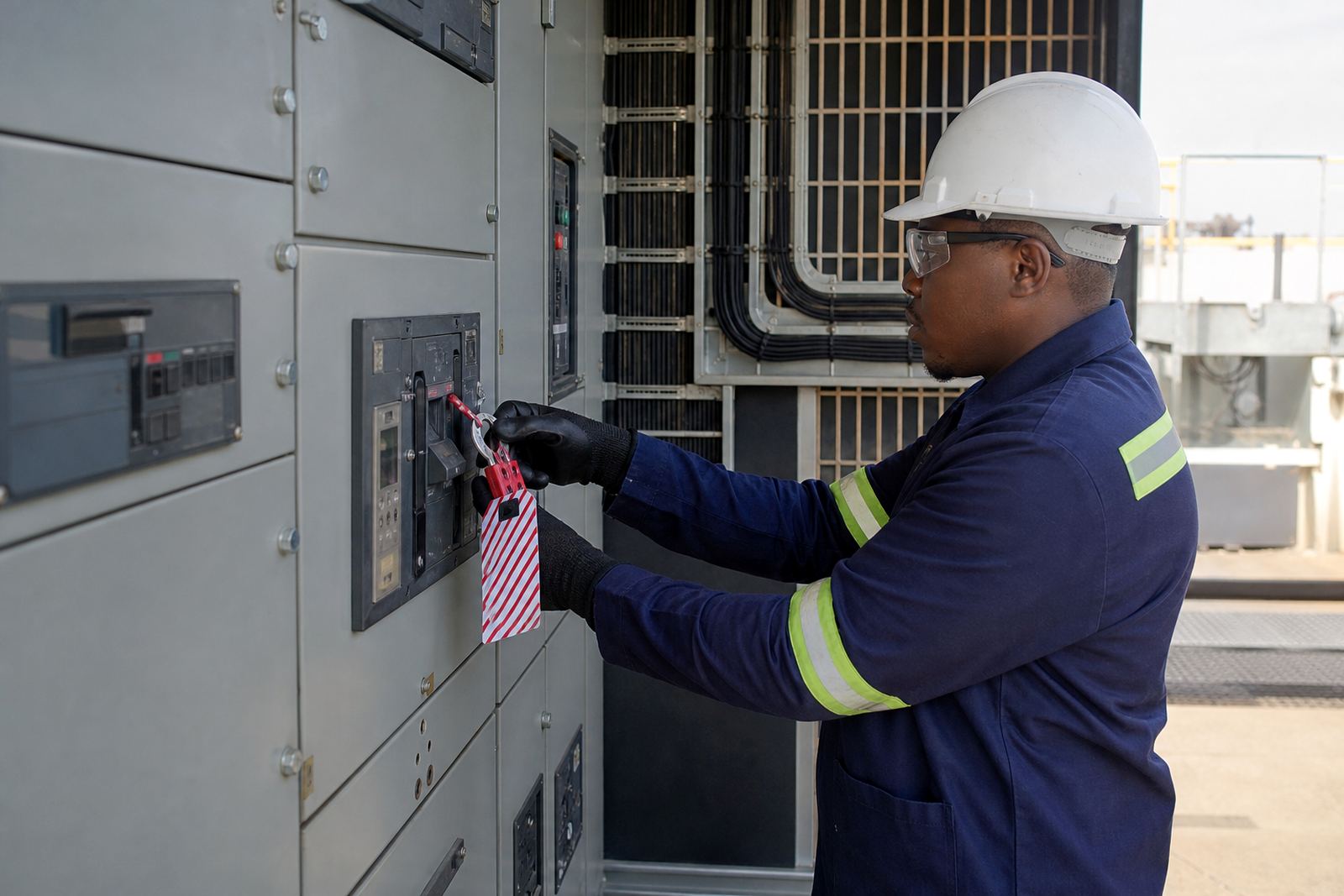
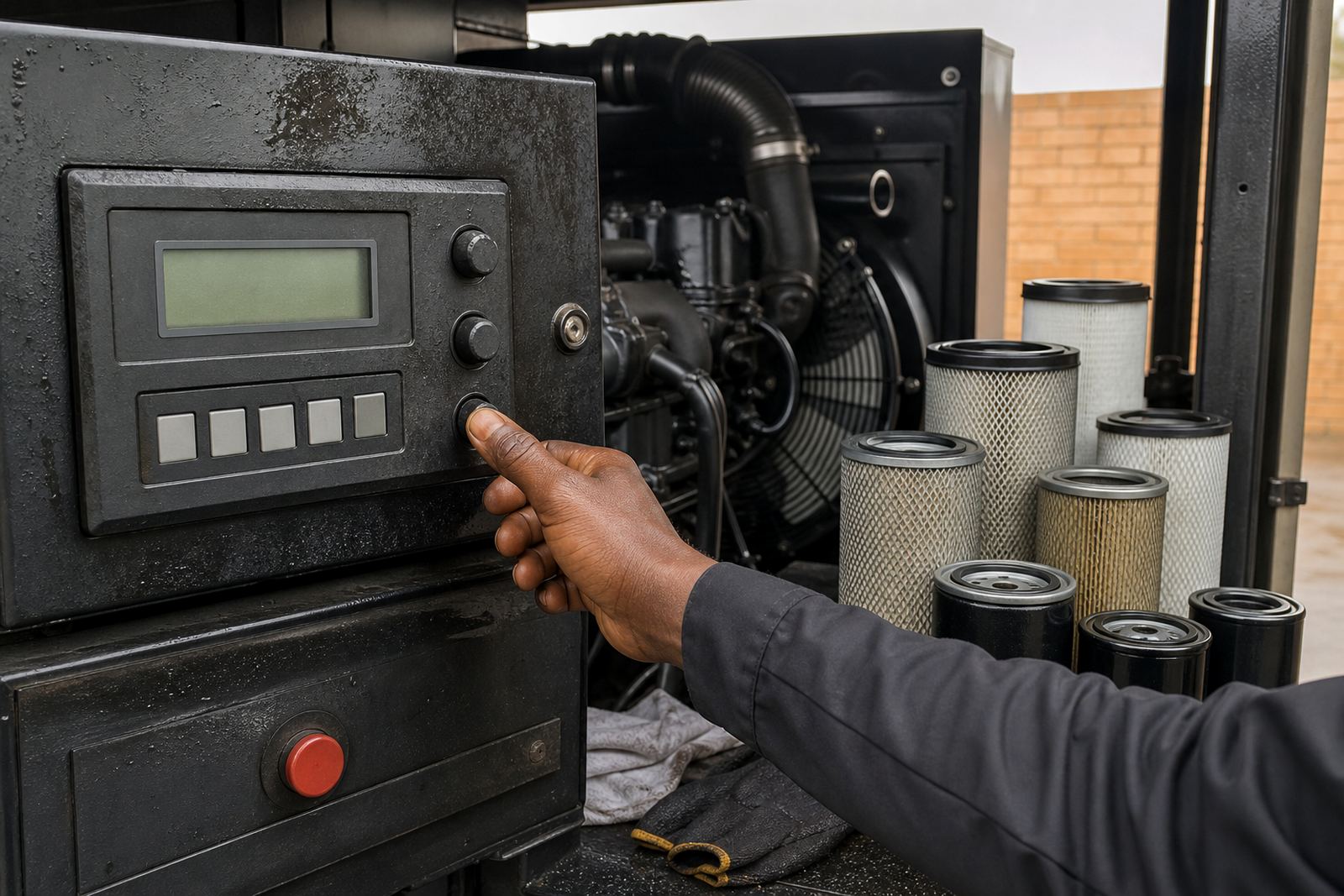
Oil filter replacement should never be treated as an isolated task. A qualified technician should inspect the full lubrication circuit, check for leaks, review service records and make sure the correct filter and oil are matched to the engine specification. Electrical work, including any checks linked to alarms, starter circuits or control systems, must be handled by qualified people under local regulations.
A thorough service usually includes more than swapping a part. It should also look at oil condition, the state of sealing surfaces and whether the engine has any contamination from coolant or fuel. If the filter housing is damaged or poorly tightened, a fresh element alone will not solve the problem.
- Drain and inspect engine oil for signs of sludge or metal
- Fit the correct oil filter and replace seals where needed
- Check for leaks after start up and after load transfer
- Record engine hours and service dates for contract tracking
How service intervals change from one site to the next
There is no single interval that suits every generator. A standby set in Sandton may run briefly during municipal interruptions, while a unit in Durban may face higher humidity and corrosion risk, and a site in Polokwane may see dust and temperature swings that affect service needs. The right interval depends on run hours, fuel quality, loading pattern, location and whether the machine is exposed to coastal air or heavy construction dust.
That is why maintenance contracts work well for business sites with more than one generator or a mixed fleet across Johannesburg, Pretoria, Cape Town and other centres. Regular servicing makes it easier to replace filters before they choke, and to catch early issues with hoses, seals and breathers. It also keeps service records in order, which helps during audits and handovers.
What timely replacement protects beyond the engine
Oil filters do more than protect moving parts. They support overall reliability, reduce the chance of breakdown callouts and help preserve the rest of the maintenance schedule. When the engine is clean internally, other systems often stay in better shape too. Fuel system repairs, starter system repairs, coolant checks and battery testing all become easier when the generator has not been fighting unnecessary contamination for months.
For businesses that rely on standby power during outages, a neglected filter can become a small fault that creates a bigger interruption. That matters to workshops, production lines, refrigerated storage and sites that cannot afford a stoppage during peak demand. A filter is a modest component, but the consequences of overlooking it can be costly and plain frustrating.
RelGen services standby and prime generators on maintenance contracts from Midrand across South Africa, with scheduled servicing, load bank testing, changeover switch checks and preventive site inspections. If the service plan is tight and the records are current, the oil filter is far less likely to catch anyone out at the worst possible time.