Why fuel filters matter before the generator starts coughing
Fuel filters are there to catch dirt, rust, water and other debris before it reaches the engine. In generator servicing, that matters because a standby unit may sit for weeks with fuel ageing in the tank, then be expected to start instantly during a load shedding event or an unscheduled outage.
When a filter blocks up, the engine may struggle to start, hesitate under load, or cut out after a short run. In some cases the fault looks like a battery issue or a starter fault, but the real problem is restricted fuel flow. That is why a proper service plan should include filter checks, fuel condition checks and a look at the full fuel system, not just the engine oil and coolant.
What dirty fuel looks like in a Midrand yard or workshop
Many fuel issues begin with ordinary site conditions. Dust from construction, moisture from coastal humidity, poor storage practices and condensation in tanks can all shorten filter life. In Gauteng, we often see units that have sat through winter mornings and summer storms, then show signs of water contamination or fine sediment in the bowl or element.
- Hard starting after the unit has been idle for a while
- Loss of power when the load increases
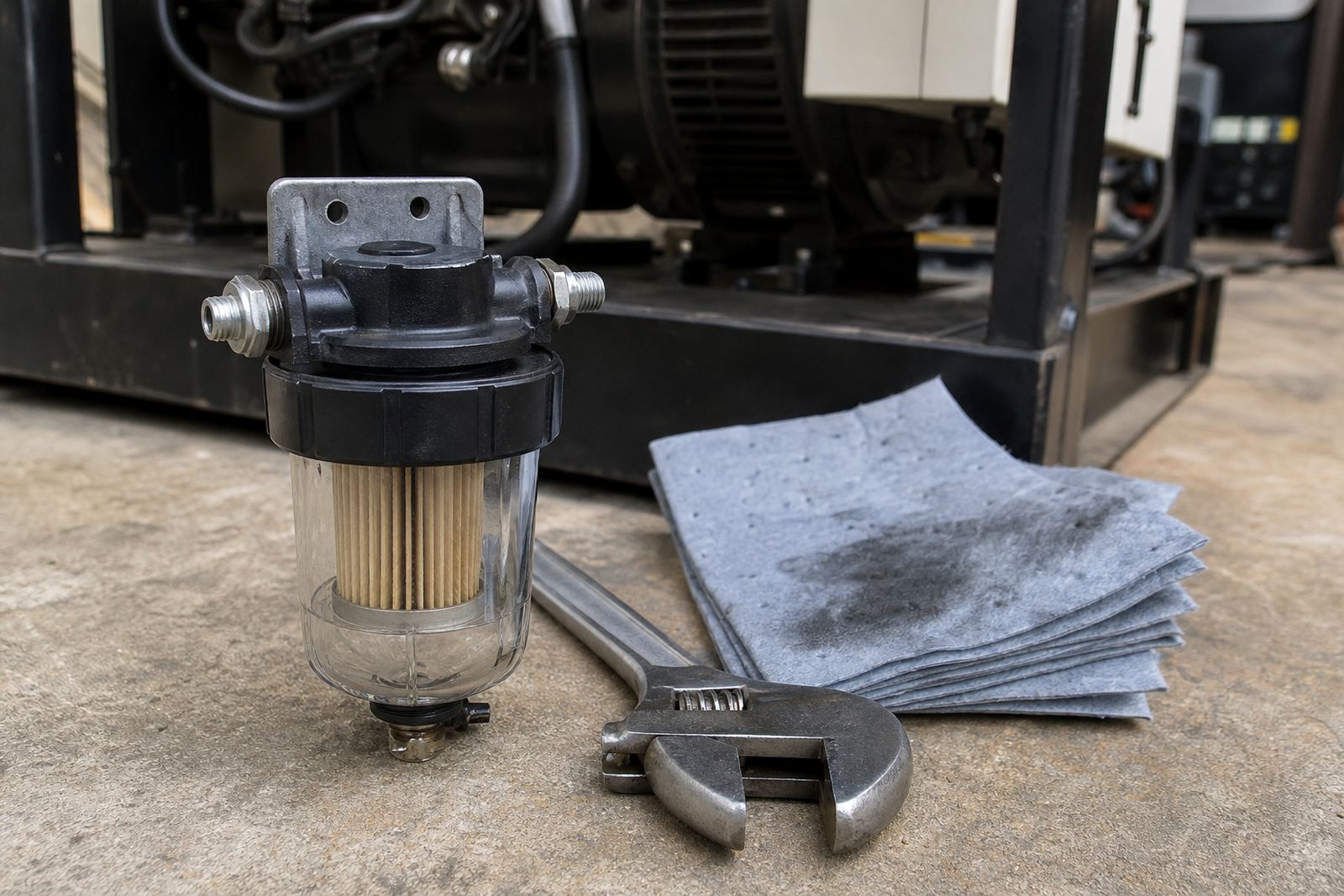
- Visible sludge, rust or dark contamination in the filter housing
- Repeated priming or air in the fuel line
- Warning alarms linked to low fuel pressure or poor combustion
If a generator is feeding critical plant, waiting for a complete failure is expensive. A blocked filter can cause downtime long before the engine stops completely.
How often a filter should be checked on contract work
No fixed interval suits every site. A unit in a clean warehouse with short weekly runs will not age the same way as a machine at a busy production plant, a mine support site, or a construction camp with dusty storage tanks. The right interval depends on fuel quality, run hours, tank condition and how often the set is exercised.
On maintenance contracts, the filter should be checked as part of scheduled servicing, along with oil and filter changes, battery testing, coolant checks and inspection of the changeover switch. If a unit has had contaminated fuel, water ingress or repeated start failures, the filter should be replaced sooner. A service record audit helps track those patterns so the same fault does not keep returning.
- Check more often if the unit runs in dust, heat or high humidity
- Inspect sooner after a fuel delivery from an unfamiliar source
- Replace after contamination, not only after a set period
- Record every change so trends are easy to spot
The parts of the fuel system that must work together
A filter is only one part of the job. Good fuel delivery depends on the tank, hoses, water separation, primer, lift pump and injection side all working properly. If any one of those parts leaks, draws air or allows dirt through, the best filter will still be under strain.
Qualified electrical and generator technicians should handle checks around starter circuits, alarms, sensors and changeover equipment, in line with local regulations. Fuel system repairs also need proper care, because a small leak can become a safety issue and a fire risk if it is ignored. It is not just about keeping the engine running, it is about keeping the site safe and compliant.
Signs a filter change is overdue on a standby set
Some warning signs are subtle. A set may still start, but it starts slower than usual, smokes more on warm-up, or takes longer to pick up load. Operators sometimes keep resetting the unit without checking the cause, which can lead to repeated strain on the starter system and unnecessary fuel use.
Watch for these common signs:
- Long cranking before the engine fires
- Rough running after start-up
- Black smoke or uneven combustion
- Fuel pressure alarms or low flow faults
- A filter bowl that shows water, rust or dirt
If any of these appear, the filter should not be treated as a minor detail. It is usually a sign that the fuel system needs a closer look, including lines, seals and the tank condition.
A local example from a commercial site in Gauteng
At a Midrand business park, a standby generator began tripping on start-up during afternoon load shedding. The battery tested well, the starter circuit was sound and the changeover switch was operating normally, but the engine would not hold steady under load. On inspection, the fuel filter was heavily restricted and the fuel in the bowl showed signs of fine contamination.
After replacing the filter, checking the fuel line for air leaks and flushing the affected section, the set returned to normal service. The lesson was plain: the fault looked electrical at first, but the real issue was fuel flow. On busy sites, that kind of misread can cost hours of downtime.
What a proper service visit should include around the filter
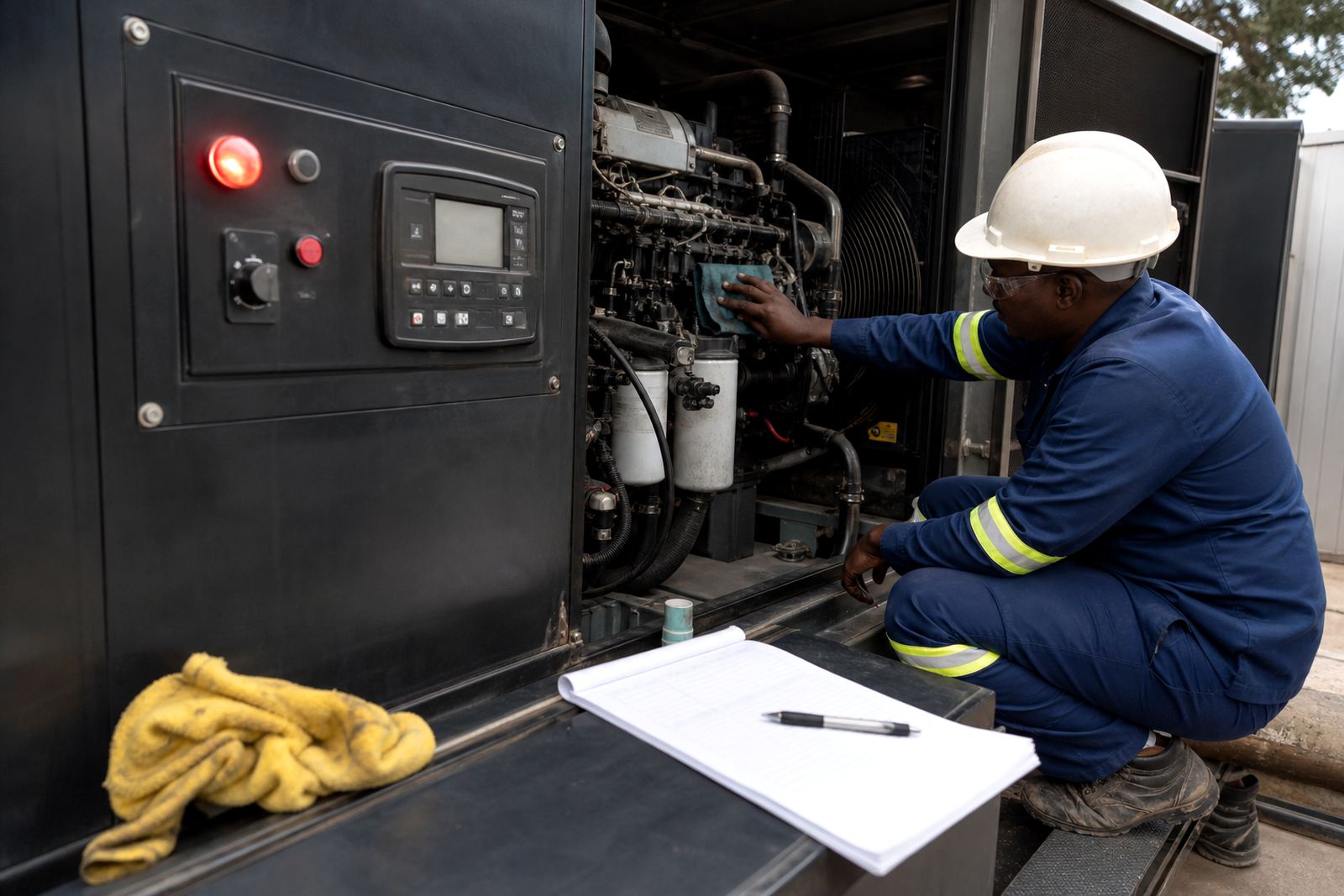
Fuel filter care should sit inside a wider preventative routine. A good visit will cover the filter element or cartridge, seals, water separation if fitted, nearby hoses, priming operation and signs of contamination in the tank. It should also include checks on oil, coolant, batteries, starter components, load bank testing where required, and a look at the changeover switch and service records.
- Inspect the filter housing for leaks or damage
- Check for water or debris in the fuel path
- Confirm the engine primes and starts cleanly
- Replace worn seals and any compromised parts
- Log the work so the next service has a clear history
That is the practical way to protect a generator contract. Clean fuel filtration supports reliable starts, steadier performance and fewer emergency callouts, which is what most businesses need when the power drops out.