Why white powder on the terminals matters
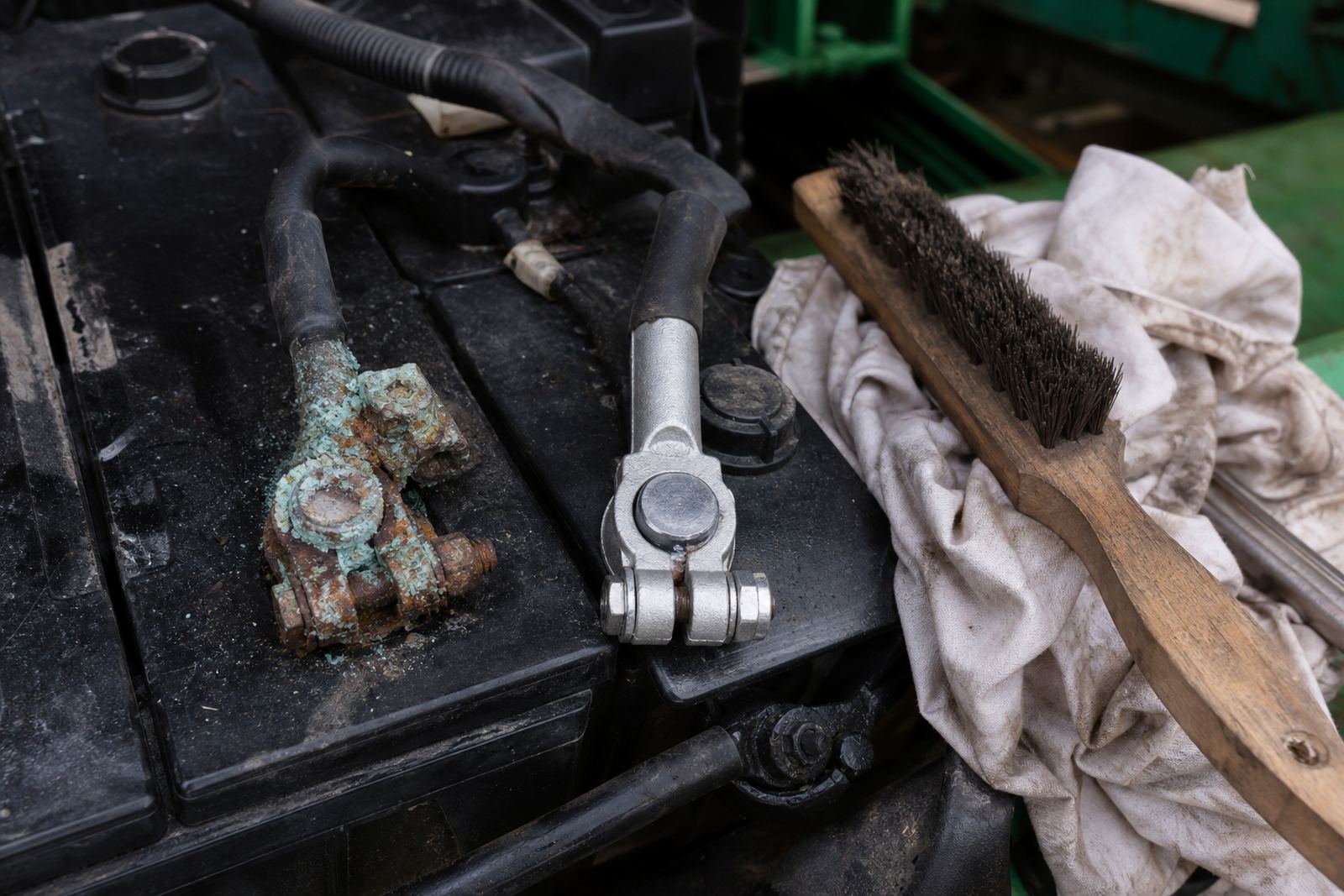
Battery terminal corrosion usually shows up as a white, blue-green or crusty build-up around the posts, clamps and cable ends. It is not just dirt. It creates resistance where the battery should deliver a strong burst of current to the starter system, and that extra resistance can be enough to stop a generator from firing up cleanly.
On a busy site in Midrand or Centurion, that fault often gets noticed during a power interruption or a planned test run. The battery may still show some charge, but the starting circuit cannot move enough current quickly. That is why terminal condition matters as much as battery age.
- Corrosion increases resistance and heat at the connection point.
- Loose clamps let vibration work the joint even harder.
- Moist air, acid vapour and dirt all speed up the problem.
What actually causes corrosion on generator batteries
Most corrosion starts with a small amount of leakage, moisture or acid mist around the battery caps and terminals. On generator sets standing in coastal air, or in plant rooms with poor airflow, that build-up can happen faster. Heat from the engine room and vibration from running equipment also loosen connections over time, so the terminal surface is exposed again and again.
In practice, we often see corrosion linked to simple maintenance gaps. A battery that is not checked regularly may have low electrolyte levels, cracked casing, tired cables or a charger problem. Any one of those can create a weak point.
- Overcharging can push vapour out around the posts.
- Undercharging leaves deposits and poor contact.
- Moisture and dust mix with residue to form a conductive paste.
- Old cables with damaged lugs corrode faster at the joint.
The starting faults corrosion can trigger
When terminal corrosion builds up, the generator may still have a battery on board but struggle to crank. The starter can click, turn slowly or fail completely. Some units will try once, pause, then throw a low-voltage alarm. On a standby set that should cover a municipality issue or a load-shedding outage, that is a serious risk.
Faults linked to corrosion often look like bigger electrical problems at first. The real issue may be at the battery end, not in the alternator or control panel. That is why a qualified technician checks the whole starting circuit, including cable condition, terminal tightness, charger output and battery health under load.
- Slow cranking during start-up.
- Repeated start failures after a battery was recently charged.
- Intermittent alarms on the control panel.
- Hot, discoloured or pitted terminal lugs.
How servicing keeps the starter circuit clean and dependable
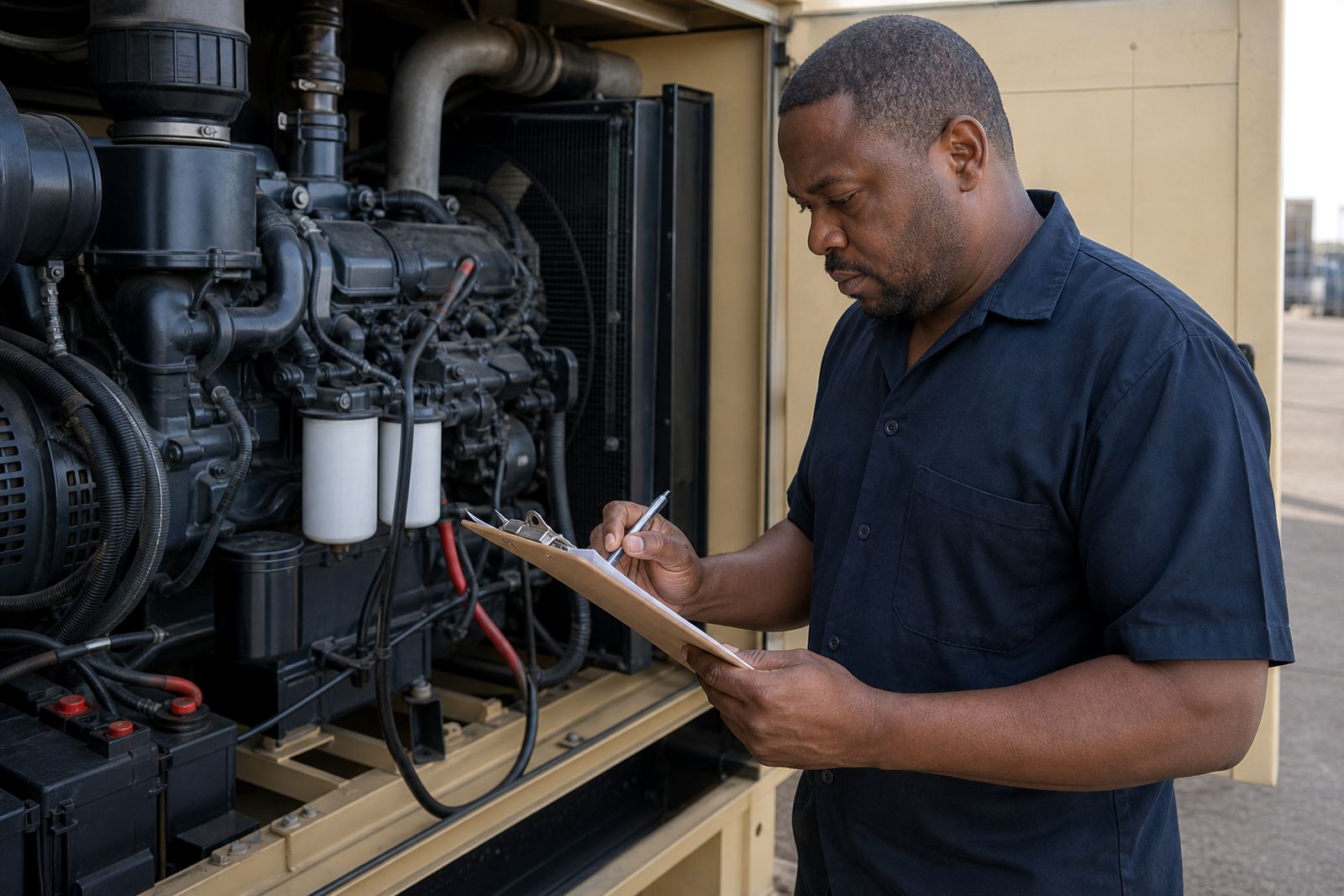
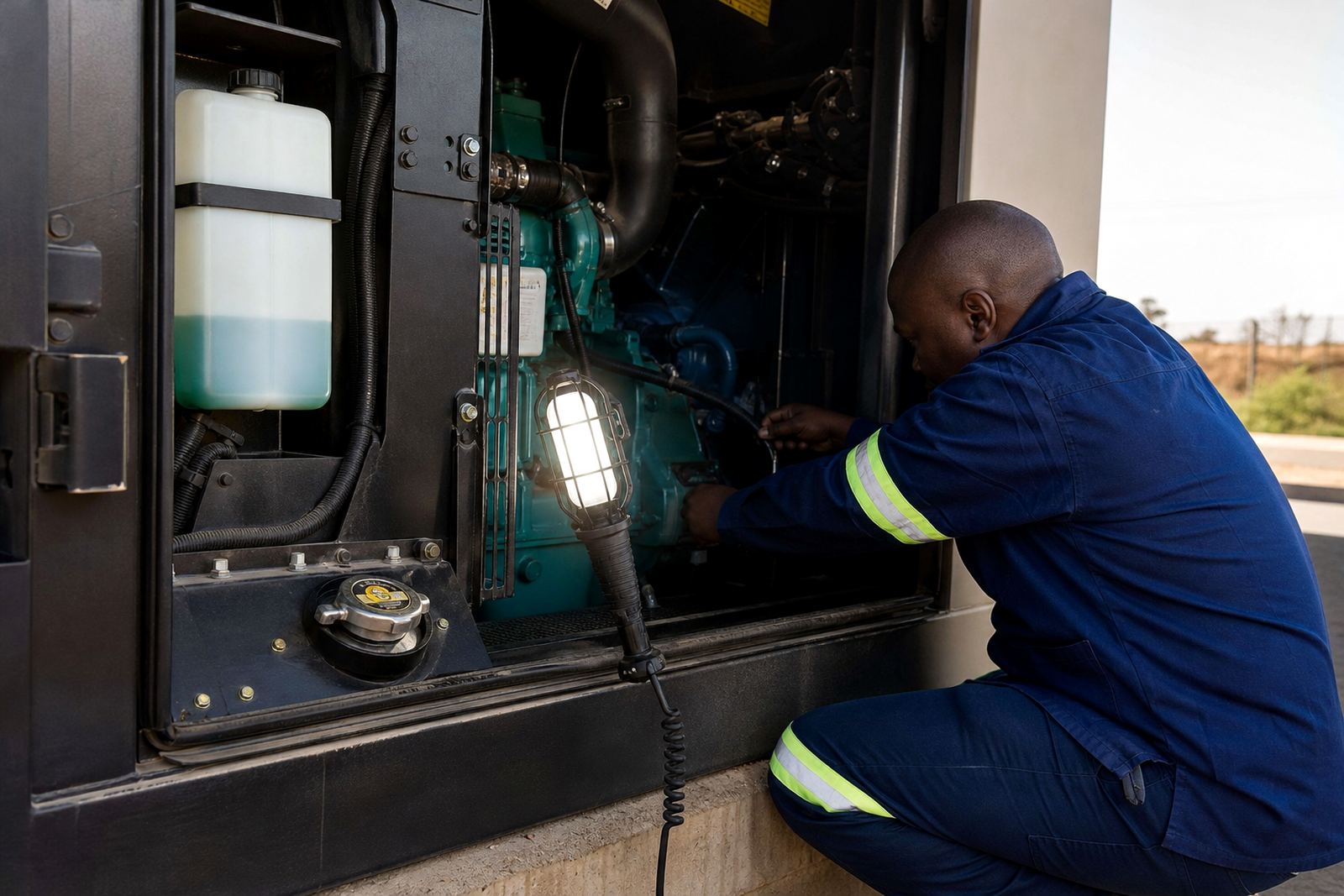
Regular generator servicing gives technicians a chance to catch corrosion before it becomes a callout. The battery tops are cleaned, terminals are removed where needed, contact surfaces are prepared and clamps are refitted to the correct tightness. If a battery shows signs of swelling, leaking or poor output, it is flagged before it causes a failure.
Good service also includes checking the charging system and making sure the charger is maintaining the battery within the correct range. If the battery is constantly overcharged or left undercharged, the problem will return. In a maintenance contract, that type of pattern is easier to spot because service records show what has changed over time.
- Terminal cleaning and protective treatment.
- Battery voltage and charge checks.
- Starter cable inspection and tightening.
- Service record audits to track repeat faults.
A Midrand warehouse lesson from a neglected battery bank
A warehouse in Midrand called for help after a standby generator failed to start during an outage. The battery terminals were heavily corroded and one cable lug had started to pit. The unit had been test-run, but the battery connections had not been properly cleaned or checked for months. Once the terminals were restored and the charging side was inspected, the starting fault was traced to poor contact rather than a major engine problem.
That kind of issue is common in Gauteng where equipment is often expected to carry through sudden interruptions. A generator can be mechanically sound, but if the battery connection is weak, the whole system is affected. On sites in Johannesburg, Pretoria and Sandton, we see the same pattern when plant rooms get hot, dusty and overlooked between planned inspections.
What to watch before the next start test
Battery corrosion does not always appear overnight. A quick visual check between services can catch the warning signs early. If the battery area smells acidic, looks damp or has a powdery crust, it should be inspected by someone who understands generator starting systems and the local electrical rules that apply to the installation.
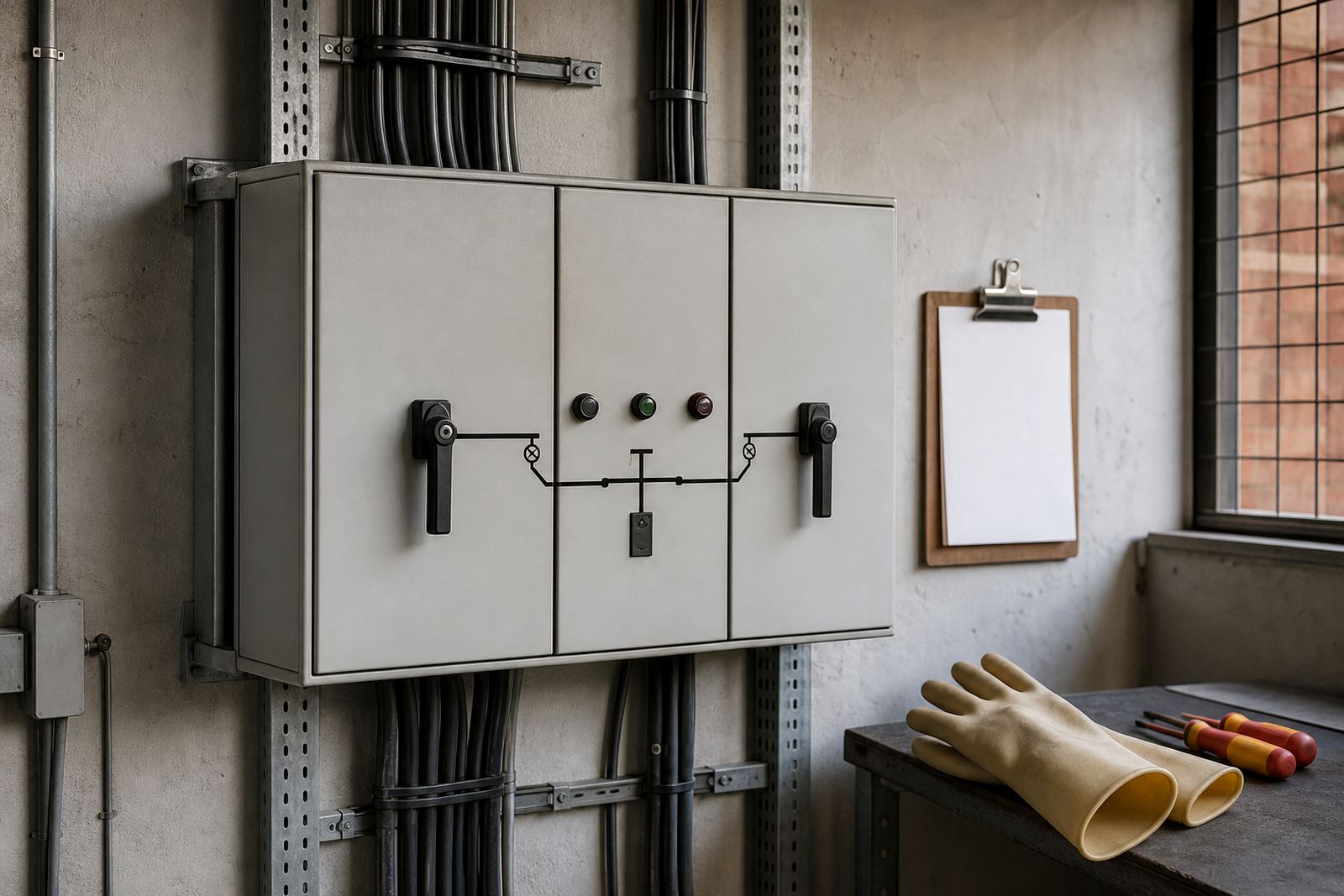
Electrical work should always be handled by qualified people under the relevant regulations. On generators, that matters not only for the battery side but also for changeover switches, charging circuits and any related control wiring. A safe check is better than a guess, especially on prime power equipment that runs hard in factories, workshops and construction yards.
- Look for white, blue or green residue around the posts.
- Check for loose clamps or damaged cable insulation.
- Watch for slow cranking after long idle periods.
- Ask for a battery test during scheduled servicing, not after a failure.
The maintenance habits that keep batteries ready
Battery terminal corrosion is manageable when servicing is consistent. A proper contract covers routine visits, fault finding and preventive inspections, so small issues are dealt with before they become expensive downtime. That approach helps businesses with standby and prime generators across South Africa, from Durban’s humid coast to the drier conditions around Polokwane.
For operations managers, the value is practical: cleaner terminals, stronger starts and fewer surprises when the mains fail. For generator systems under regular use, batteries need the same attention as oil, filters and coolant. They are a working part of the start-up system, not an afterthought.
At RelGen, our service teams in Midrand support businesses in Johannesburg, Pretoria, Durban, Cape Town, Polokwane, Centurion and Sandton with battery checks, scheduled servicing, load bank testing, changeover switch checks and emergency callouts. The goal is straightforward. Keep the start circuit healthy so the set starts when it should.