
The battery is the first place to look when there is silence
The most common reason a generator will not crank is a weak or failed starting battery. Standby sets sit for long periods, then fail on the very day they are needed. Heat, vibration, loose terminals and age all shorten battery life, and a battery can lose strength long before it looks swollen or damaged.
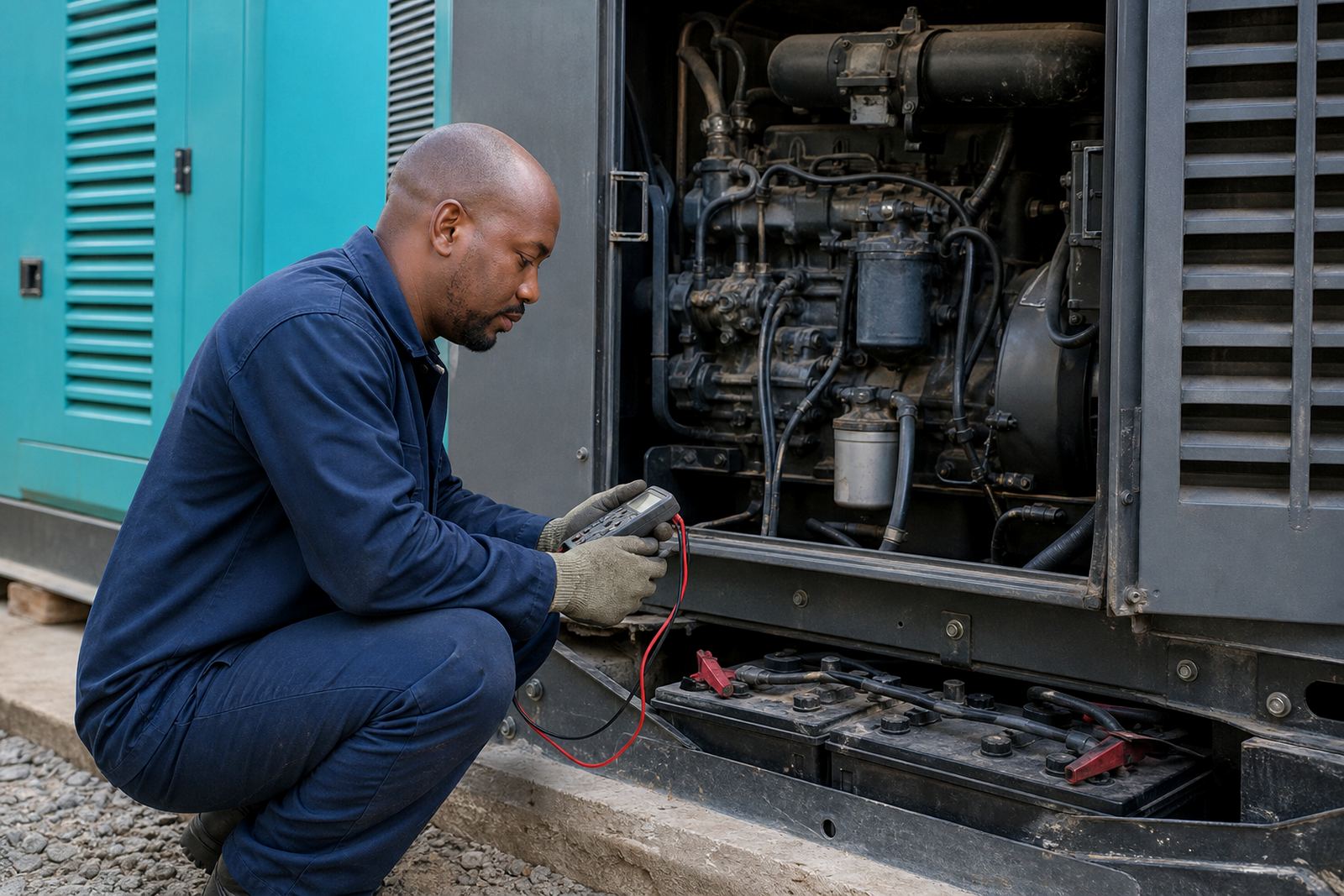
On commercial sites in Midrand or Sandton, we often find that the unit has enough charge for the indicator lights but not enough current to turn the starter motor. That is why battery testing should be part of routine maintenance, not only an emergency check. A clean terminal, sound earth connection and correct charging system can make the difference between a start and a dead unit.
- Check terminal tightness and corrosion
- Test battery voltage under load, not only at rest
- Confirm the charger is supplying power correctly
- Replace ageing batteries before they fail under pressure
Fuel supply faults that stop a set before the engine catches
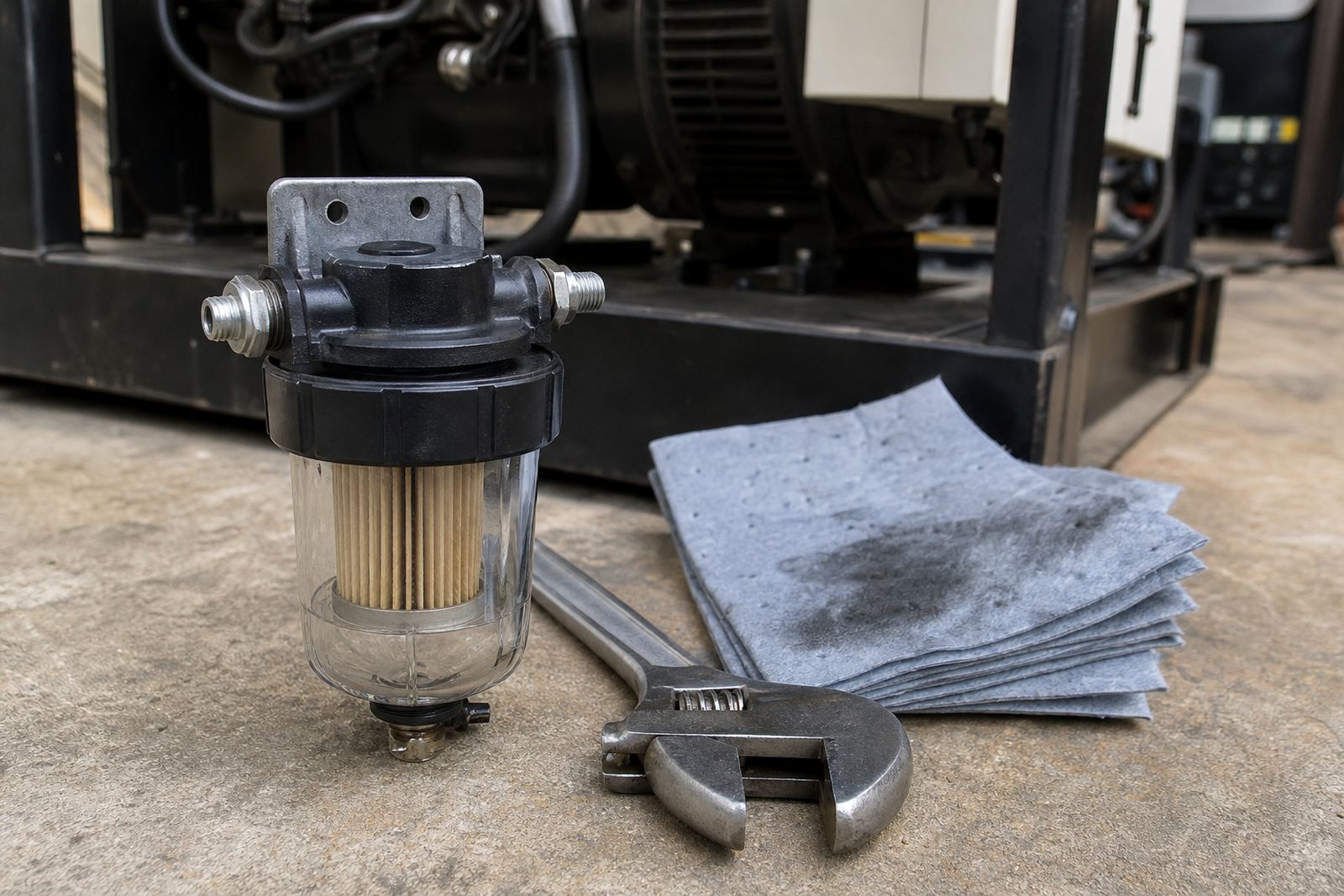
Fuel issues are another major cause of starting failure. A generator may crank normally but never fire if there is air in the line, dirty fuel, blocked filters or a closed valve. Diesel stored for long periods can pick up dirt, water and sludge, especially where tanks are exposed to coastal humidity in places like Durban or where heat builds up in rooftop plant rooms.
Fuel system repairs often involve more than a quick top-up. Lines must be checked for leaks, the fuel lift path must be clear and filters must be changed at the right intervals. If a set has sat through loadshedding cycles without proper attention, the fuel side can become unreliable very quickly, and it often shows up only when the power goes off.
- Inspect for water contamination and sediment
- Replace blocked fuel filters
- Check lift pumps and lines for leaks
- Make sure shut-off valves are open and working
Starter motor and control faults can mimic a dead engine
If the battery and fuel supply are in good order, the fault may sit with the starter system or control circuit. A worn starter motor, sticky solenoid, damaged wiring or a failed relay can stop the engine from cranking even though the rest of the set looks healthy. Control boards can also lock out starting if they detect a fault from a previous run.
Fault finding in this area must be done by qualified people under local regulations. Electrical work on generator systems is not a guessing game, and trying to bypass a safety circuit can create bigger damage or a shock risk. On busy industrial sites in Pretoria or Polokwane, we often see a repeated start failure trace back to one loose cable or a control signal that is not reaching the starter correctly.
Changeover switch problems can block the start command
Many generators are healthy at engine level but never get the correct start signal because the changeover switch or controller path is not operating as it should. If the switch is not set correctly, has damaged contacts, or is not returning to the right position after a power interruption, the generator may remain on standby instead of starting.
This is one of the reasons scheduled servicing must include changeover switch checks. The generator is only part of the system. The control path, sensing circuit and manual override all need to work together, especially on sites where the plant must carry essential process loads or security systems. A small issue in the switchgear can stop the whole set from responding.
Coolant, oil and protection trips that stop starting before damage starts
Sometimes a generator refuses to start because the controls are protecting the engine from further harm. Low oil pressure, high temperature history, coolant problems or a bad sensor can cause a lockout. The unit may look ready, but the controller sees a condition that should not be ignored.
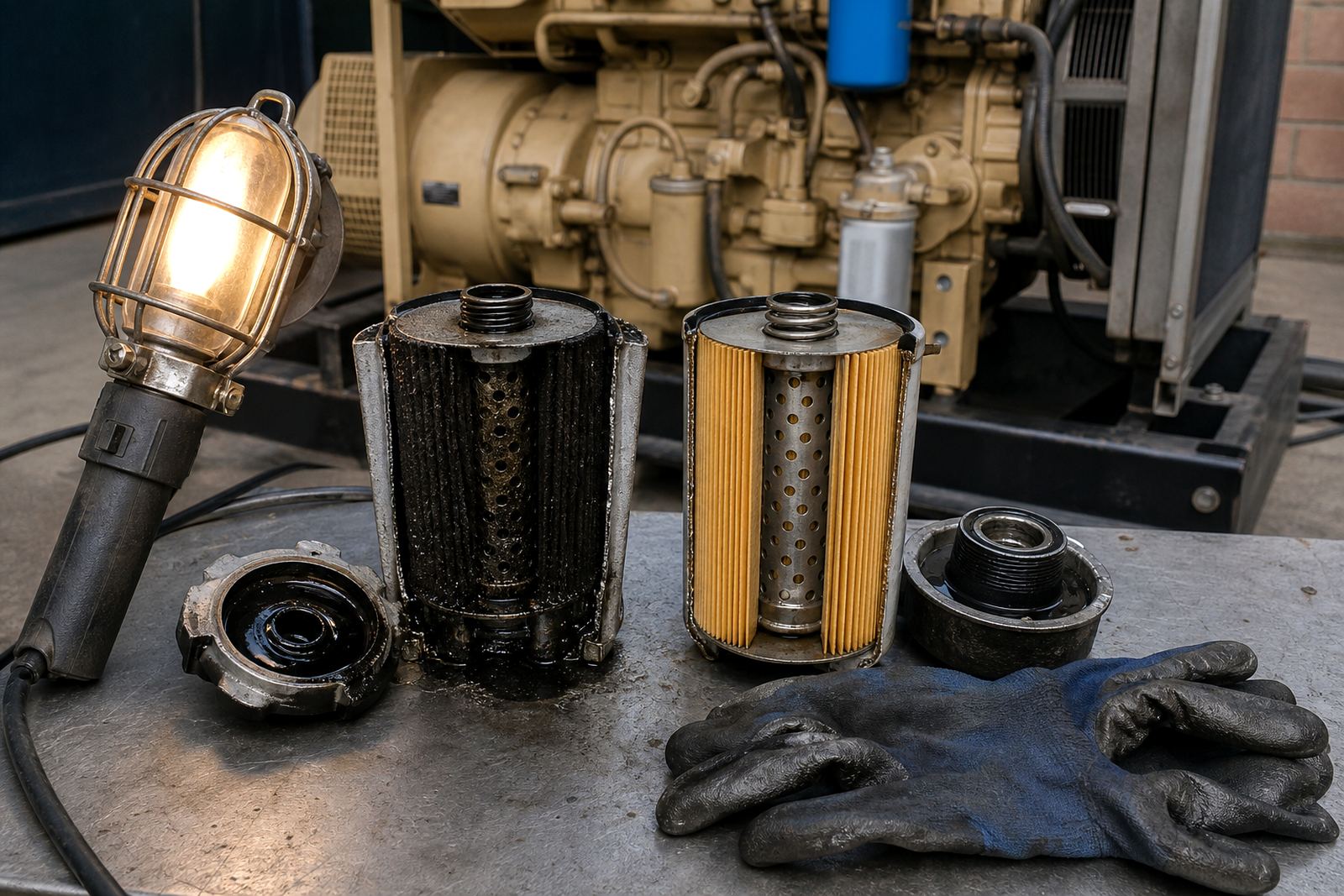
Oil and filter changes, coolant system service and preventive site inspections help stop these problems from building up. A low coolant level, perished hose or blocked radiator can trigger a fault just before the engine should run. That is why service record audits matter too, because repeated alarms often show a pattern before a full failure appears.
- Confirm oil level and oil quality
- Check coolant level, hoses and radiator condition
- Look for sensor faults or recurring alarm codes
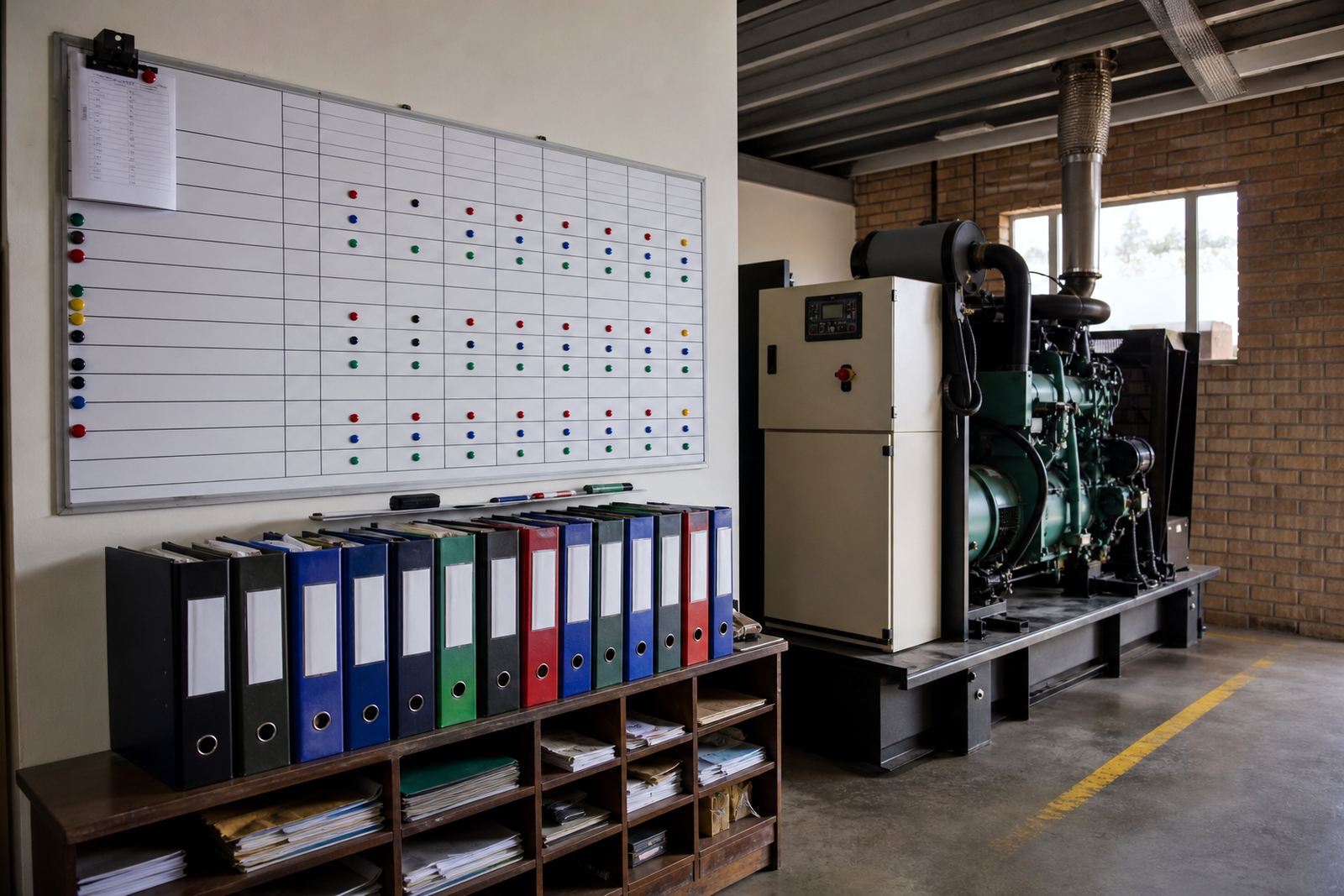
- Keep service records in order for faster diagnosis
Why a load bank test can expose the hidden weak point
A generator may start at idle and still fail when it is asked to do real work. Load bank testing helps expose weak batteries, poor fuel delivery, cooling limits and control instability before an actual outage does it for you. The unit is tested under controlled load so faults appear in a planned setting, not in the middle of a municipal interruption or a production stoppage.
We see this often on maintenance contracts where the set has not carried a proper load for months. A generator can seem fine during a brief start test, then trip when the load rises. That is why scheduled servicing, load bank testing and emergency callouts all support one another. If a business in Centurion has a standby set that has not been exercised properly, the first real failure may be the most expensive one.
A Midrand example that shows how the clues fit together
At a Midrand business park, a standby generator would crank but would not fire during a supply interruption. The battery tested weak under load, the fuel filter was partly blocked, and the changeover switch contacts were not returning cleanly after the last outage. None of those faults looked dramatic on their own, but together they stopped the set from starting when the site needed it most.
That is the practical lesson with starting failures: do not assume there is only one cause. A generator that will not start often has more than one small issue waiting in the background. Regular checks, proper servicing and quick fault finding save time, reduce downtime and help keep business operations moving across Johannesburg, Durban, Cape Town and beyond.