Why a clean radiator matters when the set is under pressure
The radiator pulls heat out of the engine so coolant can keep temperatures within the safe range. When fins are blocked with dust, grass, cardboard fibres or oily film, the airflow drops and the engine starts to work harder for the same output.
That extra heat does not stay in one place. It pushes up coolant temperature, shortens the life of hoses and seals, and can lead to nuisance trips at the worst possible time. On standby sets this often appears only during an outage, when the unit is suddenly asked to carry the whole building.
What builds up on the core and why Gauteng sites see it fast
Radiator fouling is not only a coastal or industrial problem. In Gauteng, fine dust from traffic, construction activity and dry soil gets drawn into the cooling pack with every fan cycle. On warehouses, workshops and plant rooms, lint and packaging dust can pack into the fins too.
- Dust and dry soil reduce airflow between the fins
- Oil mist from nearby machinery forms a sticky layer
- Leaves and paper fragments trap more debris behind them
- Insects and cobwebs block the outer face of the core
A unit in Midrand near busy roads may look clean from a distance but still have a clogged radiator face. It is often the rear side of the core that holds the worst buildup, so one quick visual check is not enough.
How cleaning should be handled on a service visit
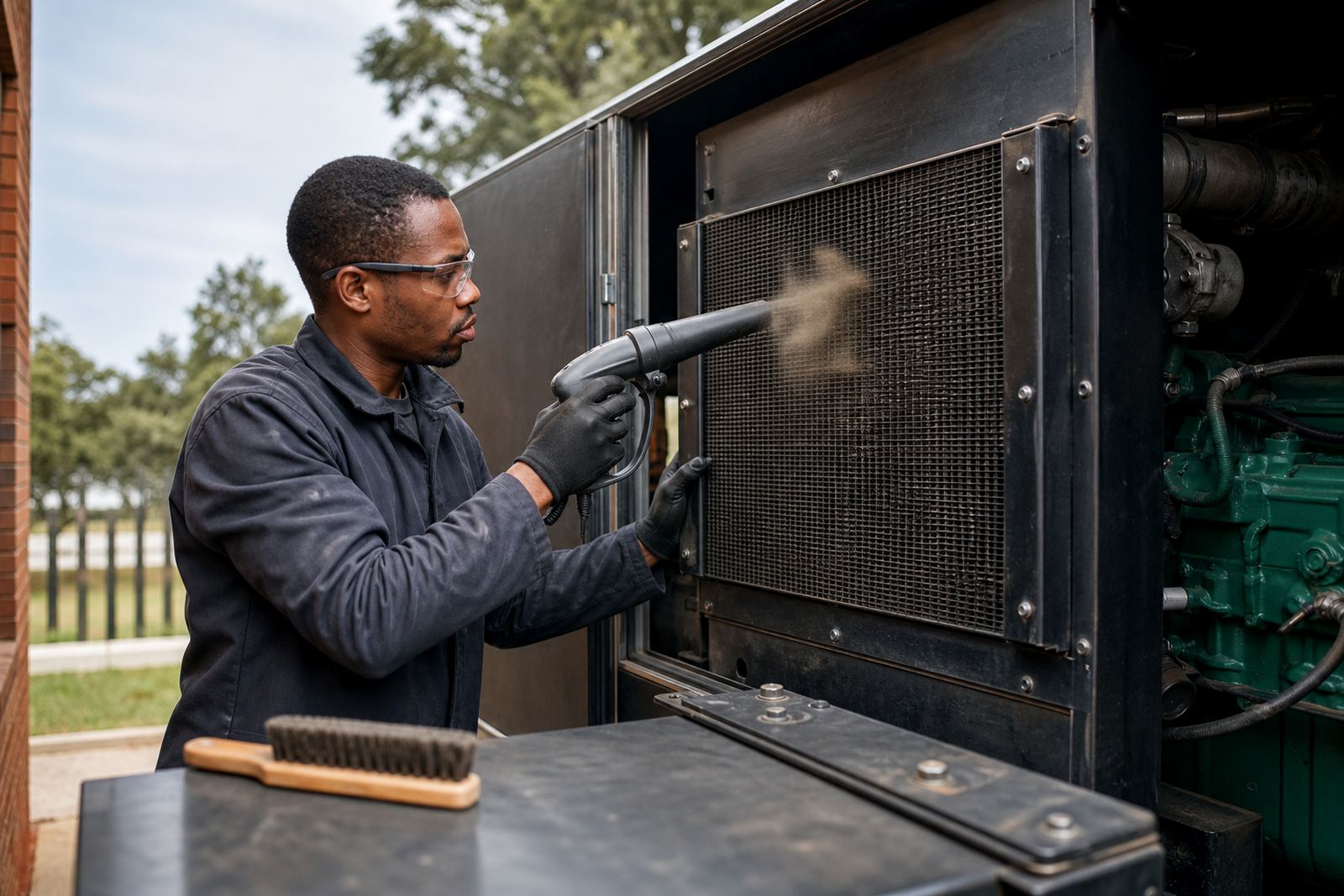
Radiator cleaning has to be done with care. Fins are thin and bend easily, so harsh water pressure or rough tools can do more harm than the dirt itself. A proper service should include isolating the set safely, allowing it to cool and then cleaning from the correct direction so debris is pushed out rather than deeper in.
Where access allows, technicians may remove guarding or panels to reach the full core. Any oil leaks, coolant stains or signs of fan damage should be noted at the same time because cleaning alone will not solve an underlying fault. Electrical work on fans, sensors, alarms and changeover switches must be done by qualified people under local regulations.
- Use low pressure air or controlled washing methods suitable for the core
- Check for bent fins, corrosion and blocked shrouds
- Inspect fan belts, pulleys and fan blades for wear or damage
- Confirm there are no leaks from hoses, clamps or the coolant tank
Clues that radiator dirt is already affecting the set
Sites often notice a cooling problem before they notice a blocked radiator. The generator may run hotter than usual under the same load, or the engine may start to cycle on high temperature alarms during test runs. In some cases the set sounds normal, but the temperature climbs quicker than it did during previous services.
If the unit has been standing for a while, the first long run after maintenance can expose a weak cooling system. That is why scheduled servicing should include radiator checks, not only oil and filter changes. A radiator that looks only slightly dirty can still restrict enough airflow to create trouble under peak demand.
- Temperature rises faster than normal during load testing
- Visible dust or oily film on the radiator face
- Fan noise changes or vibration appears
- Coolant level drops without an obvious external leak
Local example from a busy Midrand service yard
At a Midrand distribution site with standby generators and a lot of pallet movement, the cooling pack was being blocked by fine dust and bits of shrink wrap. The set could start and carry load, but the temperature was climbing on longer interruptions and the client was getting nervous about summer outages.
After a radiator clean, hose inspection and a follow up load bank test, the engine held temperature properly again. The main lesson was straightforward: if the air path is restricted, the set cannot reject heat properly, even when all the other service items look fine. That sort of issue is common on sites with open yards, loading bays and constant movement.
Keeping radiator care part of the wider maintenance routine
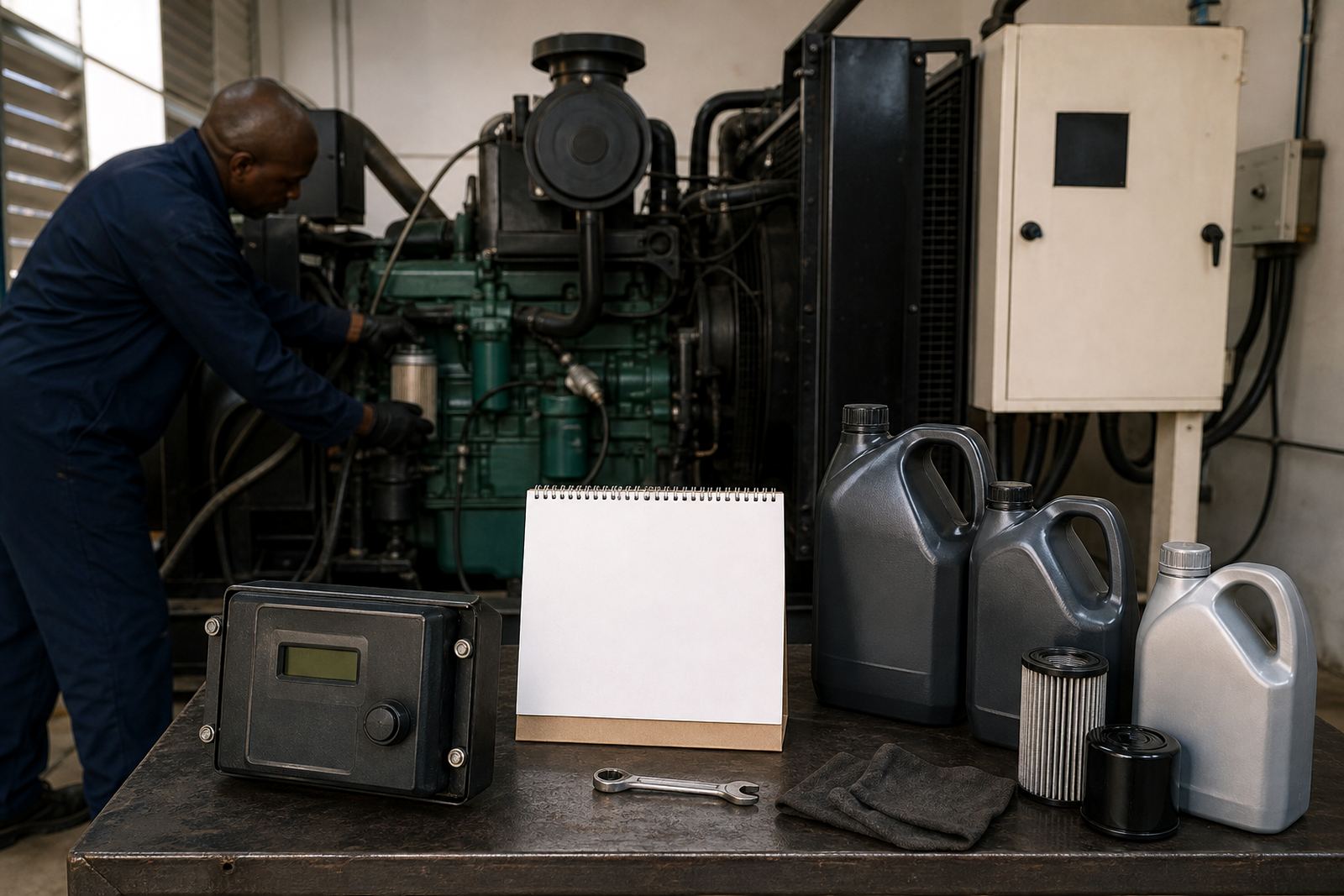
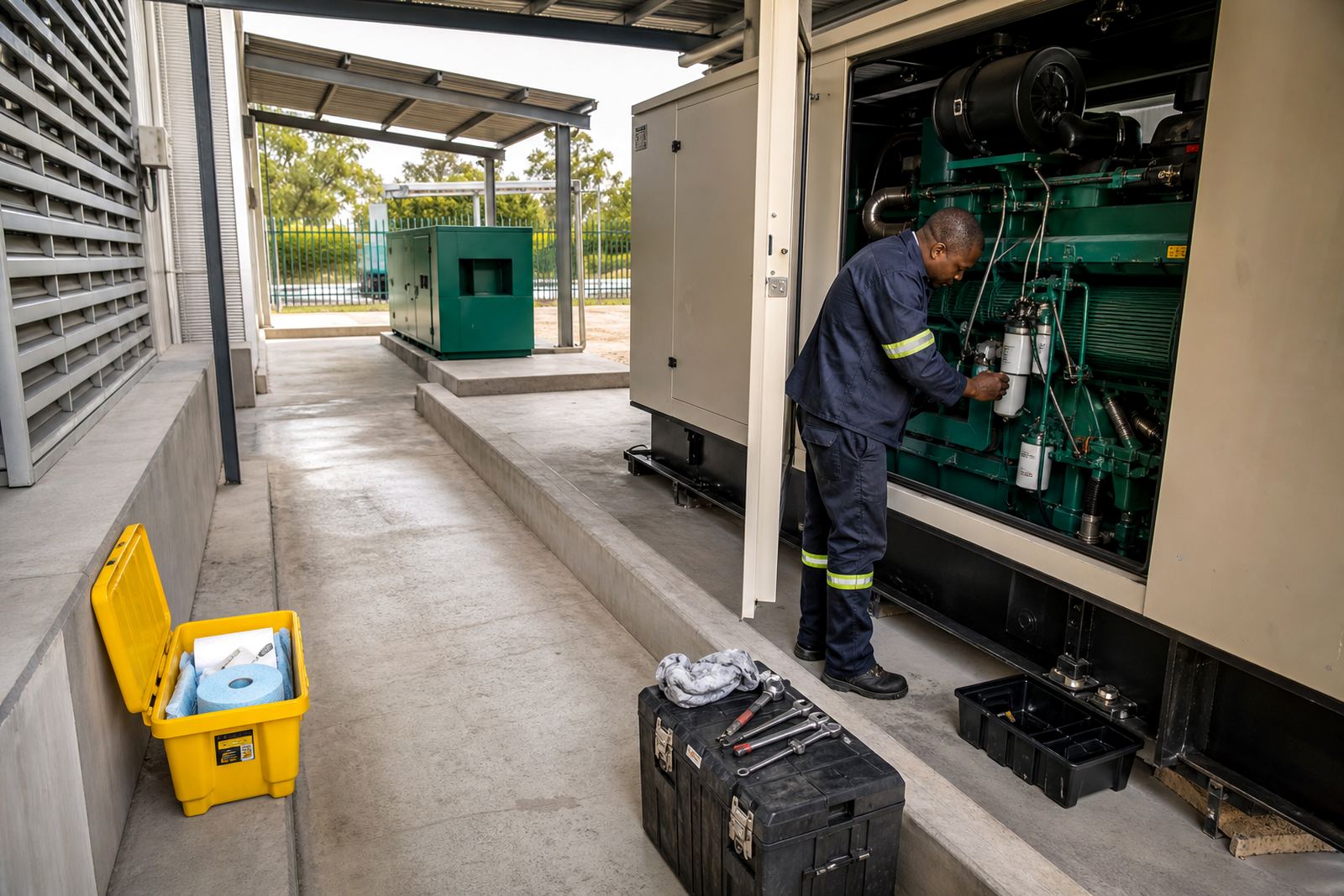
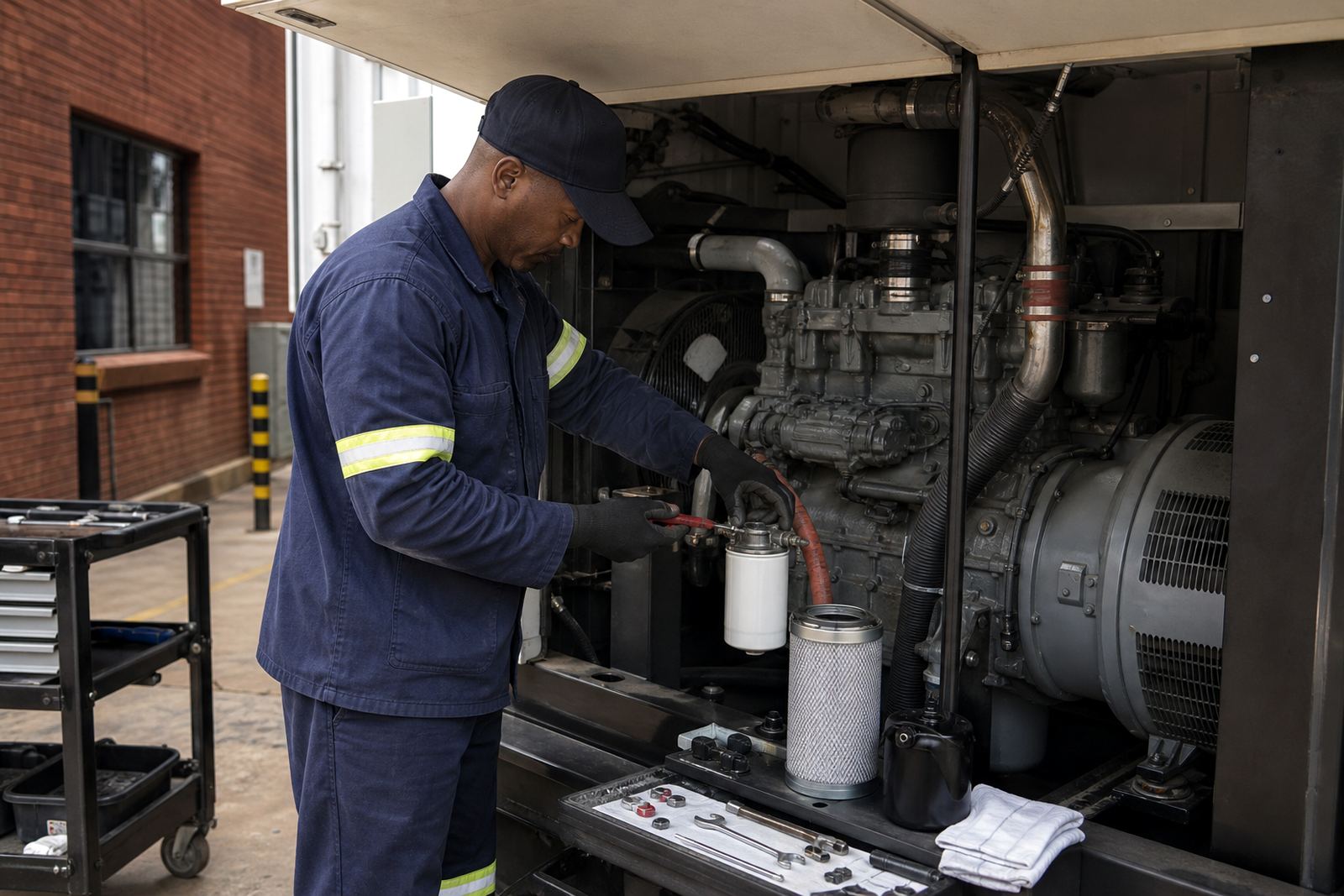
Radiator cleaning works best as part of a planned maintenance contract rather than as a one-off emergency fix. Oil changes, filter changes, coolant checks, battery testing and preventive inspections should all sit together because one weak system can put extra strain on the next. If the coolant is tired or the battery is weak, the generator may run longer and hotter while faults are being sorted.
For standby and prime generators across Johannesburg, Pretoria, Durban, Cape Town and Polokwane, regular inspections help catch dirt build-up before it becomes a shutdown risk. Changeover switch checks, starter system repairs, fuel system repairs and service record audits also matter because cooling problems often show up alongside other wear, not on their own.
- Plan radiator cleaning with each scheduled service interval
- Increase checks at dusty sites, building works and open yards
- Record temperature trends so small changes are noticed early
- Use load bank testing to confirm the cooling system under real demand
When a radiator needs more than a wash
If fins are corroded, tubes are leaking or the core has been damaged by bent guards or debris, cleaning will only buy time. In those cases the radiator or its supporting parts may need repair, and the site should be checked for the cause of repeated fouling. Poor airflow around the enclosure, blocked louvres or a fan fault can create the same symptom again and again.
Good maintenance is practical and steady. Keep the cooling path open, keep the service records up to date and check the set before the season or outage pressure arrives. That is how a generator stays ready when the lights go off and the load stays on.