The first walk-around before the cover comes off
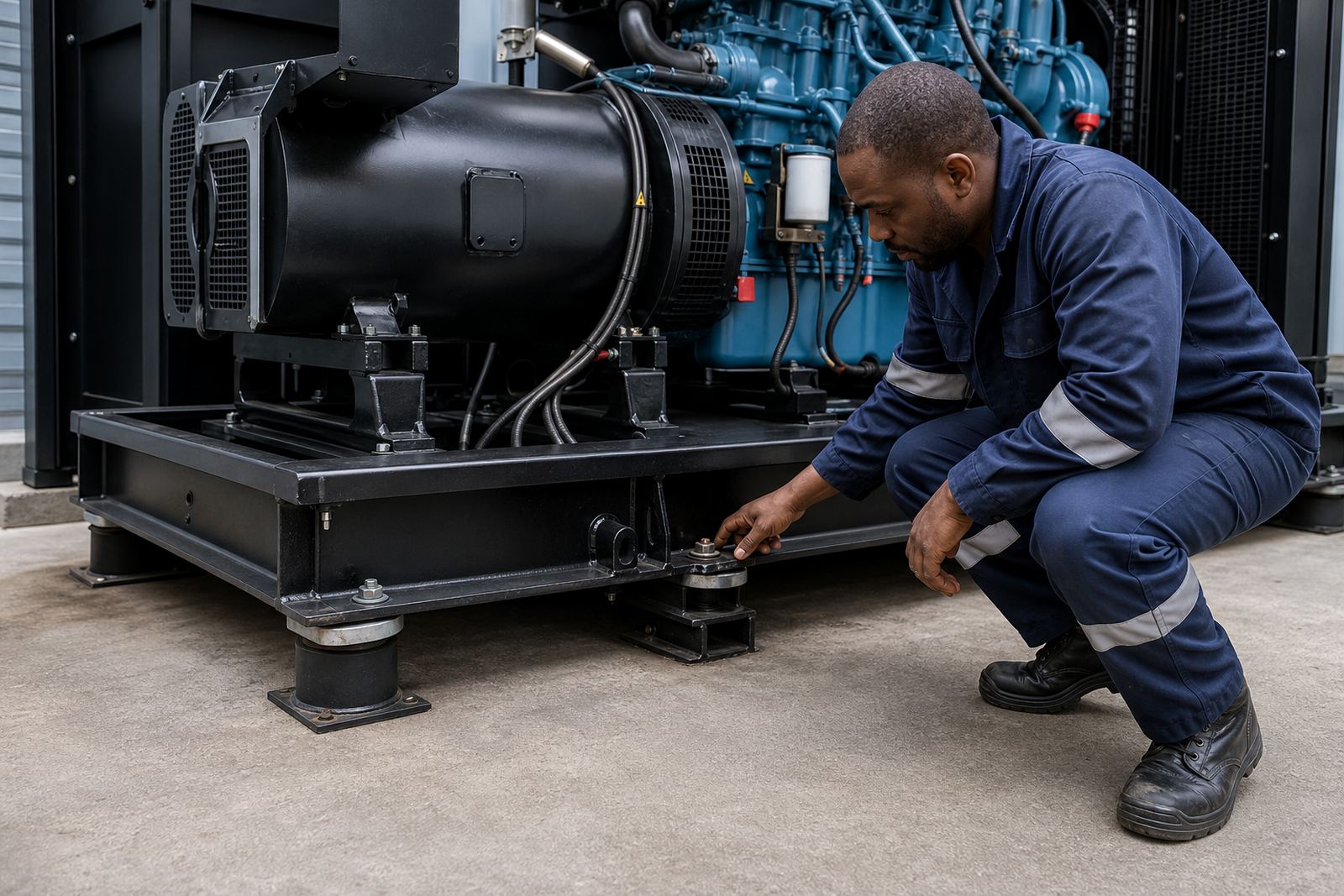
We always start with a plain visual check while the unit is still at rest. That means looking at the ground beneath the set, the drip tray if there is one, the underside of the base frame and the first signs of staining on panels or pipework. A leak can show up as a wet patch, a dusty patch stuck together with oil, or a dull shine on a hose clamp after a hot run.
In Midrand, where a generator may sit through dusty weeks and then face a heavy storm or a power cut with no warning, those small signs matter. A dry floor one day and a fresh mark the next can tell you more than a long test run if no one is actually looking in the right places.
- Check the area under the engine and fuel tank
- Look for drips around hose joints, drain plugs and filters
- Inspect the frame for staining or built-up grime
- Note any smell of diesel, coolant or burnt oil
Oil traces that point to worn seals or loose fittings
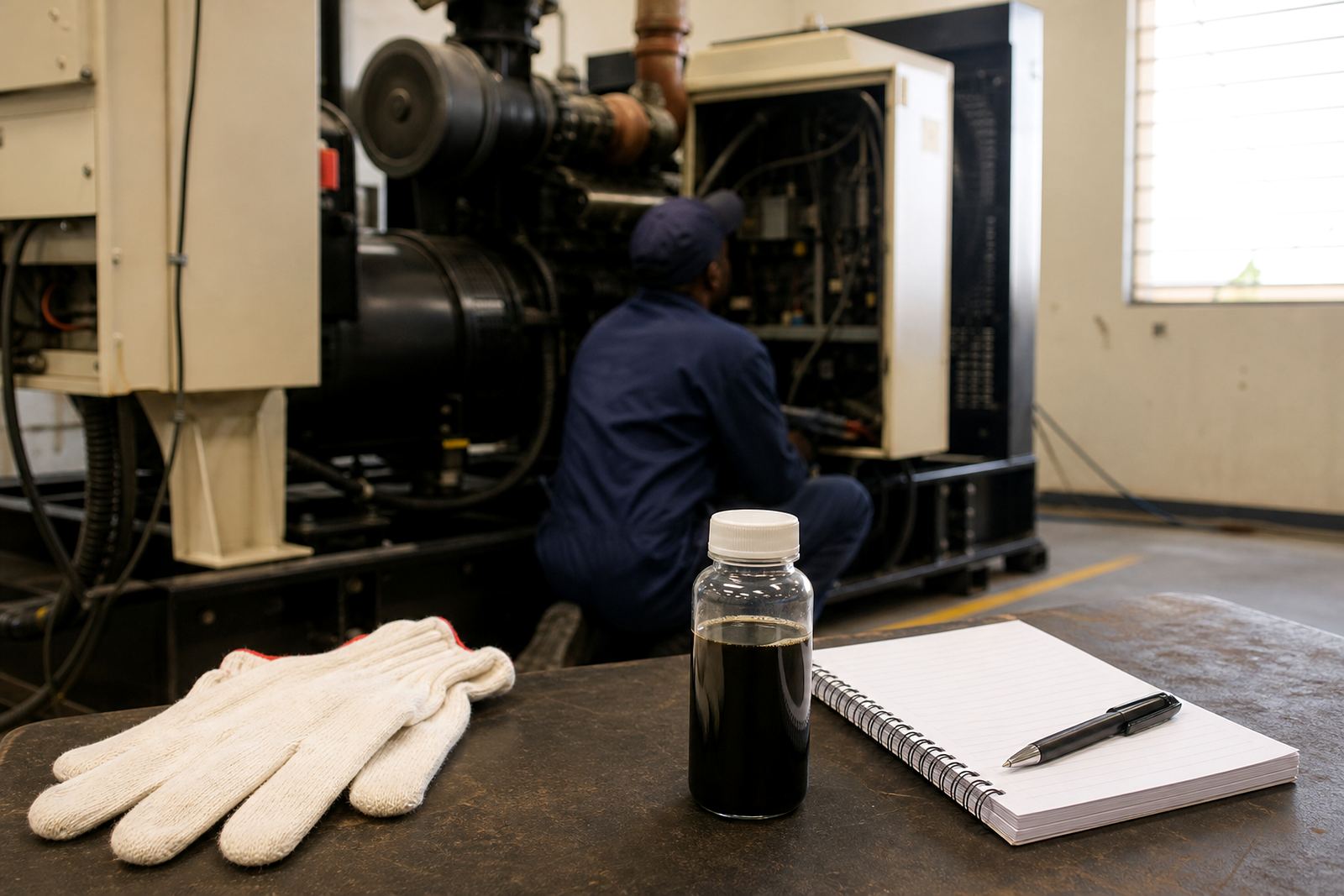
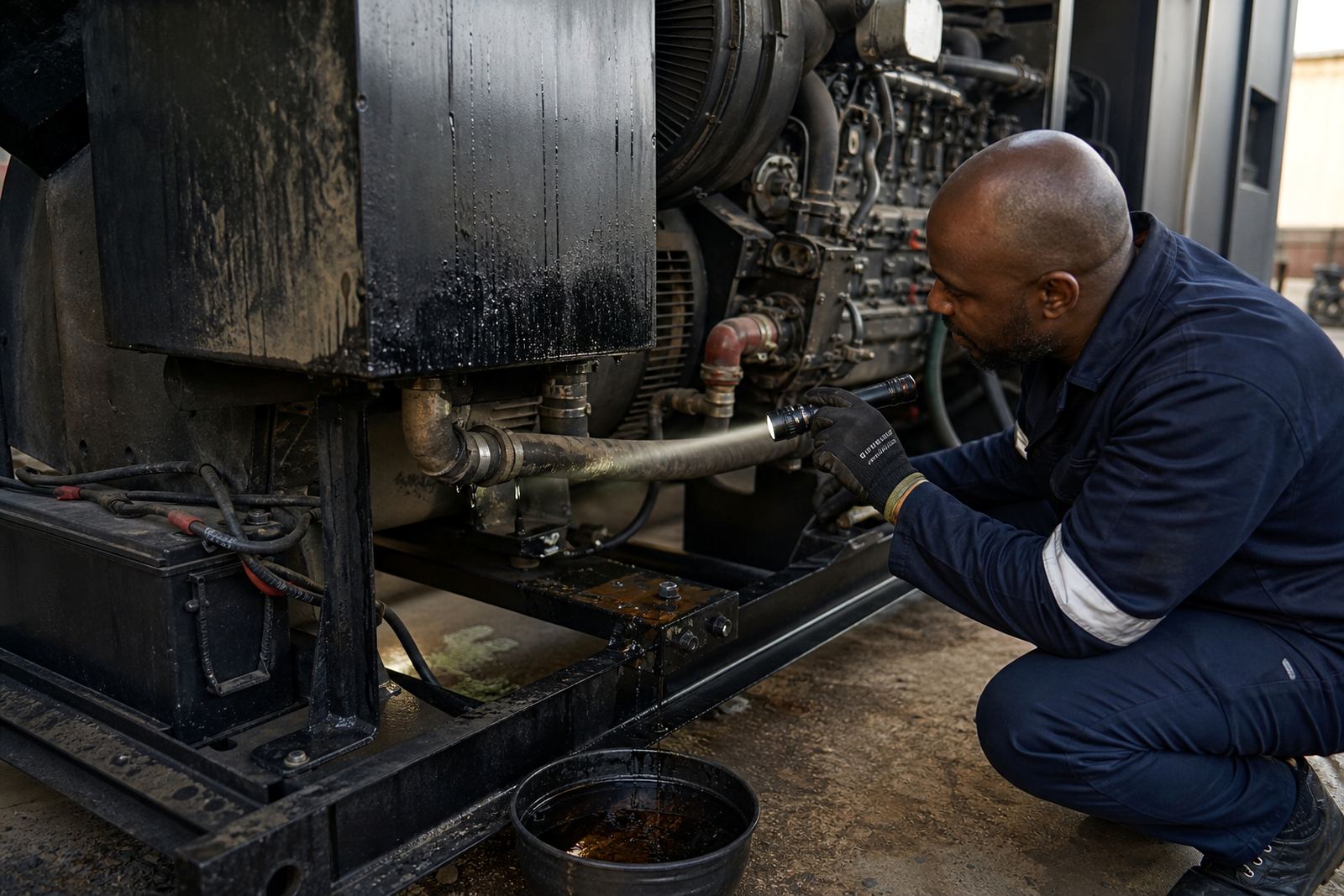
Engine oil leaks are often the easiest to spot, but they are not always easy to trace. Oil can move along a casting edge or collect in a low point and make the source look further away than it really is. We check the sump area, the filter housing, rocker cover joints where accessible and the drain plug for any fresh seepage. If the machine has recently been serviced, a poorly seated filter or a disturbed seal can leave a thin ring of oil that only shows up after the first heat cycle.
A proper check also includes the surrounding surface. Oil that has mixed with dust can form a dark paste on the base plate or around service points, and that often points to a slow leak that has been building for weeks. It is a small thing, but it can lead to low oil levels if nobody keeps an eye on it.
- Inspect around the oil filter and drain point
- Look for fresh wetness after the engine warms up
- Check for oil tracks blown backward by the fan
- Confirm the dipstick reading before and after the visit
Coolant loss that hides behind normal heat
Coolant leaks are worth checking carefully because a system can lose fluid without making a dramatic mess. We look at hose connections, clamps, the radiator area, the expansion tank and any visible water pump seals. On some sets the first sign is a white or coloured stain left behind after a small escape point dries off. On others, the scent is the clue before the actual drip appears.
In coastal areas like Durban and Cape Town, corrosion and humidity can make fittings age faster than people expect. Inland, heat and vibration can harden hoses over time. A service visit should never end with a guess about coolant condition. If a hose is sweating or a clamp has started to cut into rubber, it needs attention before the next load is carried.
- Check for dried residue around hose joints
- Inspect the radiator face for damage or damp patches
- Look under the machine after warm idle and after shutdown
- Confirm coolant level against the tank markings where fitted
Fuel seepage around the tank and lines
Fuel leaks need a careful eye because they can be easy to miss on a busy site. We inspect the tank, supply and return lines, hose clips, priming bulbs where fitted and filter housings for any sign of seepage. A small fuel leak may show as a stain on a clamp, a damp smell inside the canopy or a slow wet line under a fitting. On standby units, people often notice it only after the generator has sat unused for a while and the smell builds up.
Fuel work must be handled with care and any electrical work on the unit should be done by qualified people in line with local regulations. That matters when a leak check leads to starter faults, control issues or a problem with the changeover arrangement. One check often leads to another, and the job should stay within the correct trade boundaries.
- Inspect tank seams and sender areas for staining
- Check for loose clips on supply and return lines
- Look for dampness around the filter head
- Note any strong diesel smell after shutdown
What a good service visit records, not just repairs
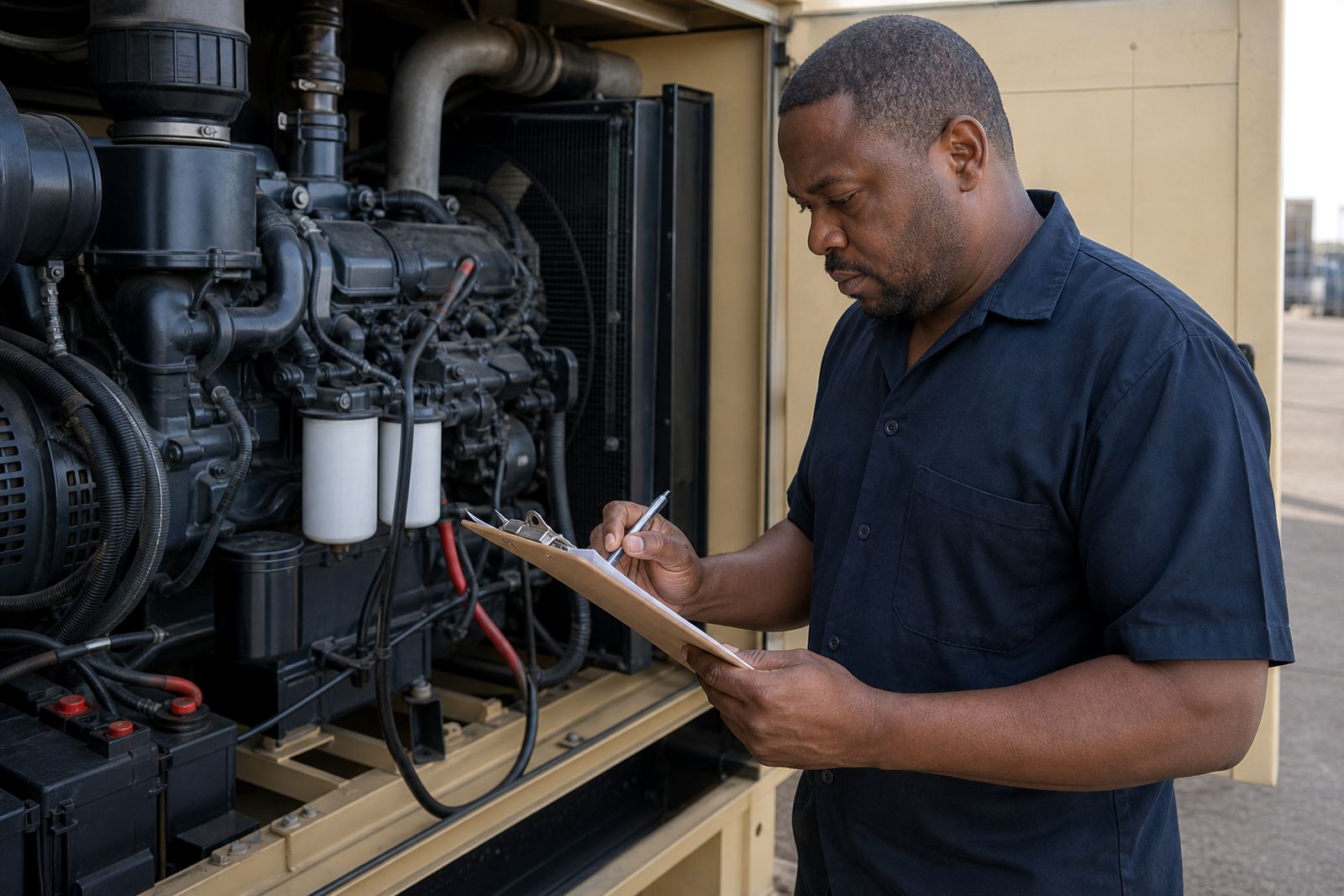
A leak checking routine is not only about fixing what is wet today. It is also about recording where a machine is starting to drift from normal. During scheduled servicing, the technician should note the exact point of the leak, the condition of the hose or seal, and whether the problem is active, intermittent or only visible after load. That record is useful for maintenance contracts because it helps track repeat faults and plan parts before a breakdown forces a callout.
On commercial sites in Johannesburg, Pretoria and Centurion, this kind of note can save a lot of hassle. A generator may run only during outages or peak demand periods, so the person managing it might not see the warning signs every day. Good service notes keep the history clear and stop a small seep from being treated as a one-off.
- Identify the exact location of the leak
- Record whether the issue appears after start-up or shutdown
- Note any part that may need replacement at the next visit
- Link the fault to service history and previous inspections
A Midrand example from a busy commercial yard
One of the most useful leak checks is the one that catches a fault before it reaches the loading bay or the plant room floor. In Midrand, a generator serving a mixed-use site can sit near delivery traffic, dust and heat from surrounding equipment. During a routine visit, a technician might find a faint oil line under the filter housing and a slight coolant mark near a hose clip, with no obvious puddle yet. That is the stage where a quick repair is still a practical repair.
After the unit is cleaned, rechecked and monitored under load, the site team has a clearer picture of what is happening. They are not dealing with a surprise shutdown during a storm or a fuel spill near a walkway. That is why routine leak checking sits alongside load bank testing, battery testing and changeover switch checks as part of proper generator care, rather than being treated as a small extra.
For businesses across South Africa, from Polokwane to Cape Town, the goal is the same: keep the machine dry, keep the records straight and deal with faults before they become a bigger bill.