
What clean fuel should look like in a service tank
On a healthy standby or prime generator, diesel should look clean and fairly clear in the tank, with little to no visible debris. You should not see a dark layer sitting at the bottom, floating bits, or a milky haze in the fuel. If the fuel looks dull and dirty instead of clear and amber, that is usually a sign that water, dust or old residue has started building up.
In Midrand and the wider Gauteng belt, dust is often the first problem. On coastal sites in Durban or Cape Town, moisture and condensation can be just as troublesome. Fuel can also change after long periods of standing, especially when a set only runs during outages and load-shedding events. A generator that starts hard, smokes more than usual or runs unevenly may be telling you the fuel is not in good condition.
The tank window, filler cap and dipstick can tell a lot
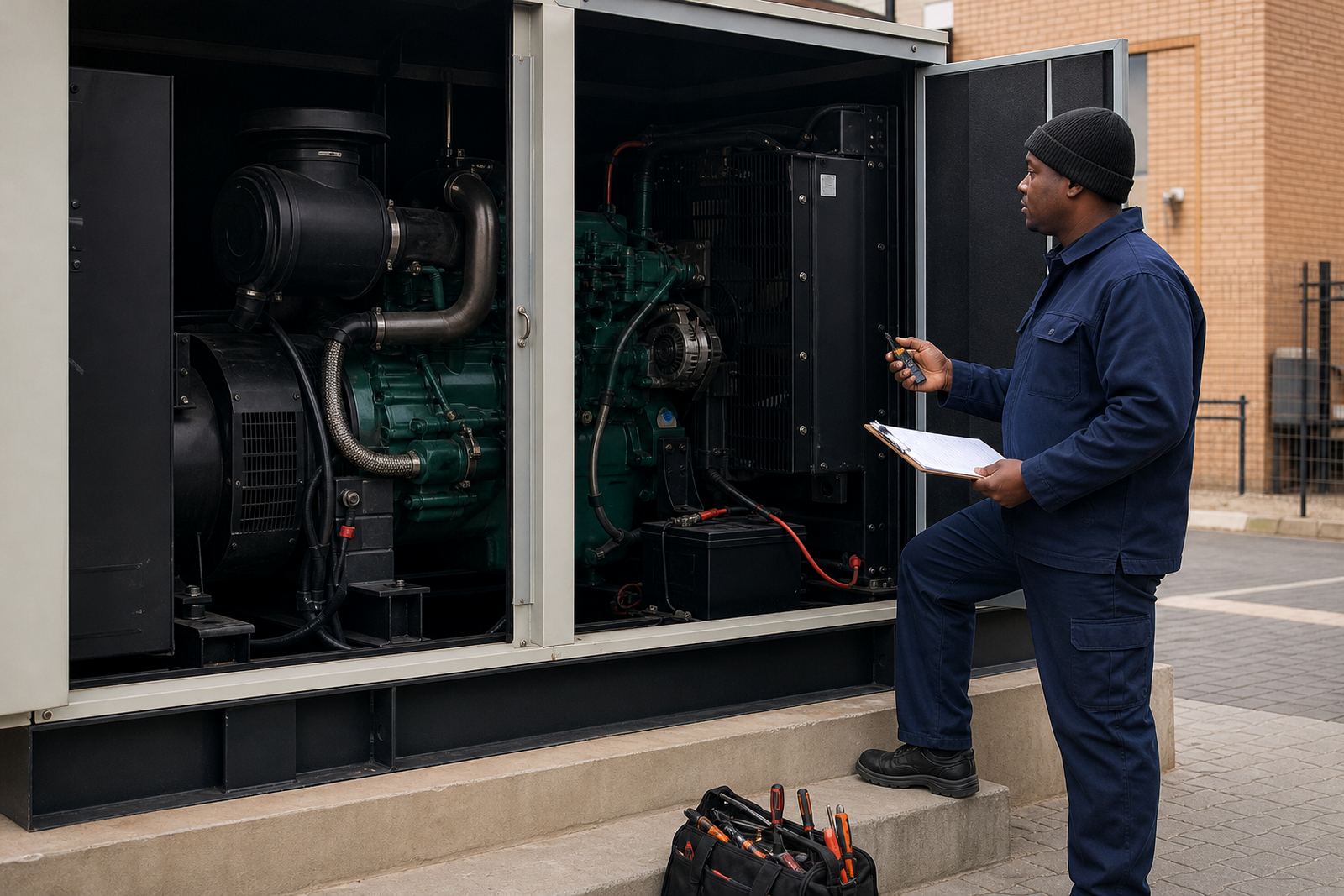
Visual checks do not need special equipment to begin with. A trained technician can inspect the tank sight glass, filler area and dipstick for signs of contamination. Rust staining around the filler neck, a wet cap seal or dirt caught on the cap can point to contamination entering the system.
- Water beads or a distinct layer at the bottom of the tank
- Dark sludge or sediment around the base of the tank
- Rust flakes, dirt or fibres caught on the dipstick
- A sour or stale fuel smell instead of a clean diesel smell
If the tank is metal and has been exposed to damp conditions, rust can appear quickly. Plastic tanks are not immune either, because dirt from the fill point or poor storage can still settle inside. These signs often show up before any fault light appears.
When filters are talking louder than the engine
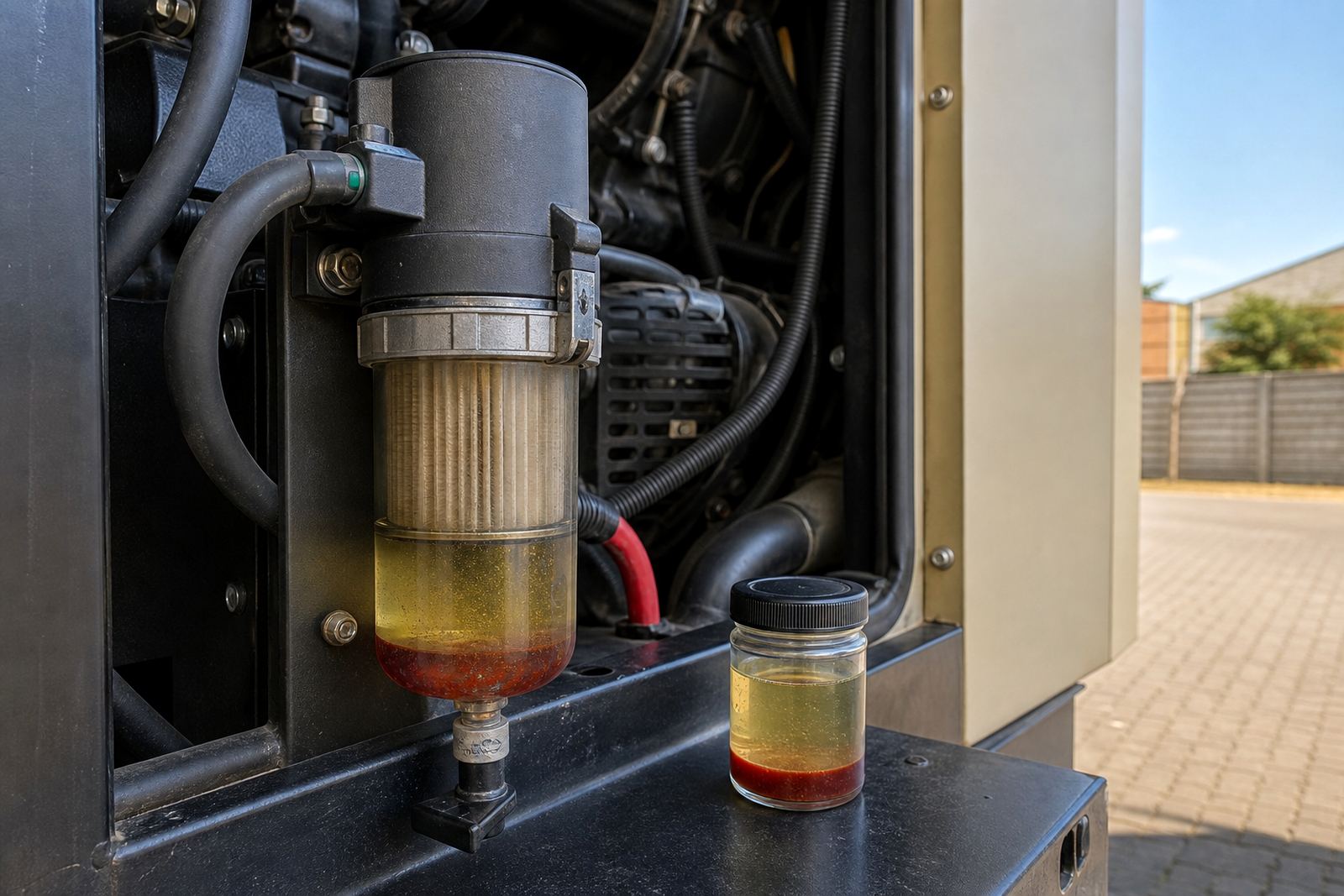
Fuel filters often give one of the clearest clues that contamination is present. If a filter is unusually dark, slimy or packed with dirt well before its normal service interval, the fuel supply may be carrying more contamination than expected. In some cases the filter housing will show a layer of water at the bottom, which is a strong warning that separation has not been effective.
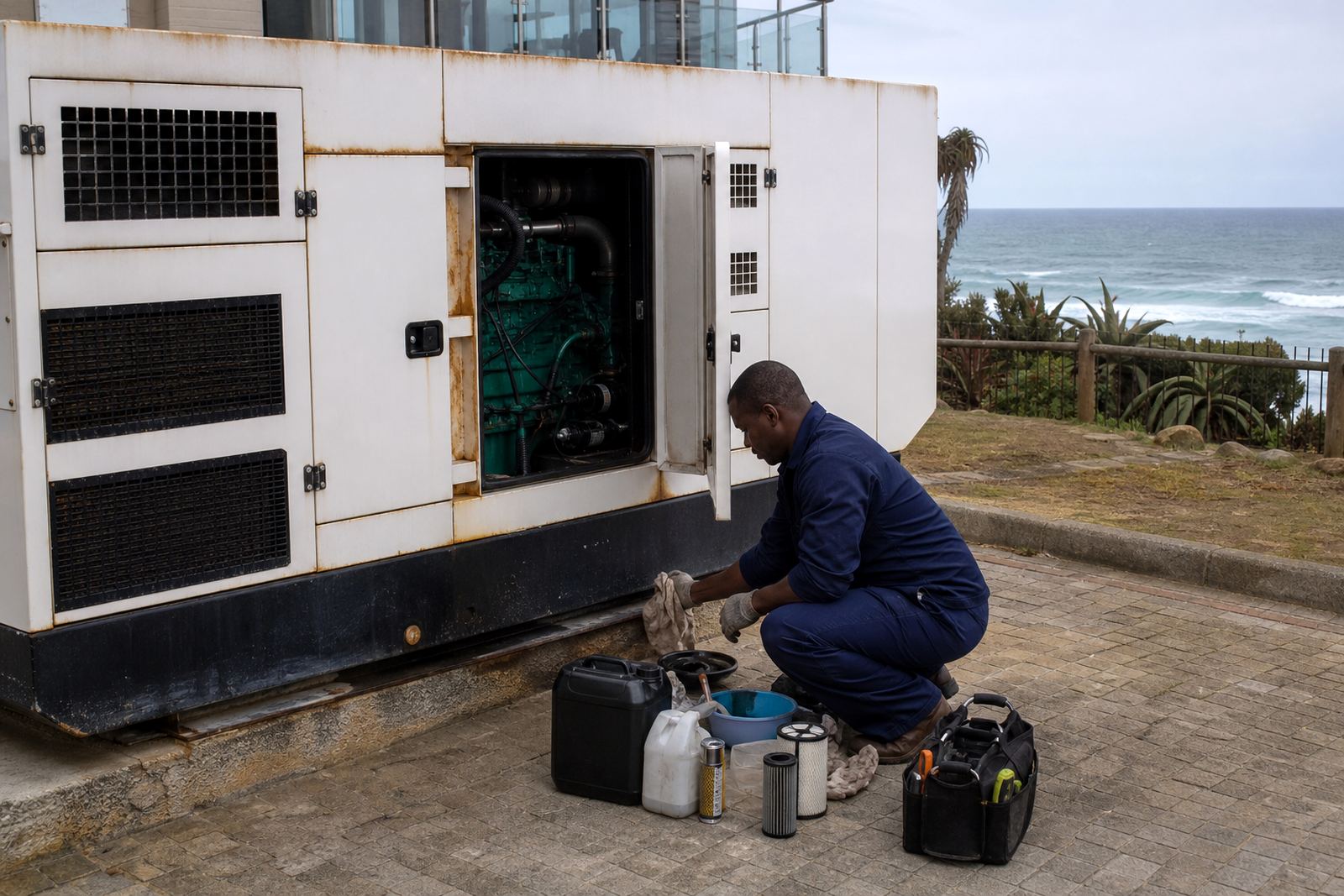
Blocked filters can cause hard starting, surging, loss of power and repeated shutdowns under load. That is why filter changes are not just routine maintenance, they are also a check on the condition of the fuel itself. During a proper service, the removed filter should be examined for sludge, rust and microbial growth, not just binned and forgotten.
- Filters turning black too quickly
- Water sitting in the filter bowl
- Sticky residue on the element
- Visible grit in the drained sample
How water gets into diesel in the first place
Water contamination is common on generators that sit for long periods. It can enter through poor tank seals, open vents, damp fill points or condensation that forms inside partially filled tanks. A set that runs in hot daylight and cools down at night can draw moisture into the tank over time, especially in coastal or humid areas.
Water is a serious issue because it encourages corrosion and can support microbial growth at the fuel and water interface. That growth forms sludge which then blocks filters and fuel lines. In practical terms, a set may still crank, but it struggles to fire or it starts and then trips when the load comes on.
For sites in places like Pretoria, Sandton or Centurion where standby sets are expected to be ready all the time, even a small amount of water can become a repeat problem if the tank is not inspected during scheduled servicing.
Local example: a Midrand site with repeated start failures
A business park in Midrand may call in for a generator that starts on test but fails after a few minutes. The battery tests fine, the starter system is sound, and the changeover switch checks out. After a fuel sample is drawn, the technician finds cloudiness in the diesel and a thin layer of water at the bottom of the tank.
The cause is often nothing dramatic. It can be a loose cap seal, a tank that has not been checked for months, or fuel sitting too long between outages. Once the contaminated fuel is drained, the tank cleaned and fresh fuel introduced, the set usually returns to more reliable starting and cleaner running. That sort of issue is common enough that it should be part of every scheduled inspection, not only an emergency callout.
Why electrical checks still matter during a fuel problem
Fuel contamination and electrical faults can look similar from the outside, so it pays to test both. A generator that will not carry load could have a fuel issue, but it may also have a problem with the starter circuit, controls, battery bank or changeover equipment. Electrical work must be handled by qualified people under local regulations, and the same applies when checking control circuits and switchgear.
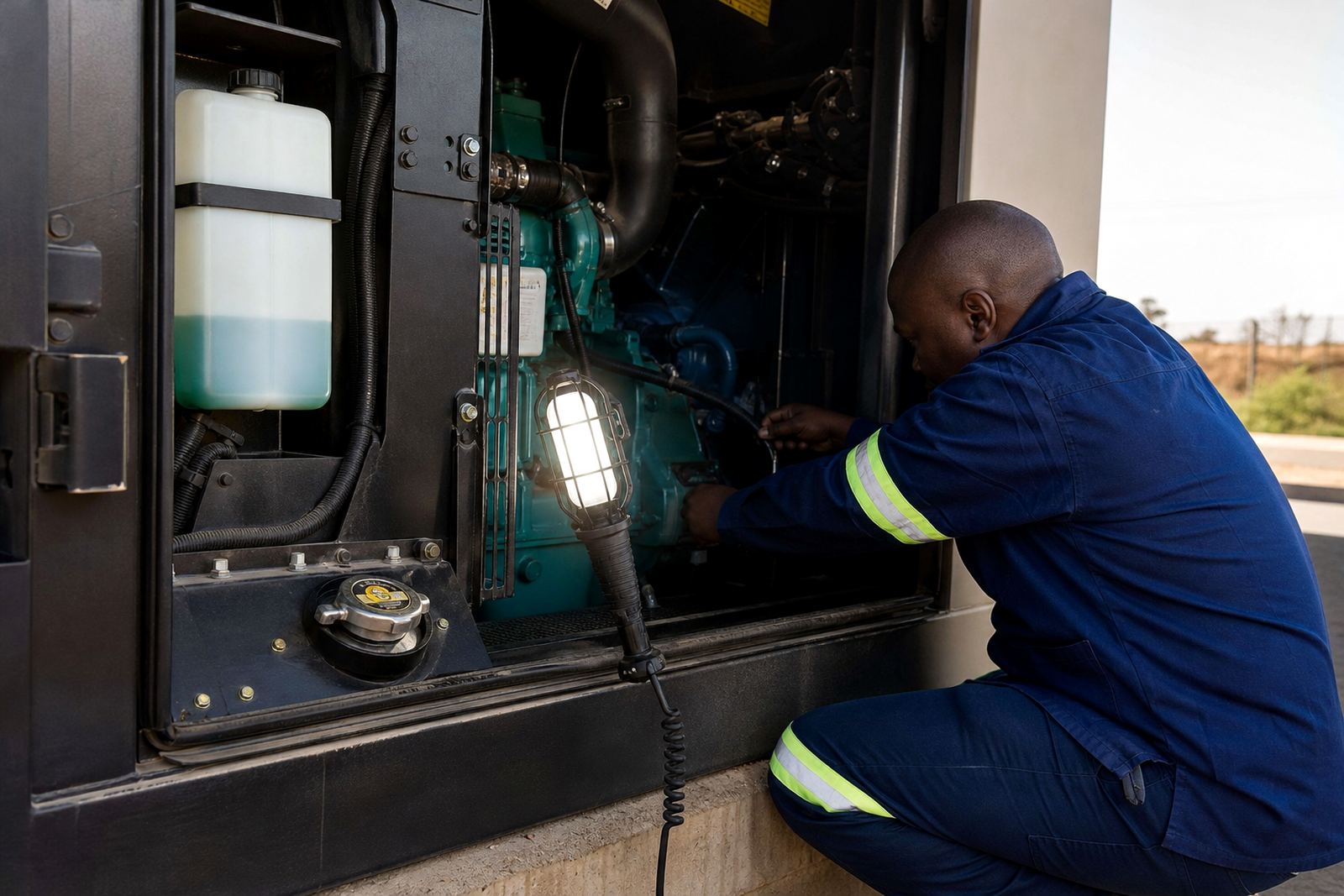
During servicing, the technician should confirm that the fault is not being caused by a poor battery, loose starter connection or a switch issue that is stopping the set from accepting load. A clean fuel system helps, but it must work together with sound electrical and mechanical condition.
- Battery voltage and cranking performance
- Changeover switch operation and alarms
- Starter system condition and cable security
- Load bank test results after repairs
What a good maintenance contract should catch early
A proper maintenance contract should not only change oil and filters on a schedule. It should also include fuel checks, coolant checks, battery testing, load bank testing and service record audits so early warning signs are not missed. If the fuel sample is cloudy, the filter is filling up too fast or the tank shows signs of corrosion, the issue can be tackled before it becomes a breakdown.
For businesses across Johannesburg, Pretoria, Durban, Cape Town and Polokwane, the main goal is the same: keep the generator ready for the next outage or production run. Fuel contamination is one of the easiest problems to spot early if someone is looking at the right things during each visit, and that can save a great deal of trouble later on.
When fuel looks wrong, smells wrong or keeps blocking filters, treat it as a warning not a nuisance.