When dust starts eating into run time
Dusty sites change the way a generator behaves. Airflow drops, filters clog faster, cooling surfaces carry a blanket of fine powder, and the set has to work harder to hold temperature and output. In Gauteng, that often shows up at construction yards, packing areas, and service depots around Midrand, Centurion, Sandton and Johannesburg where vehicles keep stirring up grit all day.
On standby units, the problem is easy to miss because the set may only run during outages or planned tests. By the time it is needed, the air filter can be loaded, the radiator fins dirty, and the battery tray coated in dust that holds moisture after rain. A generator can look fine from a distance and still be in poor shape underneath.
Air filtration deserves the first look
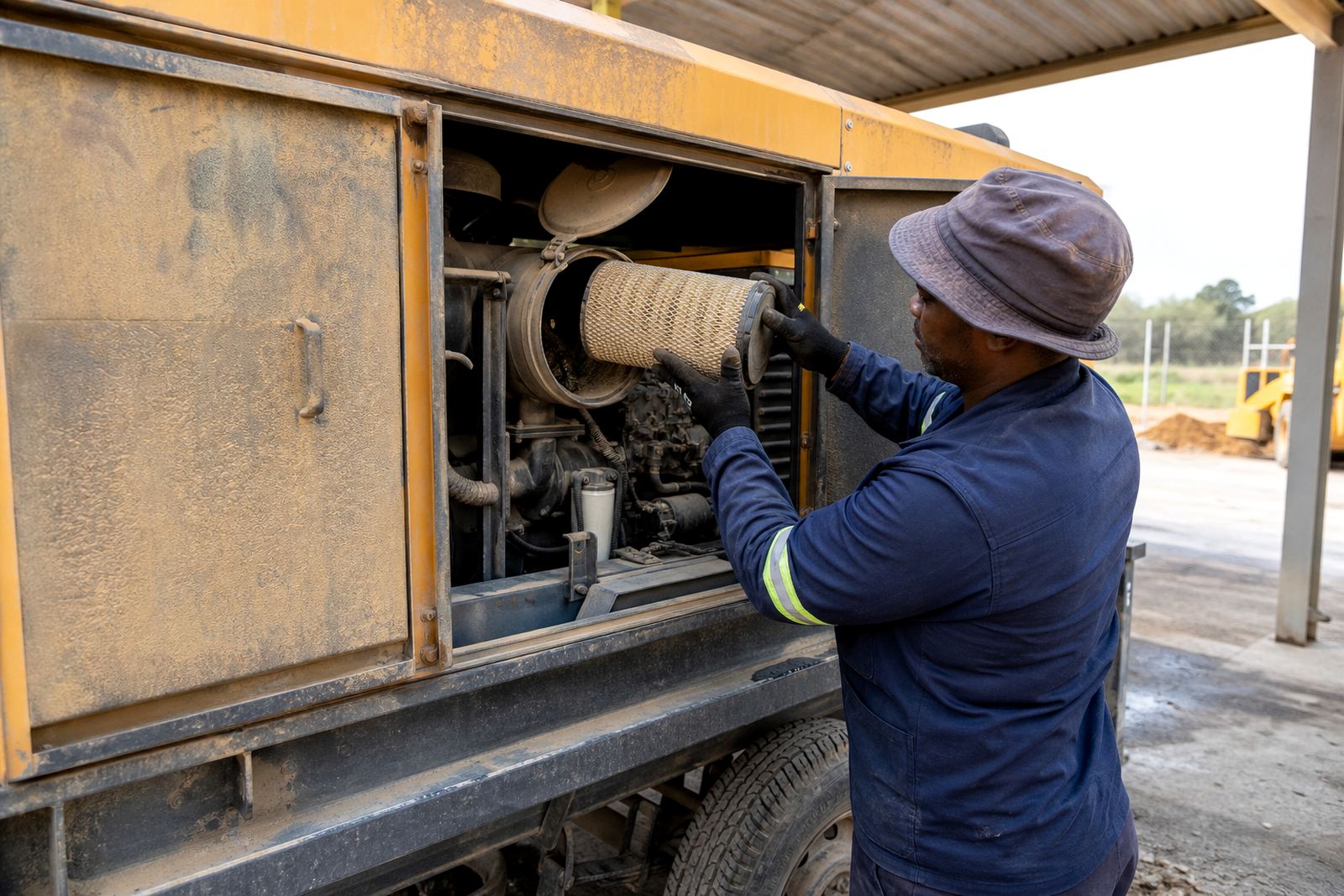
In dusty conditions, the air intake system should be checked more often than the standard calendar interval. A blocked filter restricts combustion air, which can cause harder starting, black smoke, lower output, and unnecessary wear on the engine. Where the site has fine cement dust, quarry dust, or dry soil, the intake path and pre-cleaner need close attention.
- Inspect primary and secondary air filters for loading, tears, and poor sealing.
- Check the intake housing for dust bypass around the cover or gasket.
- Clean external intake grilles and ensure nothing is stacked against the set.
- Replace filters only with the correct type and fit for the engine arrangement.
A quick wipe is not enough if the element is packed with fine material. If dust is entering past the seal, the filter change will not solve the root issue and the engine will keep drawing dirty air.
Cooling systems need extra attention in hot, dirty air
Dust and heat usually arrive together on South African sites. Once the radiator core, fan guard, or enclosure vents carry a layer of dirt, cooling efficiency drops and operating temperature climbs. This is where coolant checks matter as much as cleaning. Low coolant, weak coolant condition, or a blocked heat exchanger can turn a routine run into a shutdown.
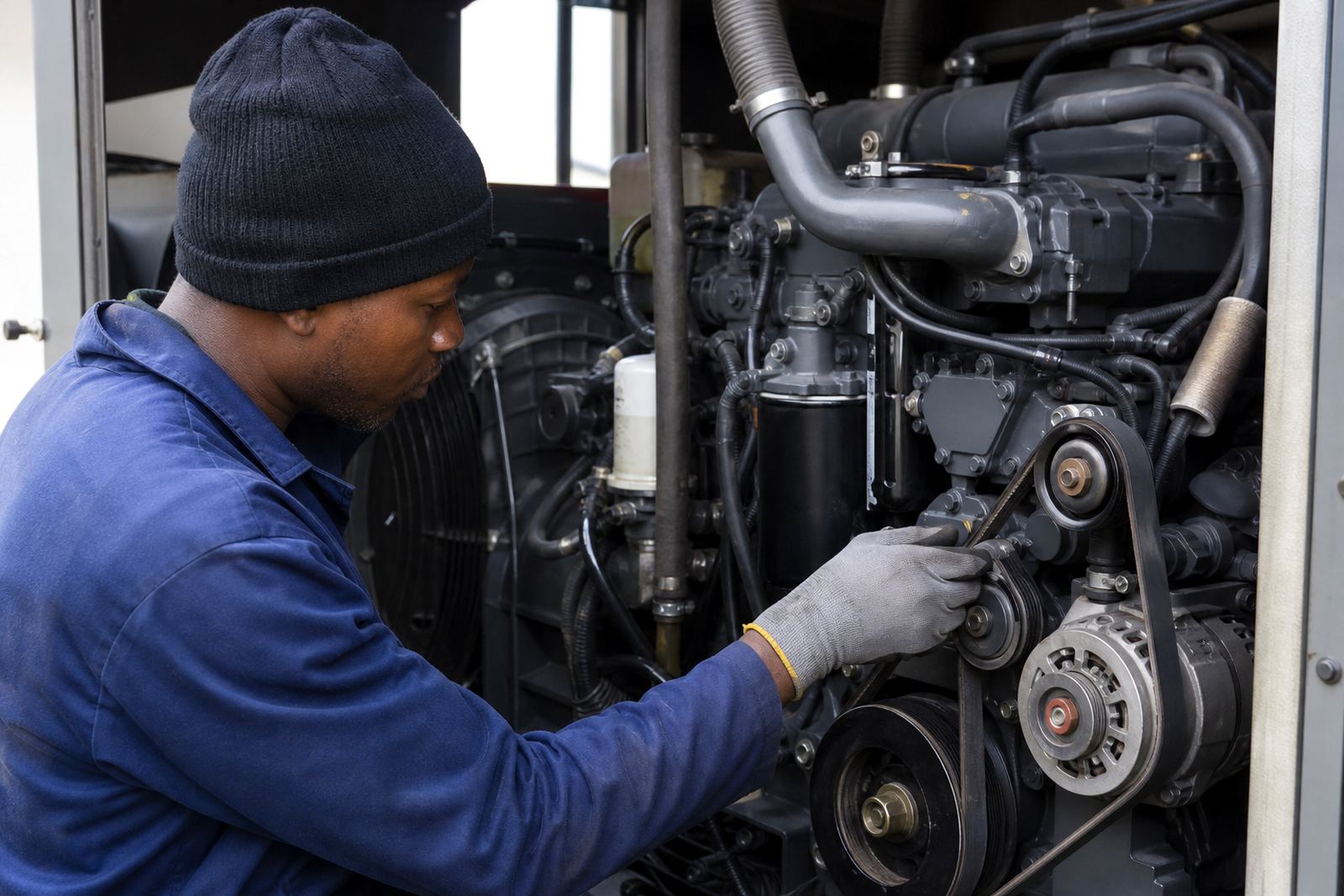
Our team checks for leaks, hose wear, loose clamps, and staining around the water pump, radiator, and joints. The coolant itself is tested for condition and level, then topped up or changed according to the service plan and the engine requirement. Where dust is heavy, the cooling package may need cleaning more often than the oil change interval.
On enclosed sets, do not overlook the room ventilation. A generator in a dusty enclosure with poor airflow will fight on two fronts at once, and that is when overheating calls start arriving after lunch or during peak load. A small cleaning job can prevent a bigger repair later on.
Batteries and starters get overlooked until the first no-start
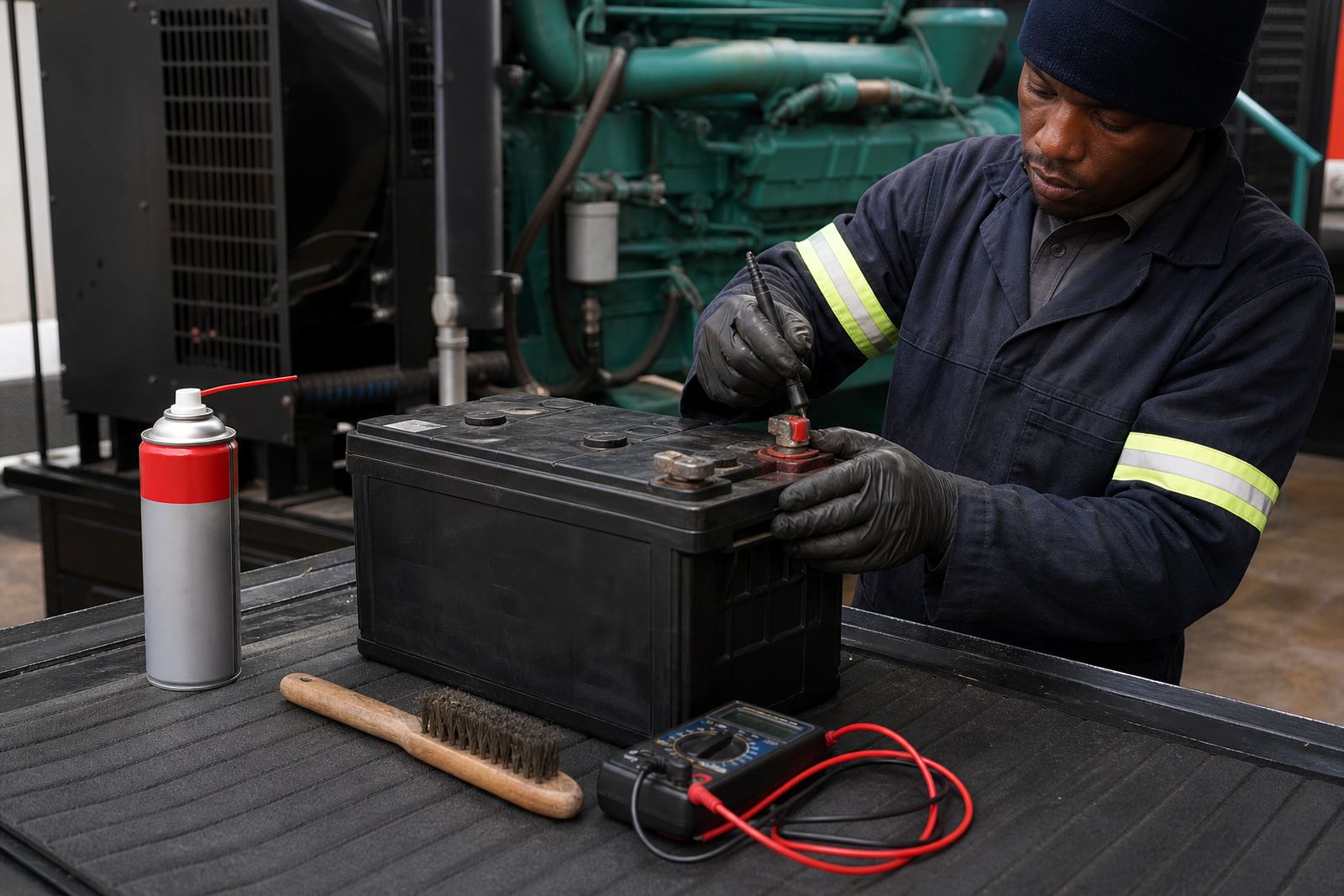
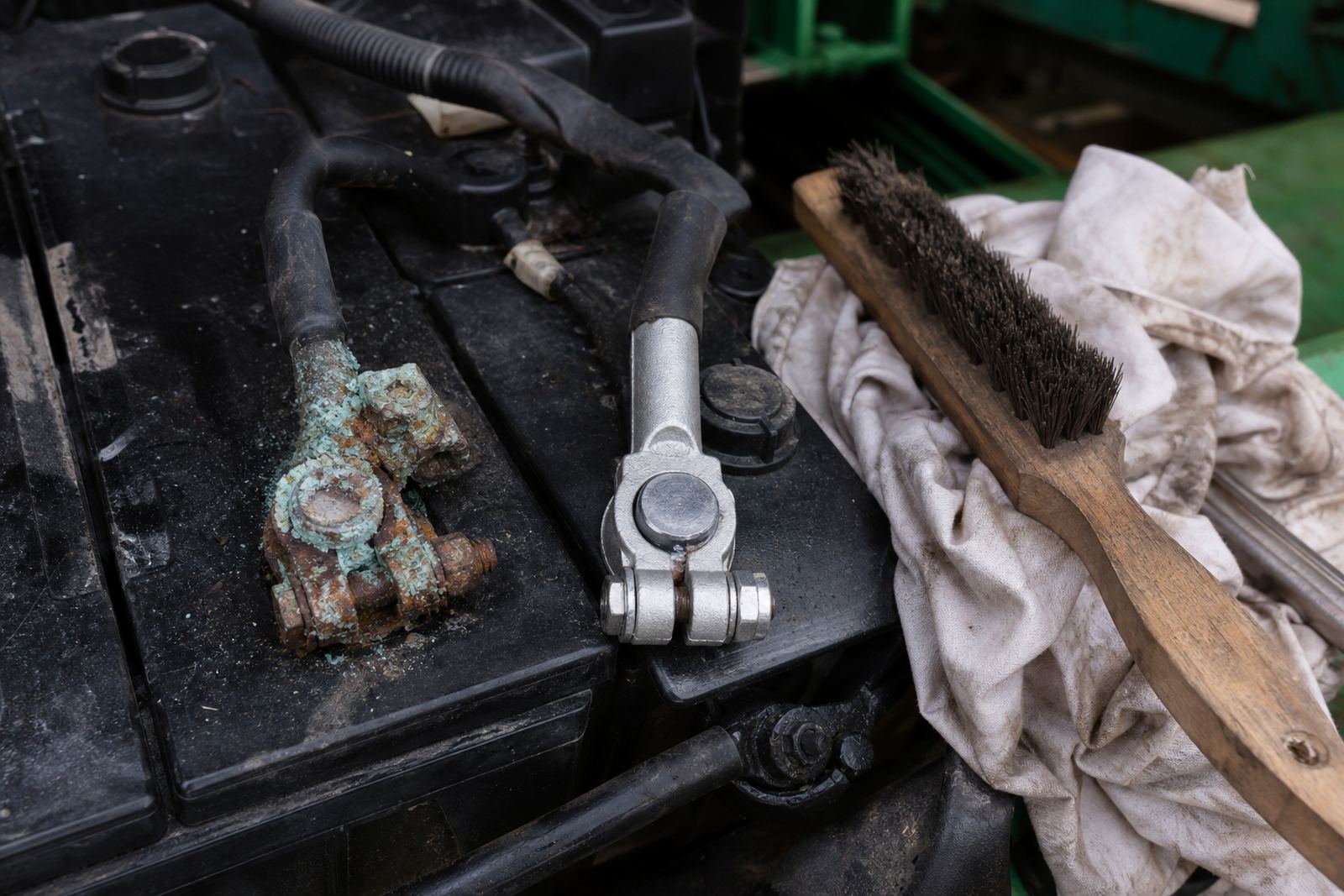
Dust on a battery is not just untidy, it can hold moisture and create tracking paths across terminals. On standby generators, that matters because the battery has to deliver a clean crank every time, even after a week or two of sitting idle. We test battery condition, inspect terminals, and check the charging system as part of scheduled servicing.
- Clean terminals and check for corrosion under the clamps.
- Inspect battery cases for swelling, cracks, or leaks.
- Verify charger output and cable condition.
- Check starter motor connections and earth points for looseness.
Starter faults on dusty sites are not always the starter itself. Sometimes the issue is poor connections, dirty earths, or a weak battery that has been dragged down by repeated short runs. That is why preventive checks pay off better than waiting for a callout.
Load bank testing shows what dirt can hide
A generator that only idles or runs light loads can fool people into thinking it is healthy. Load bank testing reveals weak points under controlled conditions, which is especially useful on dusty sites where cooling and combustion parts may already be under strain. It also helps confirm that the set can carry a proper load after servicing or repair.
For businesses in Pretoria, Polokwane, Durban and Cape Town, dust conditions differ but the principle stays the same. Fine coastal humidity can stick dust to surfaces and vents, while inland dry dust can work its way through gaps and into moving parts. Testing under load confirms the engine, alternator, controls, and changeover function are all doing their jobs.
Electrical work must be handled by qualified people in line with local regulations. That includes changeover switch checks, fault finding, and any work on control panels or live circuits. We keep the testing practical and documented, so site managers have a proper service record on file.
Service routines for sites that never stay clean
Dusty sites do not suit a once-a-year maintenance mindset. They need scheduled servicing that matches the real conditions on the ground, not just the standard handbook interval. For plants, depots, and construction operations, that often means more frequent inspections, earlier filter changes, and tighter attention to cooling and starting systems.
- Keep the area around the generator swept and clear of loose material.
- Close access panels properly after every inspection.
- Record every oil, filter, coolant, and battery check.
- Arrange preventive site inspections before peak season or planned shutdowns.
- Report vibration, smoke, high temperature, or slow cranking early.
Our maintenance contracts are arranged for businesses operating across Midrand, Johannesburg, Pretoria, Durban, Cape Town, Polokwane and surrounding areas. That includes emergency callouts, service record audits, fuel system repairs, and fault finding when dust has already done damage. The aim is to keep standby and prime generators ready for use, not just technically present.
A Midrand example from a building site
A construction site in Midrand called for repeated starting issues on a standby unit that had been running dust-heavy jobs near the access road. The filter was loaded, the radiator face was dirt-coated, and the battery terminals had a fine grey film. Nothing dramatic had failed, but enough small faults had built up to make the set unreliable.
After a full service, filter replacement, cooling system cleaning, battery testing, and a check of the changeover switch, the set started cleanly and held temperature under test. The client also adjusted the inspection routine so the generator was checked more often during earthworks and windy days. That sort of adjustment is usually what keeps a dusty site from turning into an outage story.
RelGen operates from Midrand, Gauteng with service support led by Thabo Engelbrecht and a team that handles scheduled servicing, emergency callouts, load bank testing, and preventive inspections. If your generator lives in dust, the maintenance plan should be built around that reality, not around a clean room schedule.