Make one clean shelf the home for generator parts
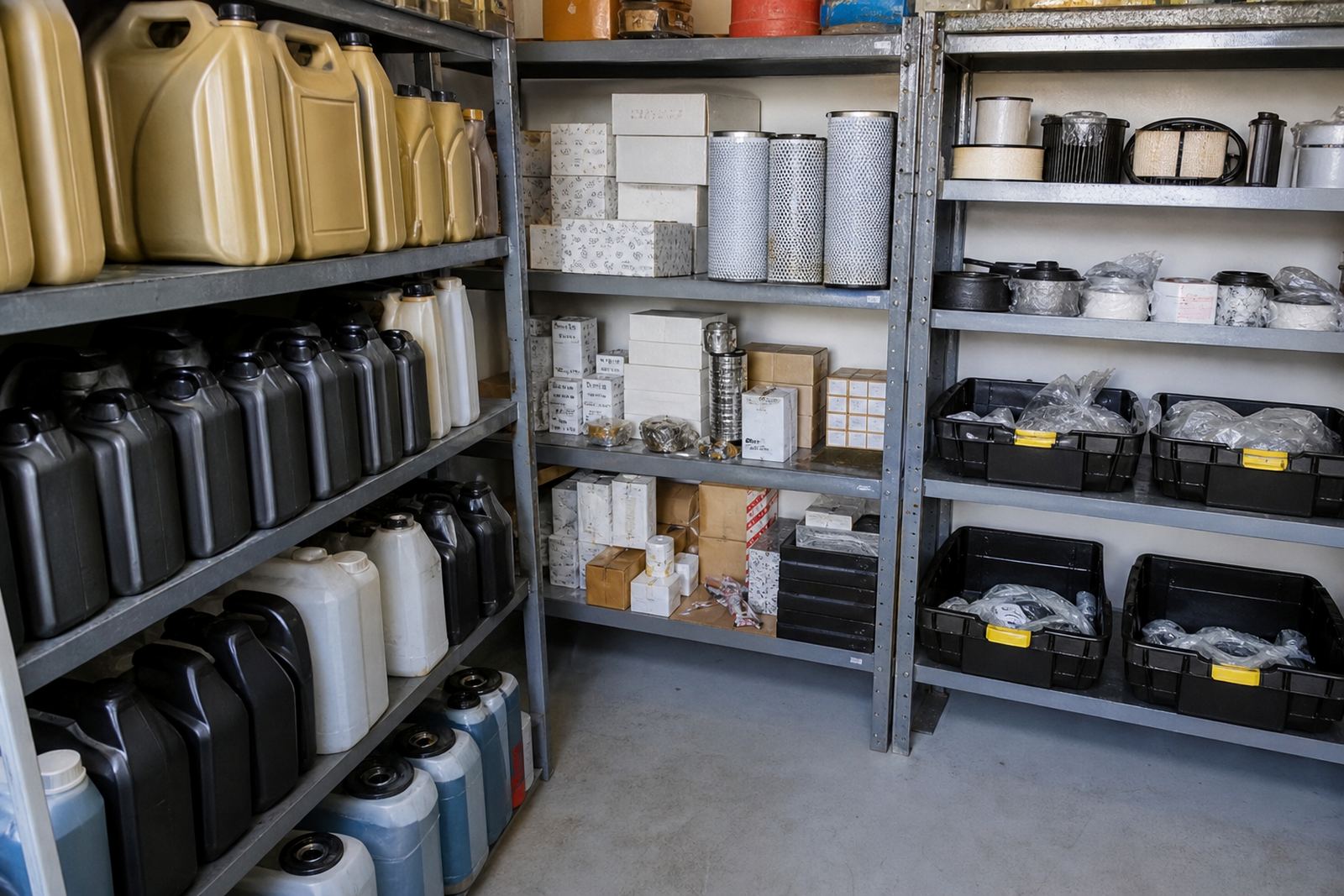
Keep all service consumables in one marked space, away from general workshop stock and cleaning chemicals. In Midrand, where dust and temperature swings are common, sealed shelving works better than open boxes on the floor. Label each shelf by generator size, site name, or service interval so the right oil and filters are easy to find during a planned stop.
Use clear containers for small parts like hose clips, fan belts, terminals and caps. If parts are left in mixed cartons, the technician spends time sorting instead of servicing, and that can stretch a site visit longer than planned.
- Store oils upright and off the floor
- Keep filters in sealed packaging until use
- Mark coolant type and quantity on the container
- Separate new parts from removed, dirty parts
Track consumables by service interval, not by memory
A simple stock card or spreadsheet saves a lot of bother. Record the date received, batch number if available, the generator site, and the next service due date. When you support standby sets in Johannesburg, Pretoria or Durban, it helps to know what is already on hand before a technician drives out. This is especially useful when roads are busy or site access is restricted.
Assign one person to update the list after every issue or delivery. If nobody owns the record, filters get used on the wrong set, or oil sits in store past its useful period.
- Note the date each item was opened
- Record which site received the part
- Match filters to the correct model and capacity
- Flag any item nearing expiry or contamination
Treat oil, coolant and batteries as separate jobs
Oil, coolant and batteries do not behave the same way in storage. Keep engine oil sealed and shaded, coolant in its original container, and batteries on a dry pallet where terminals cannot touch anything metal. Coastal humidity in Cape Town and Durban can work its way into open packaging, so a closed store is far better than a loose corner of the workshop. A battery that has been sitting flat for too long may look fine but still fail under load, so check condition before a visit.
For generators on prime duty, consumable control matters even more because service windows are tighter. A missed oil change or weak battery can lead to a callout, then the whole schedule shifts.
Checks to do before a technician leaves the yard
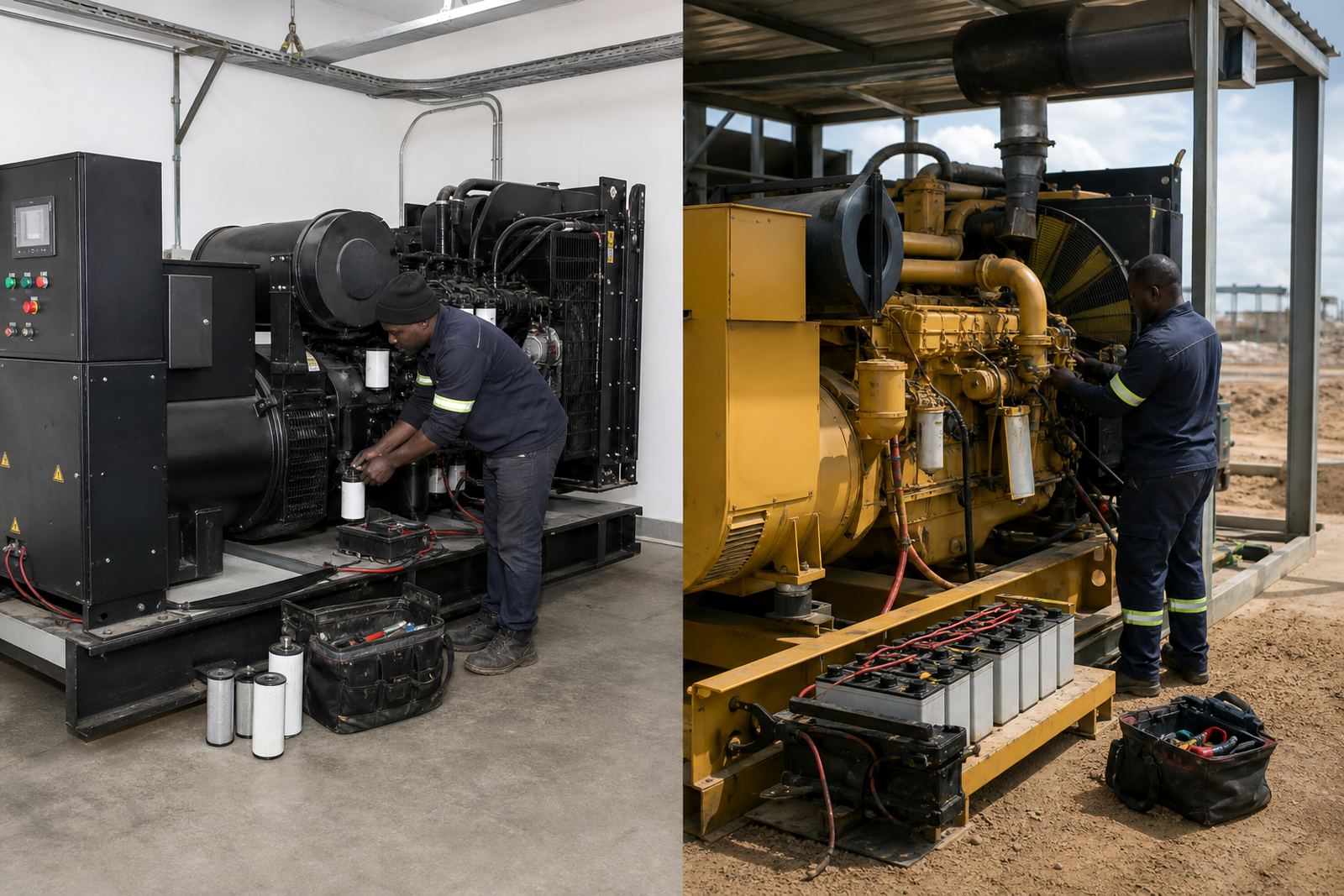
Before any service trip, match the parts to the service list and confirm that the right quantities are packed. A missing seal or incorrect filter can delay work on site, and some estates or industrial parks have limited access windows. In Gauteng, where many business sites have loading bay rules and security check points, it helps to pack everything the day before.
- Oil grade and volume checked against the service plan
- Correct air, fuel and oil filters packed
- Coolant level and type verified
- Batteries or terminals ready for testing
- Changeover switch and related consumables identified if inspection is due
Keep the service area ready for load bank testing and switch checks
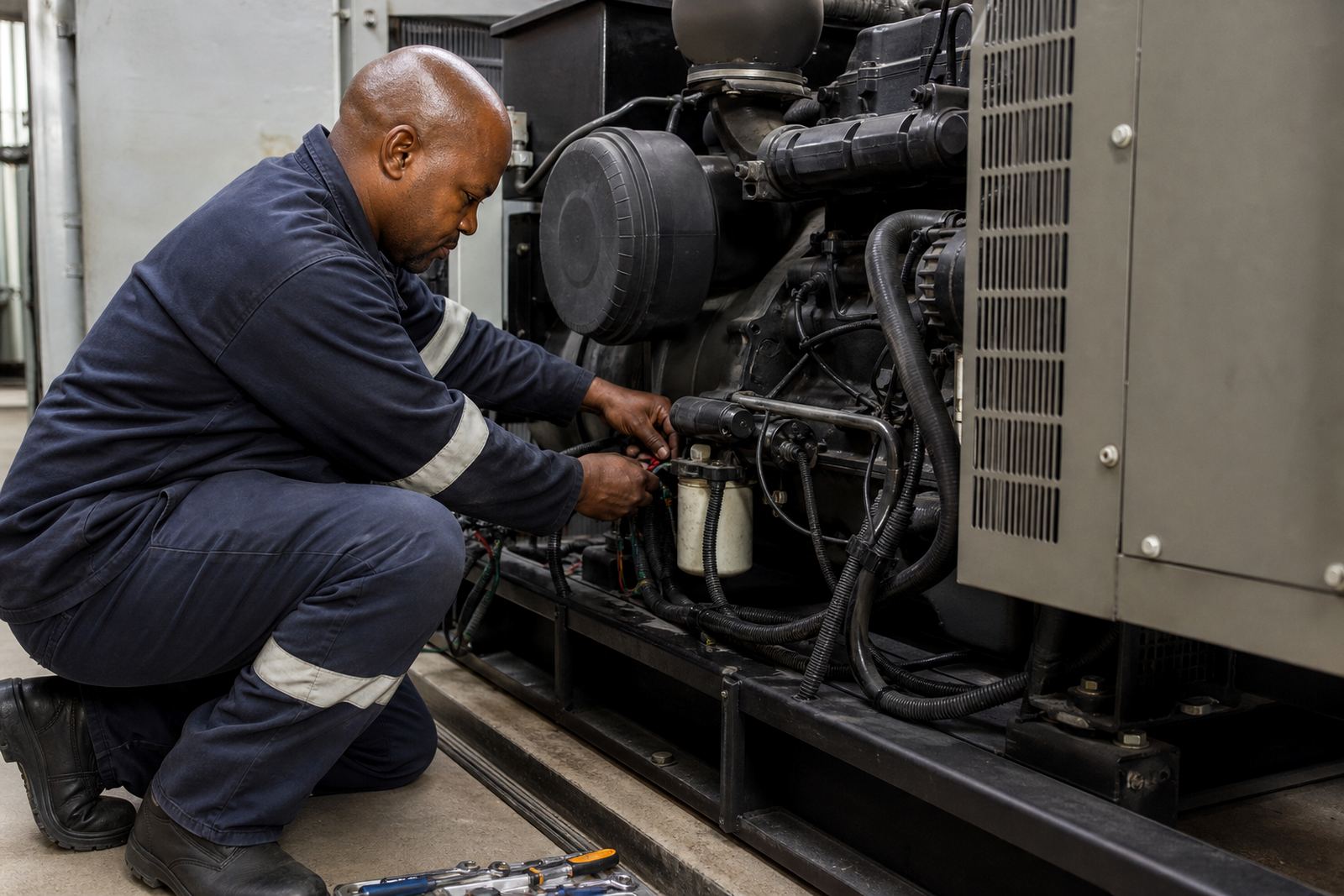
Load bank testing and changeover switch checks need tidy prep. Make sure the generator area is accessible, the store has the right cables, clamps and small fittings, and the technician can reach the unit without moving pallets or scrap. Electrical work must be done by qualified people under local regulations, and any switch inspection should be part of the planned maintenance record, not a last minute scramble.
If you support more than one site, keep a separate bin for each location. That stops parts from Centurion ending up in Sandton, or a Pretoria set being held up because the wrong gasket was issued. Small mistakes like that cost time and they can affect the maintenance report too.
Use a monthly stock clean-out so nothing sits forgotten
Set aside one day each month to check the store. Look for damaged cartons, dusty seals, oily rags near fresh stock and any items that have been moved from their marked place. This is also the time to compare what is on the shelf with what was actually used on recent maintenance visits. If a part appears often on the issue list, keep extra stock; if it rarely moves, reduce the quantity and free up space.
For teams servicing across Polokwane, Pretoria, Midrand and the coast, a tidy consumables store makes planning easier and helps emergency callouts go smoother. It also gives the service manager a clearer picture of what can be done on the first visit and what needs ordering in advance, no guesswork required.