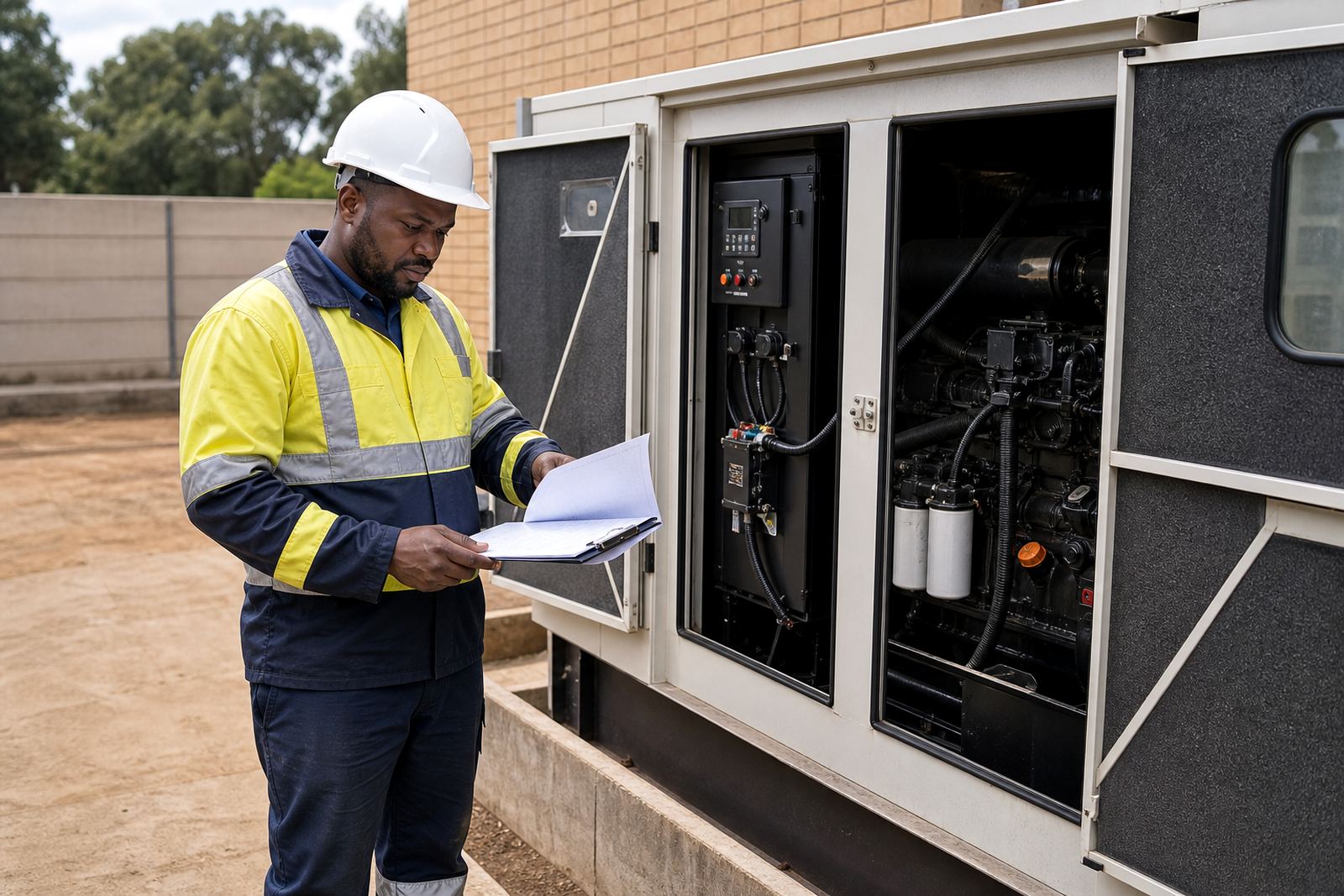
Start with the red flags, not the summary line
When a service report lands on your side, go straight to the items marked urgent, critical, failed or out of tolerance. Those notes usually point to faults that can stop a set from starting, damage components, or create an unsafe condition during a municipal outage or a long load-shedding run. If the report mentions oil pressure, battery voltage, coolant condition, abnormal smoke, charging issues or a transfer problem, treat it as immediate work rather than paperwork.
A good report should separate observations from actions taken. For example, a technician may record low battery cranking performance, top up coolant, replace filters, or note that the unit needs electrical testing by qualified people under local regulations. If the wording is vague, ask for the exact measurement, where it was taken and whether the result is changing over time.
Read the numbers against the unit’s normal pattern
Generator reports often list oil condition, filter status, coolant level, battery health, run hours and load test results. Those numbers matter most when you compare them to the previous visit. A slight dip in battery performance may be normal, but if the same issue appears on two or three reports, that is a maintenance action not a watch-and-wait note.
- Compare run hours with the last service date, not just with the calendar.
- Look for repeated notes on leaks, loose terminals, overheating or tripping.
- Check whether the technician has recorded ambient conditions, such as heat, dust or coastal humidity.
- Mark any item that affects starting, running or safe changeover as high priority.
In Midrand, Johannesburg or Pretoria, dust and traffic grime can shorten filter life. In Durban and Cape Town, salt air and moisture can affect terminals, housings and switchgear faster than many teams expect.
Turn findings into a priority list your team can act on
Not every note needs an emergency callout. Some findings are routine, some are date driven, and some should be done before the next high demand period. Sort each item into three groups: now, soon, and monitor. This keeps maintenance budgets honest and prevents small faults from turning into a no-start during business hours.
- Now: Battery failure, fuel leak, overheating, failed load bank result, transfer fault, starter problem.
- Soon: Oil and filter change due, coolant service due, worn belts, dirty strainers, service record gaps.
- Monitor: Minor vibration, early corrosion, slightly low battery reserve, small trend changes in test values.
For sites in Polokwane, Centurion and Sandton, it often helps to align the priority list with trading peaks, planned shutdowns and any building access rules. The goal is to fix the thing that can stop the set, not just the thing that looks untidy.
Use the test results to judge real readiness
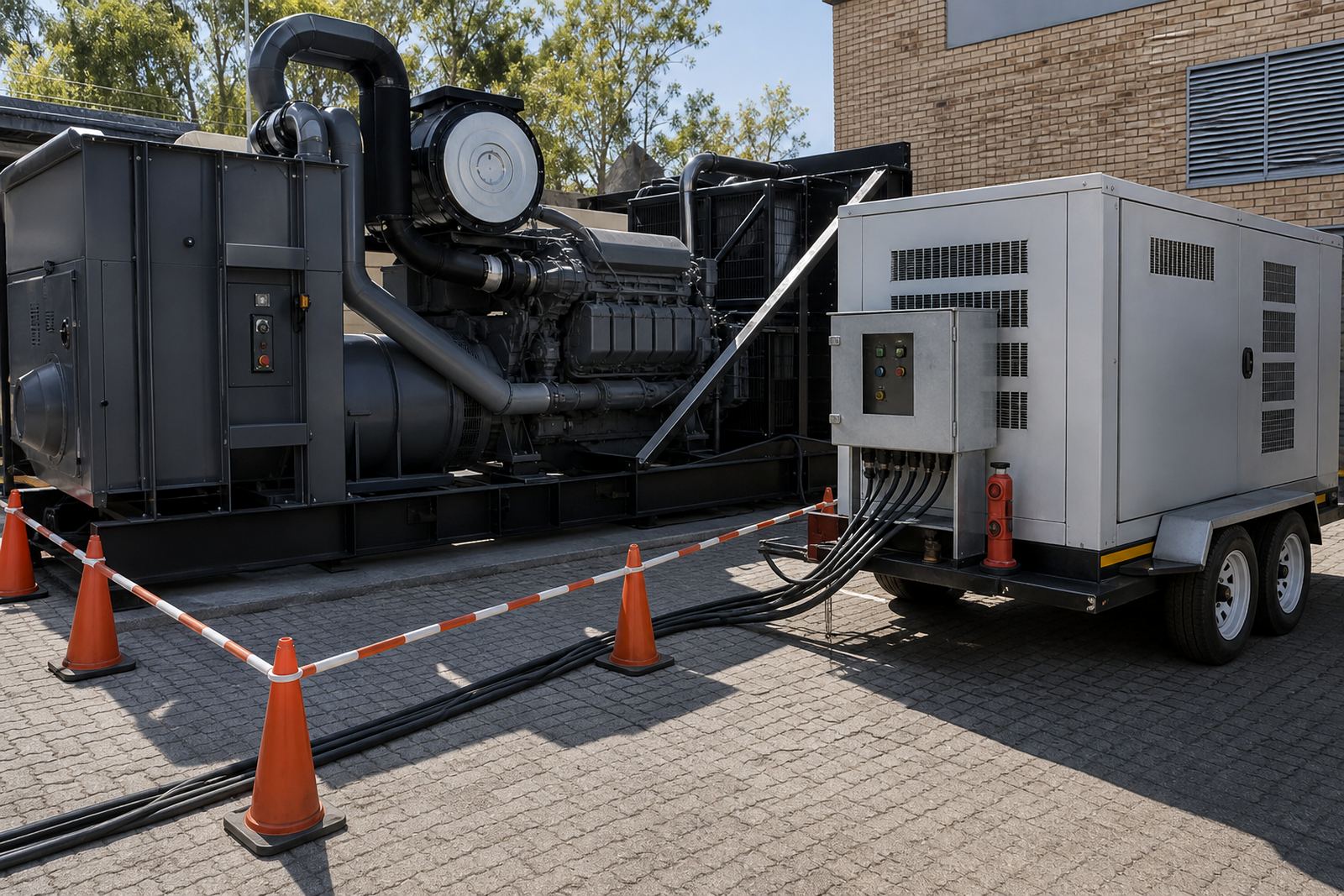
A service report is only useful if it shows how the generator performed, not just what was cleaned or replaced. Load bank testing matters because it helps confirm that the unit can carry demand under controlled conditions. If the report shows voltage instability, temperature rise, poor response under load or incomplete recovery after the test, the set may need further fault finding before it is trusted for standby duty.
For prime power applications, the report should also reflect whether the unit can handle regular running without overheating, nuisance trips or repeated alarms. If changeover switches are part of the system, their condition matters just as much as the generator itself. Electrical work on these parts must be handled by qualified people who work to local rules and site safety requirements.
What a useful report should always include
A useful service report gives you enough detail to plan work without guessing. It should name the unit, list the date, show hours, describe tasks done, and note any follow-up actions. It should also identify which items were inspected but found acceptable, so you know what was checked and not only what failed.
- Service date and running hours at inspection.
- Oil, filter and coolant findings, including any replacement carried out.
- Battery test result and starter system notes.
- Load bank results and any concerns during testing.
- Changeover switch condition and any faults needing electrician attention.
- Parts used, work completed and next service interval.
If the report is missing those details, ask for a clearer version before signing off. Good records help with warranty claims, fault history, and contract planning across sites in Gauteng, KwaZulu-Natal and the Western Cape.
When to escalate instead of waiting for the next visit
Some findings should move straight to escalation. A generator that fails to start, trips under load, shows fuel delivery problems, or has repeated battery issues needs prompt attention. The same applies when a report shows coolant loss with no clear cause, contaminated oil, damaged cables, or a transfer switch that does not operate correctly. Waiting on those items can turn a manageable repair into a larger shutdown.
Use the report to decide whether the issue needs a scheduled repair, an emergency callout, or a site inspection before the next storm season. On busy sites in Durban or Cape Town, where humidity and corrosion can move quickly, early action often saves more than one repair visit. The same is true in industrial areas around Johannesburg and Pretoria where a missed fault can interrupt production and cause start-up delays the next day.
Make the next report easier to read than the last one
Keep every report in one file set by generator and by site. Add notes on past faults, fuel issues, battery replacements and changeover switch work so the next review has context. When the same fault repeats, it is usually a pattern, not a coincidence. That is where service contracts earn their value, because the history helps plan maintenance before downtime starts.
At RelGen, our team in Midrand works with businesses across Johannesburg, Pretoria, Centurion, Sandton, Durban, Cape Town and Polokwane to keep service records practical and usable. If your report shows gaps or recurring faults, the next step is not guesswork. It is a clear action list based on the findings in front of you, with the right qualified people handling the electrical side and the mechanical side kept in step.