
Start With The Way Your Generator Is Used On Site
A contract should match the way the set is used, not just the kVA rating on paper. A standby unit in a Sandton office block that only starts during outages needs a different visit pattern from a prime unit supporting plant at a manufacturing site in Durban or Polokwane.
Look at how often the set runs, how long it carries load, how dusty or salty the environment is, and whether the site has long outage periods. Those details decide whether monthly, quarterly or more frequent servicing makes sense. A good contract should also take access into account, especially where a generator sits on a roof, in a basement, or behind security gates with limited after-hours entry.
The Checks That Keep A Contract Worth Paying For
A proper maintenance contract should cover the parts of the set that wear first. That includes oil and filters, coolant condition, batteries, fuel system checks, starter system checks and a close look at changeover switches. Electrical work must be done by qualified people in line with local regulations, and switchgear should never be treated as a casual add-on.
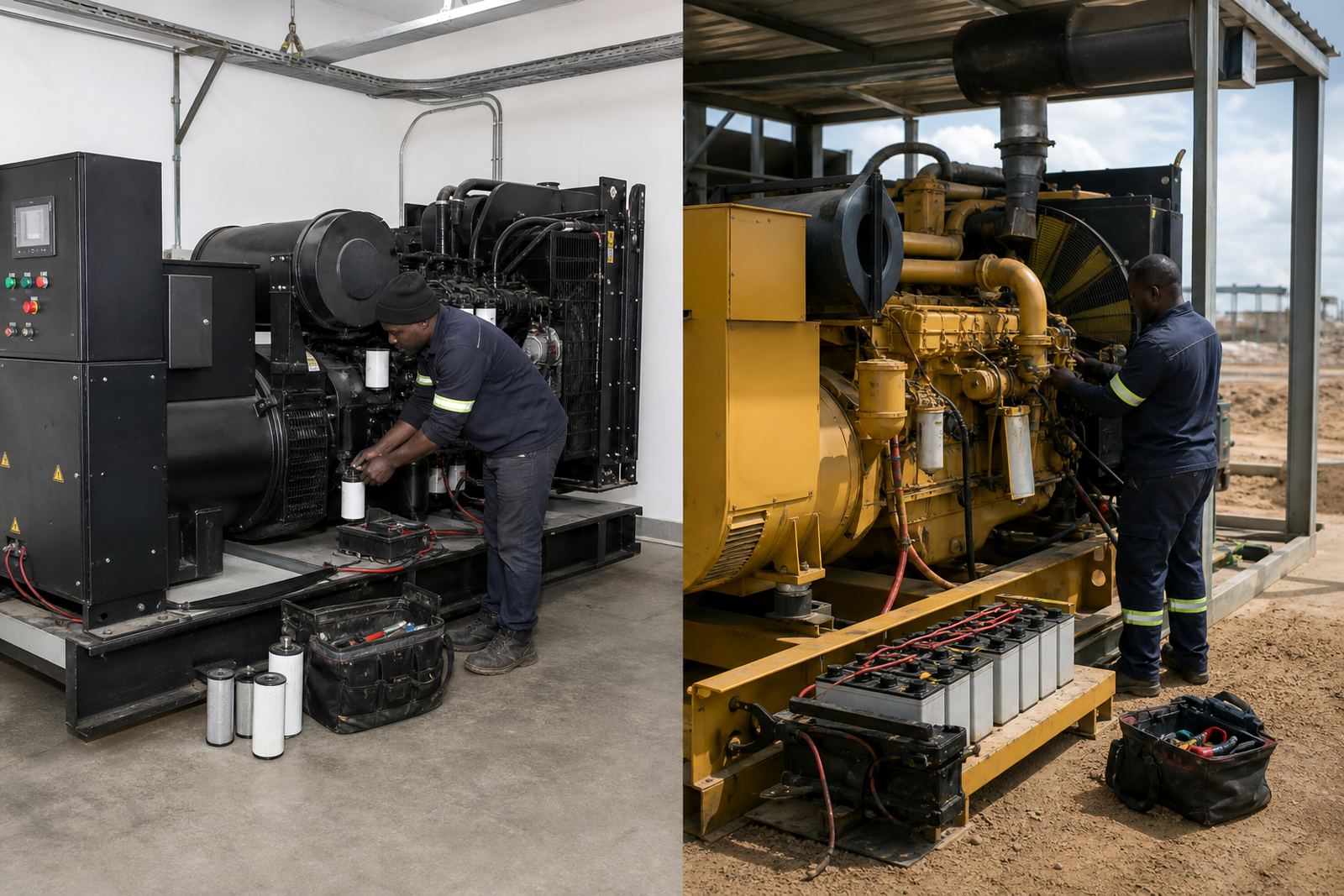
- Oil and filter changes at the right intervals for the duty cycle
- Coolant checks, top-ups and leak spotting
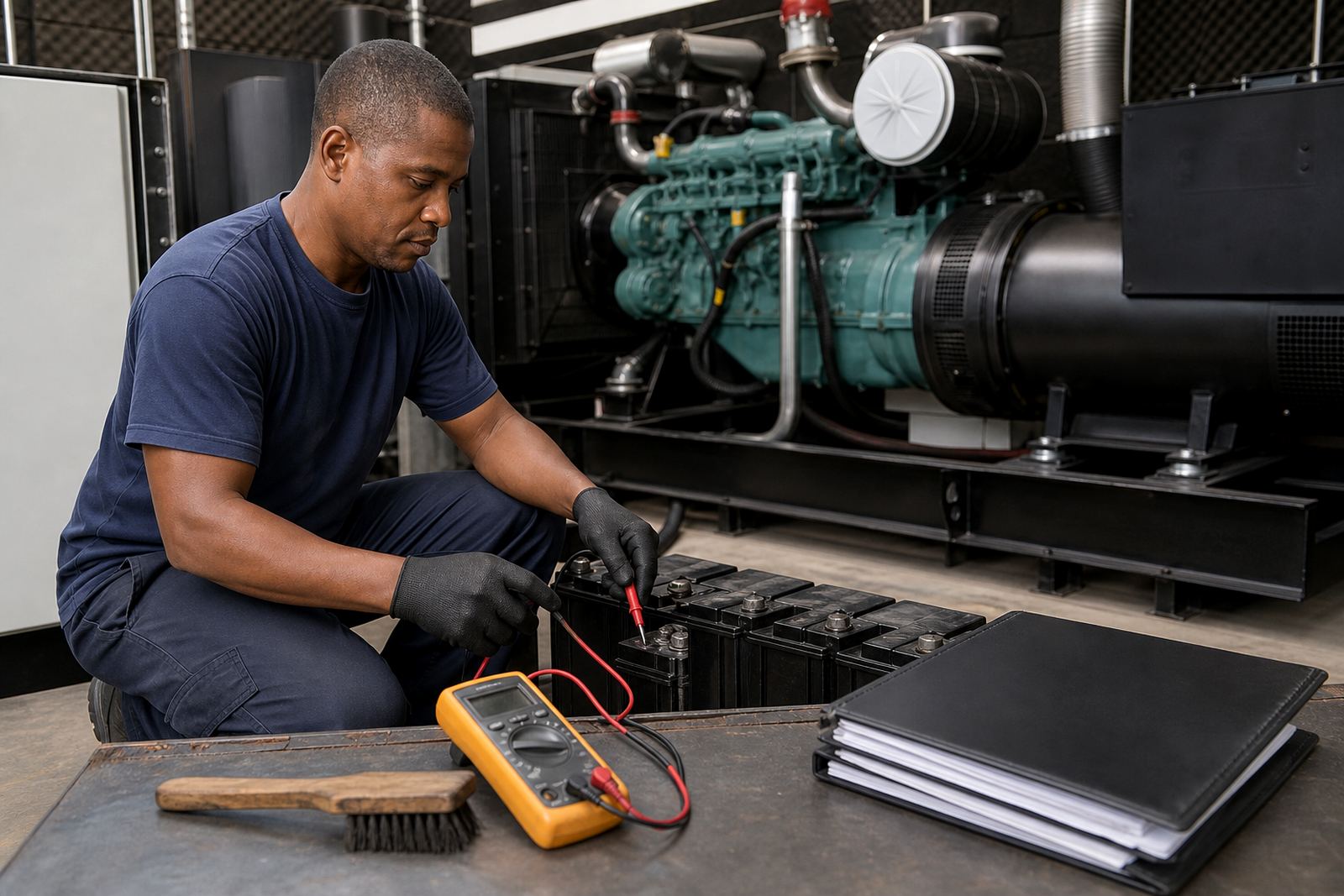
- Battery testing and terminal cleaning
- Load bank testing where the site needs proof of performance under load
- Changeover switch checks and functional testing
- Fault finding, service record audits and preventive site inspections
If a contract leaves out these basics, it may look cheaper at first but it usually costs more later when the set fails to start, or starts but cannot carry the load.
Match The Contract To Your Risk, Not Just Your Budget
Every site has a different tolerance for downtime. A small warehouse may accept a short delay while a hospital, cold room, lab or production line may not. The contract should reflect the cost of an unexpected stop, the age of the generator and the condition of the fuel and electrical systems.
For older sets, budget for more fault finding and more frequent inspections. For newer sets, the focus may be on keeping records clean, catching early wear and making sure the service intervals are followed. If your site has regular power cuts, long operating hours or unstable supply, ask for a plan that includes emergency callouts and quicker response times. One missed service can become a long stoppage, and thats where the real cost starts.
A Site Walk-Through Before You Sign Anything
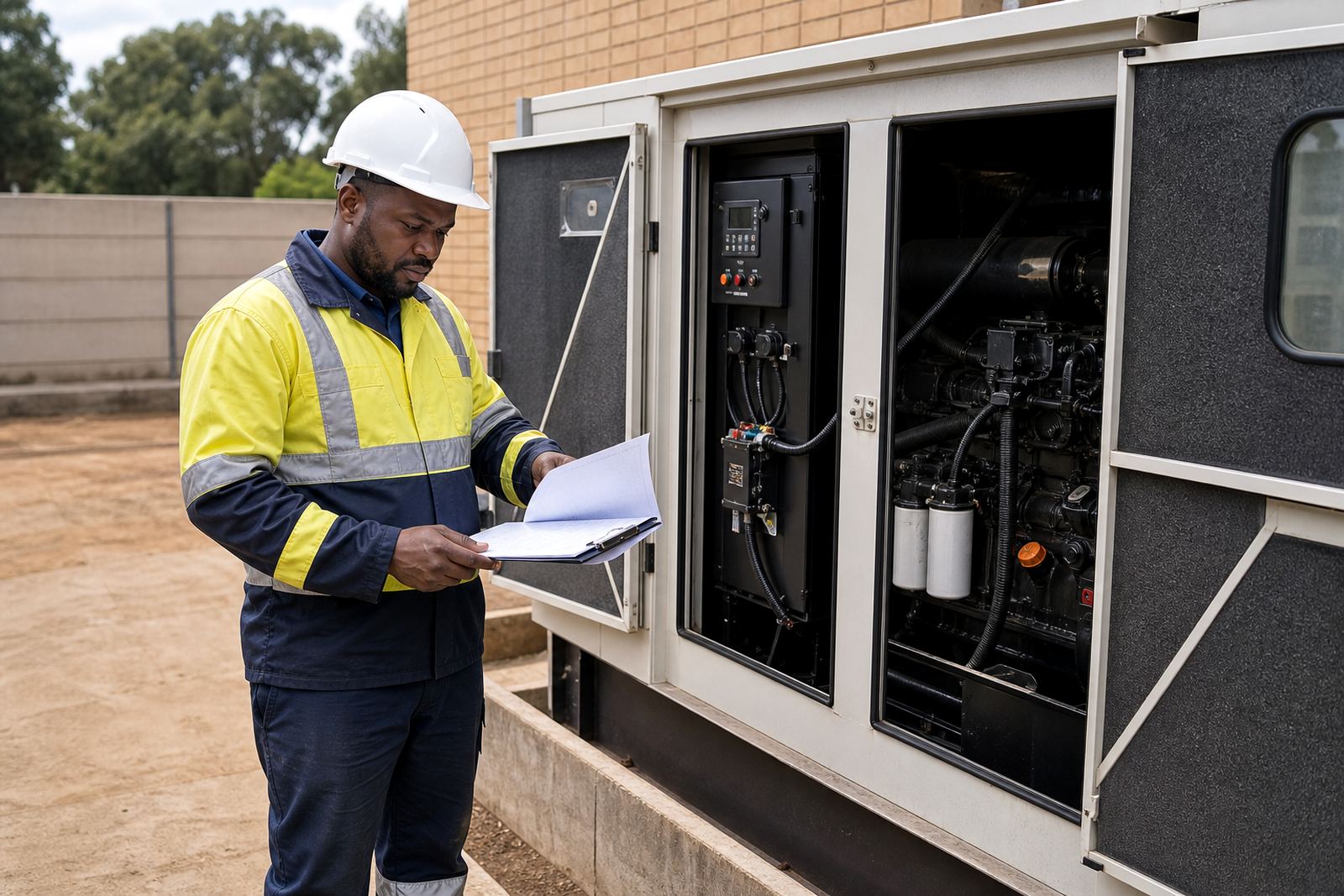
Before agreeing to a contract, the supplier should inspect the site and the machine room, then confirm what can be done safely and legally. That walk-through should cover ventilation, access, spill control, battery location, fuel lines, cable condition and how the changeover switch is operated. It should also confirm whether the set is standby or prime duty, because that changes what the maintenance plan has to do.
- Is the generator accessible for service vehicles and tools?
- Is there enough space for safe testing and maintenance?
- Are logs, previous service sheets and fault notes available?
- Are the battery and starter systems in good order?
- Are there signs of leaks, corrosion, dust build-up or overheating?
- Does the site need after-hours servicing to avoid disruption?
A proper inspection often shows small issues early, before they turn into failed starts or nuisance alarms.
What Good Record Keeping Should Look Like
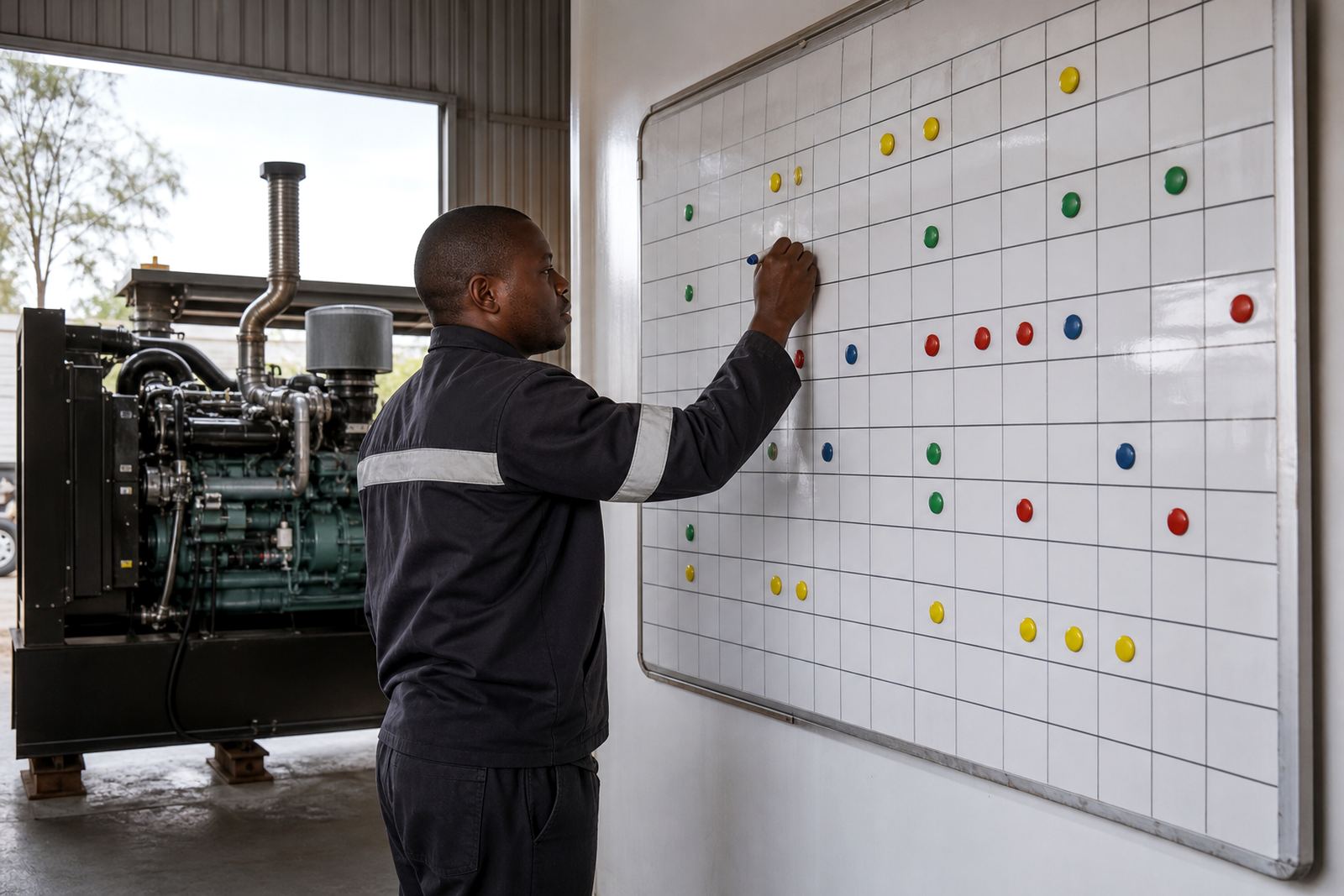
Service records are part of the value. A contract should leave you with clear dates, tasks completed, parts used and recommendations for the next visit. That makes it easier to plan budgets, show compliance and follow up on repeat faults.
If your site is audited by internal teams, landlords or municipal and safety officers, tidy records matter. Keep all service sheets together with test results, battery readings, oil and coolant notes, and any repair history. In Gauteng and along the coast, where heat, dust and moisture can be hard on equipment, records also help track patterns over time. If the same issue appears twice, it needs proper attention not just another quick reset.
When Emergency Callouts Should Sit Inside The Contract
Some sites only need scheduled servicing. Others need emergency support built into the agreement because a failed start at 6am can stop an entire shift. If your operation depends on cold storage, access control, pumps or production, a contract with callout cover is worth considering.
Ask how faults are reported, who attends, and what happens if a problem needs parts that are not on the van. A practical contract should spell out the response steps, the escalation path and the difference between service visits and repair work. That keeps expectations clear for both sides and avoids long delays while everyone tries to work out who handles what.
How RelGen Approaches Maintenance Planning For South African Sites
RelGen works from Midrand, Gauteng and supports businesses in Johannesburg, Pretoria, Durban, Cape Town and Polokwane, with service cover also extending through Centurion and Sandton. The team led by Thabo Engelbrecht builds contracts around the site, the duty cycle and the practical realities of operating in South African conditions, from load-shedding to coastal humidity and dust exposure.
That team includes Naledi Shezi in operations, Johan Matlala on service contracts, Ayanda Khoza coordinating field service, Muneerah Daniels leading technical support, Sibusiso Wessels as senior generator technician and Rikus Botha handling stores and logistics. The aim is straightforward: keep the set ready, keep the records straight and keep the maintenance plan realistic for the equipment on site.
For new contracts or a review of an existing arrangement, clients can reach us through the enquiry form on our contact page.