Start with the duty your generator actually carries
Not every generator works under the same pressure. A standby set that only starts during outages needs a different service rhythm to a prime-duty machine that carries load for long hours each week. If you run production, cold storage, medical equipment or a busy office park, the machine may need closer checks than a light-duty backup set in a small facility.
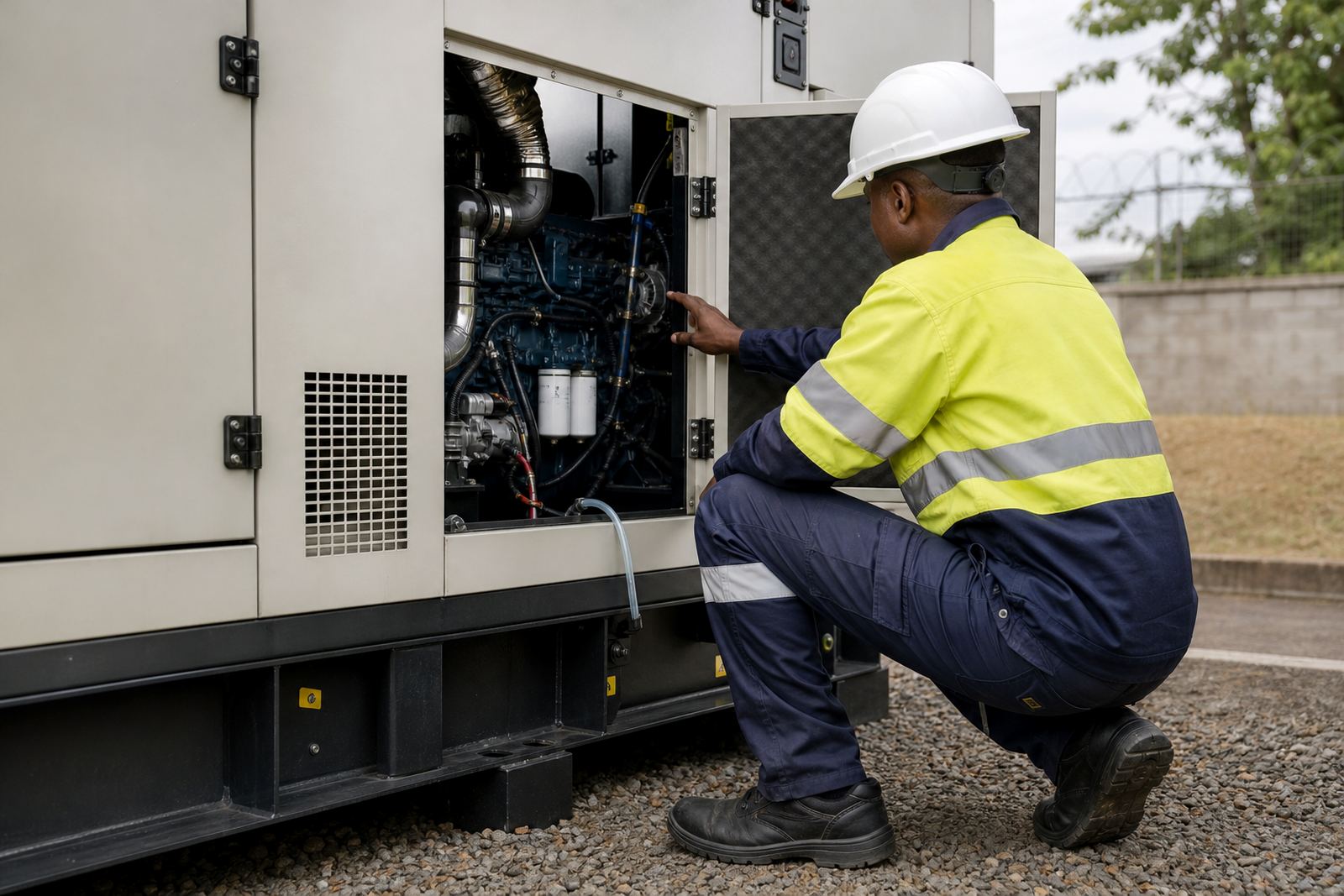
The first question is not only how old the unit is, but how often it runs and what it is asked to do when it runs. Frequent starts and stops, long idle periods, dusty yards, coastal humidity, and heat all affect service timing. In Gauteng, many sets sit in plant rooms or yards where dust and temperature swings are constant, so filters and batteries can age faster than expected.
Use your generator hours, not guesswork. If the set runs often during load shedding or scheduled site tests, keep a tighter interval and record every start. If it is mainly a standby machine, a calendar-based plan can still work, but it should be backed up by inspections after each major outage.
Use hour bands instead of hoping the calendar will carry the load
A practical way to set maintenance frequency is to tie it to operating hours and service risk. The exact interval depends on the generator type, site conditions and manufacturer requirements, but a good starting point is to separate light standby use from heavier duty use. This keeps the service plan grounded in real wear rather than a fixed date that may no longer suit the machine.
- Low-use standby sets: inspect monthly and service after a set number of running hours or at least every 6 months, whichever comes first.
- Moderate-use backup sets: inspect monthly, service every 3 to 4 months or after the agreed hour band.
- Prime or frequent-use sets: inspect weekly or fortnightly and service on tighter hour intervals, especially where the unit runs for long periods.
Keep in mind that hour bands are only part of the picture. A machine that starts and stops many times may need attention sooner than one that runs steadily for the same total hours. Repeated starting can reveal battery weakness, starter faults and changeover switch issues before they become expensive downtime.
The parts that usually decide the service interval
Some components age quietly until they fail at the wrong moment. Oil, filters, coolant, batteries and fuel system parts all influence how often the unit should be serviced. If these items are neglected, the generator may still start once or twice, but reliability drops fast. That is why service frequency should be based on both running hours and the condition of these key parts.
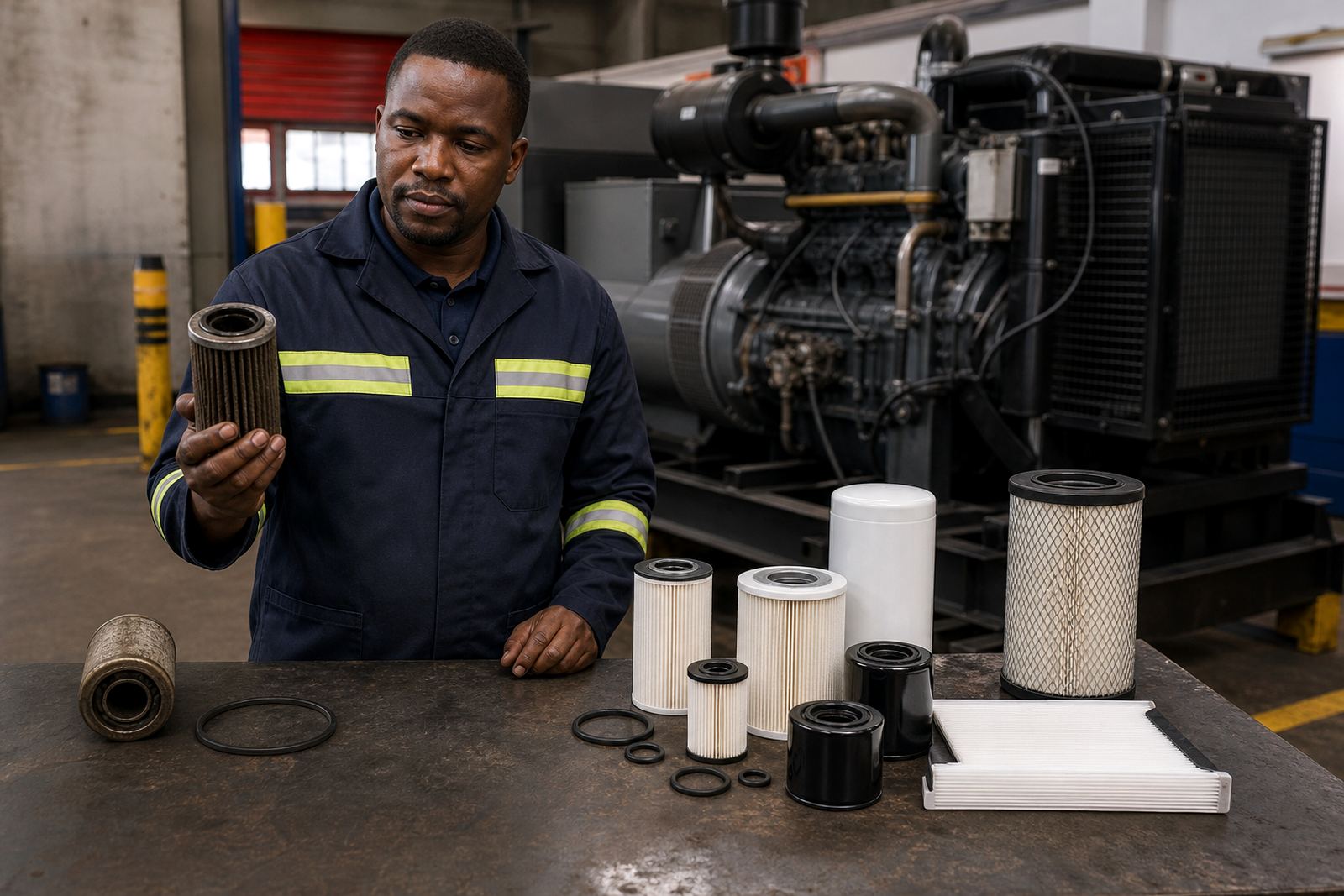
- Oil and filters: change at the required hour band, or sooner if the machine works in heavy dust, heat or stop-start duty.
- Coolant system: check levels, hoses, clamps and condition regularly, especially on units operating in high ambient temperatures.
- Batteries: test state of charge and cranking strength every service cycle, because weak batteries are a common cause of failed starts.
- Load bank testing: use this where a standby set does not run under full load often enough to confirm real performance.
- Changeover switches: inspect for wear, loose terminations and correct operation, but any electrical work must be done by qualified people under local regulations.
If the machine sits in a coastal or humid area such as Durban, or in a dusty industrial yard around Johannesburg or Pretoria, the interval may need to be shorter than a similar machine kept indoors. Environment matters almost as much as hours.
Match the plan to the risk of downtime at your site
Not every site can afford the same level of risk. A warehouse with no cold chain may tolerate a short delay better than a process plant, data room or medical site. The maintenance frequency should reflect what happens if the generator does not start, or if it starts but cannot carry load properly.
Think about the business impact, not only the technical condition. If a failed start would stop production, spoil stock or breach a contract, you need more frequent servicing and more regular checks. If the site depends on a changeover switch to transfer power safely, that switch must be included in the maintenance plan and tested with the rest of the system.
A good service contract will also include preventive site inspections. These are useful where fuel contamination, blocked vents, loose terminals or water ingress can build up slowly. In places like Midrand, Centurion and Sandton, we often see that the unit itself is fine, but the surrounding conditions create the fault, so the inspection matters just as much as the service.
A maintenance checklist that helps set the right interval
If you are building or reviewing a schedule, use a checklist before deciding whether the next service should be moved closer. A machine that passes each check may stay on its current interval. If several items show wear, shorten the gap and inspect again sooner.
- Does the generator start cleanly without extended cranking?
- Is there any smoke, leaks, vibration or unusual noise during running?
- Are oil and coolant levels stable between services?
- Are batteries holding charge and passing load tests?
- Have filters, hoses and belts shown early wear?
- Has the unit run under actual load, not only during a no-load start?
- Have all service records been updated after each visit?
Keep the checklist with the service log, not in someone’s memory. If different technicians attend the site over time, records help keep the schedule consistent. That matters in larger operations where maintenance handovers are part of the daily routine.
When to shorten the interval without waiting for trouble
There are times when a generator should be serviced sooner even if the next date is still ahead. Heavy dust, fuel contamination, repeated alarms, failed starts, poor load response and hot operating conditions all justify a shorter interval. The same applies after long outages where the generator has worked harder than usual, or after building work on site that may have introduced dust and debris.
Shorten the service gap if the unit has:
- More starts than usual during load shedding periods
- Visible fuel stains, coolant loss or oil seepage
- Battery replacements that were needed earlier than planned
- A changeover switch that has not been checked in months
- Evidence of underloading, where load bank testing would help confirm the set is healthy
Electrical work on the switchgear and related systems must always be handled by qualified people under local rules. The right maintenance frequency does not only protect the engine, it also protects the way the whole system transfers and carries power.
Set the next service date from facts, not habit
The best maintenance frequency comes from three things working together: hours, risk and condition. A set that is lightly used but mission critical still needs regular inspection. A set that runs often may need a tighter schedule even if it is physically new. Once the pattern is clear, the service plan becomes easier to manage and downtime becomes less of a surprise.
At RelGen in Midrand, we set service contracts around the way each generator is actually used across Johannesburg, Pretoria, Durban, Cape Town, Polokwane and surrounding areas. That includes scheduled servicing, emergency callouts, oil and filter changes, coolant system service, battery testing, load bank testing, changeover switch checks, fault finding, fuel system repairs, starter system repairs, service record audits and preventive site inspections. The aim is to keep the intervals practical and suited to the site, not just the calendar.
If you review the service history regularly, the right interval usually becomes clear after a few cycles. The machine tells you what it needs if someone is recording the signs properly.