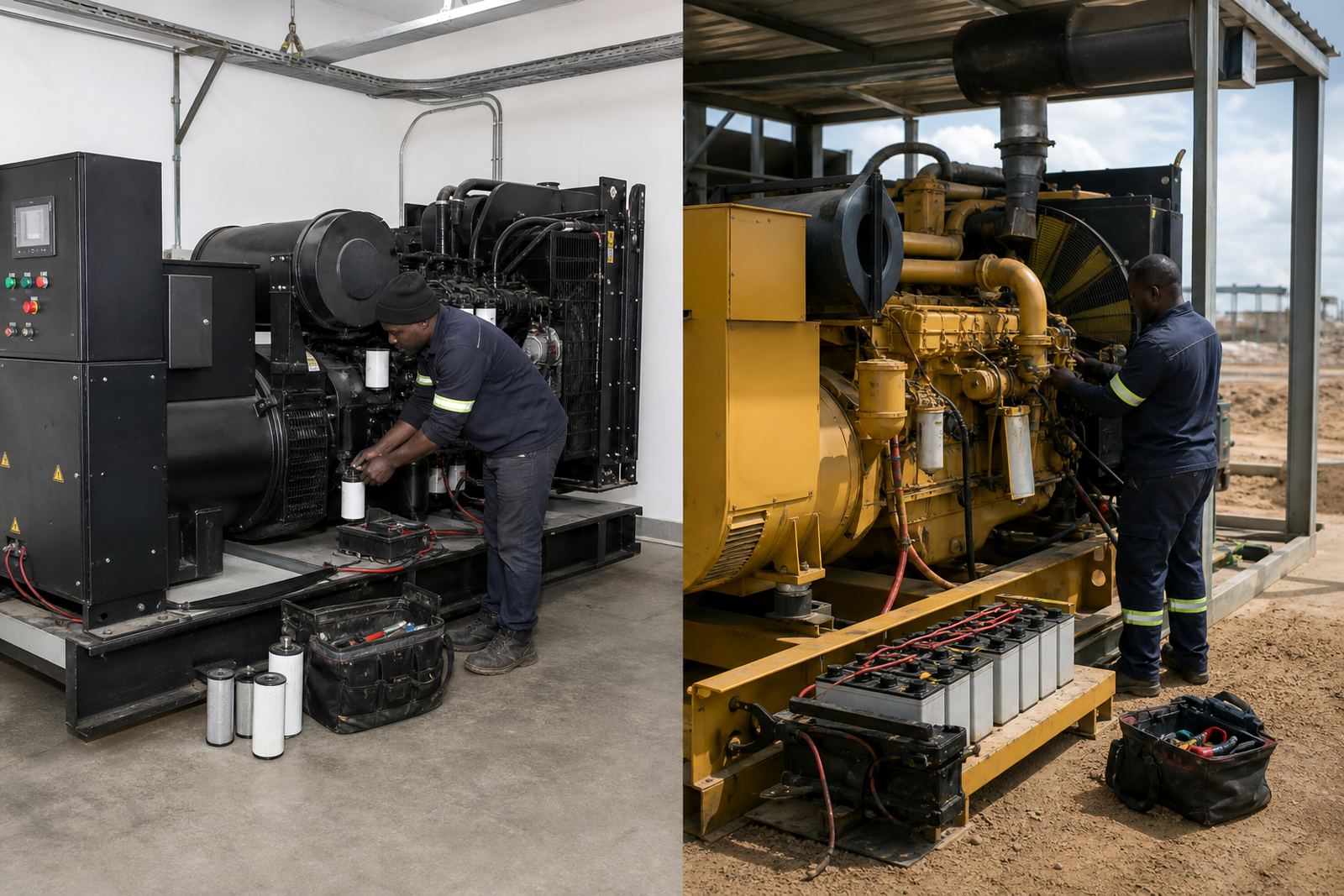
The first clues usually start at the panel, not the engine
Most generator trouble gives off signals before it becomes a full failure. A warning lamp that stays on, a breaker that trips more than once, a longer start time, or a unit that sounds different during start up all deserve attention. On many Midrand, Sandton and Centurion sites the first sign is not a total stop, it is a change in routine behaviour.
Ask your team to note any new noise, smoke, vibration, smell, or heat around the set and the changeover equipment. If a standby unit used to start cleanly and now hesitates, or if a prime unit feels rough under load, that is already useful information. Even a loose cable guard or a coolant stain on the floor can point to a bigger issue inside.
Keep a log book near the generator room. Write down the time, weather conditions, any alarm codes, what load was on, and whether the changeover switch operated normally. A small note taken during a load-shedding event can save a lot of guesswork later, especially when the problem only shows up under pressure.
Smells, leaks and stains should never be ignored
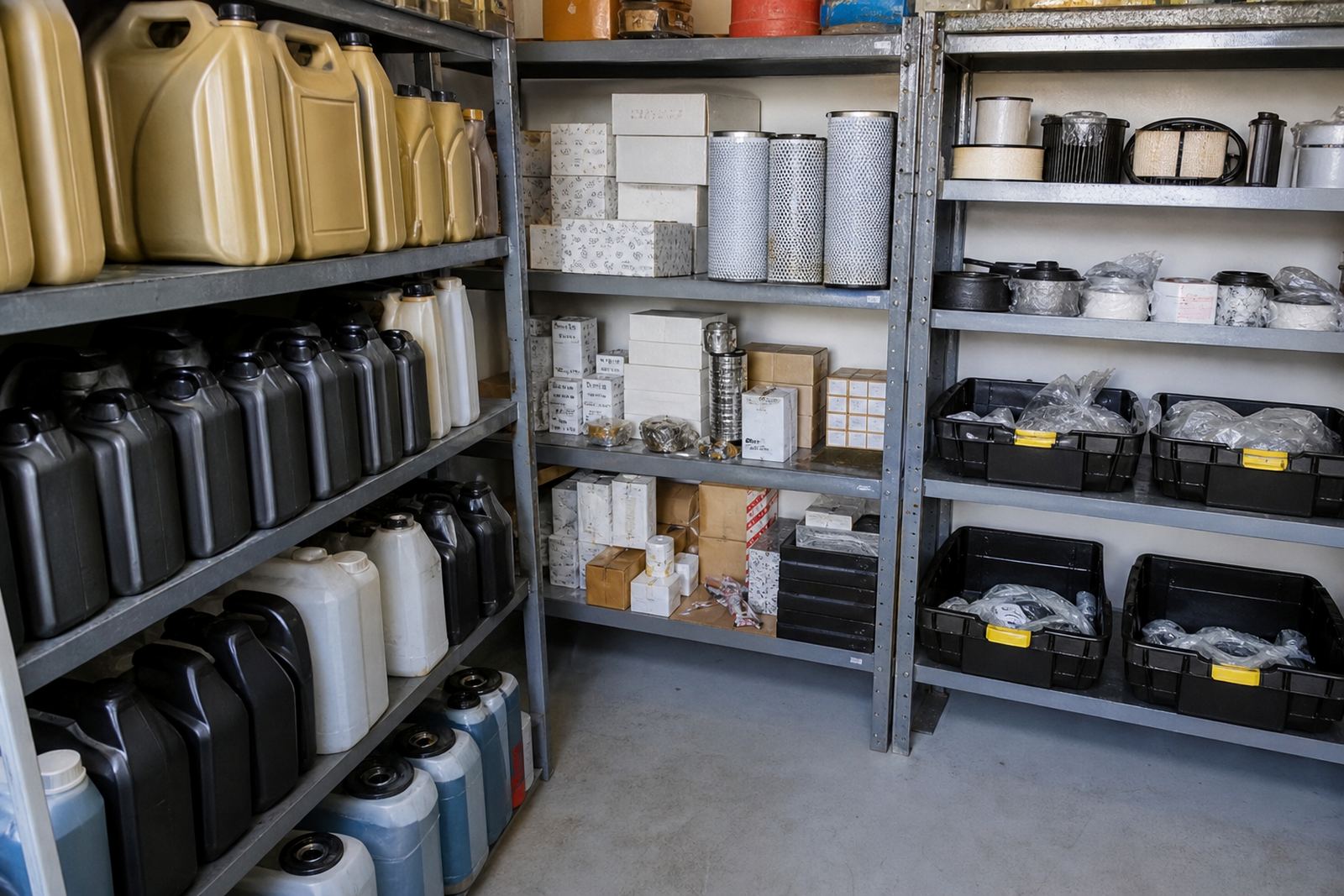
Oil, diesel, coolant and battery fluid each leave their own marks. A dark patch under the engine, a wet hose clip, or a strong fuel smell around the set should be checked straight away. Coastal humidity in Durban and Cape Town can make minor leaks worse because fittings corrode faster and seals age quicker than expected.
Look at the floor, drip tray, pipe joints and hose ends before and after the unit runs. A small leak may seem harmless, but it can become a loss of pressure, contamination, or a safety hazard. If the generator room smells burnt, sour or sharply chemical, do not assume it is normal. That is a sign to stop and inspect.
- Check for fresh oil marks under the engine and around the filter housing.
- Look for coolant residue on clamps, hoses and the radiator area.
- Inspect for diesel staining near the tank, lines and priming points.
- Watch for battery acid marks, swelling, or white crust around terminals.
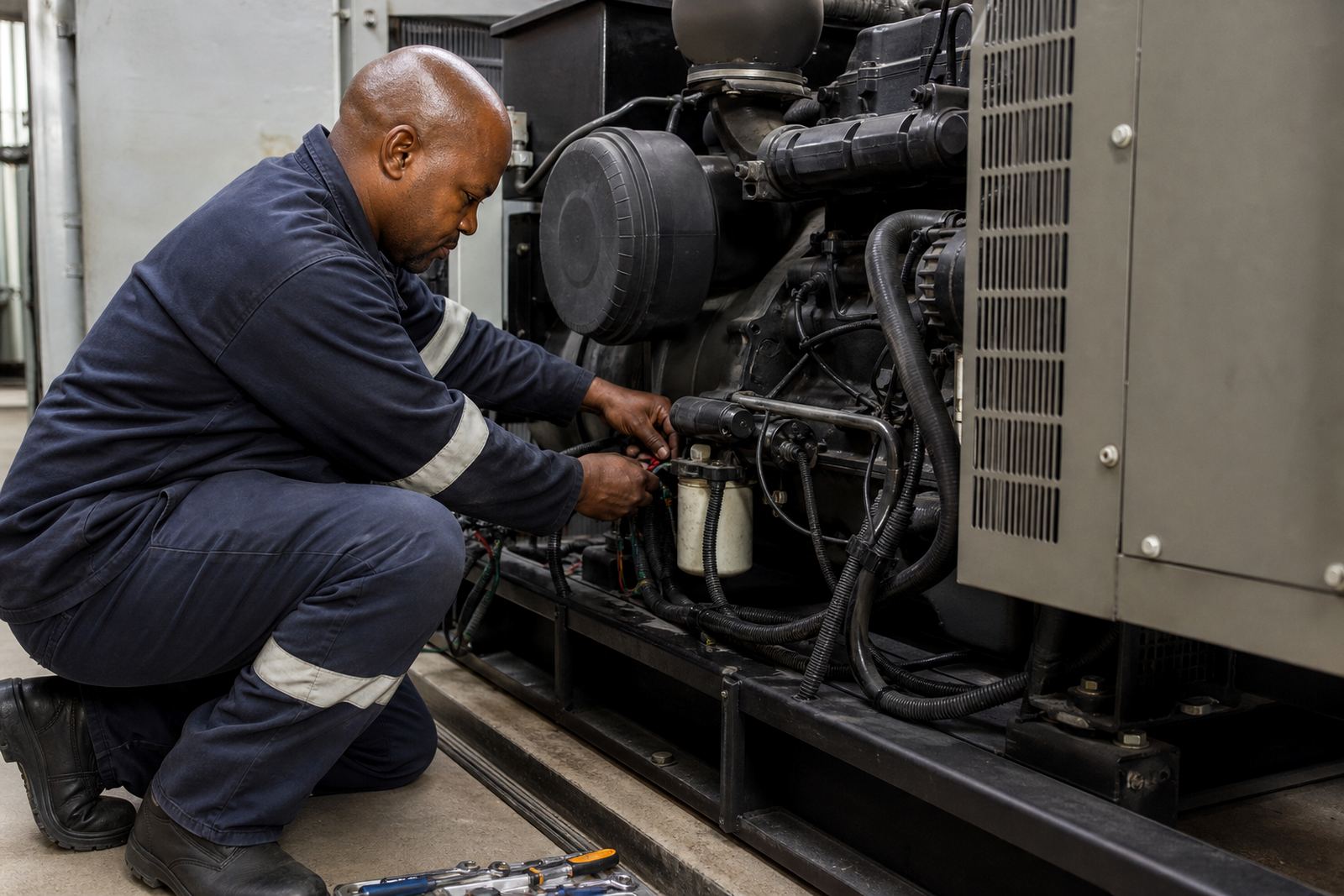
If the leak is active, isolate the area and report it. Electrical work must be done by qualified people under local regulations, and the same careful approach applies to fuel and battery faults. Site staff should observe and report, not improvise repairs.
When starts get slower or rougher, check the support systems
A generator that starts slowly on Monday and fails to start on Thursday is usually warning you that the support systems are slipping. Batteries lose capacity, terminals loosen, starter circuits wear, and dirty filters make the engine work harder than it should. On sites that rely on standby power for offices, pumps or process equipment, that change matters very quickly.
Battery testing should be part of normal site awareness. If the starter sounds weak, if the control panel resets oddly, or if the unit needs a second attempt, do not wait for a full failure. The battery bank may be getting tired, or the charger may not be holding the charge properly. A starter system repair left too long often becomes a callout at the worst possible moment, usually after hours and in bad weather.
- Listen for a slow crank, repeated cranking, or a click without start.
- Check whether the charger shows normal operation.
- Look for loose terminals, corrosion, or heat around battery cables.
- Note any warning lights that appear before start and then disappear.
For prime generators, short periods of unstable operation can still point to deeper mechanical wear. If a unit hunts, surges, or struggles to carry normal load, the issue may be in the fuel system, filters, or governor settings and should be checked by a technician.
Load bank testing tells you more than a no-load start ever will
A generator can start and still not be healthy. Load bank testing shows how the unit behaves when it must work properly, not just idle in the yard. It helps reveal weak cooling, poor combustion, voltage instability and hidden faults that only show up once the set is carrying a proper load.
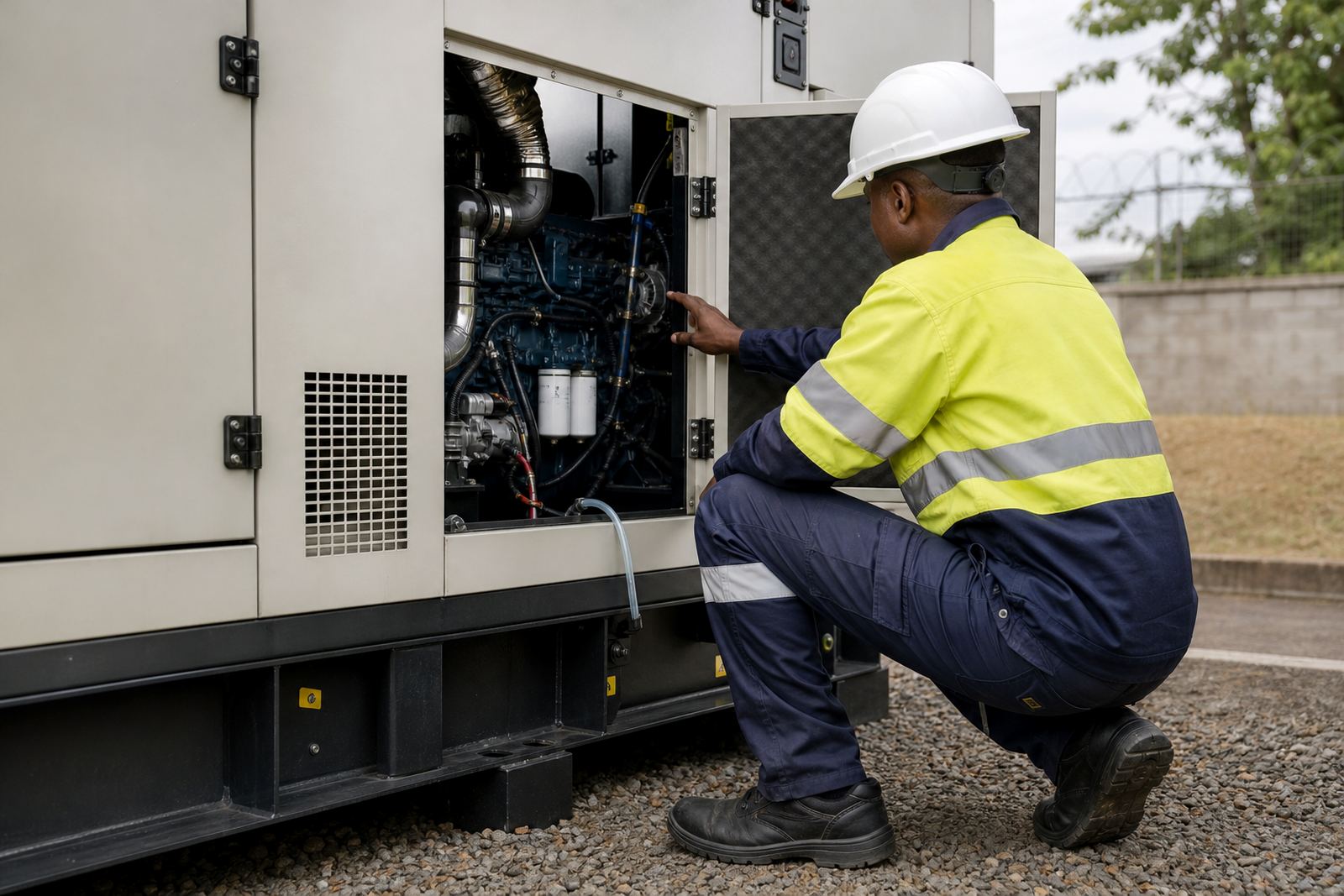
Site teams should pay attention to how the generator behaves during scheduled tests. Rising temperature, unusual exhaust smoke, unstable frequency, or a drop in performance under load are signs worth reporting. If the set looks fine at no load but fails the moment the building demand increases, the problem is already active.
Load bank testing also helps spot cooling issues early. A blocked radiator, low coolant level, bad fan performance or a partially restricted hose may only show themselves after a sustained test. In industrial areas around Johannesburg, Pretoria and Polokwane, dust build up can make this happen faster than expected.
- Record temperature rise during the test.
- Note smoke colour and any change as the load increases.
- Watch for alarms, trips or unstable readings on the panel.
- Listen for fans, belts and any new rattling noise.
A clean no-load run is useful, but it does not prove the unit will carry a building during a long outage. Regular testing gives you a better warning window and helps maintenance contracts stay ahead of failures.
Changeover switch faults are easy to miss until the lights stay off
The changeover switch is often treated as background equipment, yet it is central to how the whole site behaves during a power cut. If it sticks, hesitates, overheats or fails to transfer smoothly, the generator may be ready but the building still loses supply. That can happen in offices, warehouses and retail sites where the staff assume the issue is with the engine itself.
Tell your team to watch for delayed transfer, buzzing, burnt smells, flickering supply, or a switch that feels hot to the touch around the enclosure. If the transfer sequence has changed from what is normally heard and seen, it should be checked. Switch gear faults can be dangerous, so only qualified people should inspect or repair electrical components under the applicable regulations.
In practice, many callouts start with a complaint that the generator ran but the site still went dark. That is why changeover switch checks belong on every routine visit. A tidy switch room, clear labels, and a clean audit trail make fault finding much easier when the pressure is on.
A practical site checklist for the people on the ground
Your staff do not need to diagnose the fault. They only need to notice the early signs and pass on good information. A clear checklist helps security teams, facilities staff and supervisors report issues before they grow into an emergency repair.
- Check whether the generator starts on the first attempt.
- Look for leaks, drips, stains or puddles near the set.
- Listen for knocking, grinding, hunting or unusually loud fans.
- Note any warning lamps, alarms or error messages.
- Confirm whether the load transfers properly during a test or outage.
- Report low coolant, low oil, weak batteries or a strong fuel smell.
- Confirm that access panels, vents and the room itself are clear.
If the site uses a maintenance contract, keep service records together with these notes. A pattern often becomes obvious only when several small events are read side by side. One delayed start may be nothing, but three delayed starts in a month usually points to a real issue.
When to stop watching and call in support
Some signs mean the unit should not be left running without attention. Repeated tripping, visible smoke, major leaks, overheating, dead batteries, failed transfer, or a generator that cannot hold load all need prompt action. Do not wait for the next outage to see what happens. That is how small faults turn into long downtime.
RelGen supports standby and prime generator servicing for businesses across Midrand, Johannesburg, Pretoria, Durban, Cape Town, Polokwane, Centurion and Sandton, with scheduled servicing, emergency callouts, fault finding, service record audits and preventive site inspections. Where electrical checks are needed, qualified people must handle them under local rules, and the goal is always the same: keep the equipment ready before the pressure arrives.
Our team knows that a small sign often tells the whole story if somebody is paying attention. The earlier it is logged, the better the repair plan usually is.