Start with the reason for the test, not the date
Load bank testing is used to confirm that a generator can carry its rated load, respond properly to step changes, and hold stable voltage and frequency over time. For businesses in Midrand, Johannesburg, Pretoria, Durban, Cape Town and Polokwane, that matters when a standby set must pick up municipal outages or when a prime unit is carrying a more regular duty cycle on site.
Before arranging the test, be clear about why it is being done. Is it part of scheduled servicing, a post-repair check, a commissioning review, or proof that a contract generator still performs under load? The answer changes the plan, the duration and the equipment needed.
- Confirm the generator type: standby or prime duty.
- Check the rated kVA and expected running load.
- Note any recent faults, alarms or derates.
- Decide whether the test must be done during operating hours or after hours.
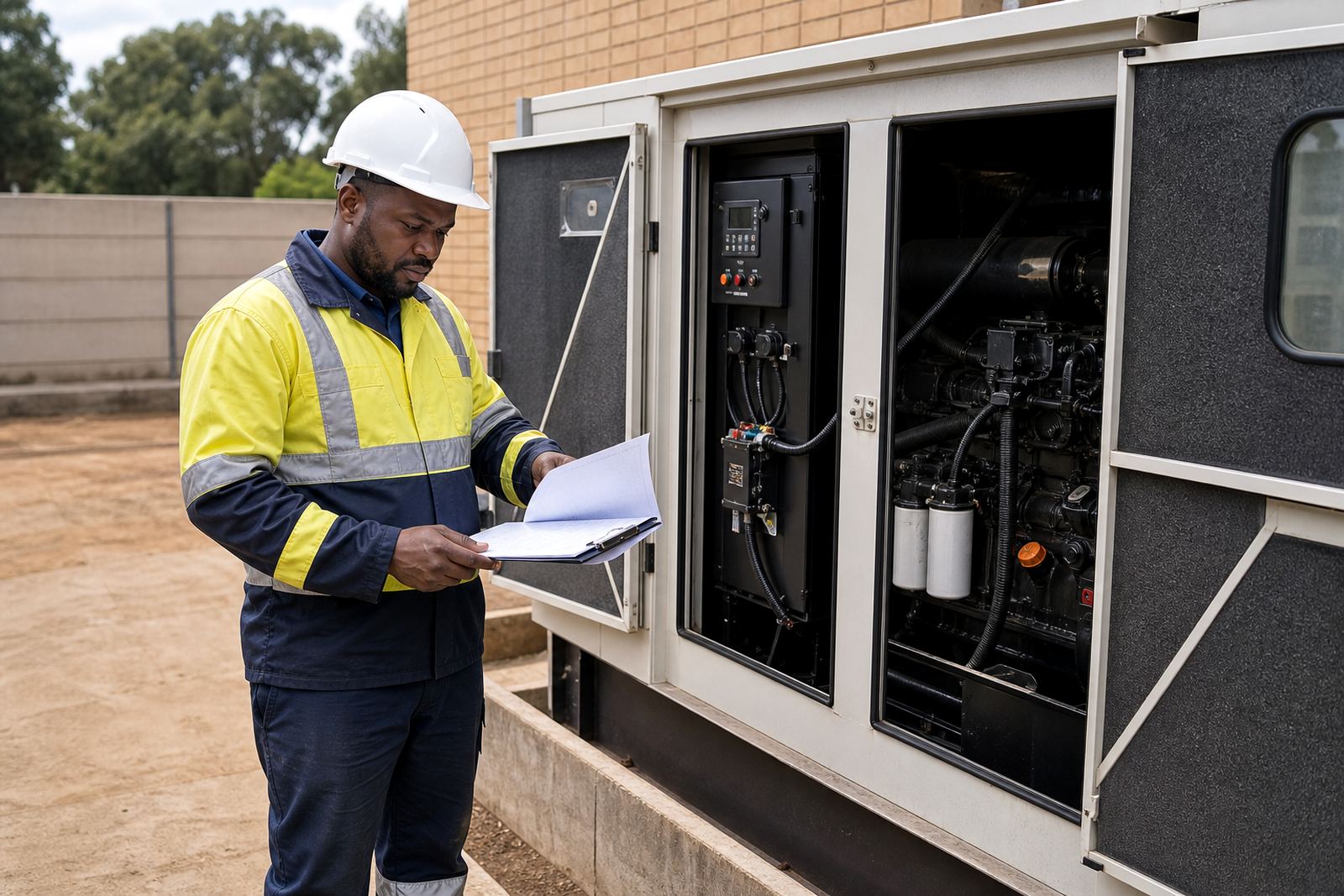
Check the machine’s service condition first
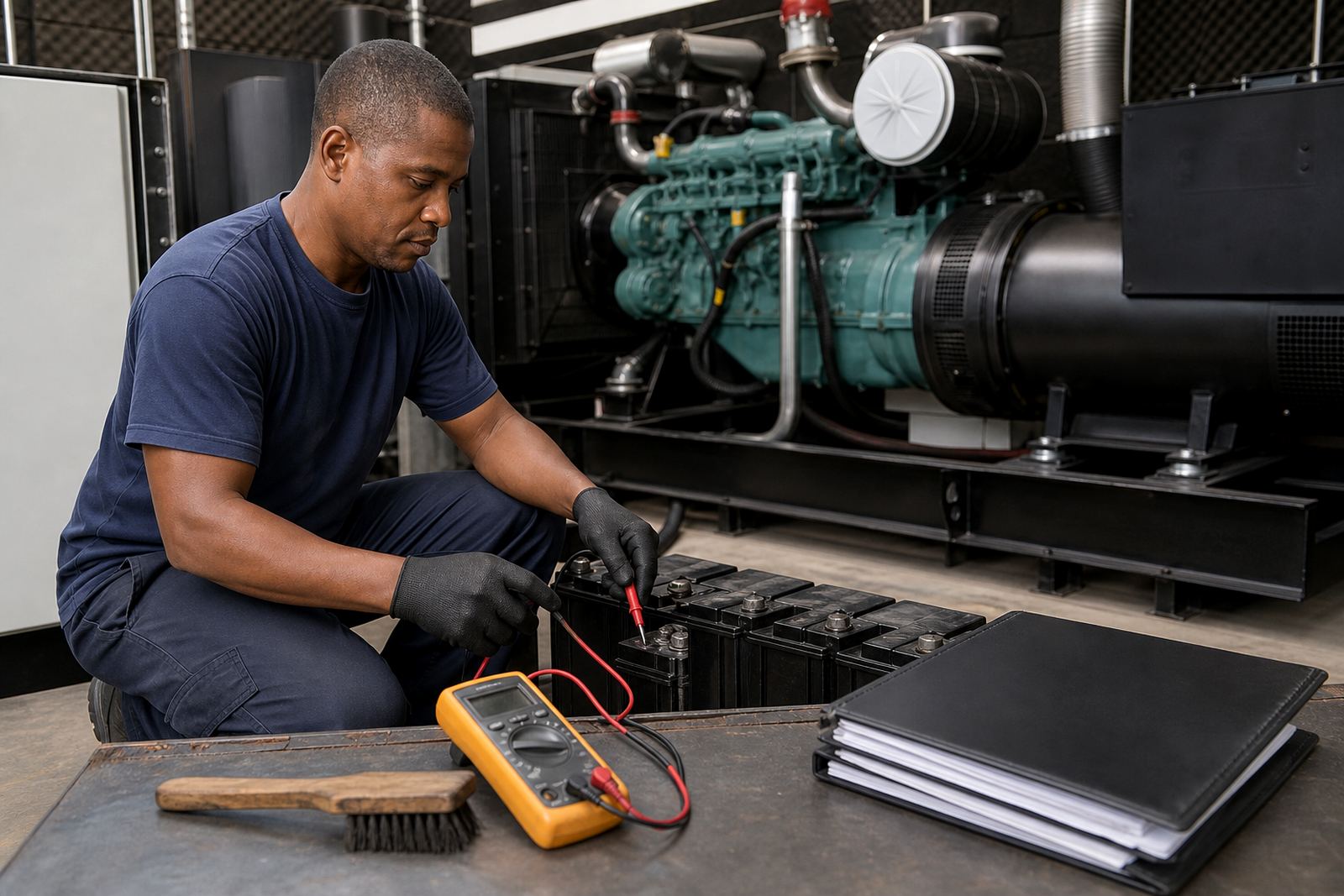
A load bank test should not be the first thing done on a neglected generator. Oil condition, filters, coolant level, battery health and general cleanliness all influence the result. If the unit has been standing for long periods, or has been exposed to coastal humidity in Durban or Cape Town, inspect for corrosion, damp terminals and deteriorated hoses before any heavy load is applied.
It is also worth checking the service records. A unit with overdue oil changes, blocked filters or repeated starter faults may show poor results that are really maintenance issues. That can waste time and hide the real cause. Load bank testing works best when the basics are already in order.
- Oil level and oil condition.
- Air, fuel and oil filters.
- Coolant level, hose condition and radiator fins.
- Battery voltage, terminals and charger operation.
- Fuel leaks, staining or soft hoses.
Make sure the site can handle the test safely
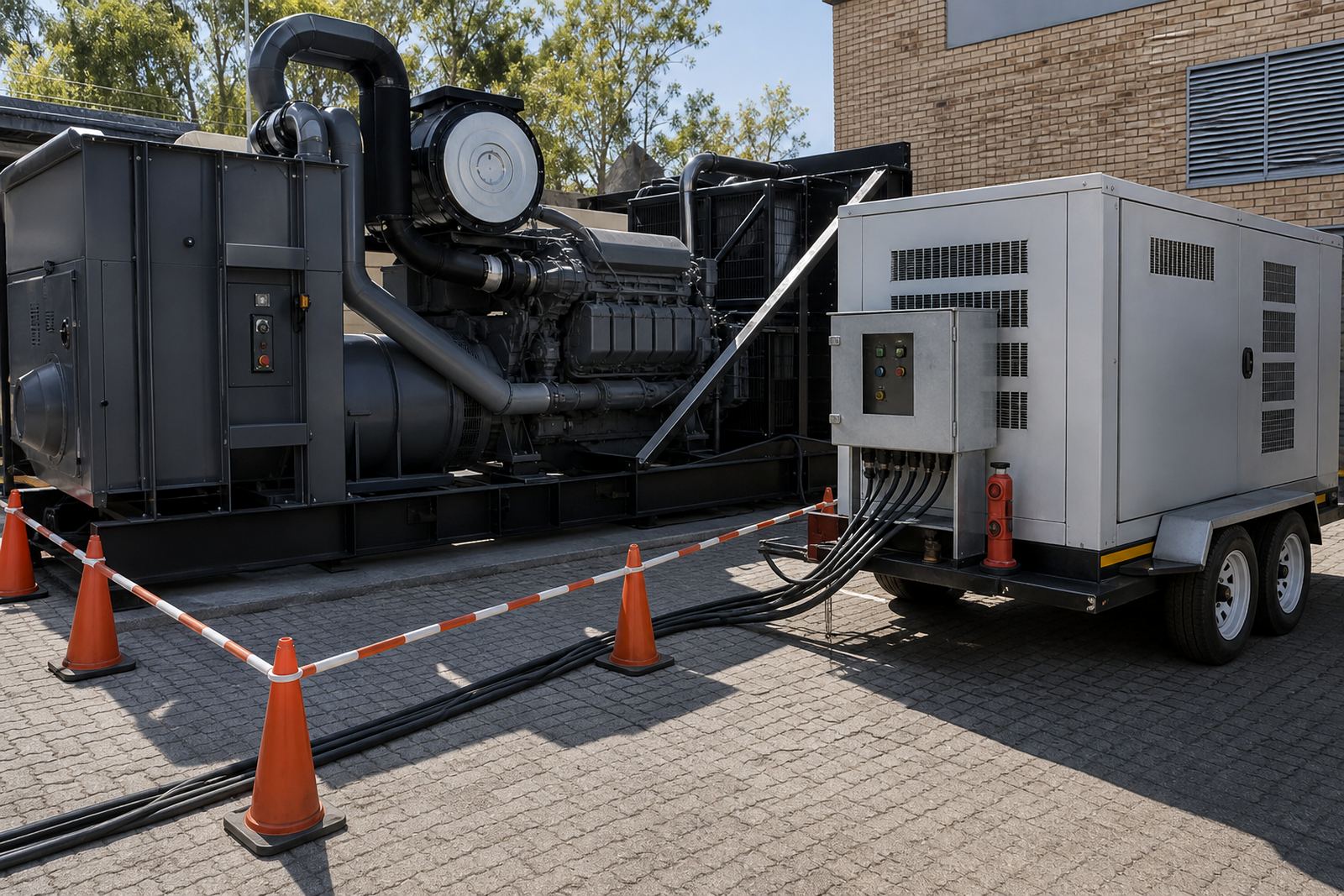
The test load has to be placed where it will not block access, overheat nearby equipment or create a fire risk. The area should have good airflow, enough space around the test bank, and clear access for the generator exhaust and cabling. On industrial sites in Centurion or Sandton, space can be tight, so route planning matters as much as the test itself.
Only qualified people should do electrical work, changeover checks and any connection or isolation work under local regulations. Never leave a load bank connected by guesswork. The generator, changeover equipment and site distribution must be isolated and verified properly before anyone starts work. A missed step can damage switchgear or put staff at risk.
- Confirm safe access for the technician and equipment.
- Check whether the site has enough ventilation for prolonged loading.
- Identify any fire extinguishers and emergency shut-off points.
- Keep unauthorised staff away from the work area.
Match the load bank to the job at hand
The load bank must suit the generator’s output and the kind of test being done. A short functional check is not the same as a full capacity run. If the aim is to prove cooling performance, exhaust behaviour and governor response under sustained load, the test should be long enough to bring the set up to working temperature and hold it there. For prime generators, that can be especially important because they often run harder and for longer periods.
It also helps to agree on the test profile in advance. Some sites need a stepped load increase, while others need a steady load over a defined period. If the business runs sensitive process equipment, the test should be planned around production timing so there are no unnecessary interruptions.
- Generator size and output rating.
- Planned load level as a percentage of capacity.
- How long the unit must run at each stage.
- Whether the test includes a cool-down period.
Do not forget the fuel, cooling and starter systems
Load testing puts pressure on the whole generator set, not only the alternator. Fuel delivery has to remain steady, coolant must circulate properly, and the starter system should be healthy enough to handle repeated starts if the test includes restarts. A tired battery or weak charging system may pass a quick no-load check but fail when the set is expected to carry demand.
It is common to find issues only once the machine is hot. Fuel restrictions, loose clamps, blocked air flow and marginal batteries often show up then. That is why a proper load bank test is useful: it gives a more honest picture than a brief start-up ever will. On busy sites, that insight can prevent a surprise outage later.
- Fuel level suitable for the full test duration.
- Radiator and cooling fan condition.
- Battery charger and starting batteries.
- Visible leaks, abnormal noise or vibration.
Use the test to check the changeover system as well
Many generator problems are not in the engine at all. Changeover switches, interlocks and control circuits must operate properly if the generator is going to serve the site when utility power fails. If the test plan allows it, include a check of the changeover process and controls so the generator is not working hard while the transfer system is acting up.
Where a site has repeated outages or load shedding pressure, the transfer sequence should be confirmed before the next disruption arrives. Service teams should also note alarms, controller warnings and any abnormal delay in transfer or retransfer. Even a small fault in the controls can affect the whole system.
- Changeover switch operation and indication lights.
- Transfer timing and return-to-mains sequence.
- Alarm history and fault codes.
- Any unusual tripping or hesitation during changeover.
Leave behind a record that can be used next month
After the test, the site should not be left with only a verbal report. Record the readings, the load levels, the run time, any alarms and the corrective actions taken. That record becomes useful for the next service visit, the next audit and the next decision about repair or replacement. It also helps show whether the generator is holding condition or slowly drifting out of tolerance.
For contract sites across South Africa, a proper paper trail is part of responsible maintenance. It helps the operations team plan around shutdowns, budget for parts and avoid repeat faults. If the generator is being used in harsh conditions or under heavy daily demand, keep the record detailed enough to spot patterns over time.
- Test date, site and generator identification.
- Load levels, duration and readings.
- Any defects found during the test.
- Recommended follow-up work and priority.