Make the access route part of the plan
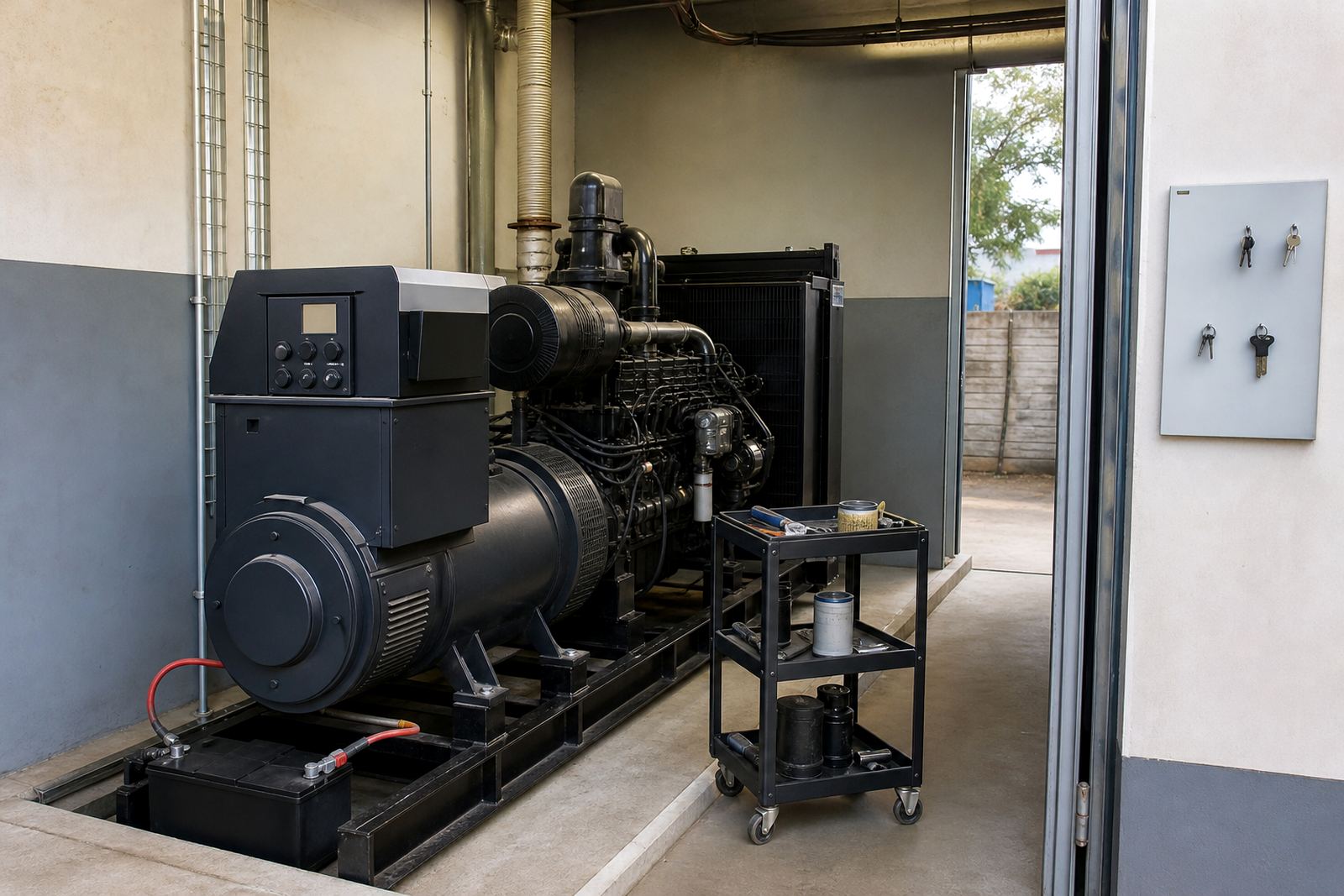
Before the visit, clear a safe path from the gate or loading area to the generator room, container or outdoor enclosure. In Midrand, Sandton and Pretoria sites where plant rooms are tight, this often means moving stock, pallets or parked vehicles so the technician can reach filters, drains, batteries and test points without delay.
Make sure doors open fully, locks are available, and lighting works if the service lands after hours or during load shedding. If the site has security control, let the guard or receptionist know who is arriving and where to direct them.
- Unlock or arrange access to the generator room, roof area or yard
- Clear at least 1 metre around the set where possible
- Keep keys, gate codes and asset tags ready
- Set aside a safe place for old filters, oily waste and removed parts
Hand over the paperwork that saves time
Service records help the team see what was done last time, what was noted, and whether there were any recurring faults. A clean service history is especially useful on maintenance contracts where the same unit must support standby supply, prime running or mixed duty across a busy site.
Have the logbook, past reports, alarm notes and any site rules ready. If there were recent nuisance trips, battery issues or changeover concerns, write them down before the technician arrives. A short note can prevent a long search later.
- Previous service report or logbook
- Fault notes, alarm history and recent outage details
- Any site permit, induction sheet or permit-to-work requirement
- Names of the site contact and backup contact for the day
Give the technician a clean starting point
Generator servicing is easier when the equipment is not buried under clutter or dust. Remove stored goods from around the enclosure and make sure the area is swept, dry and free of standing water. On coastal sites in Durban or Cape Town, salt air and moisture can collect fast so it helps if the unit and surrounding area are already reasonably clean.
If the set is in a plant room, check for blocked vents, leaking pipes, loose cable covers or anything that may slow down inspection. It is also worth confirming that the room is not being used for storage, as blocked airflow can affect cooling and fuel system checks.
- Clear away boxes, cleaning gear and loose materials
- Remove water, oil or chemical spills before the visit
- Check that vents and louvres are open
- Keep fire extinguishers and safety signage in place
Tell the team about the site’s own rules
Every site has its own conditions, and it helps to brief the service crew before they start. Some factories need noise control, some offices need work done before trading starts, and some construction sites need extra safety control around moving plant and vehicles. Electrical work must be handled by qualified people and in line with local regulations, so do not ask untrained staff to open panels or touch live parts.
If the generator supports critical systems, let the team know which loads must stay live, which can be isolated and whether there are any special shutdown windows. That avoids confusion when changeover switches, battery systems and test procedures are involved.
- Explain any lockout, induction or visitor control process
- Point out no-go zones, overhead hazards and hot surfaces
- Confirm if the service must avoid trading hours or production peaks
- Share any municipal or site compliance rules that affect access
Prepare the fuel, battery and cooling checks
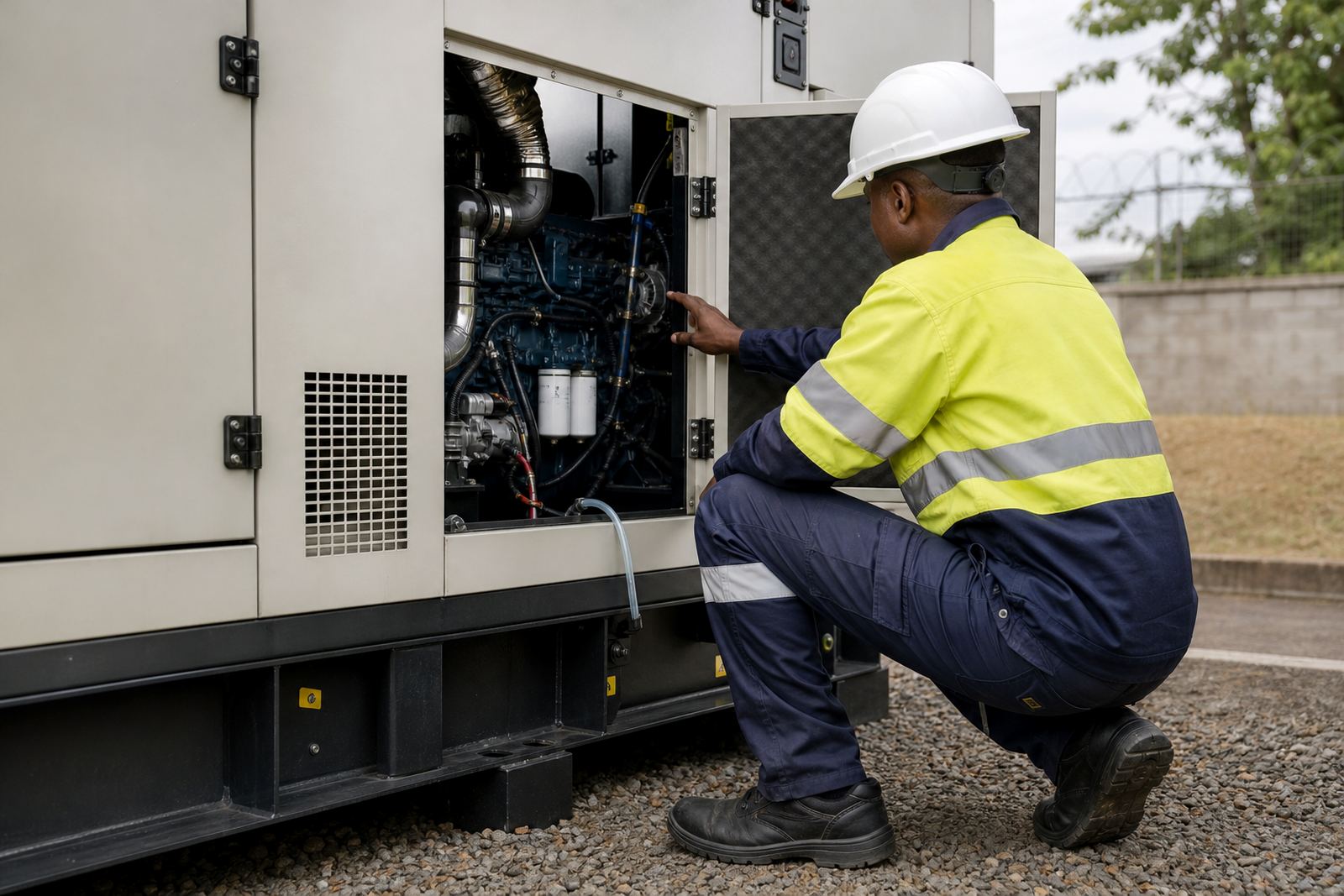
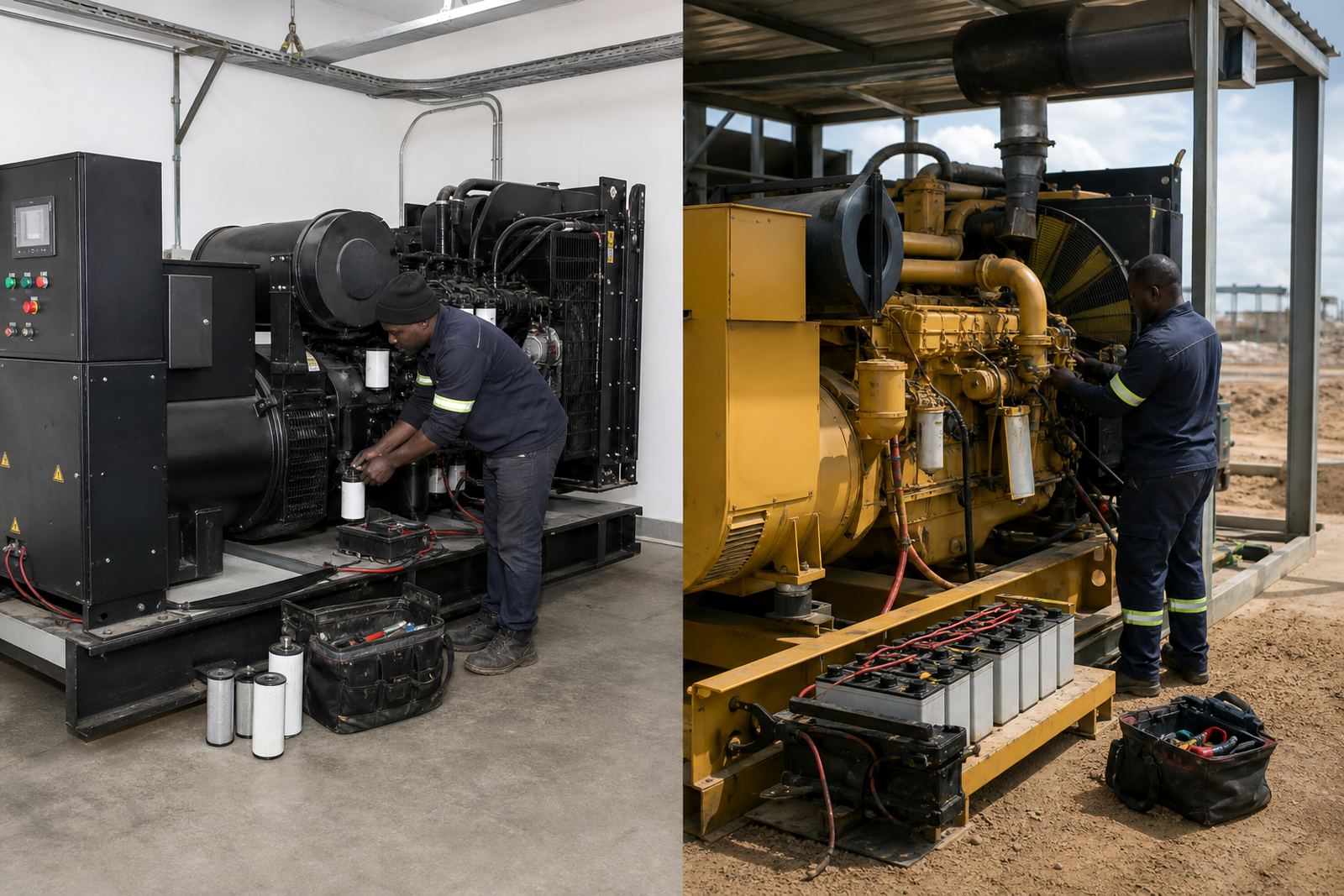
A proper maintenance visit may include oil and filter changes, coolant system inspection, battery testing and checks on starter and fuel system condition. If your tank gauge is not working or the fuel level is uncertain, note that before the visit. The same applies to coolant top-ups, battery chargers, visible leaks or repeated low-voltage alarms.
If the generator has been running hard during outages, tell the technician how long it was on load and whether it struggled to start. That detail helps with fault finding and with deciding if load bank testing or extra inspection is needed.
- Note any slow cranking, warning lights or repeated alarms
- Confirm fuel tank access and whether refuelling is needed
- Check for battery swelling, corrosion or loose terminals
- Record any coolant loss, hose damage or overheating signs
Sort out the transfer gear and test plan
Changeover switch checks are an important part of many service visits, but the test must be planned around the site’s operations. Let the team know if the automatic transfer switch feeds IT, refrigeration, pumps or process equipment, because those loads may need warning or controlled isolation before testing starts.
If load bank testing is scheduled, make sure there is enough space, airflow and safe discharge area. A generator that has not carried proper load for a while may need a controlled test to confirm performance and this should not be rushed. On some sites, the best results come from a short pre-brief with the operations manager, electrician and security team.
- Identify critical loads that may be affected by transfer testing
- Confirm whether the test will be live or during planned downtime
- Check that exhaust, cooling and ventilation paths are unobstructed
- Make sure someone on site can authorise the test and sign off
After the visit, capture the useful bits while they are fresh
Once the service is done, ask for the findings to be explained clearly and keep the updated records with the site file. If there were worn parts, oil leaks, battery concerns or switch defects, deal with them before the next outage catches the site off guard. Good follow-through matters as much as the visit itself.
It also helps to keep one internal person responsible for service records, even if several departments use the generator. That way maintenance notes, test results and fault trends do not get scattered across inboxes and forgotten.
- File the service report and updated readings
- Track any outstanding repairs or follow-up parts
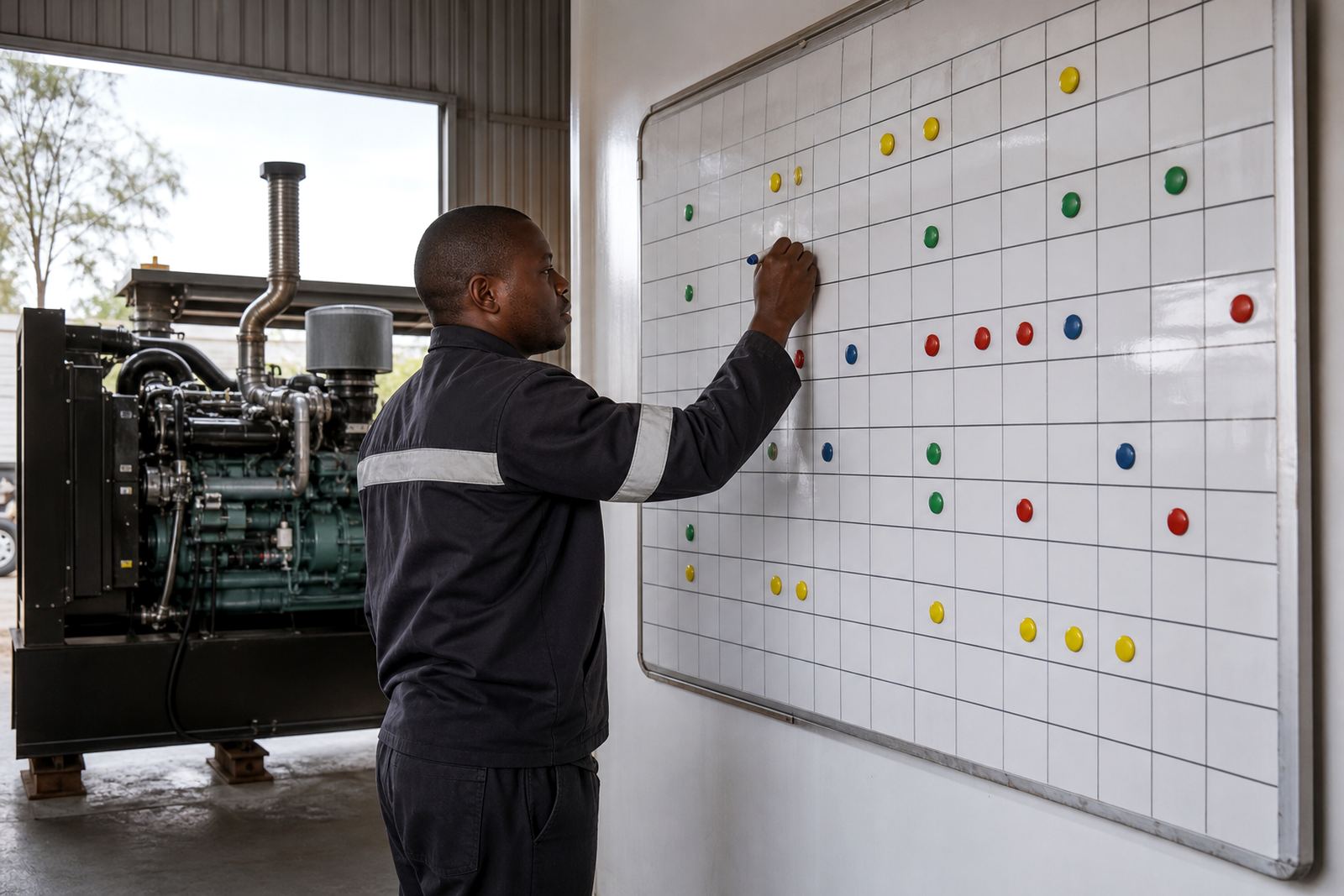
- Update your next service date on the site calendar
- Share key findings with operations, security and facilities staff