
Start with the running pattern, not the calendar alone
A service plan should match how the generator works in your day to day operation. A unit that starts during load-shedding a few times a month needs a different service pattern from one that runs for long shifts at a warehouse, workshop, clinic or plant. We review the actual running hours, start frequency, site conditions and fuel storage so the schedule is based on use not guesswork.
In Gauteng, dust and temperature swings can affect air filters, battery condition and coolant levels. In coastal areas such as Durban and Cape Town, corrosion and humidity need more attention on terminals, connections and enclosures. If the machine sits in a tight plant room at Midrand or Centurion, access and airflow also matter.
Check whether the service scope still matches the set
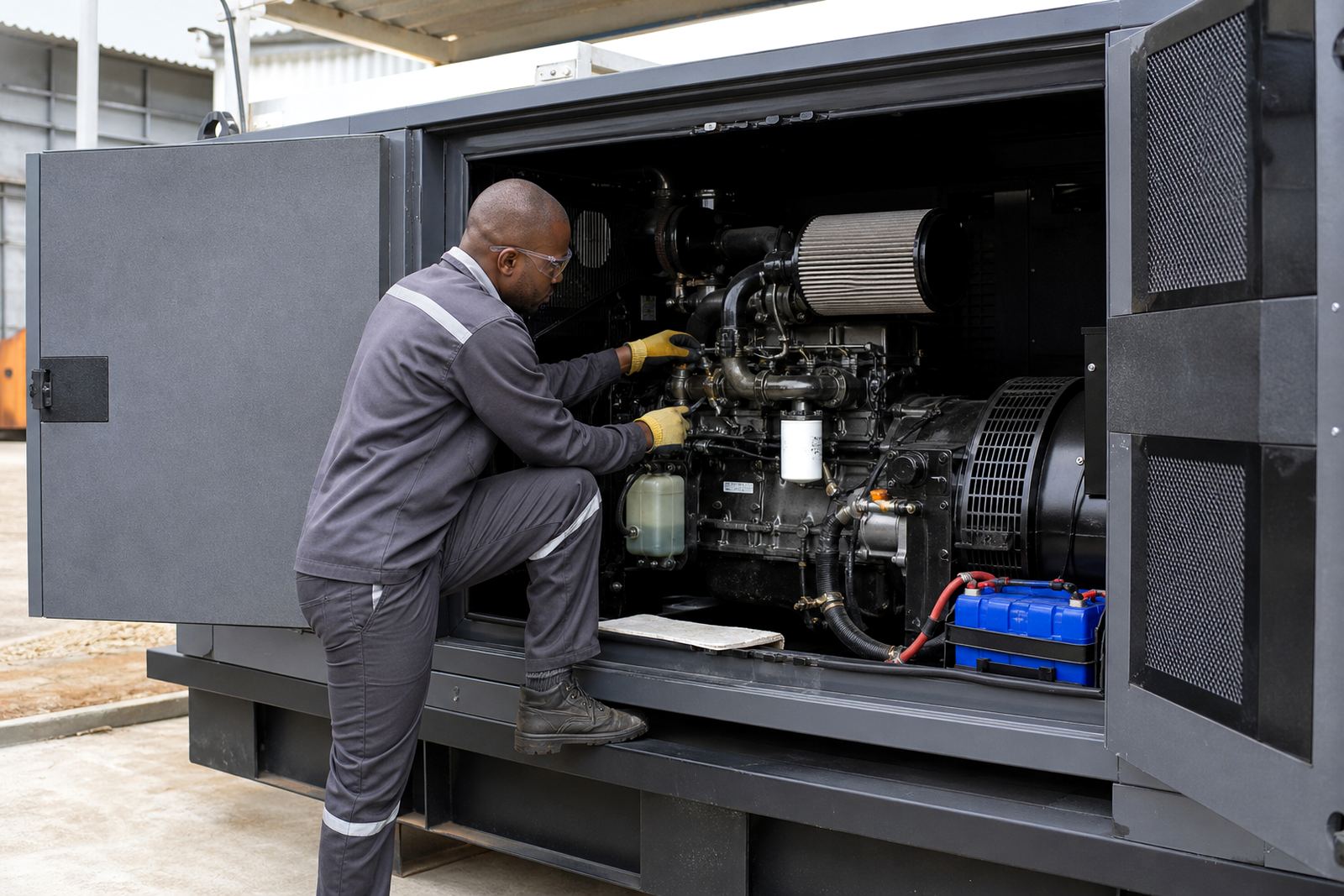
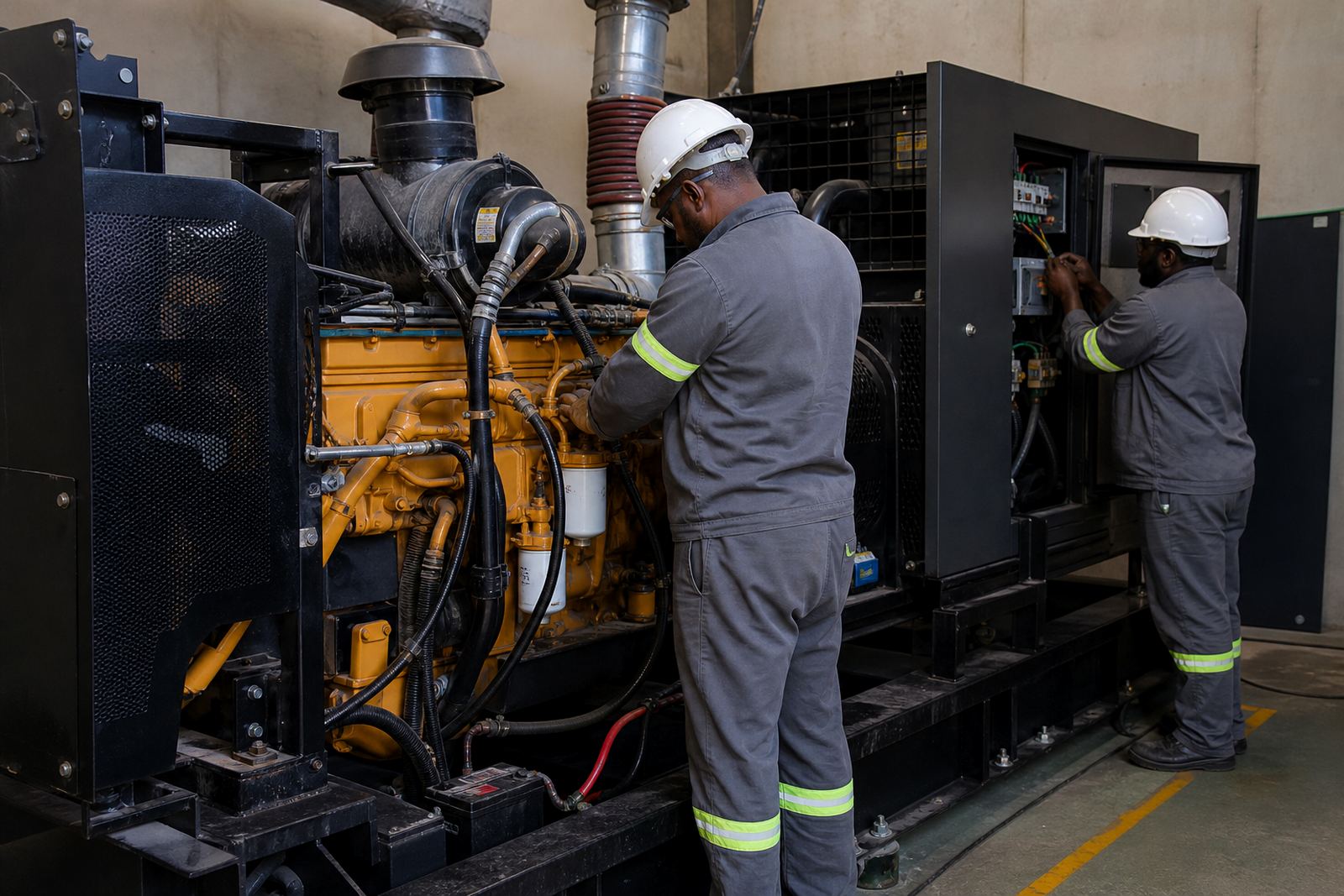
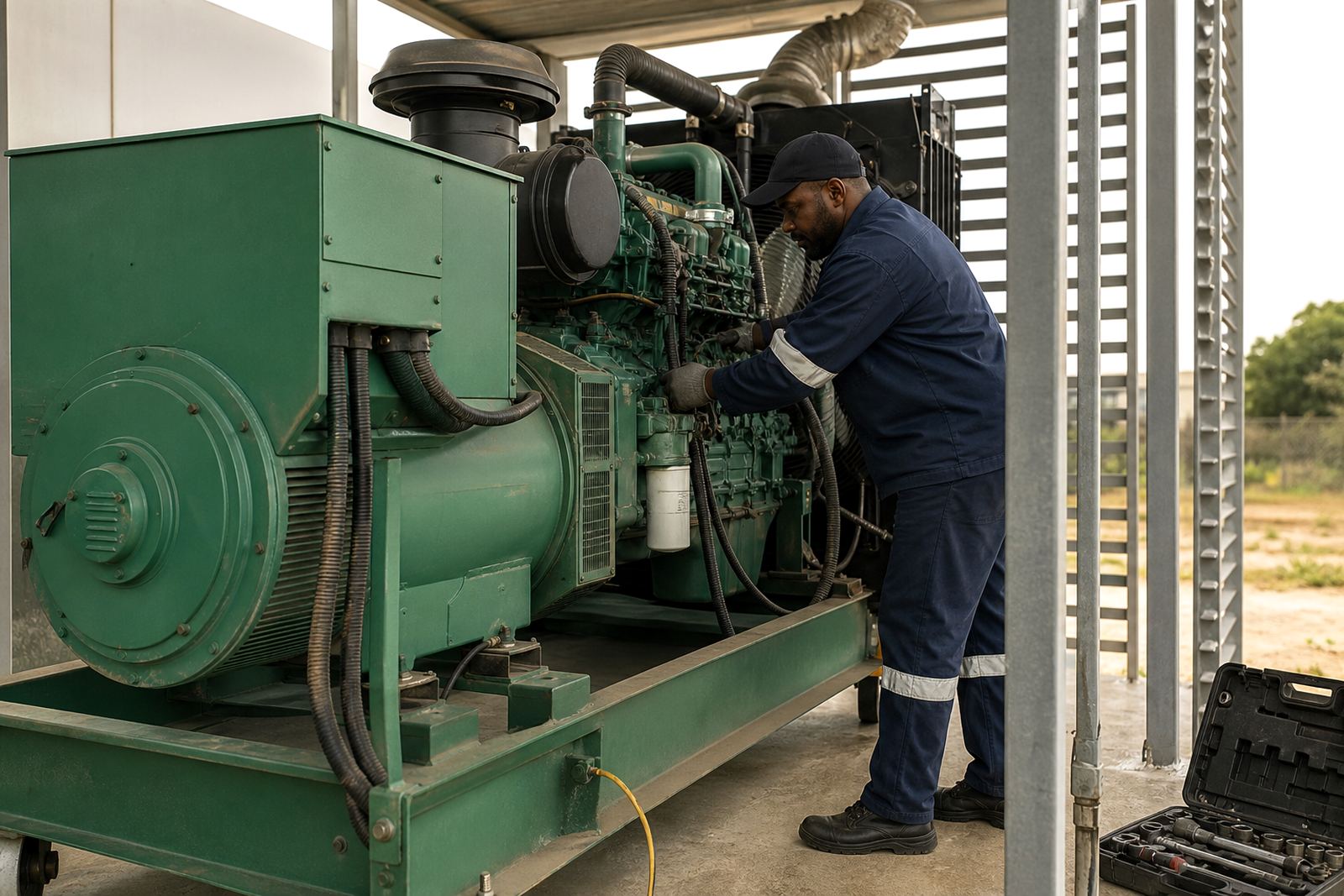
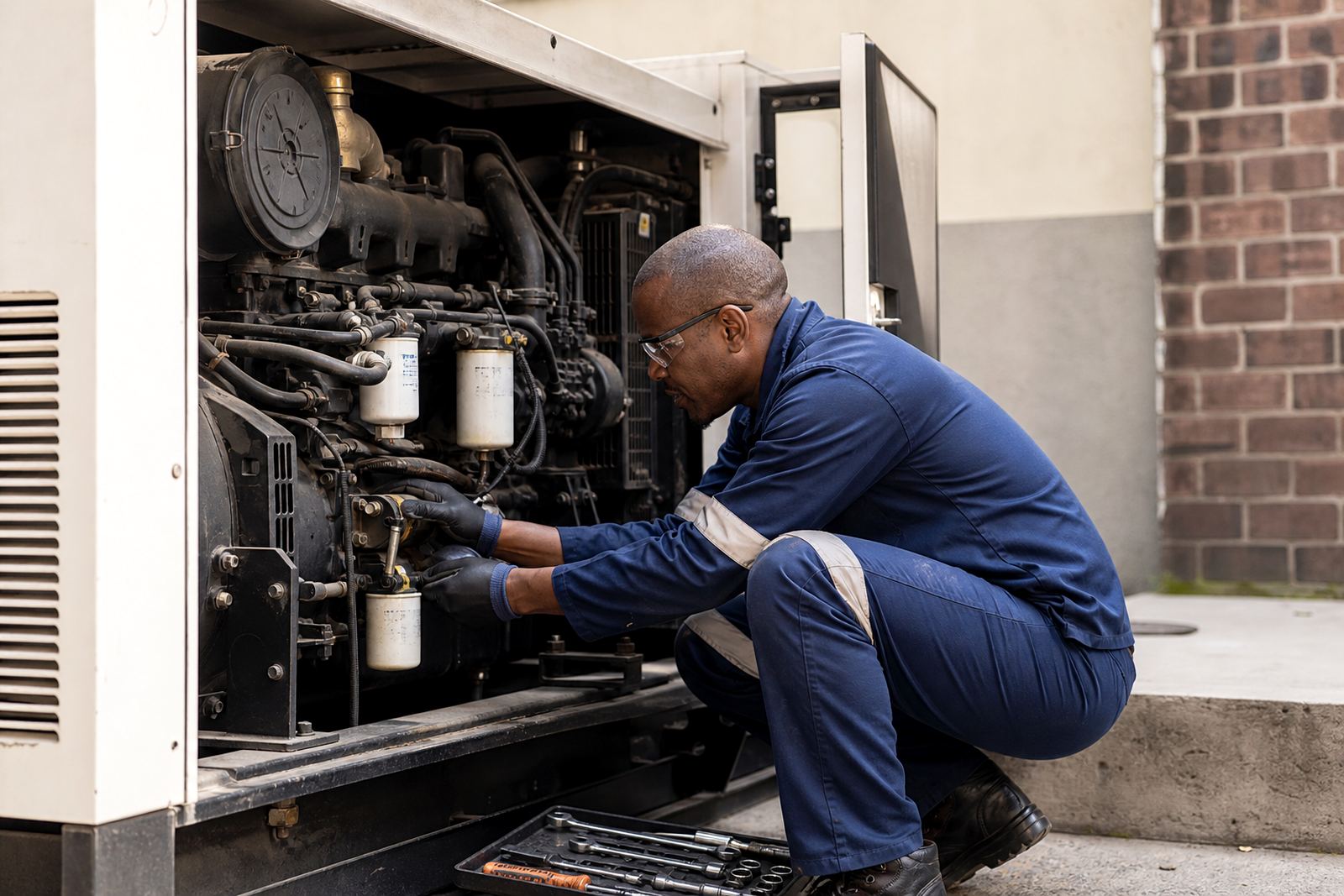
Many plans start well but drift over time. We compare the written scope with the work the set actually needs, then note any items that should be added or removed. That can include oil and filter changes, coolant system service, battery testing, load bank testing, changeover switch checks, starter system repairs and fuel system repairs.
- Oil quality and service intervals
- Air, fuel and oil filter replacement
- Coolant condition, leaks and hose wear
- Battery age, charge condition and terminals
- Load bank testing for standby units that do not run under real load often
- Changeover switch inspection and function checks by qualified people under local regulations
Electrical work must always be handled by qualified personnel in line with the rules that apply to the site. We focus on the generator service side and flag anything that needs formal electrical attention.
What the records should tell you at a glance
A good service record should show more than a stamp and a date. It should show what was checked, what was replaced, what readings were taken and whether any faults were found and cleared. If the paperwork is thin, it becomes difficult to prove that the set was maintained properly or to spot patterns like repeated low battery voltage or blocked filters.
We review logbooks, service sheets and fault notes to see whether the history is useful. If the records are incomplete, we help you identify the missing parts so future visits create a proper trail for audits, landlord files, insurance queries or internal checks.
A practical review for sites under pressure
Midrand businesses often need a plan review when the premises have grown, the load has changed, or the generator is carrying more critical equipment than before. We also see reviews after a move to new premises, after repeated nuisance trips, or when the original contract no longer matches the current operating hours. Muneerah Daniels in technical support and Johan Matlala on service contracts often look for these shifts first.
- More frequent callouts than the plan allows
- Repeated faults after poor fuel quality or storage issues
- Starter or battery problems that were not part of the original scope
- Cooling concerns in hot rooms or poorly ventilated enclosures
- Changeover issues after building alterations
That review is useful whether the site is in Sandton, Pretoria, Johannesburg or further out in Polokwane, because the same set can face very different duty cycles.
What we look at during the review visit
Our team uses a structured check so the review is clear and practical. Naledi Shezi coordinates the process, while Ayanda Khoza arranges the field visit and Sibusiso Wessels handles the technical checks where needed. Thabo Engelbrecht oversees the broader service picture for the business.
Typical review points include:
- Current maintenance frequency against actual run hours
- Oil condition, leaks and service interval history
- Filter replacement pattern and air intake condition
- Battery testing and charging performance
- Coolant level, quality and hose condition
- Load bank test history and whether the generator has been loaded properly
- Changeover switch checks and any signs of wear or sticking
- Fuel system condition, contamination signs and water separation
Next steps after the review are made clear
Once the review is done, we set out what should stay the same, what should be tightened up, and what can wait. Rikus Botha in stores and logistics checks parts planning so filters, belts, batteries and service items are available when needed. That helps reduce delays, especially for sites that cannot afford long downtime.
You will get a straight view of where the current plan is working and where it is leaving risk on the table. From there, we can update the maintenance frequency, refine the scope, and align the record keeping with how the generator is actually used. If the site has changed a lot, that usually saves money over time because the service work matches the machine instead of the old paperwork.