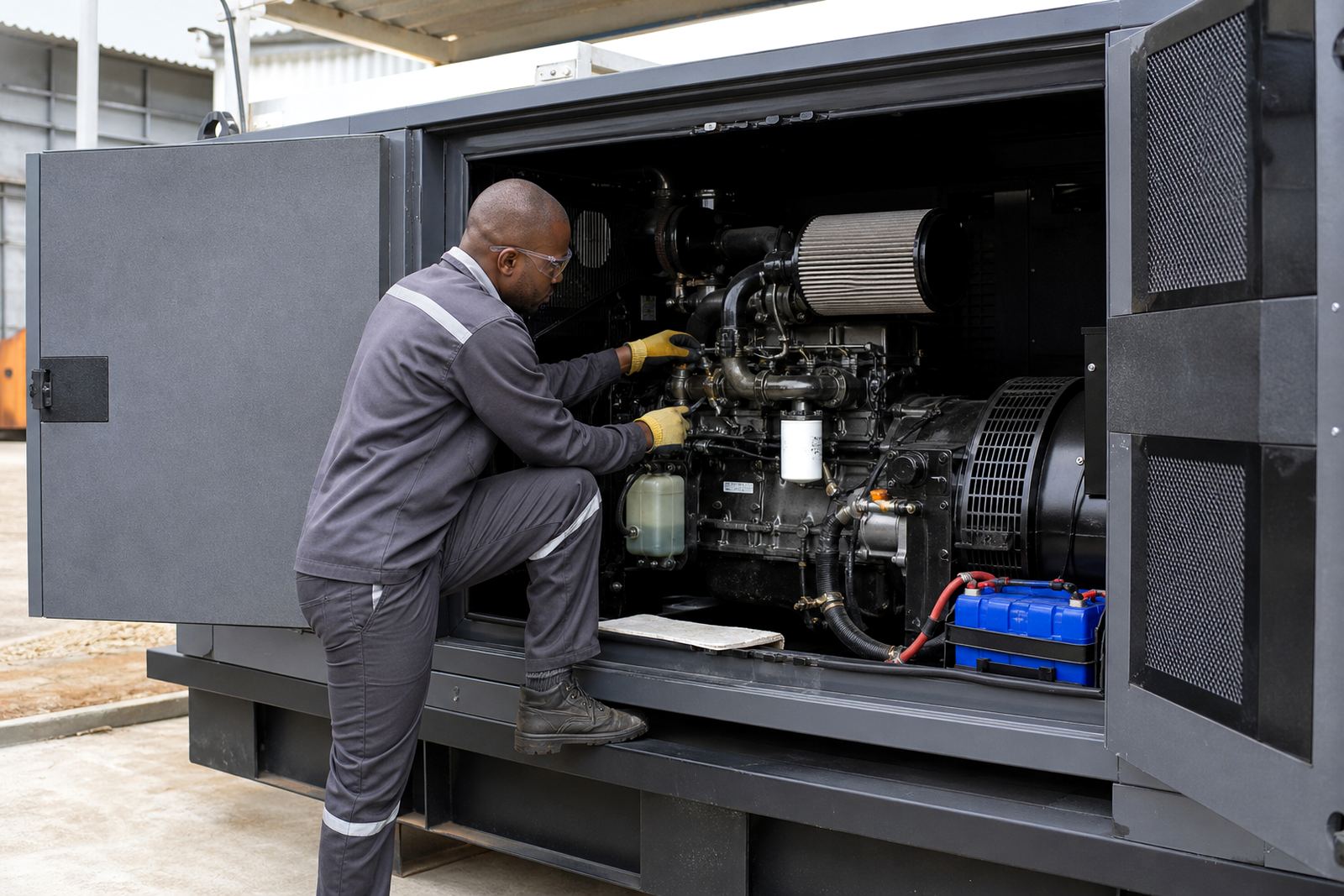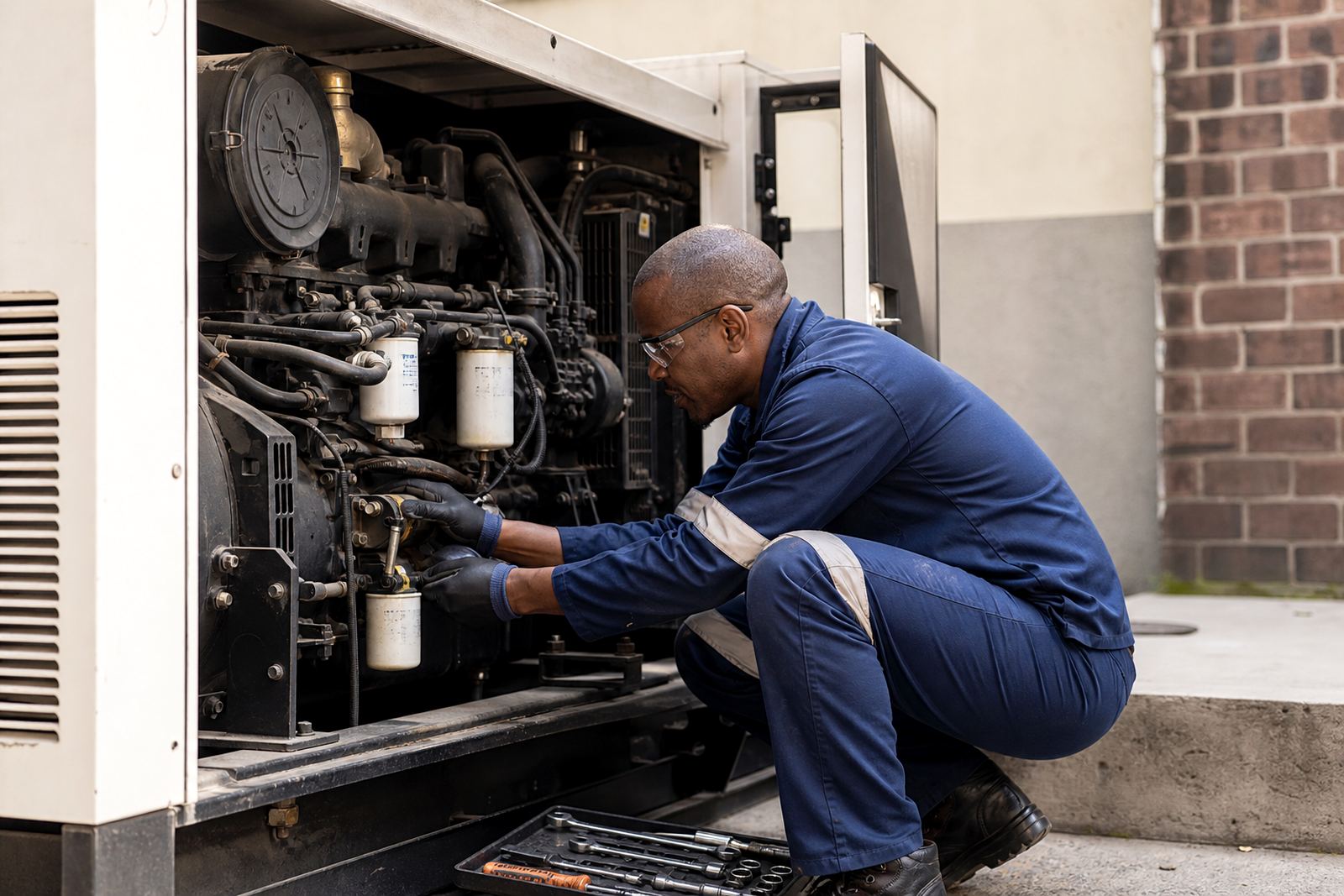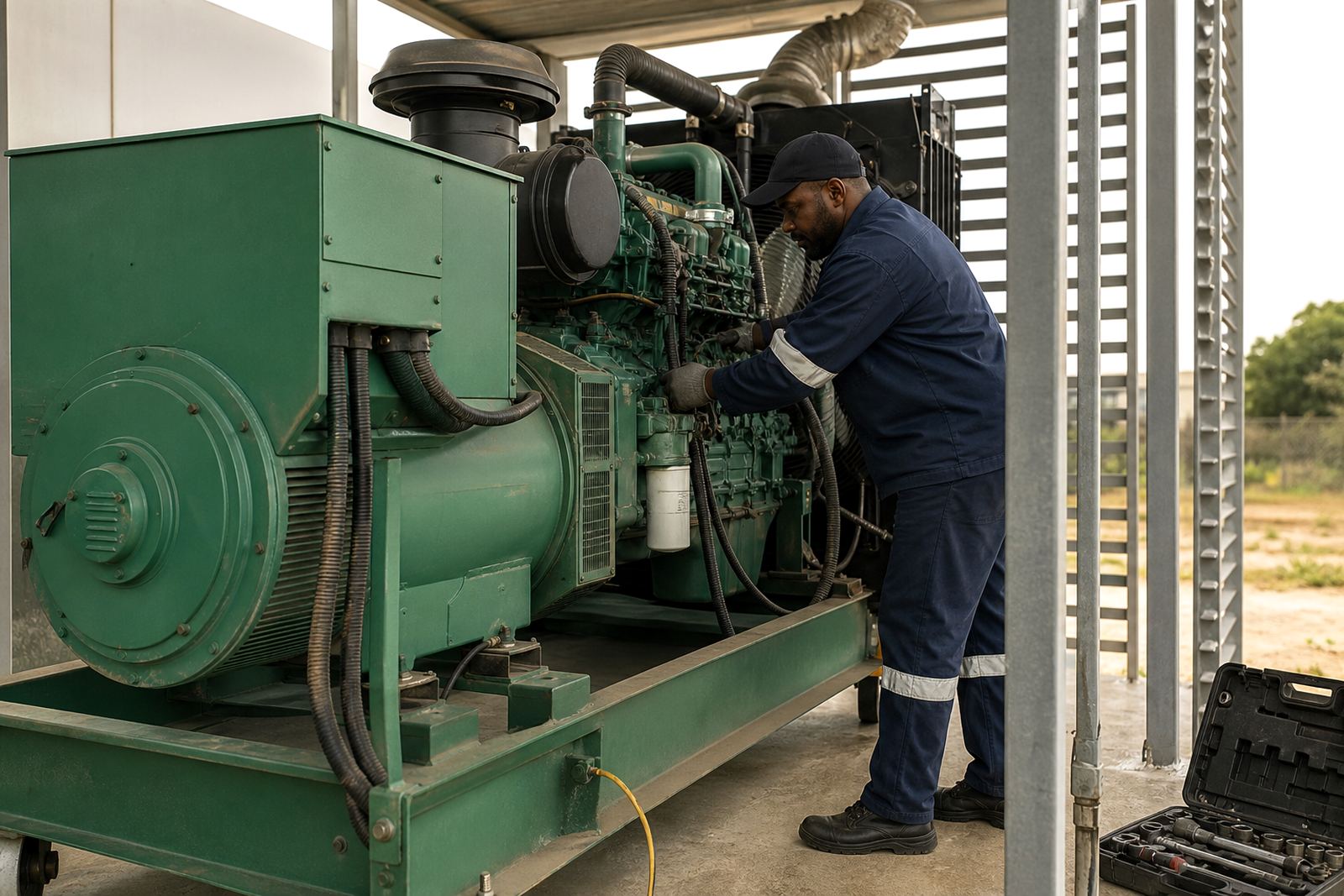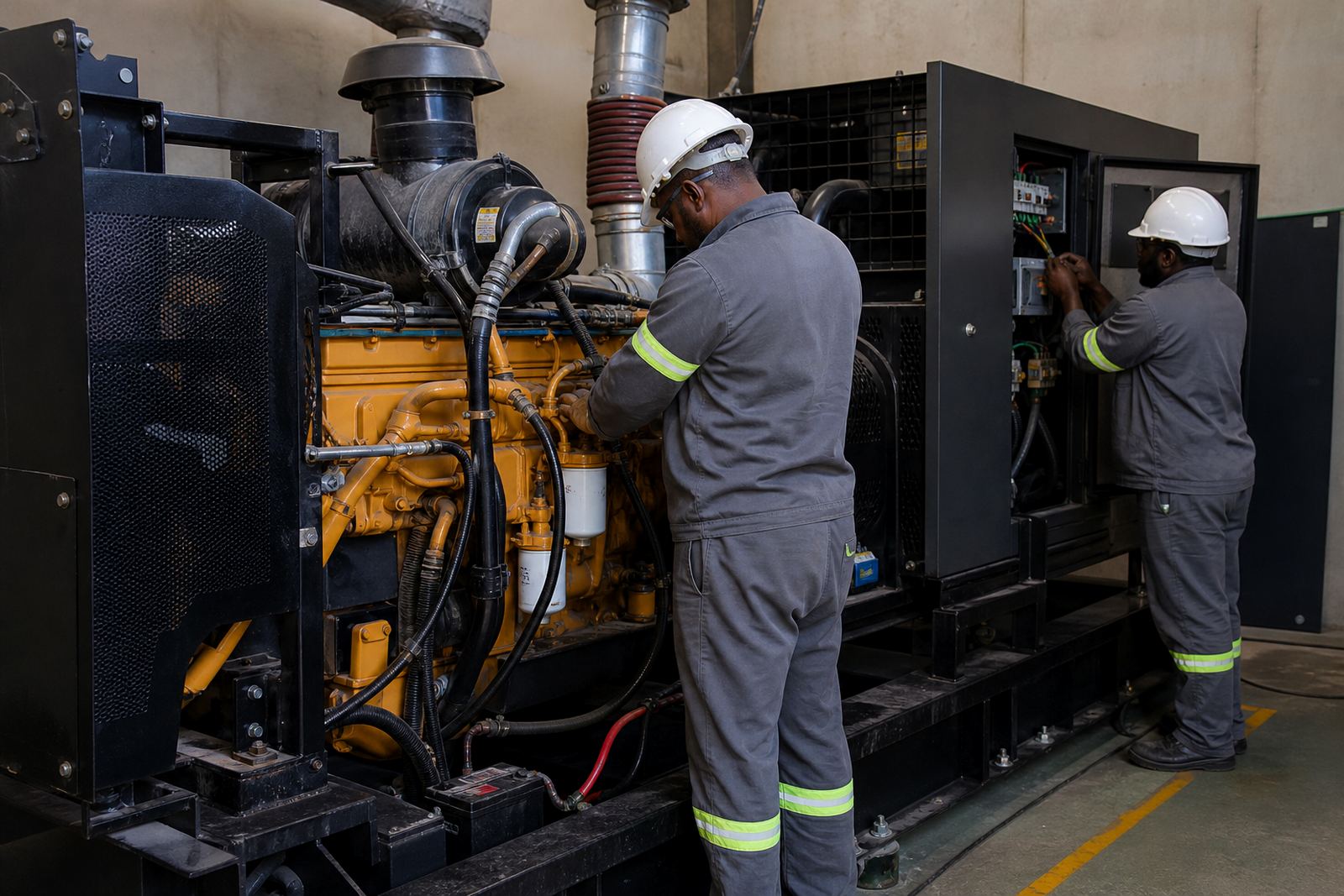
Tell us exactly what the set is doing now
When a generator acts up, the first message matters. Tell us whether the unit will not crank, cranks but does not fire, starts and stops, runs rough, trips on alarms, or fails under load. If you can see the control panel, note any warning lights, codes or unusual readings. A clean description helps us decide if the issue points to batteries, fuel delivery, oil pressure, coolant temperature, charger faults, starter gear, changeover issues or a deeper engine problem.
It also helps to say whether the unit is a standby set or a prime power set, how often it is used, and if the problem started after load shedding, a storm, a scheduled test or a recent service. That extra detail saves time on site and can stop repeat callouts.
The details that speed up dispatch
We work across Midrand, Centurion, Sandton, Johannesburg, Pretoria, Durban, Cape Town and Polokwane, so accurate site information helps us route the right support team. Please include the exact address, the site contact name, access instructions, and any security process at the gate or reception. If the plant room is behind a warehouse, on a roof, in a basement or inside a noisy process area, mention that too.
- Generator size or kVA rating if you know it
- Make, model or serial number from the nameplate
- Fuel type and whether the tank is full enough for testing
- Last service date and any recent repairs
- Any linked equipment, such as a changeover switch or ATS panel
- Whether the set is on a maintenance contract or is an emergency attendance
If the issue is happening during business hours, tell us whether the site can tolerate a short shutdown. Some faults need the unit isolated before safe inspection can begin, especially where electrical work is involved and qualified people must follow local regulations.
What our support team checks before a technician leaves
Once we receive your fault details, our service team reviews the likely cause and the next steps. That may include checking service records, preparing oil and filters, packing coolant, test gear, starter parts or battery equipment, and assigning a technician with the right experience for the fault. If the job looks like a fuel issue, we may ask about contamination, blocked filters, low tank level or air in the lines. If it sounds electrical, we look at safe isolation requirements and whether the changeover switch or control system needs attention.
For some sites in coastal areas such as Durban or Cape Town, humidity and salt air can speed up corrosion on terminals, battery cables and switchgear. In Gauteng, dust and load cycling often show up in blocked filters, dirty radiators and tired batteries. Those are small things, but they can stop a set from starting when it is needed most.
If the generator is still running, do these checks first
If the generator is running but not behaving properly, keep the load stable and avoid unnecessary starts and stops. Only carry out checks that are safe for your team and your site rules. Never open live panels or bypass safety devices. If the issue involves electrical work, testing or changeover equipment, it must be handled by qualified people under the local rules that apply to the site.
- Look for oil leaks, coolant loss or fuel smell near the unit
- Check whether the battery charger is on and the battery voltage looks normal
- Confirm that ventilation openings are clear and the room is not overheating
- Note any vibration, smoke, knocking, warning lights or unusual shutdowns
- Record the exact time the fault happened and what the load was doing
Do not keep restarting a machine that is alarmed on low oil pressure or high temperature. That can turn a serviceable fault into a costly engine repair.
How we handle urgent attendance and planned repairs
For urgent breakdowns, we aim to get a technician moving with the right tools and the right spares as soon as the fault is understood. For non-urgent issues, we may suggest a scheduled attendance that combines repairs with scheduled servicing, oil and filter changes, battery testing, coolant system service or a changeover switch check. That approach helps reduce downtime and keeps maintenance work in one visit where possible.
Our field support covers emergency callouts, fault finding, starter system repairs, fuel system repairs, load bank testing, preventive site inspections and service record audits. The goal is to get the set back into dependable condition and to show you what was found. If a fault keeps returning, we look at the pattern, not only the symptom.
What happens after the visit is logged
After the attendance, we update the service notes and log what was checked, replaced or monitored. If the unit needs follow up, we note the remaining risks and what should be done before the next outage or testing window. For sites on contracts, that record helps with planning and with keeping the machine ready for the next service interval. It also helps facilities teams, procurement and site managers keep track of changes in condition over time.
RelGen operates from Midrand with a practical support structure led by Thabo Engelbrecht, with Naledi Shezi, Johan Matlala, Ayanda Khoza, Muneerah Daniels, Sibusiso Wessels and Rikus Botha supporting operations, scheduling, technical support and logistics. If you are managing one site or several across South Africa, send the fault details and we will take it from there.