When a load bank test makes sense on your site
Load bank testing is useful when a generator needs to be checked under controlled electrical load rather than waiting for a real outage. It helps show how the set handles heat, voltage stability and frequency control when the engine is working properly under strain. On standby units, it is often used when the site has had light running only, or when maintenance records suggest the machine has not been taken up to full working duty for a while.
For businesses in Midrand, Johannesburg, Pretoria, Durban, Cape Town and Polokwane, the decision usually comes down to risk. If your generator protects cold rooms, servers, production lines or security systems, a load bank test can be part of a sensible maintenance plan. If your unit is a prime machine on regular service duty, testing may also help confirm that it is still coping with the demand placed on it day after day.
What our technical check looks at before testing starts
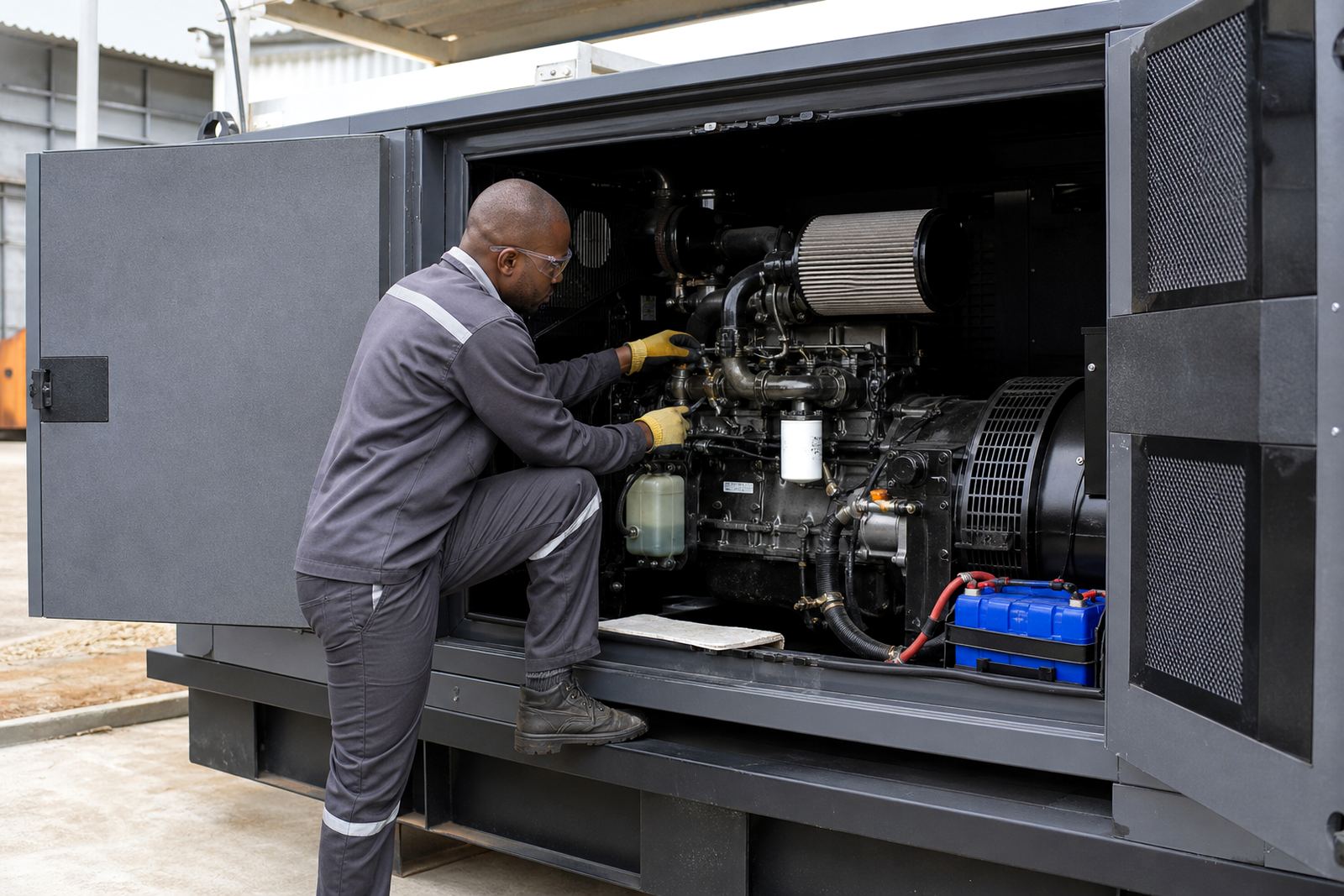
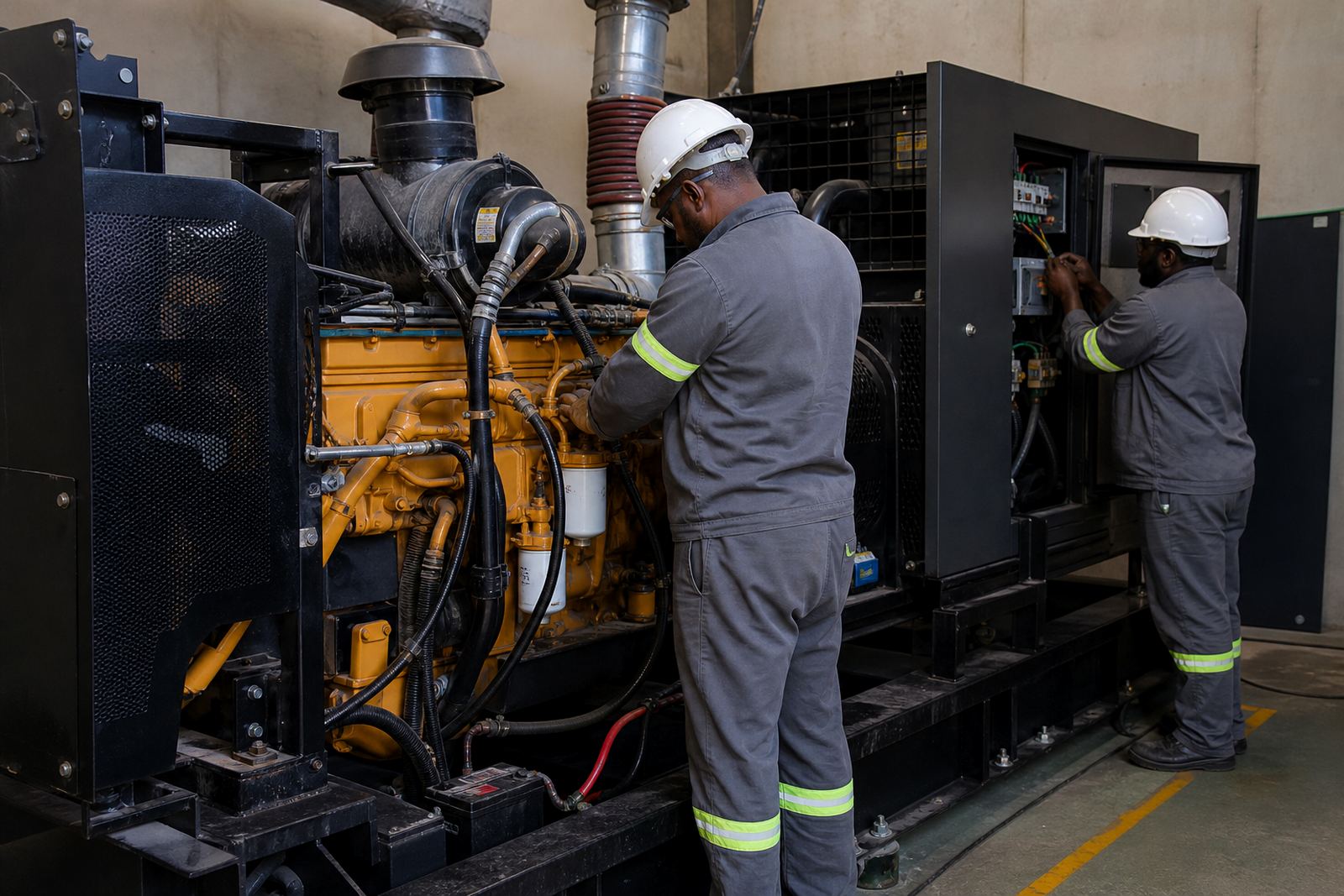
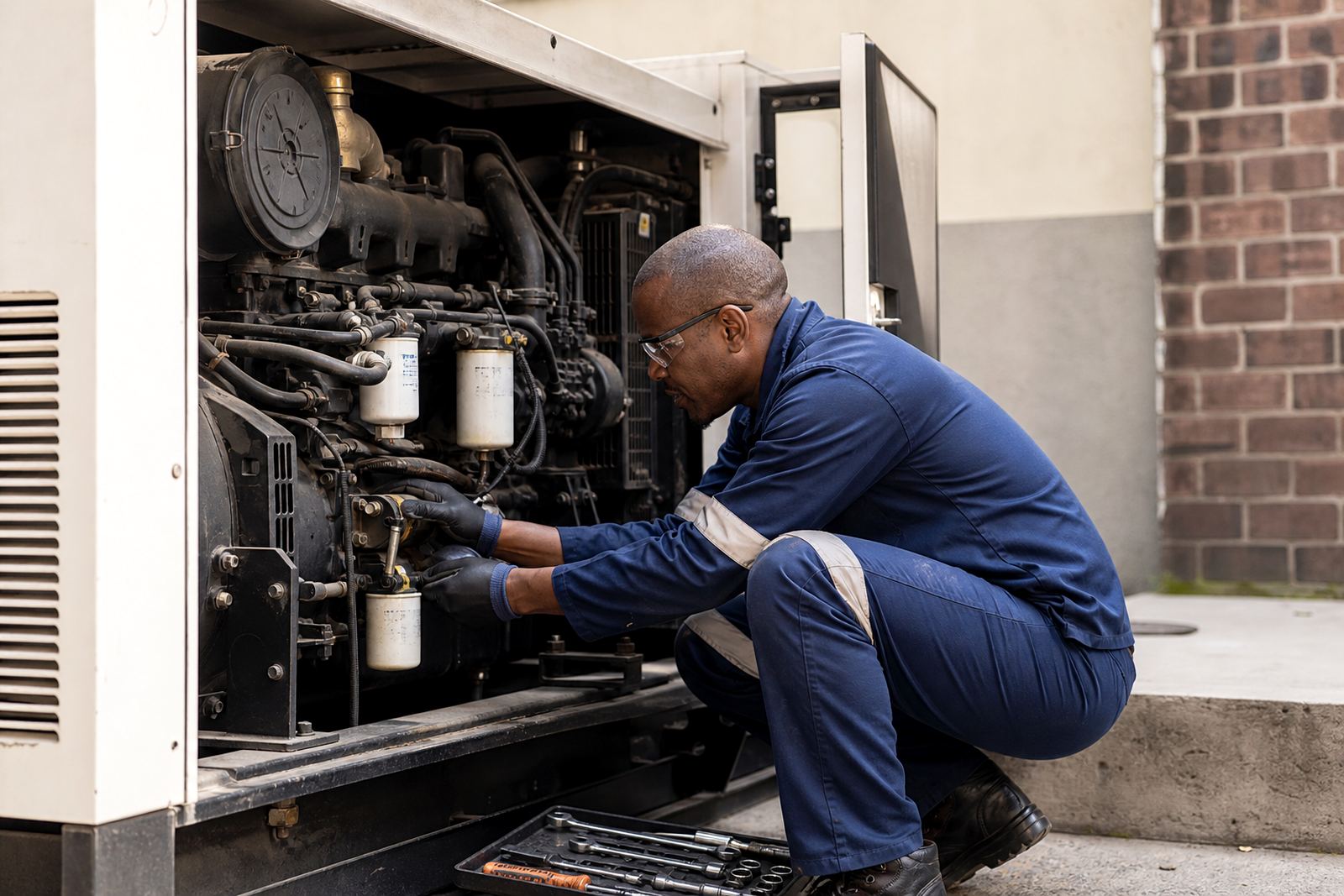
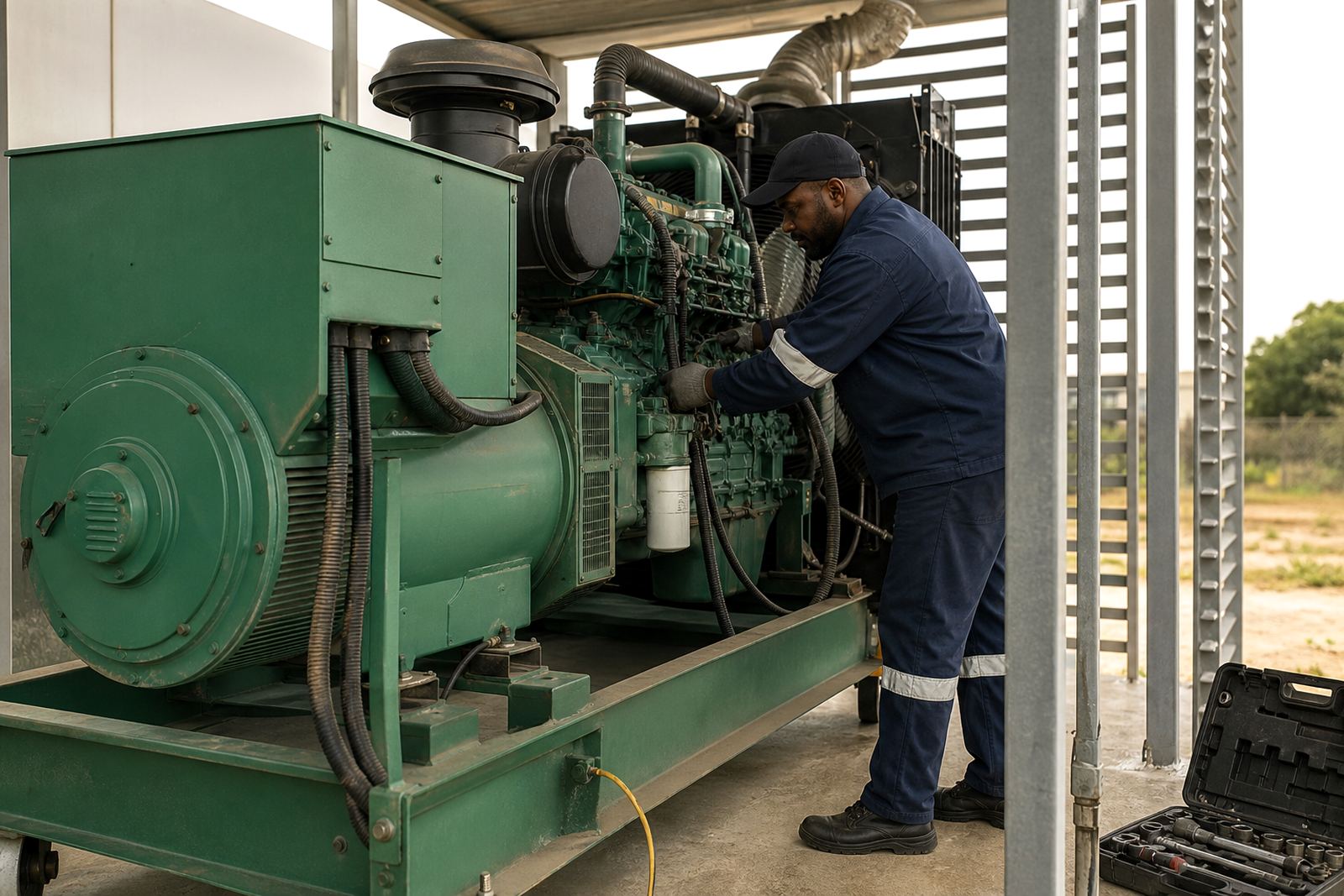
Before any load bank enquiry is approved, we look at the generator condition, service history and changeover arrangement. That includes oil condition, filters, coolant level, battery health, starter performance and whether the changeover switch is functioning as it should. Electrical work must be handled by qualified people and in line with local regulations, especially where the test connects into a live installation or forms part of a controlled shutdown.
- Current service record and last oil and filter change
- Battery condition and charger performance
- Coolant system condition and any signs of leakage
- Starter circuit health and cranking response
- Changeover switch operation and site access for testing equipment
How the testing day is handled on site
On the day, our team prepares the generator, confirms the site plan and sets out the test sequence. The load bank is then connected to apply a measured electrical load for the required period, so the engine can be assessed while temperature and output are monitored. Where needed, the test can be matched to a service visit so the unit is not opened and closed more than once.
We keep the process practical. If there are municipal rules, building access limits or tenant constraints, those are taken into account before the crew arrives. In business parks and mixed-use sites, that often means checking noise windows, access to loading bays and where exhaust discharge will not affect other tenants.
What the test can reveal before an outage does
A load bank test can expose problems that do not show up during short weekly runs. Weak batteries may crank fine once or twice, then fail under repeated starts. A cooling system can seem acceptable at idle but struggle once the unit is worked. Fuel delivery faults, poor governor response and loose connections may only appear when the generator is pushed close to its expected duty.
- Overheating under extended running
- Voltage or frequency instability
- Poor battery recovery after start-up
- Faults in fuel delivery or starter circuits
- Changeover issues that affect transfer during outage conditions
How RelGen fits the test into a maintenance contract
RelGen supports standby and prime generator maintenance contracts across South Africa, with our base in Midrand, Gauteng. For some sites, load bank testing is scheduled after oil and filter changes, while other sites need it before a season of higher demand, planned shutdowns or a compliance review. Naledi Shezi and Johan Matlala coordinate service planning, while Ayanda Khoza handles field scheduling and Muneerah Daniels supports technical review.
We do not push testing where it is not needed. If the unit has a good service record and the running profile is low, a different inspection may be enough. If the site has a history of nuisance trips or uneven loading, then a load bank enquiry can be the right next step.
What to send through when you ask for guidance
When you send an enquiry, give us the generator size if you have it, the site town, the type of operation and whether the unit is standby or prime. If you know the last service date, add that too. A photo of the nameplate and the changeover arrangement can help us understand the setup faster.
- Site location and access details
- Generator duty type: standby or prime
- Last service date or service record reference
- Any past faults, alarm history or repeated shutdowns
- Whether the site has load sensitive equipment or restricted access hours
From there, Rikus Botha can help check parts and logistics, and Sibusiso Wessels can advise on the practical side of the test if a field visit is needed.