Why the battery deserves attention before the first crank
A generator battery does more than start the engine. It has to hold charge, accept charging correctly, and deliver enough current for a clean start when the mains fails or the set is called in for scheduled use. In Gauteng heat, coastal humidity in Durban, or long idle periods on inland sites, batteries can weaken faster than many teams expect.
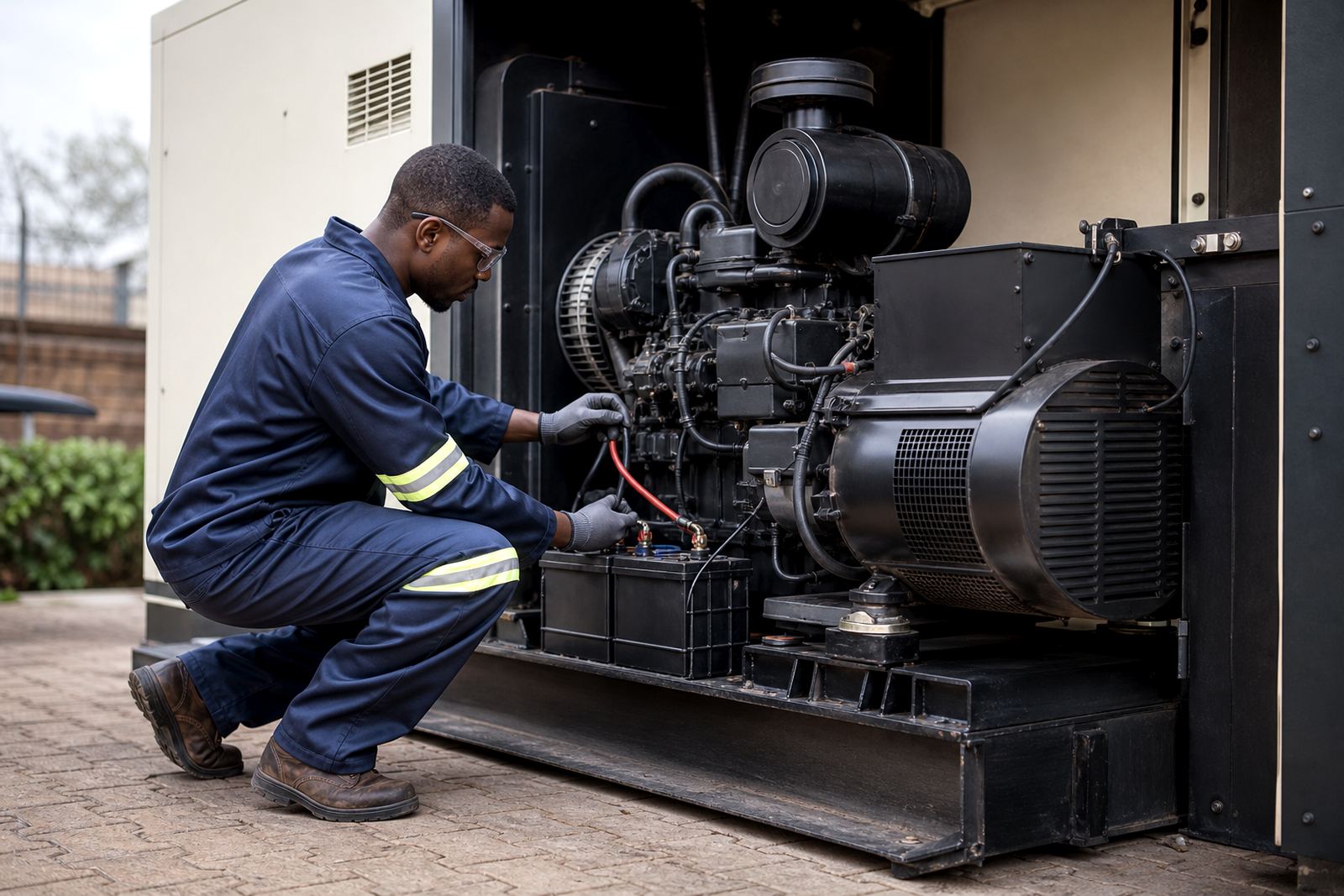
We check whether the battery is carrying the right voltage, whether the charging circuit is keeping up, and whether the terminals are clean and tight. A battery that looks fine on the outside can still be tired under load, and that is where proper testing matters.
Signs the battery system is slipping
Battery issues often start with small warnings. The engine may crank slowly, the charger light may behave oddly, or the set may need a jump before it starts. Sometimes the problem is not the battery alone, but poor charging, loose terminals, sulphation, low electrolyte level or a failing starter circuit.
- Slow cranking when the generator is started
- Battery case swelling, leakage, or corrosion on terminals
- Repeated low-voltage alarms
- Short runtime on control power when the set is off
- Battery charger warm to the touch or tripping
If a generator is used for load shedding back-up, prime duty, or weekly test runs, these warning signs should not be put off. A small fault can turn into a no-start event with no warning at all.
What our battery testing checks on site
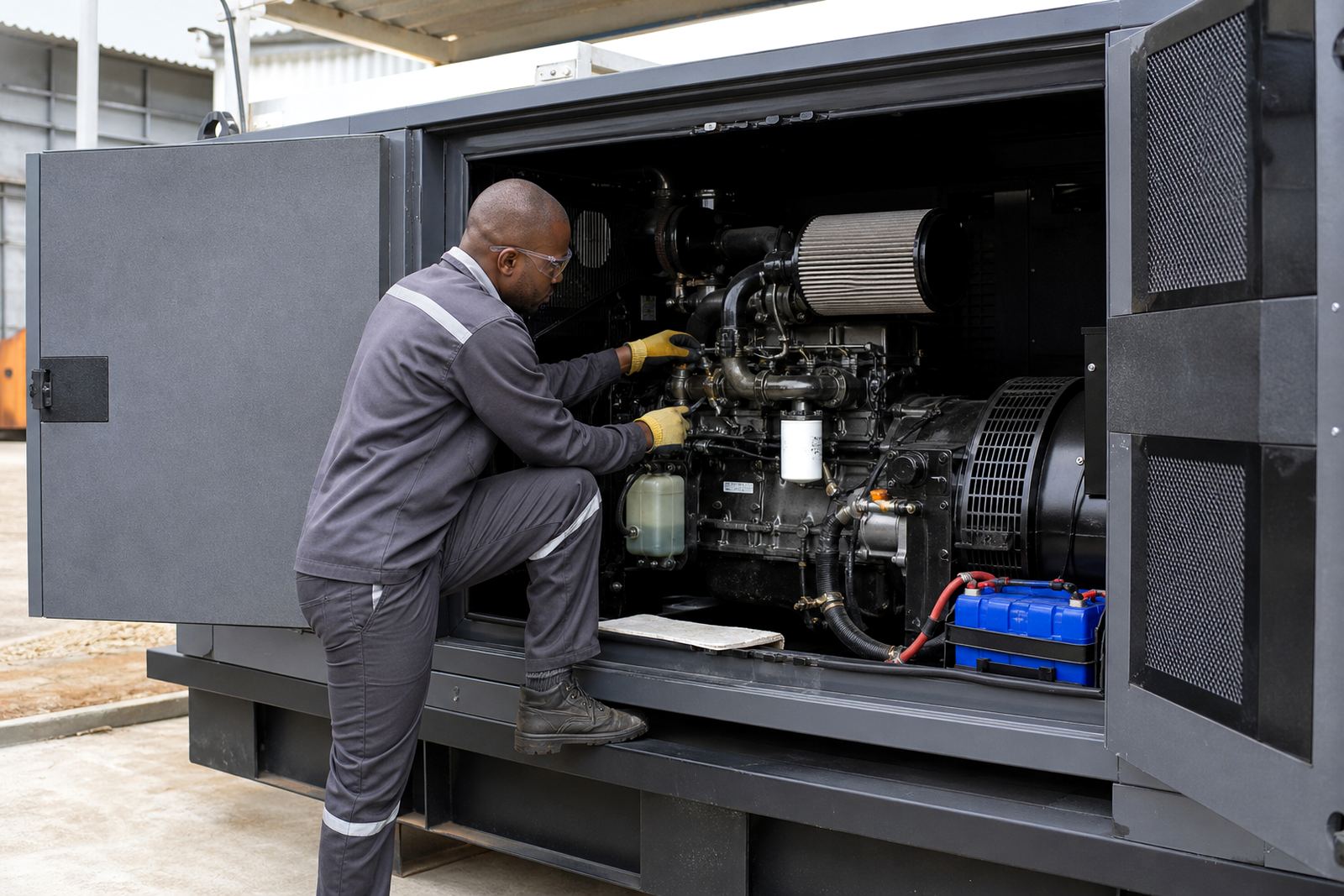
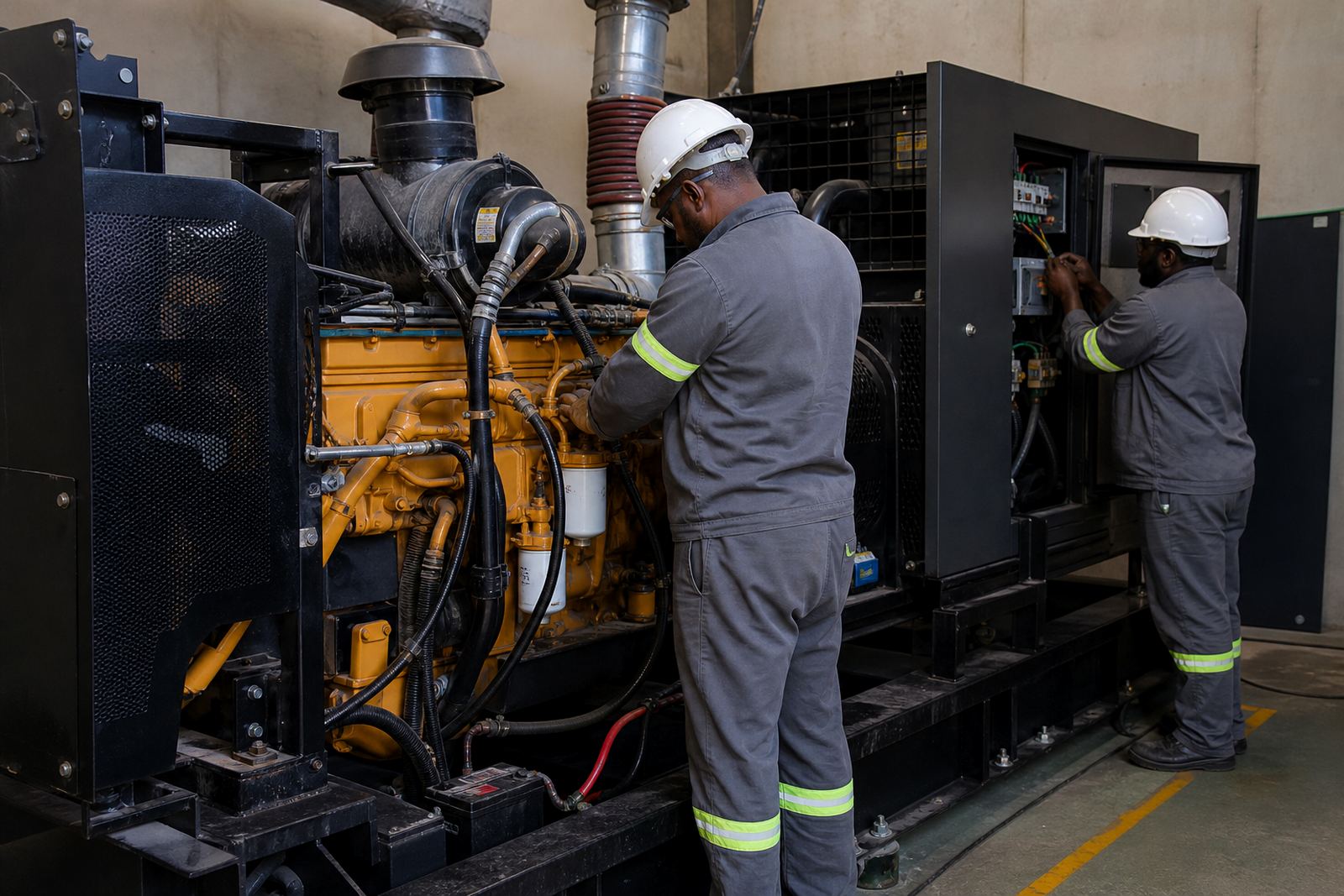
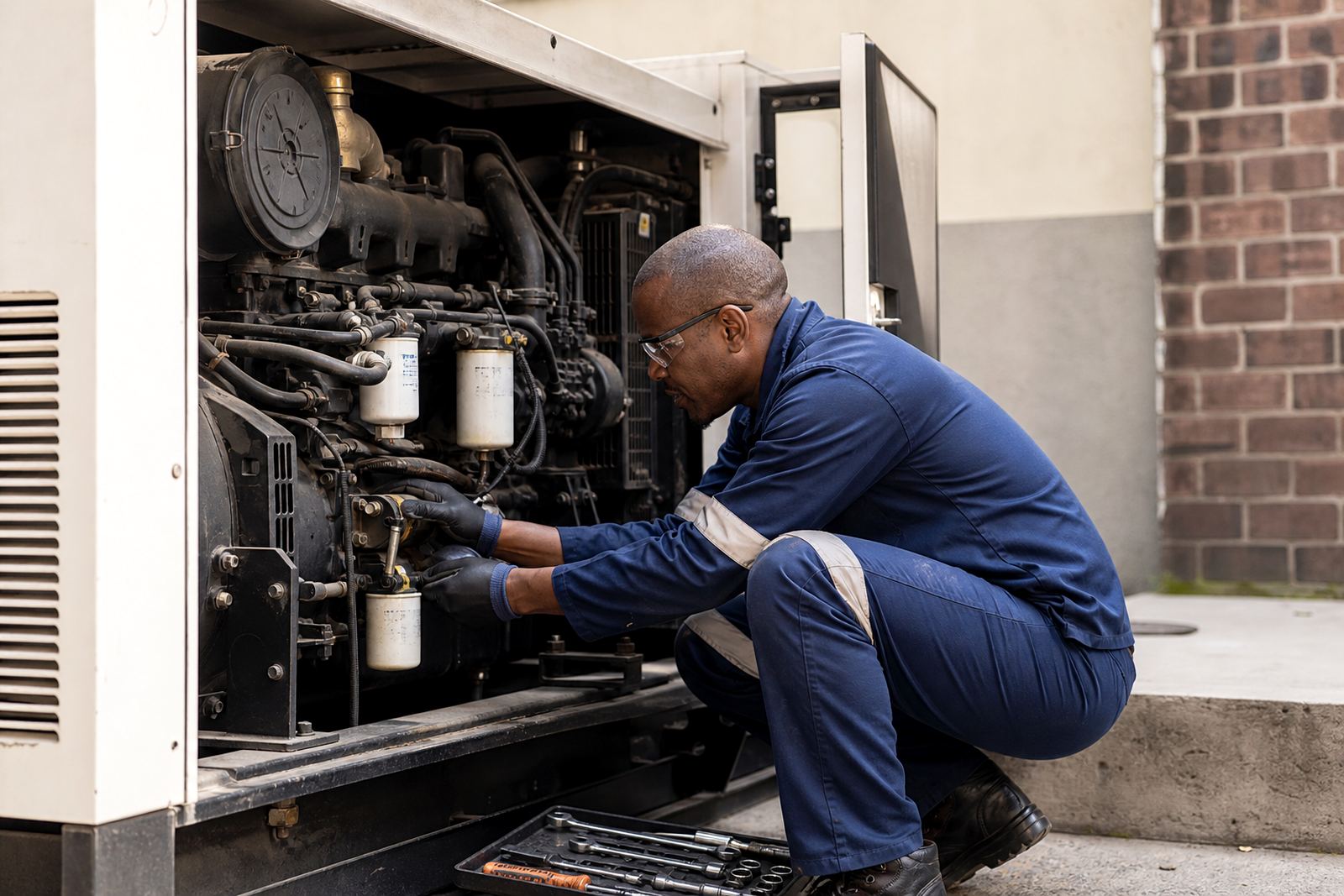
Our technicians work through the battery system in a practical order, beginning with the obvious items and moving into the electrical checks. Electrical work is handled by qualified people under local regulations, and any live testing is done with proper isolation and safe procedure. That matters on sites where a single mistake can take out more than just the generator.
We usually check battery condition, charger output, terminal security, cable condition, and the starting circuit. Where needed, we also inspect the engine cranking performance and confirm whether the charging system is keeping the battery within the correct range.
- Visual inspection for damage, acid marks and loose fitment
- Voltage checks at rest and during charging
- Terminal cleaning and tightening
- Starter draw observation during crank
- Review of alarm history and service records
Charging trouble that hides behind a healthy-looking battery
Sometimes the battery itself is not the real issue. If the charger is underperforming, set too high, or cycling badly, the battery can be overworked. That leads to shortened battery life and repeated faults. On standby systems, this is especially common when the set runs infrequently and nobody notices the problem until an outage.
We check the charger against the battery type fitted, the supply into the charger, and the condition of the associated wiring. If the battery bank is made up of mismatched units, that is noted as well because one weak battery can pull down the entire string. On larger units, that can become a costly pattern if it is not dealt with early.
Replacement planning without last minute panic
Replacing a battery after failure is always more stressful than replacing it on schedule. RelGen helps businesses plan battery replacement in a way that matches actual use, not guesswork. We look at age, test results, charging behaviour, site conditions and the duty cycle of the generator before advising on timing.
For sites in Sandton, Centurion, Midrand and industrial parts of Pretoria, where standby sets may be tested often, replacement planning can be built into the maintenance contract. For coastal sites in Durban or Cape Town, corrosion and humidity can shorten service life, so the inspection interval may need to be tighter.
- Track battery age and service history
- Replace pairs or matched sets where required
- Plan swaps before peak load periods or shutdowns
- Check charger health at the same time as the new battery install
How we support battery problems across South Africa
RelGen services standby and prime generators from our Midrand base, with support across Johannesburg, Pretoria, Durban, Cape Town, Polokwane and surrounding business areas. Our work covers emergency callouts, scheduled servicing, preventive inspections and service record audits, so battery issues can be handled as part of the wider generator system rather than as a one-off fix.
We also look at related items that affect battery reliability, including changeover switch checks, starter system repairs, fuel system faults and control panel alarms. That wider view helps avoid repeat visits for the same problem. It saves time on site too.
What to send through when you need battery support
When you reach us through the enquiry form on our contact page, include the generator make and model if you have it, the battery issue you are seeing, and whether the set is standby or prime duty. If there has been a failed start, mention what happened just before it occurred, for example a charger alarm, a slow crank, or a recent power interruption.
- Site location and access notes
- Generator kVA or set size if known
- Battery age or last replacement date
- Any alarms, smells, heat, or visible corrosion
- Whether the unit must stay online during business hours
That detail helps our team prepare the right parts and test equipment before the visit, which makes the repair work more efficient and keeps the generator ready for the next outage.